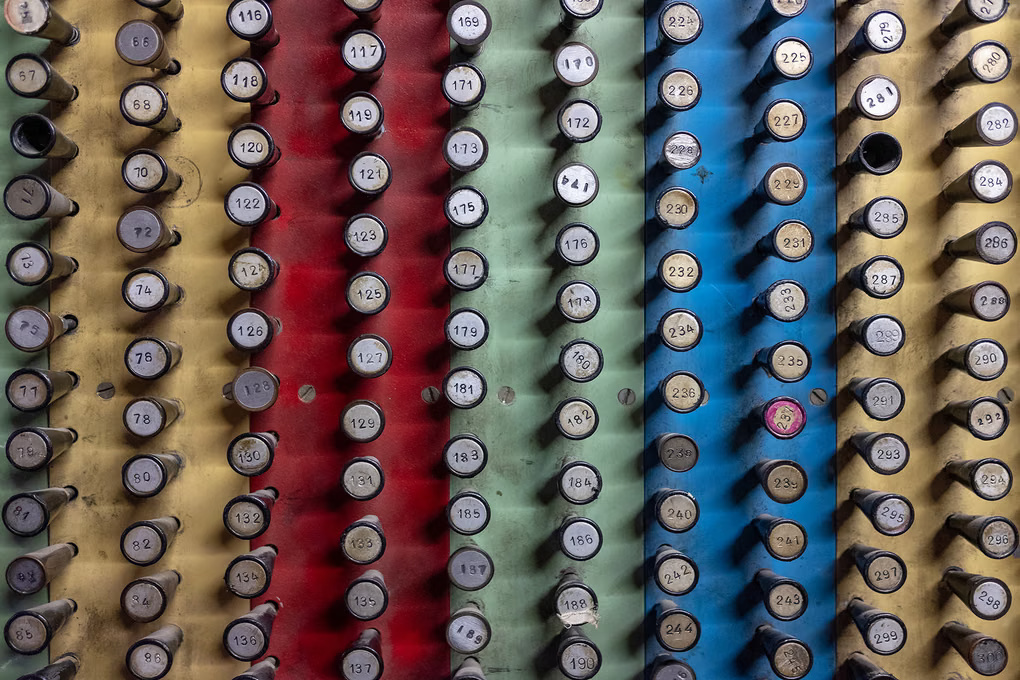
Aside from the fear, radiation clouds and suicide squads, the nuclear arms race and Cold War was the golden age of consoles, buttons and dials. The photographer Eric Lusito has been looking at former Soviet scientific institutes.
In the 1990s, after the fall of the Soviet Union, many institutions across the empire were abandoned. Others survived, albeit is much reduced circumstances.
Above his his picture of a console at the Usikov Institute for Radiophysics and Electronics of the National Academy of Sciences of Ukraine, part of the Ukrainian Institute of Physics and Technology. The laboratory of electromagnetic oscillations, was established in 1930. Led by Abram Slutskin, it pioneered research into electrical engineering and electromagnetic waves. Effective microwave oscillators, magnetrons in particular, became key components of radar systems, a priority of the Red Army. The original Soviet-era staff attendance board is still a fixture at the entrance to the institute
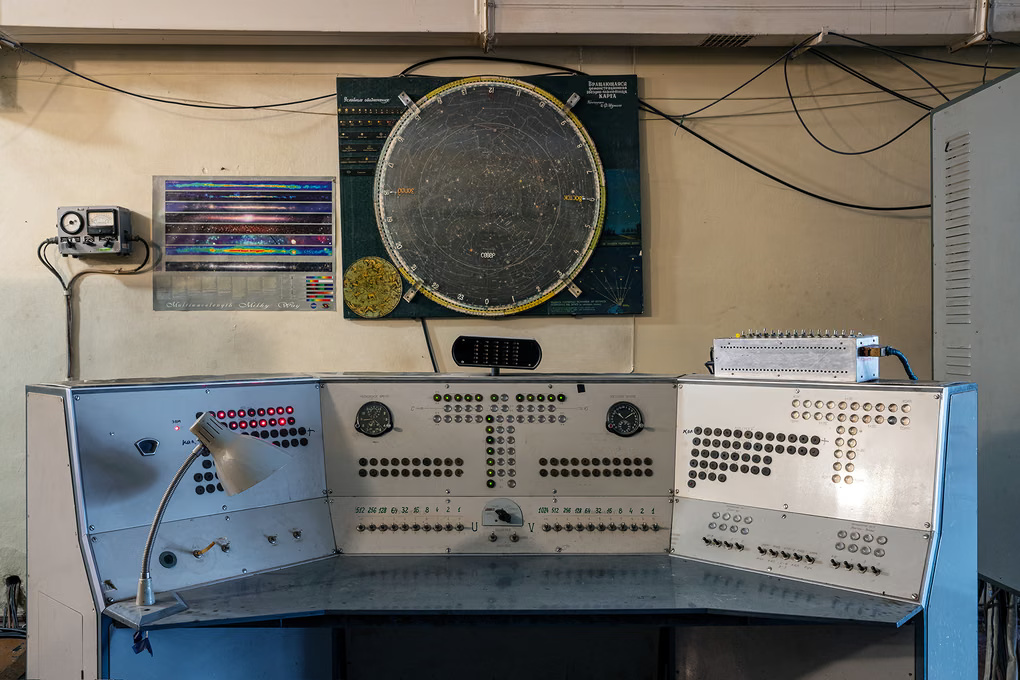
UTR-2 antenna control panel, Institute of Radio Astronomy of the National Academy of Sciences of Ukraine
The Ukrainian T-shaped radio telescope, second modification (UTR-2) is the world’s largest low-frequency radio telescope. Made up of a network of 2,040 antennas known as dipoles, the entire structure covers 15 hectares and takes the form of a giant letter T. The telescope is used to analyse radio signals from a range of cosmic sources, particularly those from the sun, lightning on Saturn and pulsars, as well as emissions from interstellar and interplanetary space.
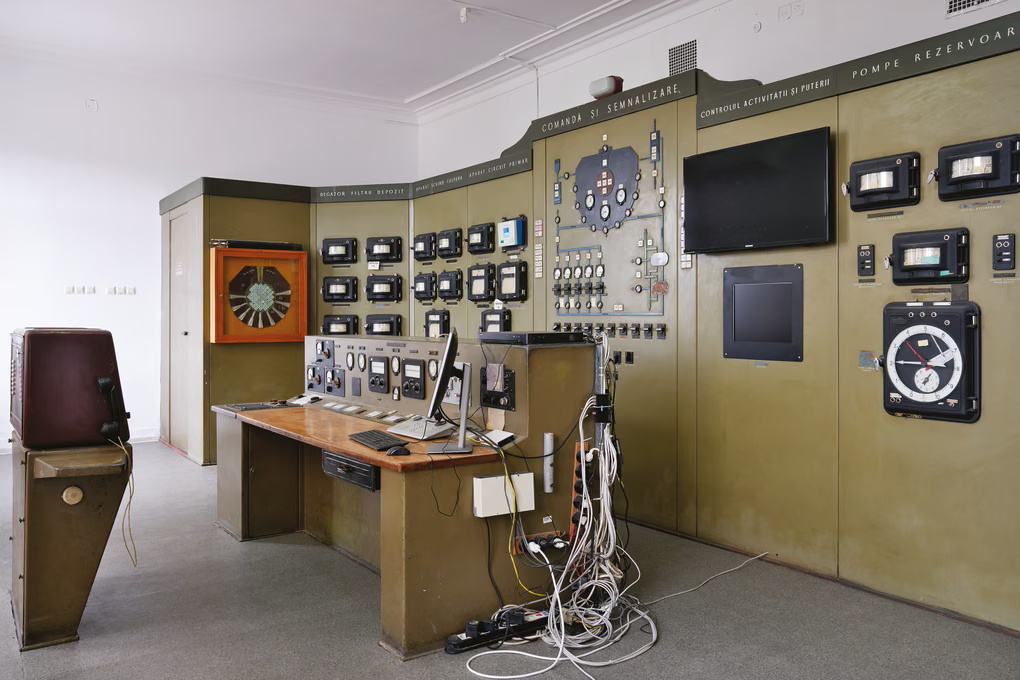
The reactor control room (unchanged since its construction in the 1950s) at the Horia Hulubei National Institute for Research and Development in Physics and Nuclear Engineering, Mǎgurele, Romania.
The Romanian nuclear programme began in 1955 after a bilateral agreement with the USSR. In 1956, construction began on the country’s first two major research facilities, the VVR-S nuclear reactor and the U-120 cyclotron. The VVR-S was the first reactor to be approved by the USSR outside of its own borders. It was operational until its shutdown in 1997.
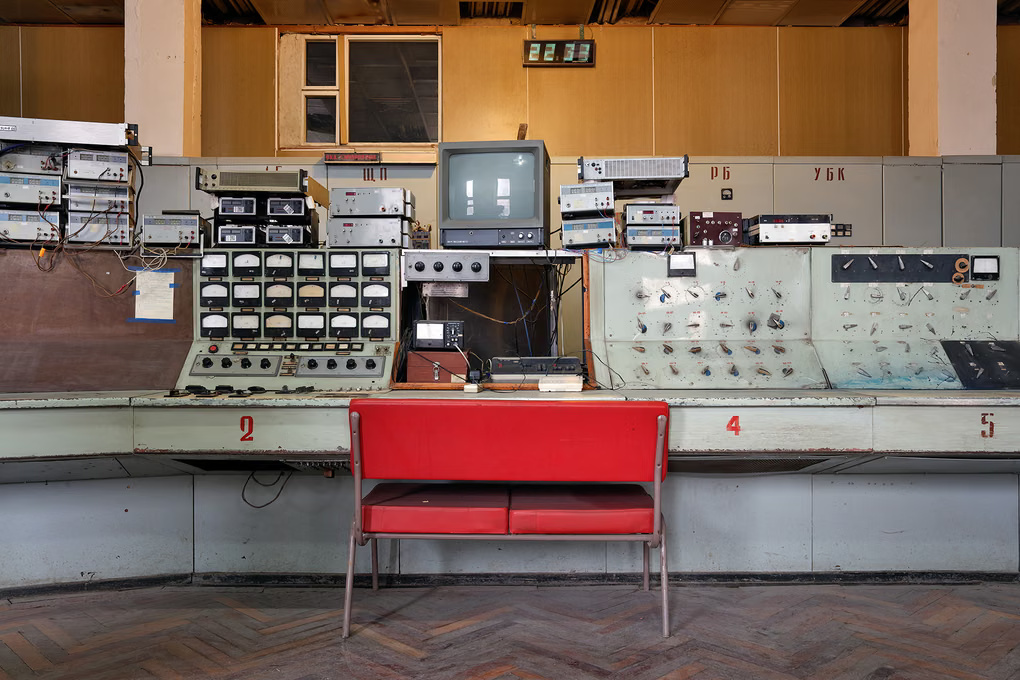

Synchrotron control room, Yerevan Physics Institute, Alikhanyan National Science Laboratory, Yerevan, Armenia.
In 1956, the Soviet physicist Artem Alikhanian began the development of the Armenian accelerator, known as Arus. His aim was to construct the most powerful electron synchrotron in the world, capable of accelerating particles to nearly the speed of light around a closed loop. Along with the creation of new departments, services and laboratories, a new town nicknamed ‘Physcity’ was built incorporating housing, schools, nurseries, shops, clinics, a cultural centre and a hotel.
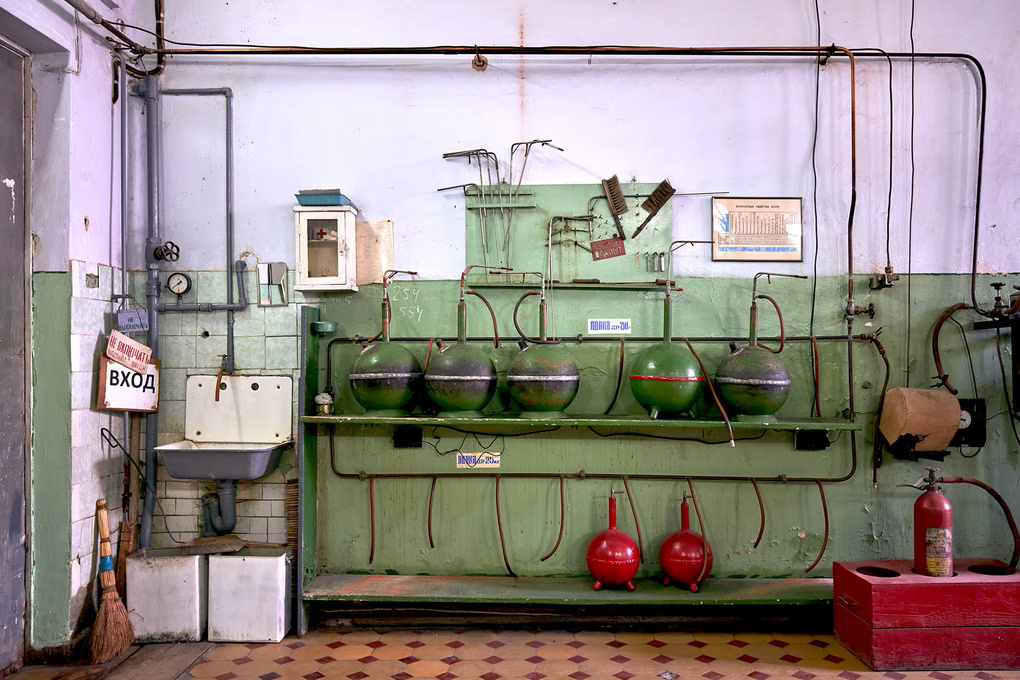
Kharkiv Institute of Physics and Technology of the National Academy of Sciences of Ukraine
In 1932, the cryogenic laboratory led by Lev Shubnikov was the first in the USSR to achieve helium liquefaction, a technological breakthrough that facilitated further research, culminating in the discovery of type II superconductivity (named the Shubnikov phase) in 1936. These spherical containers were used for the storage of liquid hydrogen.
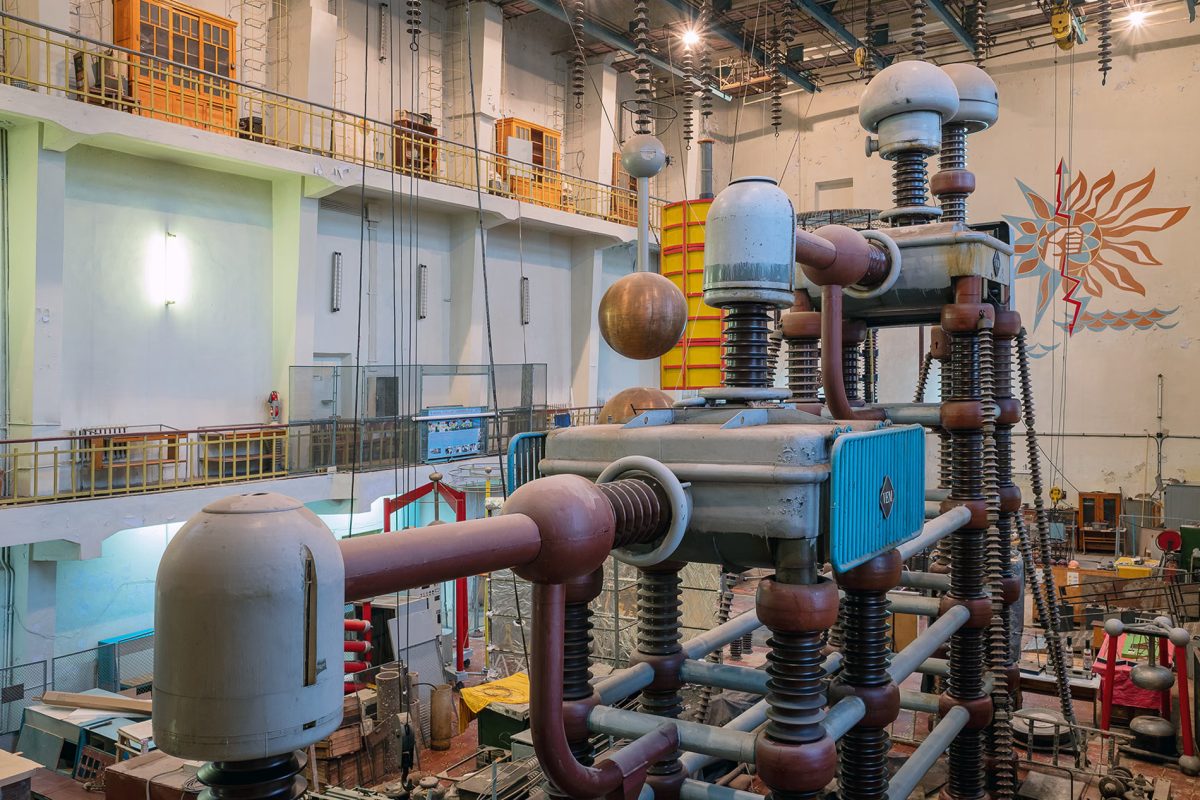

Interdepartmental Training and Technology Centre for High-Voltage Pulse Engineering, Polytechnic Institute Kharkiv, Ukraine
The high-voltage hall has remained almost unchanged for a century. A Soviet-era mural depicts a hand grasping a lightning bolt.
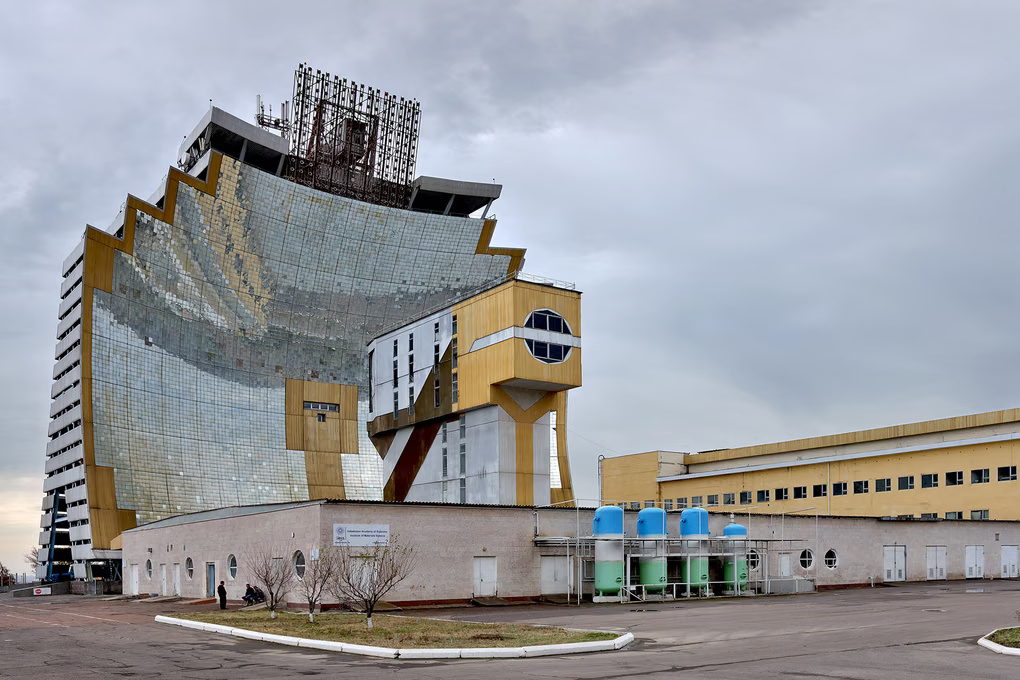
Institute of Materials Science of the Uzbekistan Academy of Sciences, Uzbekistan
The Big Solar Furnace is one of the world’s largest solar research facilities. Built in 1981, this monumental installation harnesses the power of the sun for cutting-edge science. The solar energy concentrator uses 10,700 mirrors to focus light reflected from an array of heliostats on to a single focal point. Today the facility is used for civilian research and specialist industrial orders.
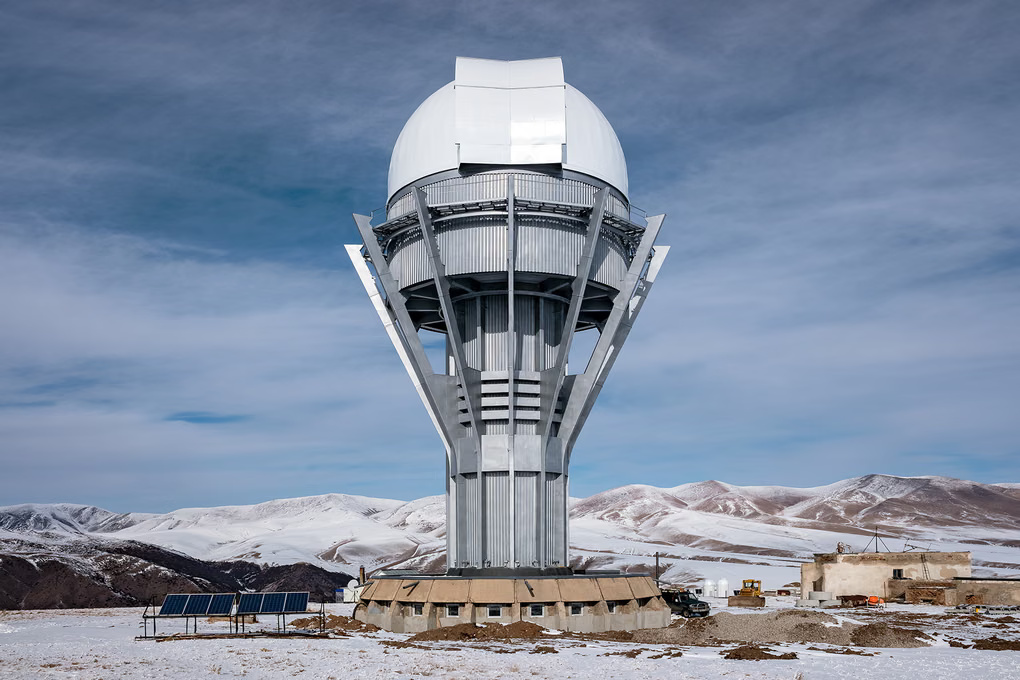
Byurakan astrophysical observatory, Armenian National Academy of Sciences, Byurakan, Armenia
BOA was founded in 1946 by Viktor Ambartsumian, who served as director of the BAO and president of the Armenian Academy of Sciences for 42 and 46 years respectively. In 1947 he discovered stellar associations, very loose clusters of about 10 to 1,000 stars. Observing these, he concluded that star formation was a continuous process, a concept that countered contemporary scientific ideas and powerfully influenced subsequent research in this field.
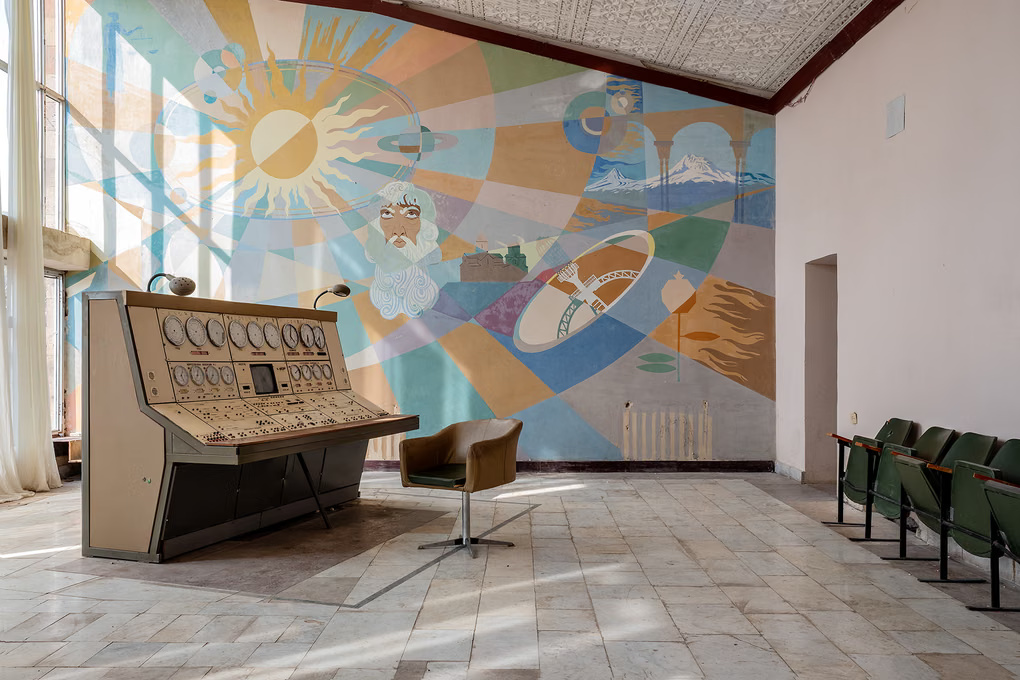
Control panel and mural at the Byurakan astrophysical observatory, Armenia
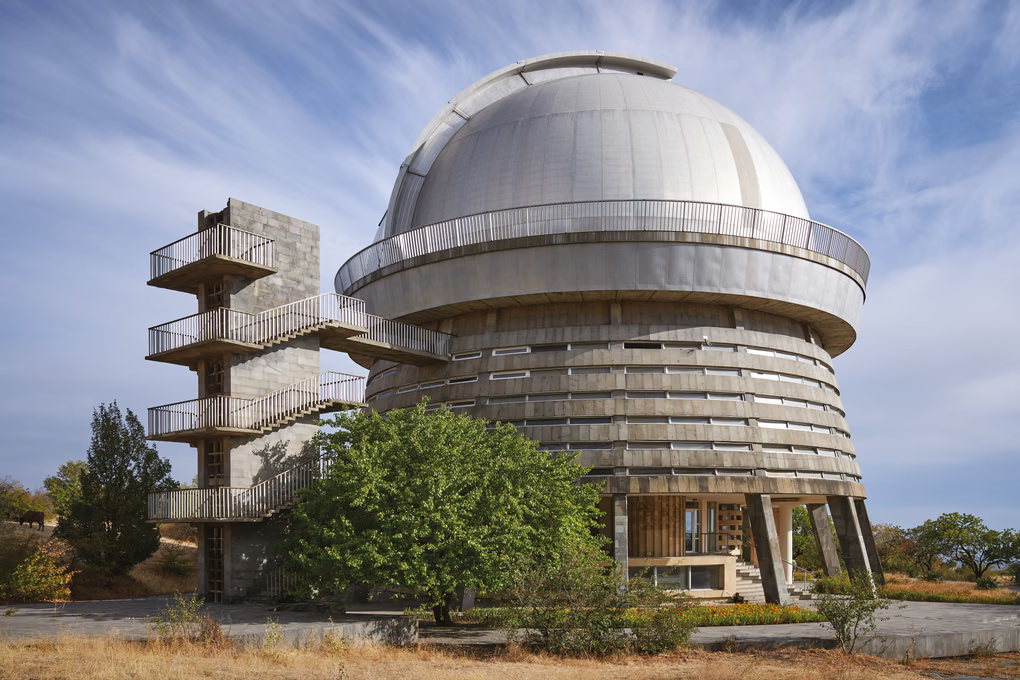
Byurakan astrophysical observatory, Armenian National Academy of Sciences, Byurakan, Armenia
BOA was founded in 1946 by Viktor Ambartsumian, who served as director of the BAO and president of the Armenian Academy of Sciences for 42 and 46 years respectively. In 1947 he discovered stellar associations, very loose clusters of about 10 to 1,000 stars. Observing these, he concluded that star formation was a continuous process, a concept that countered contemporary scientific ideas and powerfully influenced subsequent research in this field.
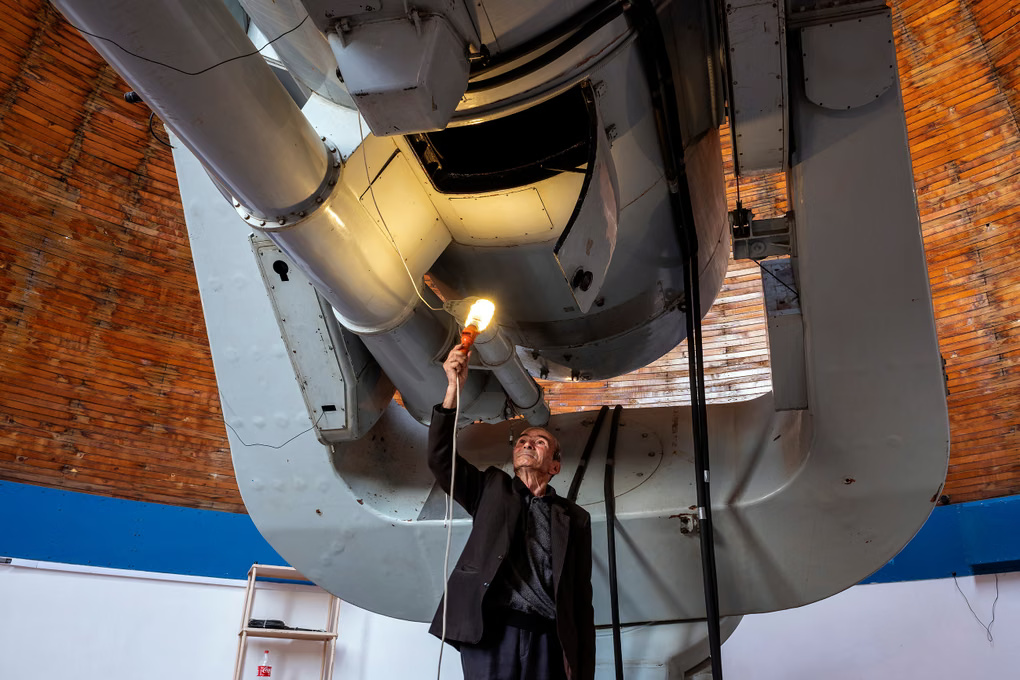
Byurakan Astrophysical Observatory, Armenian National Academy of Sciences, Byurakan, Armenia
This 1-metre Schmidt telescope, installed in 1960, was instrumental in several significant discoveries, including Markarian galaxies. It ceased operating in 1991 but after modernisation in 2015 was brought back into use. Here, Henrik Sargsyan, an engineer who has worked at the observatory since 1958, illuminates the hatch housing a new digital sensor.
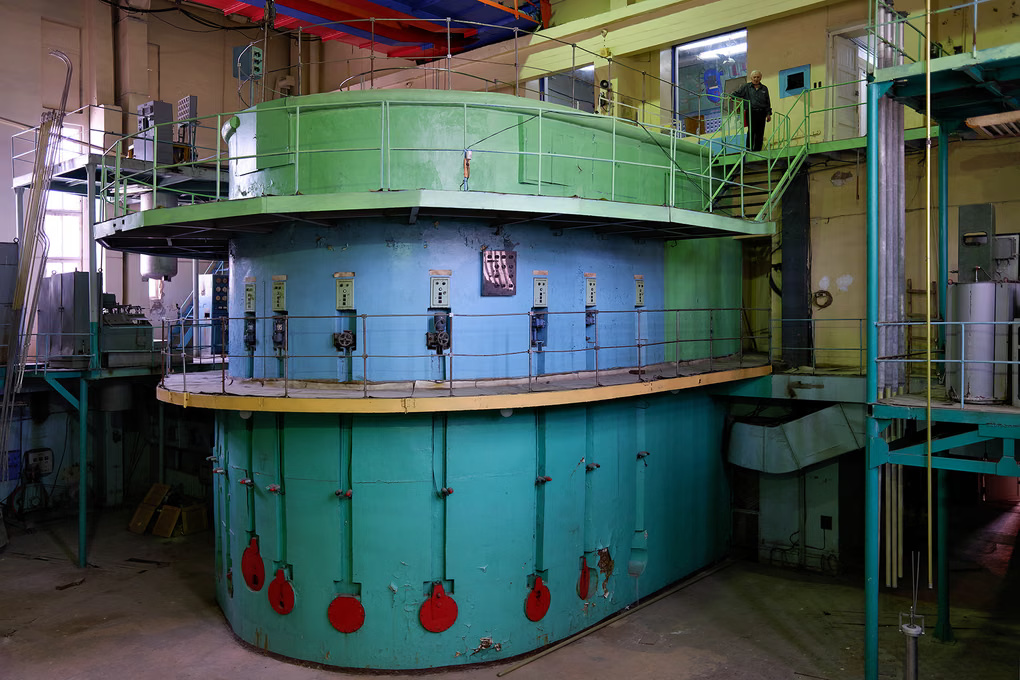
Andronikashvili Institute of Physics, Tbilisi, Georgia
As the Soviet quest to develop nuclear capabilities in weaponry and energy progressed, experimental prototype reactors were assembled. The first of the IRT reactors was constructed near Tbilisi. Scientists at the institute accurately modelled conditions found in space, allowing them to study the effects of low-temperature irradiation on various materials. The standard research reactor is a pool-type reactor using water as moderator, neutron reflector and coolant as part of the biological shielding of the reactor
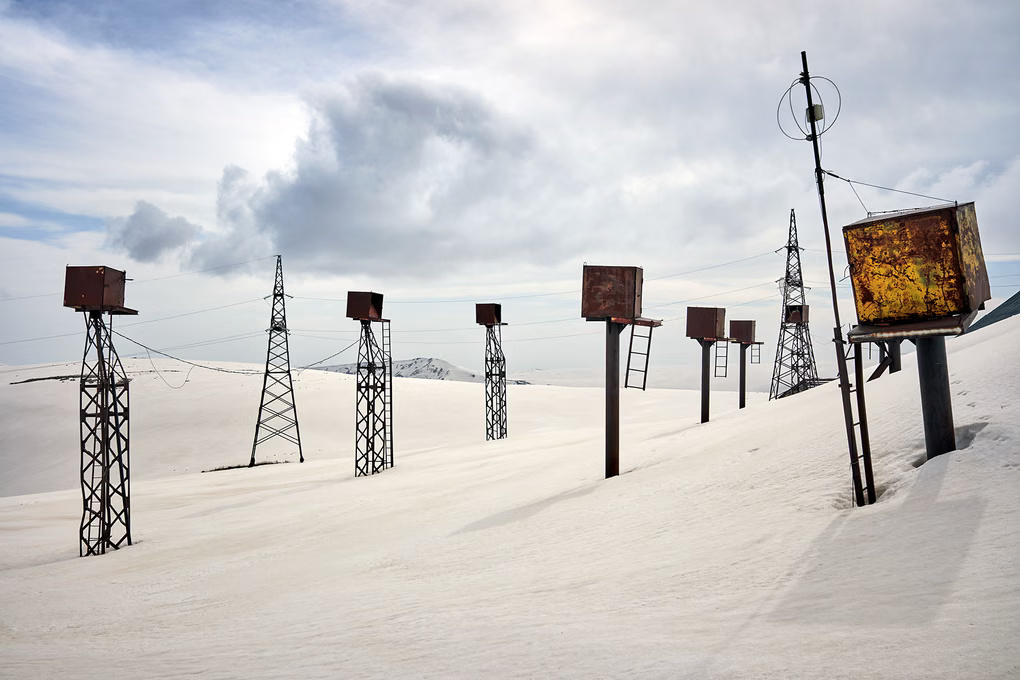
Alikhanyan National Science Laboratory’s Aragats cosmic ray research station, Armenia
After the collapse of the USSR, with funding discontinued, the station’s survival seemed uncertain. International grants and support from the Armenian diaspora bridged the gap, allowing Aragats to continue its work.
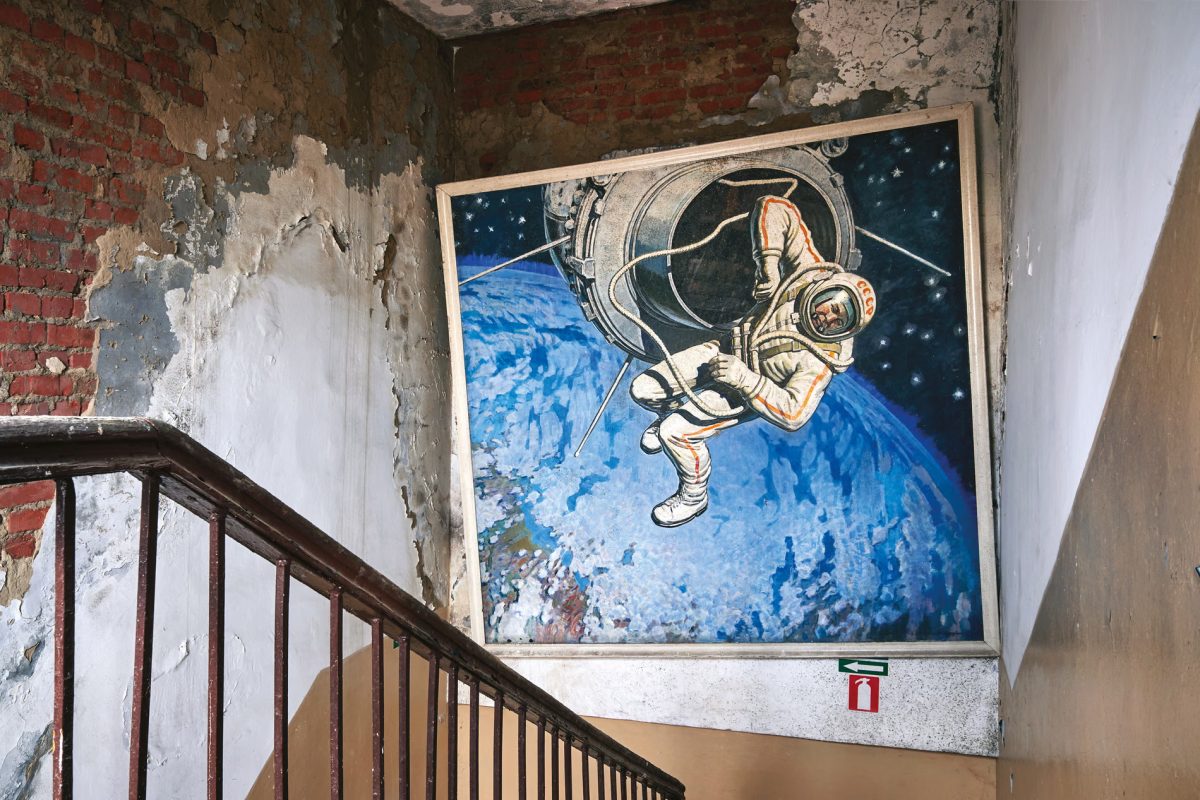
Institute of Radio Astronomy of the National Academy of Sciences of Ukraine, Kharkiv, Ukraine
A stairwell in the damaged building. The painting depicts the first spacewalk, performed in 1965 by the cosmonaut Alexei Leonov. And what a story his is.
Via: Soviet Scientific Institutes by Eric Lusito by FUEL
Would you like to support Flashbak?
Please consider making a donation to our site. We don't want to rely on ads to bring you the best of visual culture. You can also support us by signing up to our Mailing List. And you can also follow us on Facebook, Instagram and Twitter. For great art and culture delivered to your door, visit our shop.