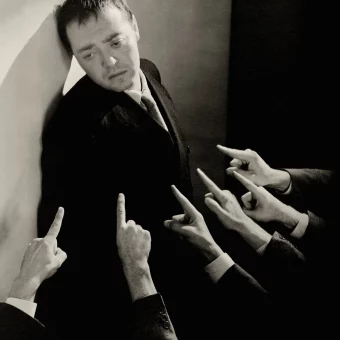
“As soon as people see a camera, they change, and what you see you lose”
– Vivian Cherry
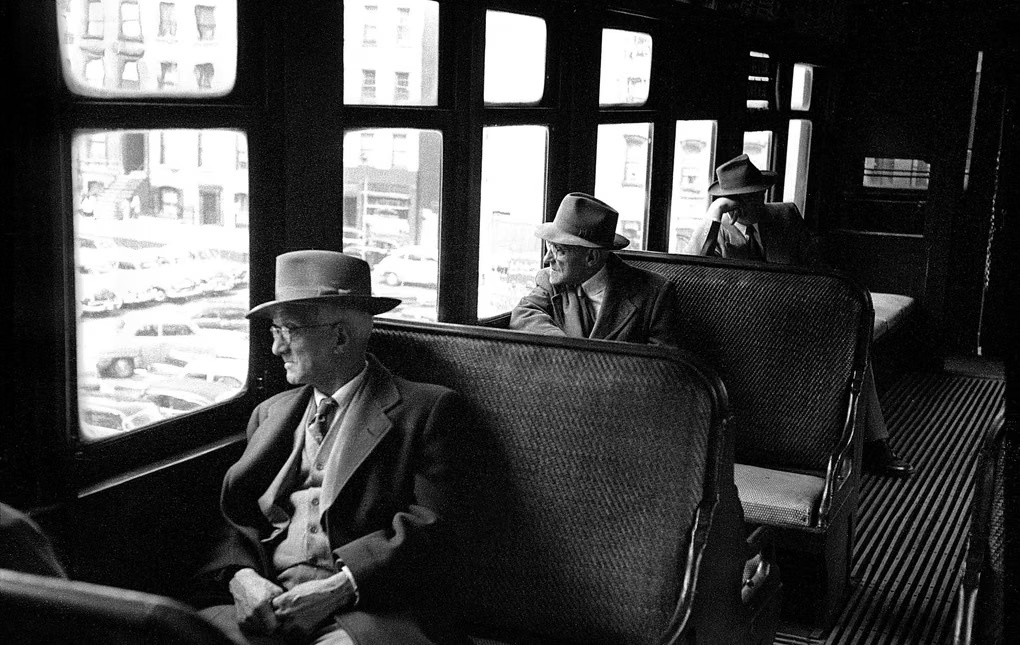
Vivian Cherry (July 27, 1920 – March 4, 2019) showed a New York City of film noir energy and intrigue bathed in light and shadow. “The older photographers working at this time wanted to make pictures that looked like paintings but reality was coming up, and that was really great,” she said of her move into street photography.
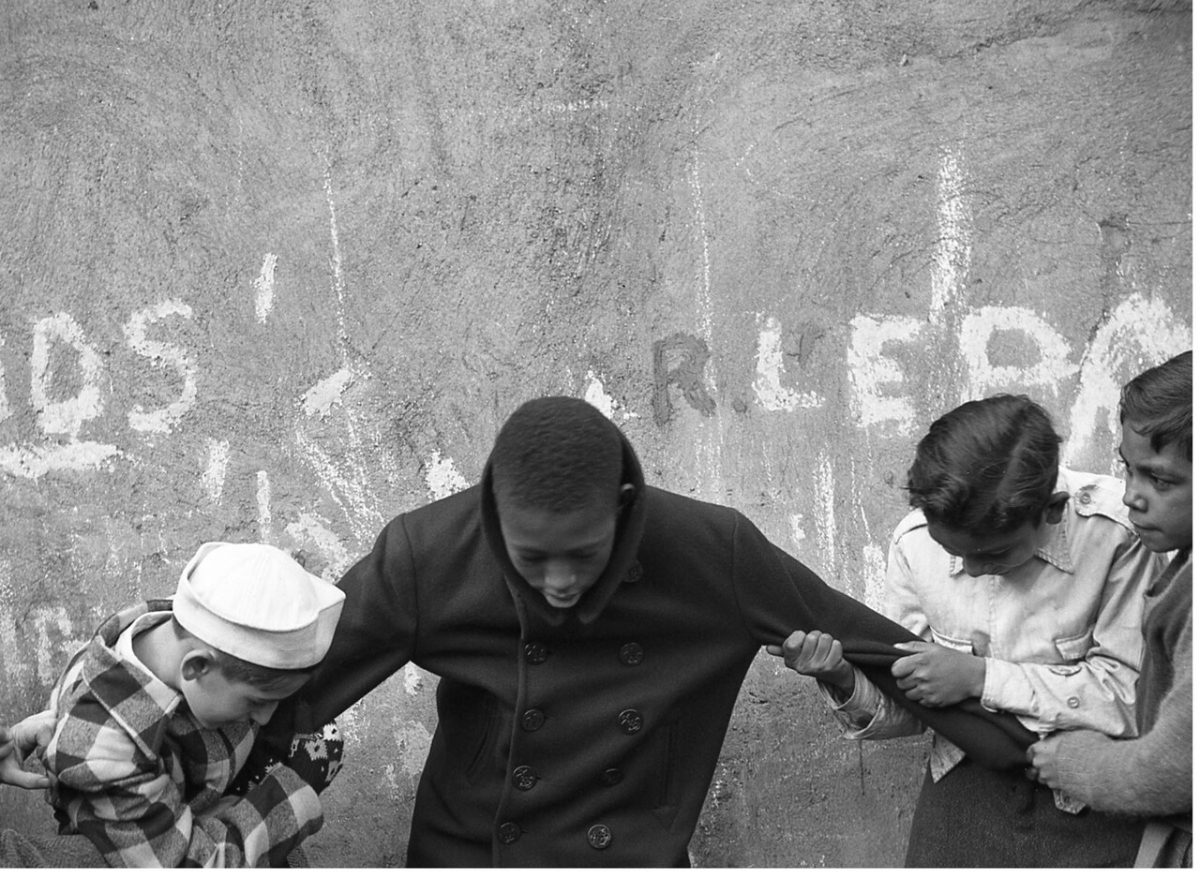
Game of Lynching, East Harlem, 1947
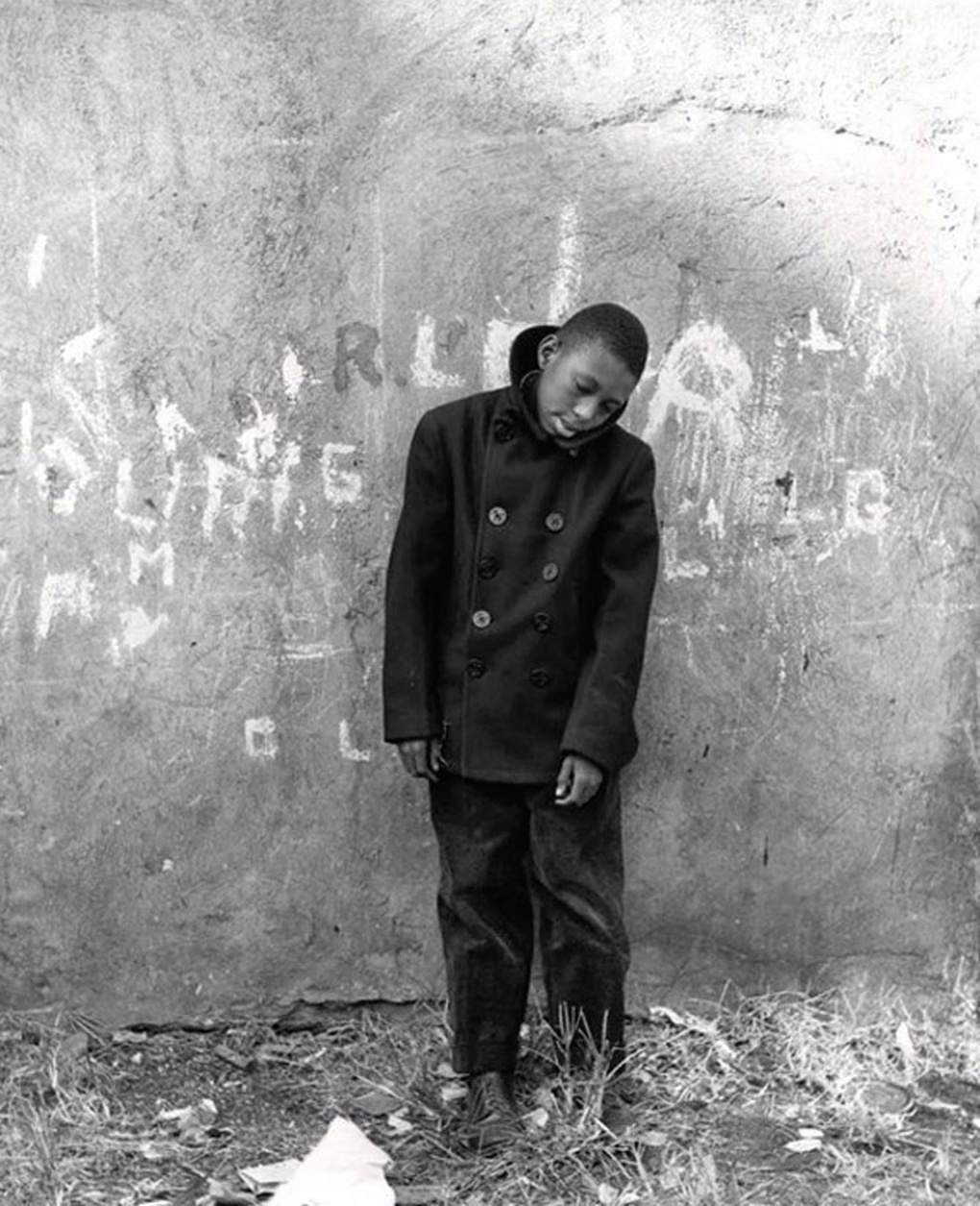
playing at a Lynching, East Harlem, 1947
‘There were no lynchings in New York, but there they are, playing that game and it didn’t matter if they were black or white”
– Vivian Cherry
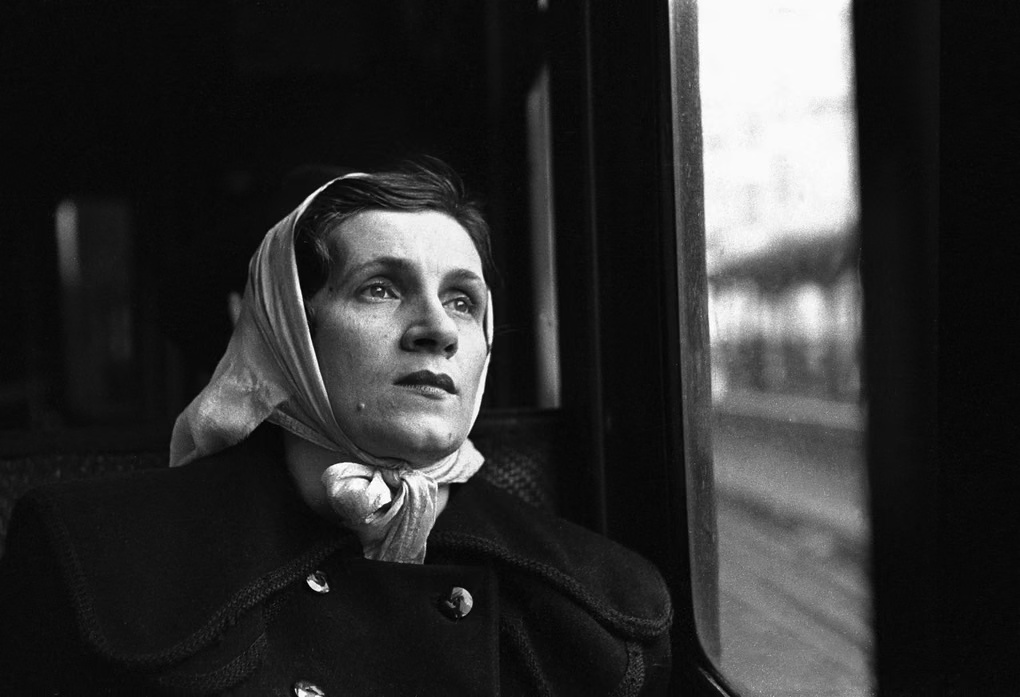

Third Avenue El, early 1950s
“I was walking by a printers called Underwood and Underwood, and I saw a sign saying, ‘Darkroom Help Wanted! – No Experience Necessary!’ I remember it was the ‘no experience’ bit that caught my attention – I didn’t know what the job would entail. At that time they were short on people to print photographs because so many men had been drafted, so I applied and got the job”
– Vivian Cherry
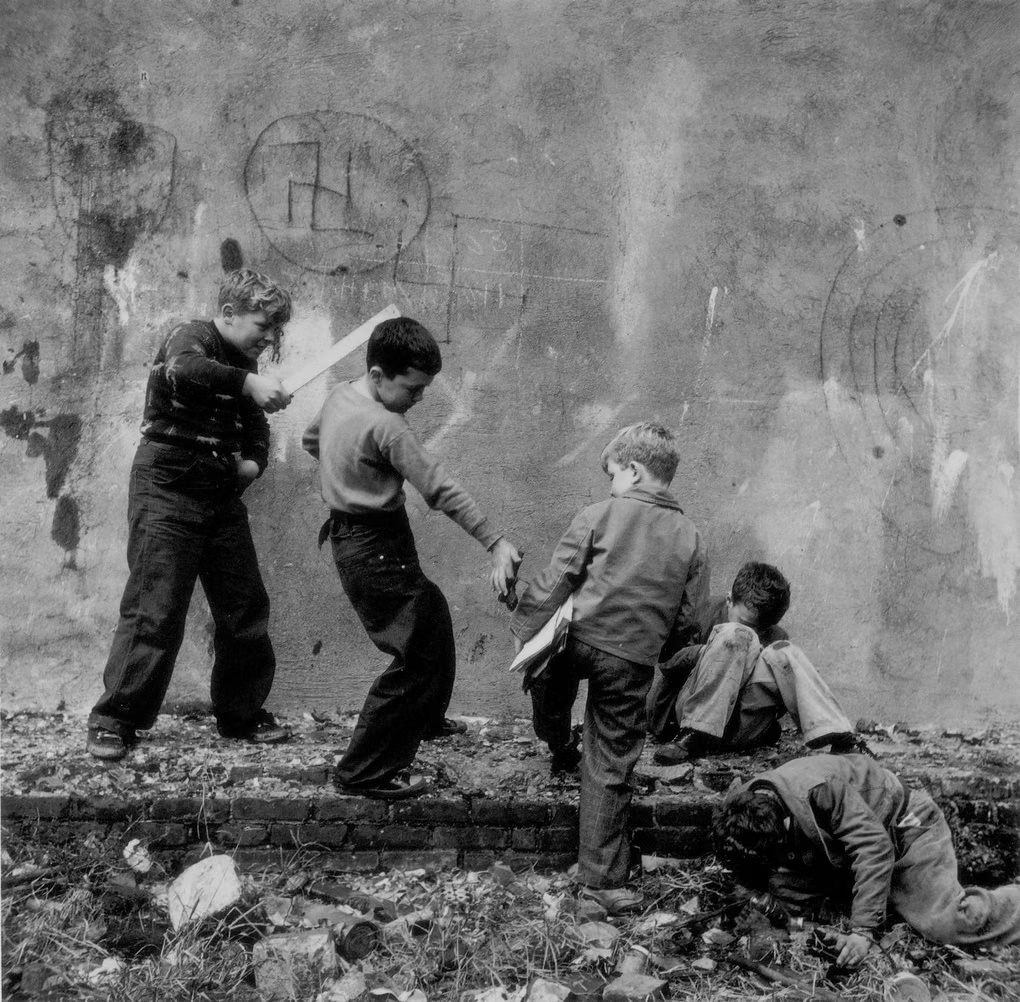
Yorkville, 1947
“It was easier to take pictures of children then than it is now, because they’d always be running around in the open spaces in the city, playing cops and robbers and shooting each other with their fingers”
– Vivian Cherry
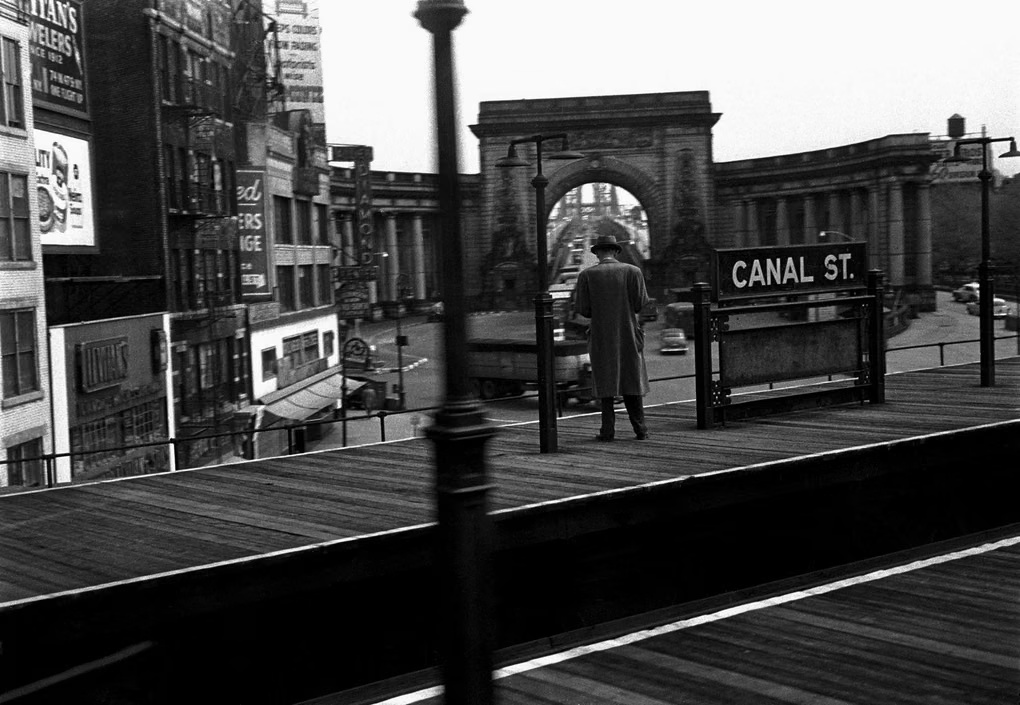

“It’s funny because now everybody has a camera, but back then the people I photographed didn’t pay much attention to me…
“If I saw something interesting, I’d put my camera to my eye straight away and shoot, and if someone started yelling at me, I’d turn around and say, ‘I didn’t do it!’ and then I’d walk away very fast!”
– Vivian Cherry
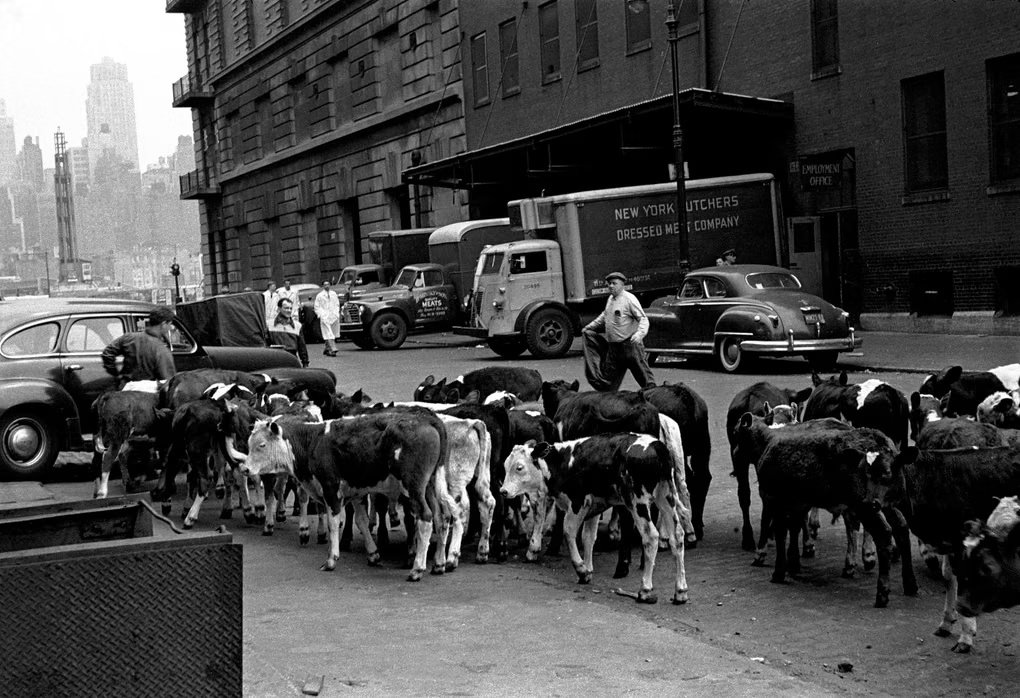
Meatpacking Cows, undated
‘And if somebody didn’t want their photograph taken, I didn’t take it … except that I did too”
– Vivian Cherry
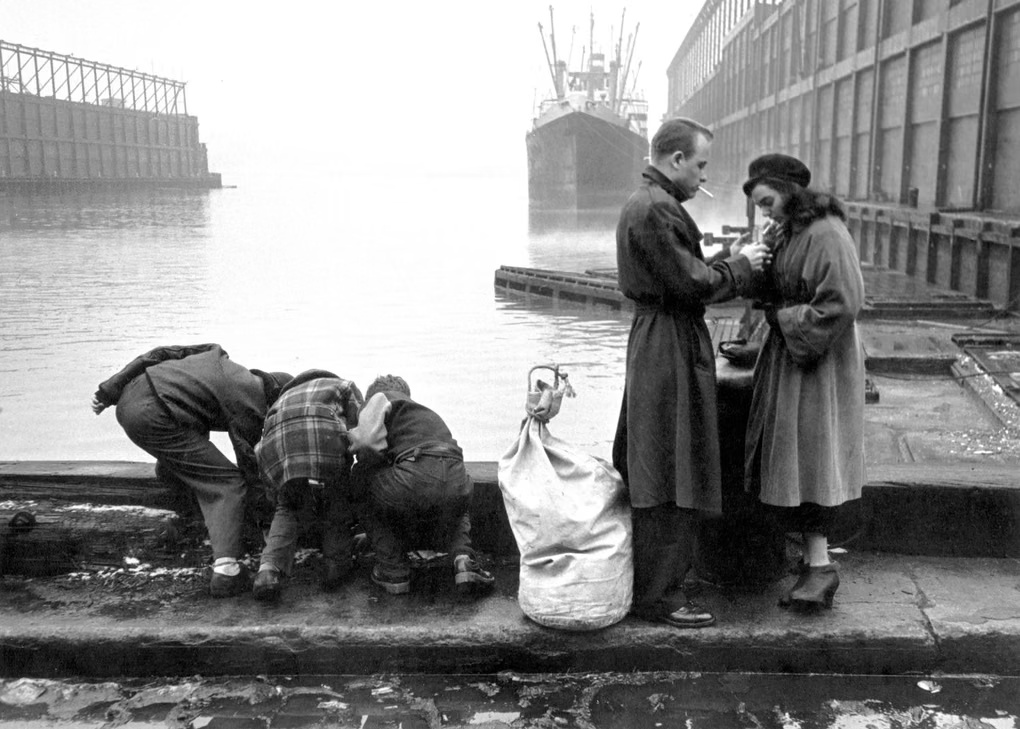
Hudson river, 1955
Vivian Cherry grew up in the Bronx, New York. Her parents, Sasha and Ida (Agranovitch) Cherry, were Russian-Jewish immigrants. After arriving in the United States, her father anglicised his name to Sam and worked as a house painter, while her mother was a homemaker.
Cherry’s earliest ambition was to become a dancer. She studied dance at the Denishawn School in the Bronx before attending Walton High School. She had been making her living as a dancer in nightclubs and on Broadway when a knee injury made her look for other ways to amke a living.
“I was walking by a printers called Underwood and Underwood and I saw a sign saying, ‘Darkroom Help Wanted! – No Experience Necessary!’” she recalled. “I remember it was the ‘no experience’ bit that caught my attention – I didn’t know what the job would entail. At that time they were short on people to print photographs because so many men had been drafted, so I applied and got the job.”
She worked as a printer, and began to think about image-making.“Eventually I got myself a 35mm camera and just started walking the streets taking pictures,” she said.
Cherry’s knee healed and she returned to Broadway, dancing in a production of Showboat, but photography was her calling. “Dancing is wonderful,” she said, “but you don’t get much of reality… Helen Levitt, Dorothea Lange, Paul Strand and Fons Iannelli were my favourites.”
In 1947, she joined the Photo League, founded by Sid Grossman and Sol Libsohn during the Great Depression, and thought about addressing societal issues through photography. She often took pictures on the Third Avenue EL and of families on the stoops of Spanish Harlem.
Cherry continued to photograph her New York for decades. Her work an be seen in permanent collections at MoMA, the Smithsonian and the National Portrait Gallery.
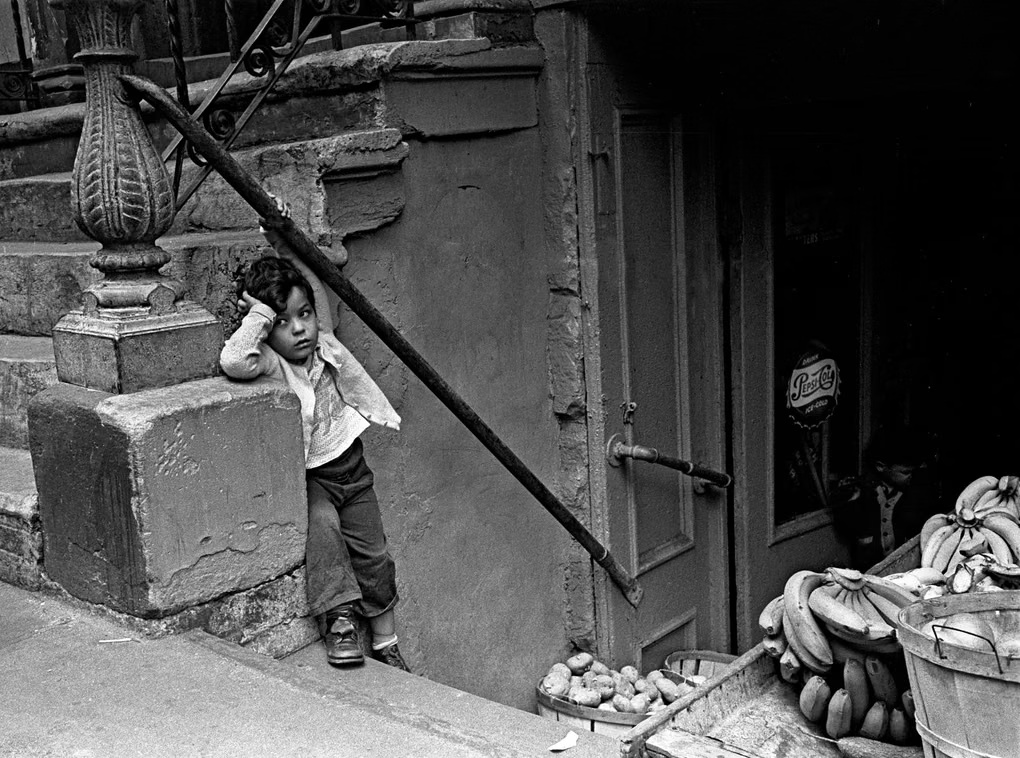
Lower East Side, early 1950s
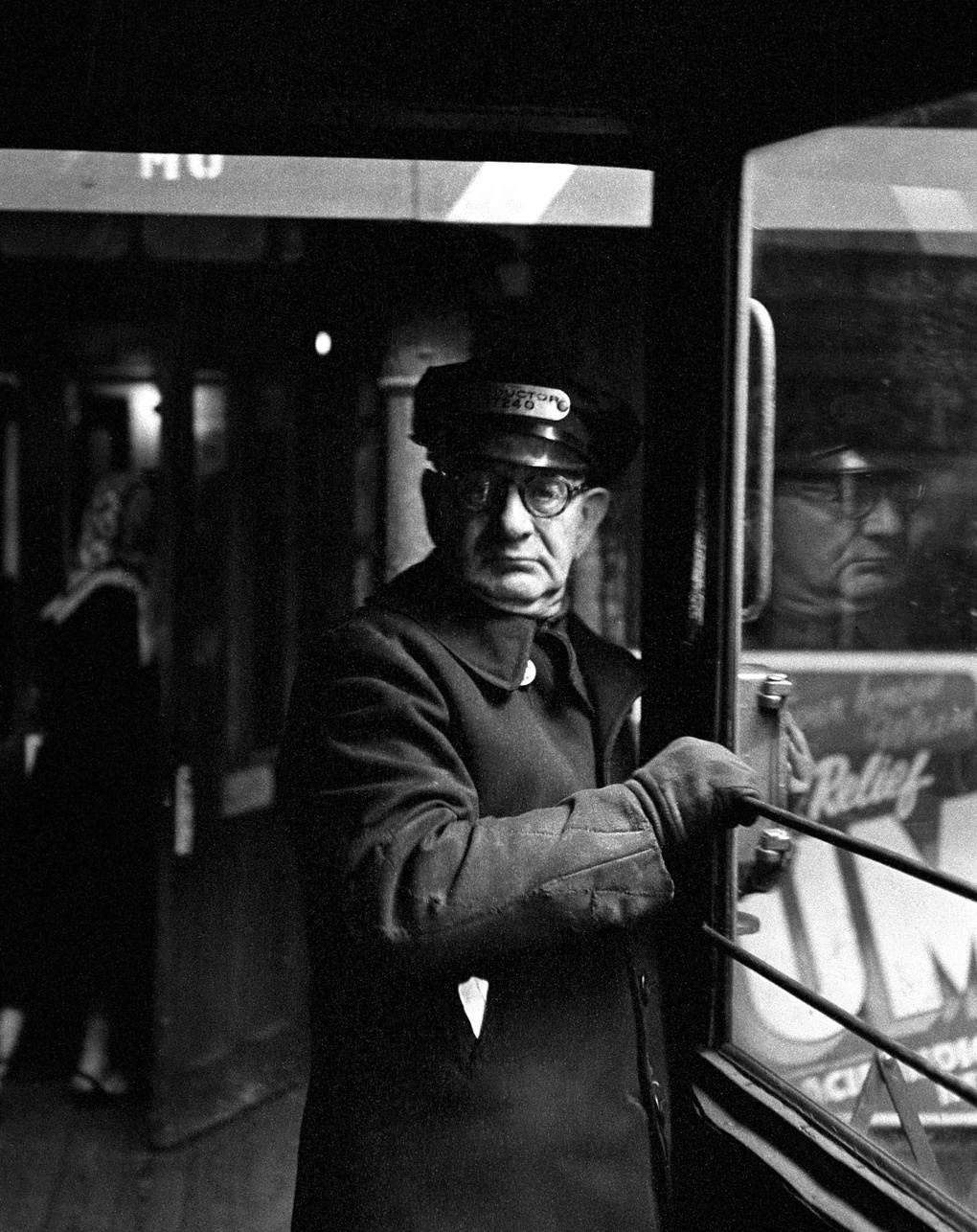
Conductor, Third Avenue El, early 1950s
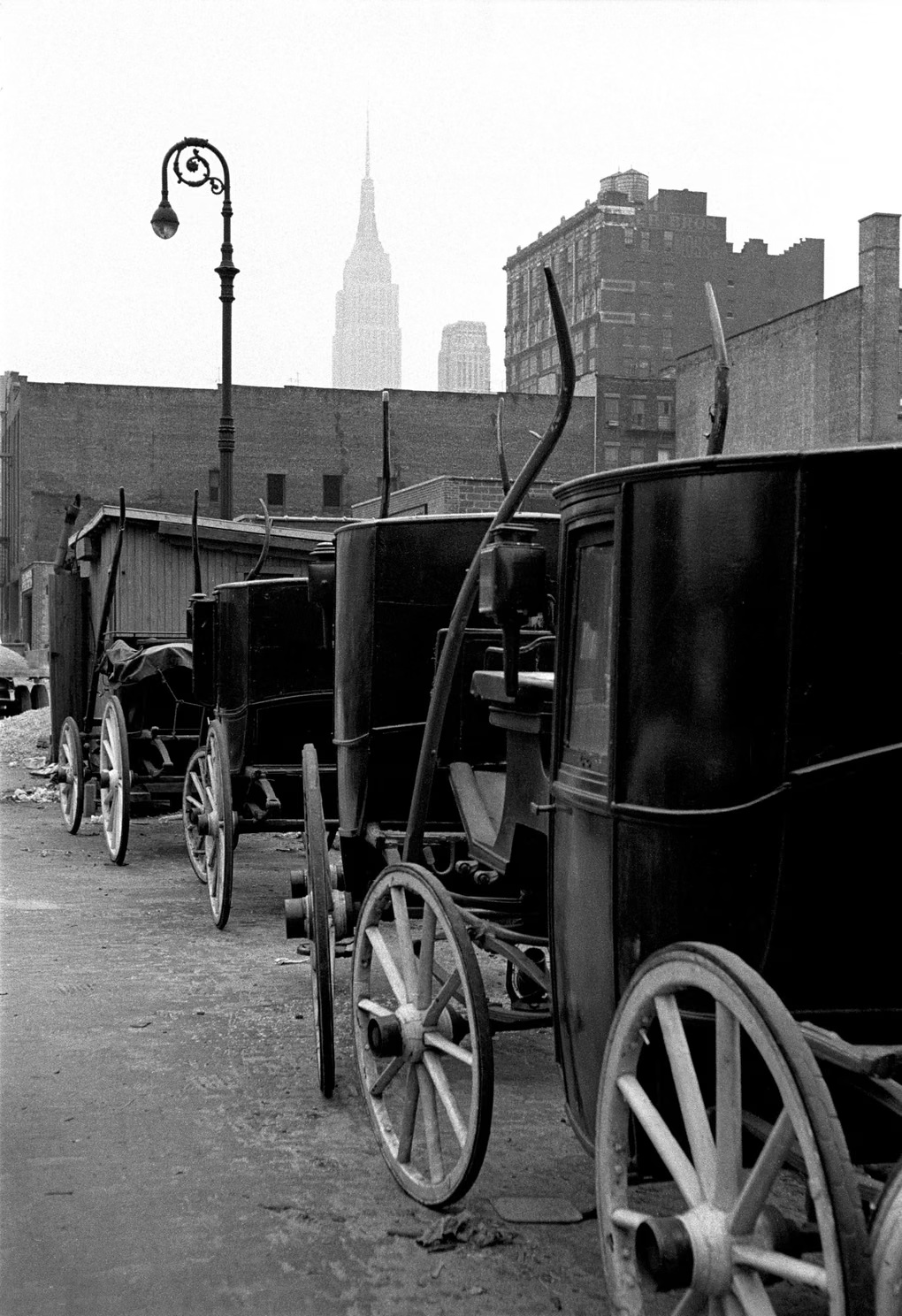
Central Park Carriages, 1952
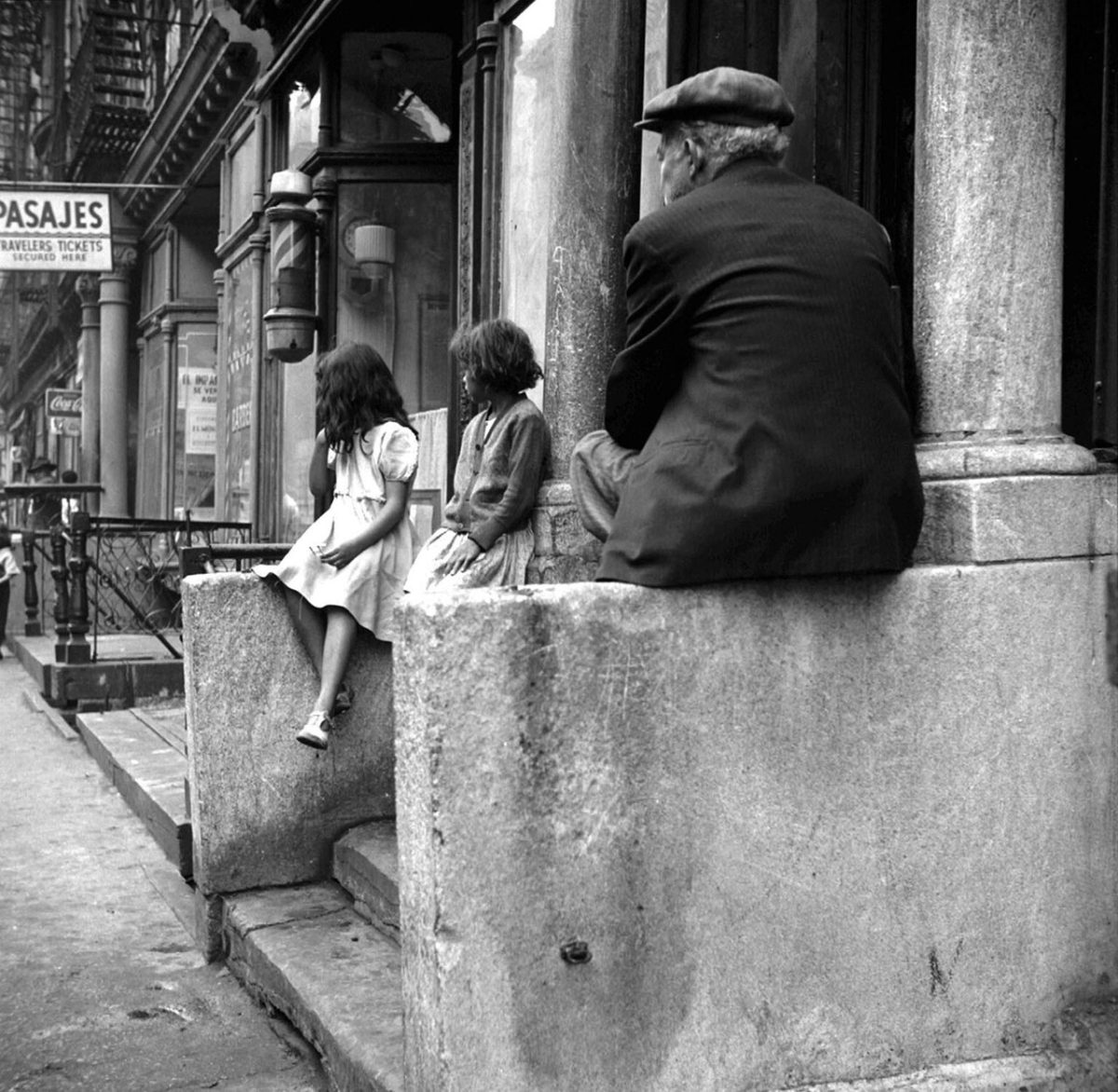
Spanish Harlem, 1948
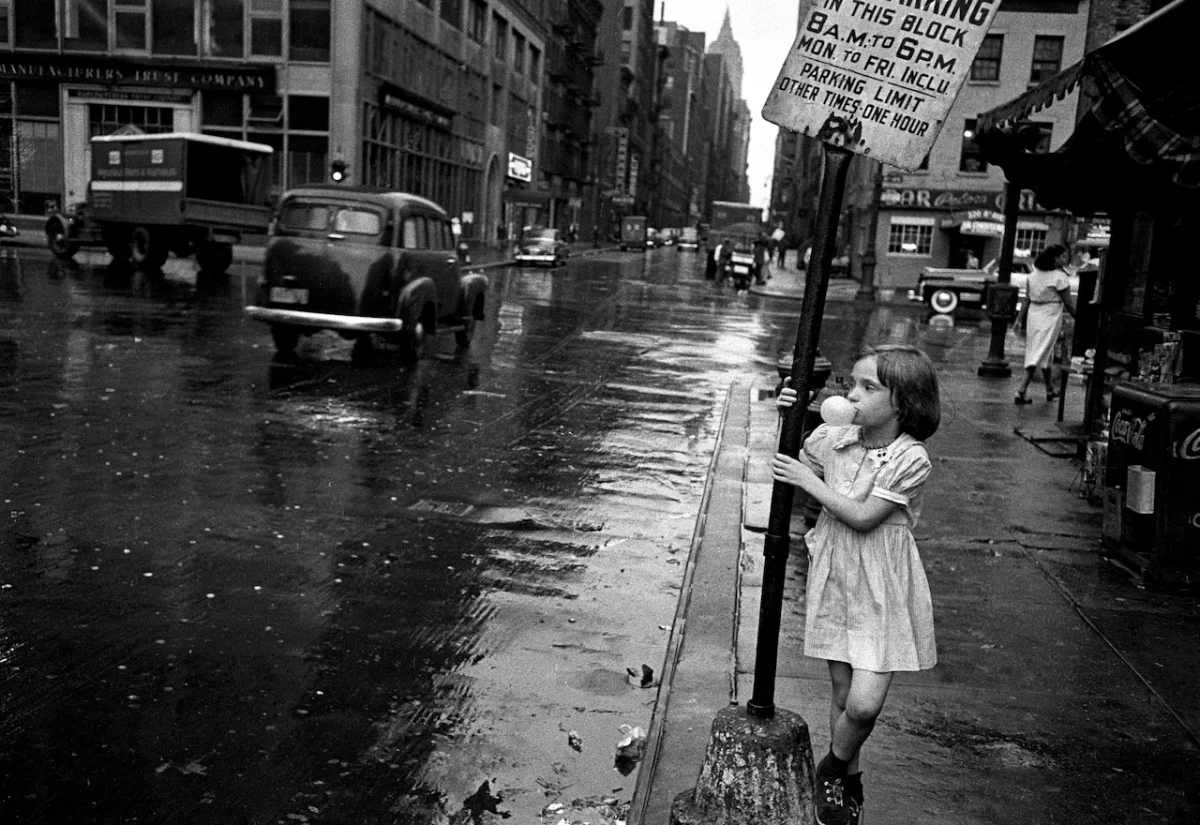
Antoinette, Chelsea, 1954
Via: Daniel Cooney Fine Art, New York
Would you like to support Flashbak?
Please consider making a donation to our site. We don't want to rely on ads to bring you the best of visual culture. You can also support us by signing up to our Mailing List. And you can also follow us on Facebook, Instagram and Twitter. For great art and culture delivered to your door, visit our shop.