‘First thing that happened at the airport was this group of Rastas saw us and they were, like ’hey Johnny Rotten mon! God save the Queen!’. And we looked at each other and smiled and were like, “we gonna be cool here”‘.
—Dennis Morris
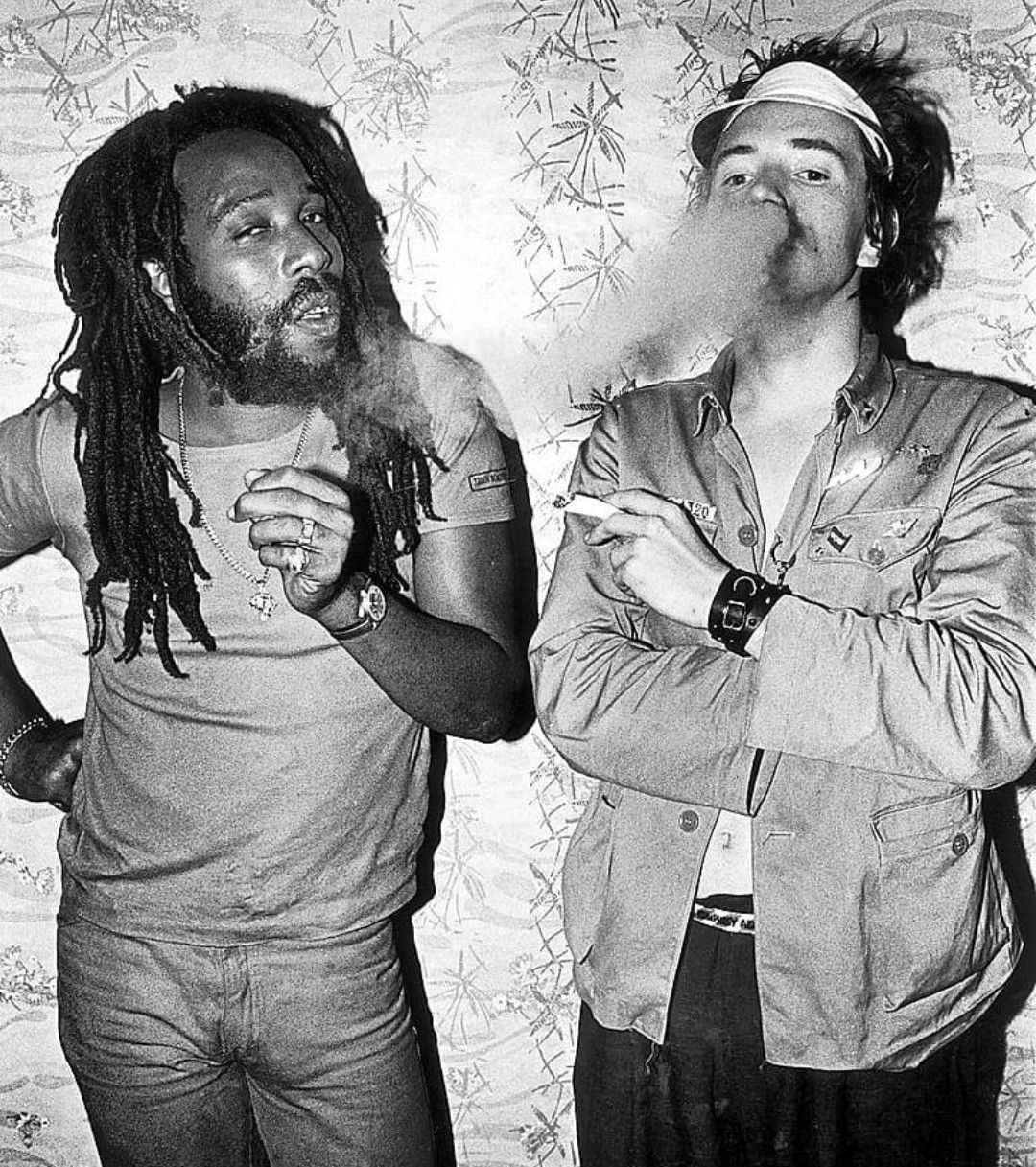
Big Youth and John Lydon in Jamaica, 1978. Photo by DENNIS MORRIS
John Lydon still knows how to piss people off, not that it’s ever been a particularly difficult thing to do. What he no longer does is make interesting music, so his commentary on current political events, while utterly baffling and bizarre, has been fairly easy to ignore. Yet when it comes to musical opinions, Lydon has been an unusually incisive, interesting critic, with a broad appreciation for different musical styles, an openness to cultural juxtapositions and reinventions, and a total lack of respect for rank imitators.
An admirer of reggae and dub before the breakup of the Sex Pistols and his bass-and-reverb heavy next band, Public Image Ltd., Lydon would only begin to get his career back on track after a 1978 visit to Jamaica, where he hung out with DJ and The Clash videographer Don Letts, Jamaican DJ Big Youth, and English photographer of reggae and punk, Dennis Morris, who captured Lydon smoking many a giant spliff, as he had done for the cover photo of Marley’s Catch a Fire.
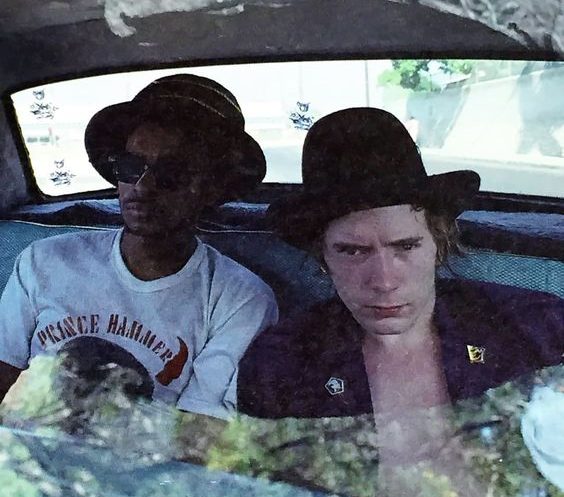
Don Letts and John Lydon in Jamaica, 1978. Photo by DENNIS MORRIS
Virgin’s Richard Branson arranged the trip and even, at one point, had Devo’s Mark Mothersbaugh and Bob Casale flown to the island to propose that Lydon join the band as their lead singer. Mothersbaugh remembers getting so high with Branson that ‘“we just started laughing… until tears were coming out of our eyes… and we’re like, “it’s not you, Richard…. We love Johnny Rotten. That’s great. But what if we just help him start a band.’”
Mothersbaugh’s version of events have led some pop historians to assume Lydon dropped his iconic bondage look and stage name and adopted the suits and corporate satire of PiL at Devo’s urging. It’s a likely story.
In a 2004 interview on PiL’s origins, Lydon makes no mention of their influence. PiL’s impetus came down to ‘nervous energy,’ he says, and ‘lack of money’ after the Pistols went to court with former manager Malcolm McLaren:
‘It made us try harder… Knowing I could lose my house because of that Pistols case, I could lose it if it went wrong, I mean nobody had anywhere to stay. My name was taken off me, Malcolm claimed that he owned the rights to the name Johnny Rotten, he tried to stop us working, it was absurd. When things are like that, don’t wallow in self-pity, get revengeful, and you get revenge by moving on.’
Rotten no more, Lydon also got revenge by going to Jamaica on Richard Branson’s dime, smoking copious amounts of ganja, and immersing himself in dub and reggae as it began to make its classical emergence onto the world stage via Bob Marley and the Wailers and Island Records.
The Space Echo-drenched sound of late-1970’s reggae, and the studio-as-instrument way of working, are all over PiL’s early recordings, especially their debut, as Public Image, First Issue (an album Virgin considered too obscure for release in the US). The influence of the trip on Lydon’s subsequent development as an artist is unmissable. Prior to Jamaica, he had been creatively adrift.
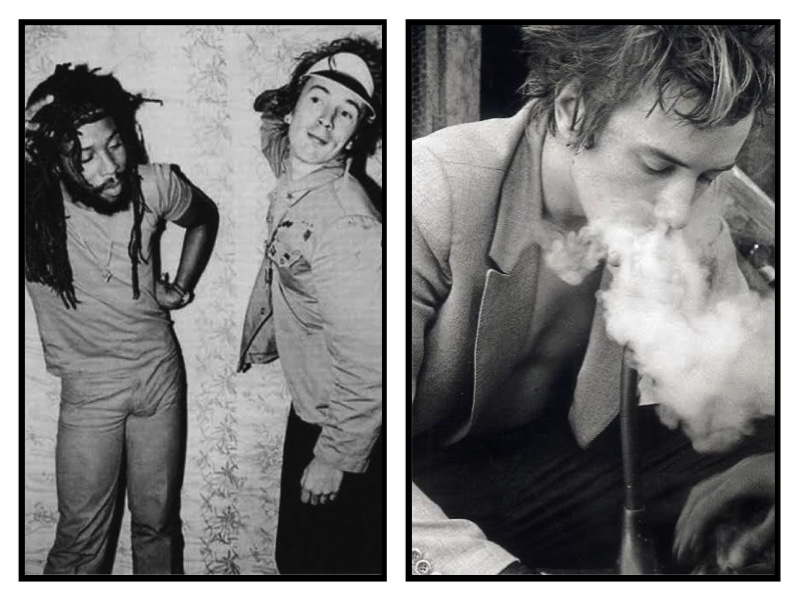
Photos by DENNIS MORRIS
As Morris tells it, he’s the one who suggested they bring the ex-Pistol along. The original idea had been for Branson, accompanied by Morris, Letts, and music journalist Vivien Goldman, to lure the island’s biggest stars to Virgin with cash advances. ‘I said to Branson, “why don’t you take John too?”, Morris tells Simon Reynolds. “He loves reggae and knows a lot about it. And he’s looking for something to do”‘:
‘Branson had booked an entire floor at the Sheraton, Kingston’s flashest hotel, and Lydon and his companions lounged by the pool, where they chatted with visiting reggae royalty while gorging on lobster. (Much to the distaste of the devout Rastafarian musicians, for whom shellfish—“anything that crawls or creeps”—was forbidden by ital, Rasta’s dietary laws). The reggae greats—U Roy, The Mighty Diamonds, The Heptones, The Abyssininans–trooped to the Sheraton because word got out that there was a crazy Englishman offering big money for their music, cash in hand. “I think it was Big Youth first. He comes to the hotel with a cassette player and we’re all sitting around the pool listening to his tape. Richard Branson says, ‘Yeah, l like it… but what do you think, John?” And Lydon goes, “yeah, yeah, it’s great”. So Richard says, “okay, what do you want for it?” Big Youth says, “20 grand”. And Branson, says “Fine… Come back tomorrow and I’ll have it for you’. Off he’d go to the bank. After that we had people coming to see us every day'”.
Lydon was by then a minor celebrity in Jamaica. Letts documented him on film hanging out with the Congos and several other big names. Rastas recognized him at the airport, Morris remembers, and shouted, ‘hey Johnny Rotten mon! God save the Queen!’
John Lydon in Jamaica, 1978, Footage by Don Letts
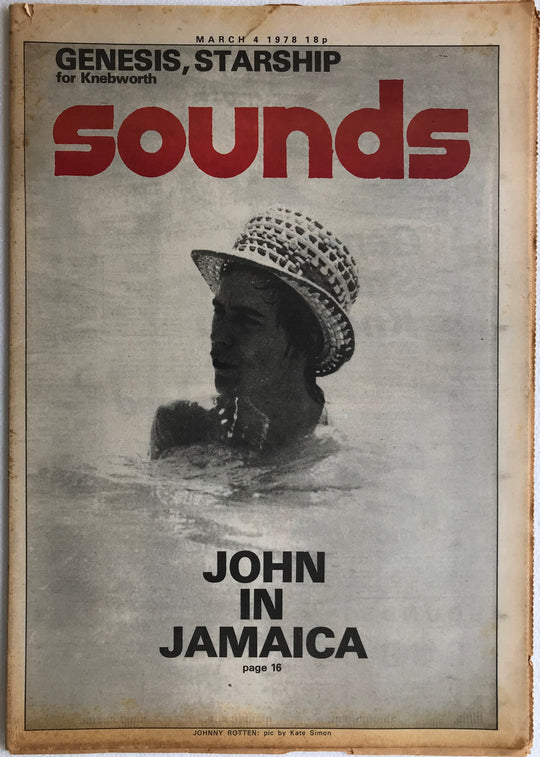
Kate Simon snapped a cover photo for Sounds magazine, who covered the trip. Meanwhile, McLaren ‘sent a minion,’ Reynolds writes, ‘John “Boogie” Tiberi, to Kingston to film the ex-Pistol being confronted with the cryptic question “Who Killed Bambi?” When Lydon refused to cooperate, Boogie was reduced to snooping around the Sheraton poolside area and trying to shoot footage of the singer surreptitiously.’ Finding him lurking him the bushes, the party pushed him in the pool.

As Morris remembers, the visit was hardly all stoned shenanigans for Lydon. It was, in fact, so creatively transformative it changed the direction of his life and sound. ‘John was picking up a lot of information, a lot of vibes,’ he says, especially from dub pioneer producer Lee “Scratch” Perry. ‘Scratch was the most charismatic figure we met in Jamaica, a total genius. And I think it was at the Black Ark [Perry’s studio], and going to sound systems, and just hanging out in Jamaica, that led John to conceive the idea for Public Image Ltd’.
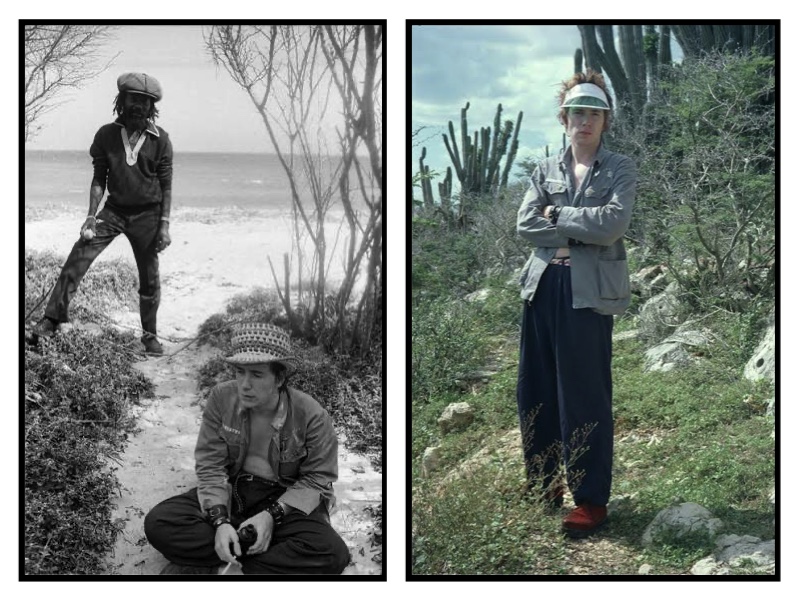
Photos by DENNIS MORRIS
Morris’ claim that the Jamaica trip birthed the idea of PiL seems to be corroborated by bassist Jah Wobble and guitarist Keith Levene’s accounts. “The whole reaon PiL worked at all,” Levene has said, “was that we were all just total dub fanatics.” Given the evidence, the Jamaica trip in 1978 turns out to be much more than a weed-filled vacation, as it’s described, for a burned-out Johnny Rotten. The visit was also a major creative turning point for Lydon, and another one of many strands that join together punk, post-punk, reggae, and dub inseparably.
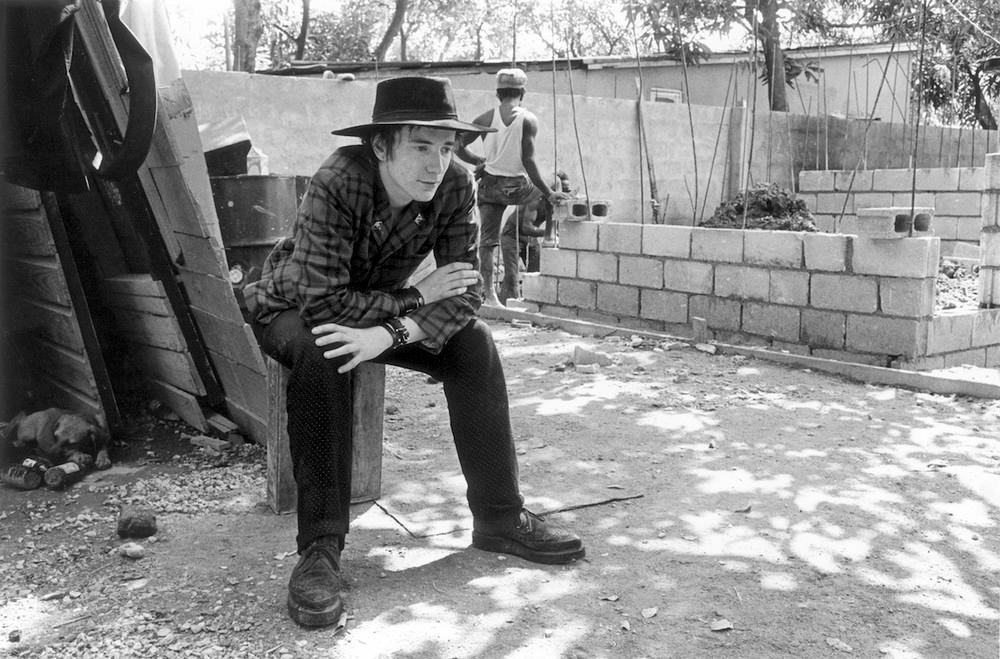

Photo by DENNIS MORRIS
Would you like to support Flashbak?
Please consider making a donation to our site. We don't want to rely on ads to bring you the best of visual culture. You can also support us by signing up to our Mailing List. And you can also follow us on Facebook, Instagram and Twitter. For great art and culture delivered to your door, visit our shop.