“America’s public enemy number one in the United States is drug abuse. In order to fight and defeat this enemy, it is necessary to wage a new all out offensive.”
– Richard Nixon, War on Drugs speech 17 June 1971, Washington DC, USA
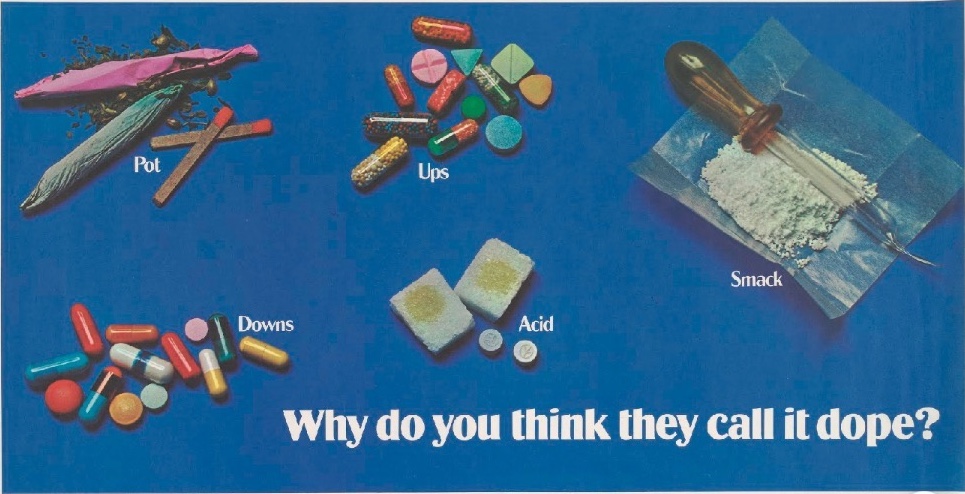
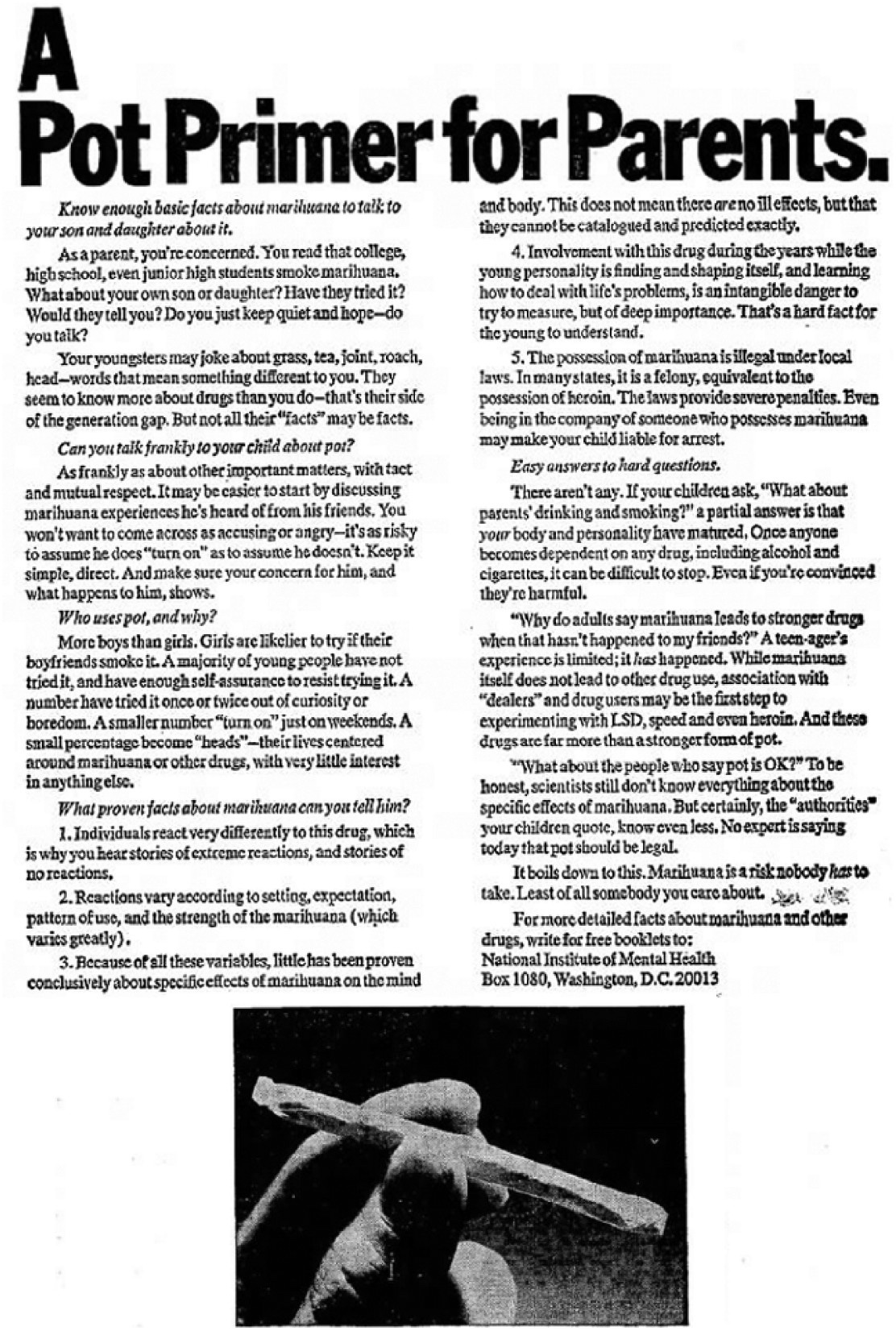
Nixon anti-drug ad, 1971-73
Some people can’t seem to help but adore U.S. Presidents who commit crimes in office, even decades after their fall. One columnist, for example, recently admitted to inventing something called “Nixonmaxxing,” which…. Well…. You can pay to take that wall down yourself….
Maybe modern horrors can make Nixon seem quaint, even cuddly. But there’s no denying his malice, copiously documented in his own words, nor his desire to destroy his political enemies above all else. As for the so-called ‘war on drugs’, which he announced, guns a-blazing, in 1971, he confronted a genuine problem with a far worse solution.
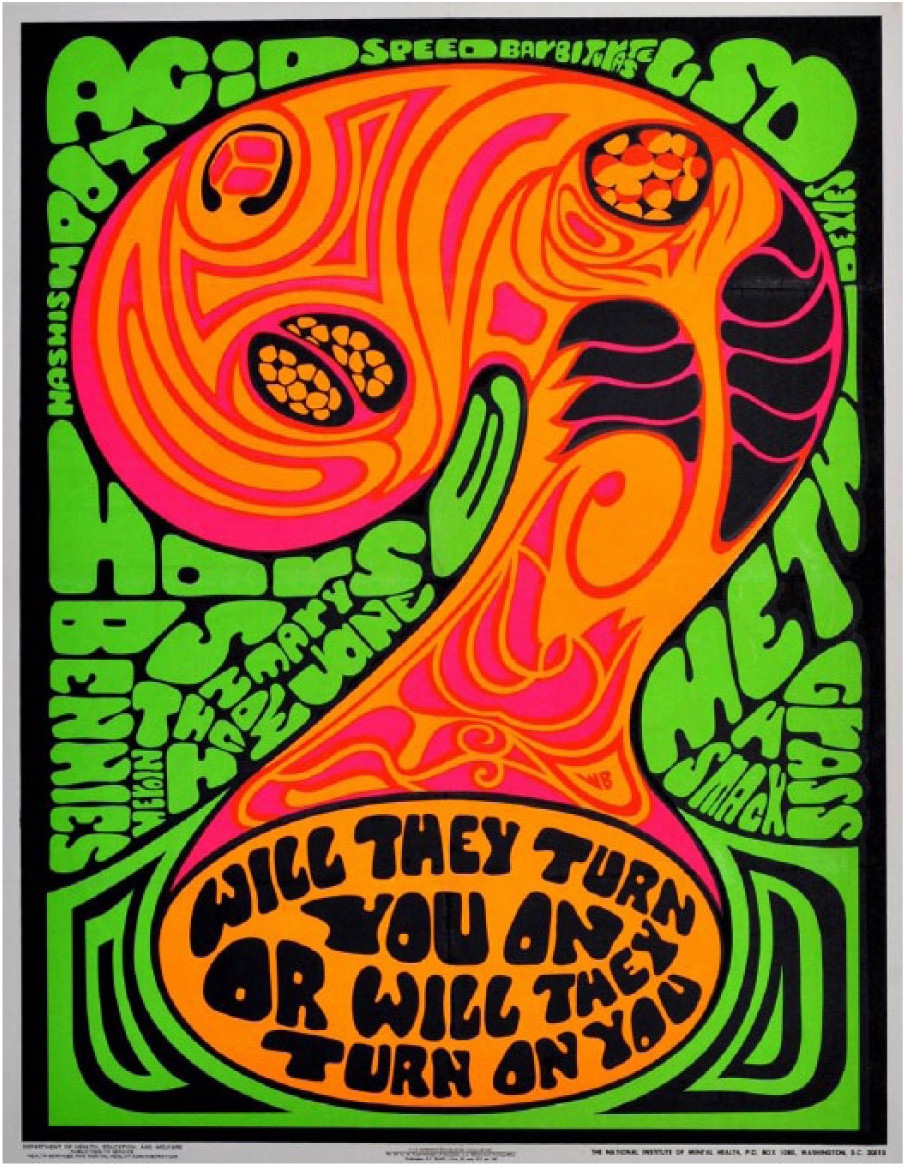
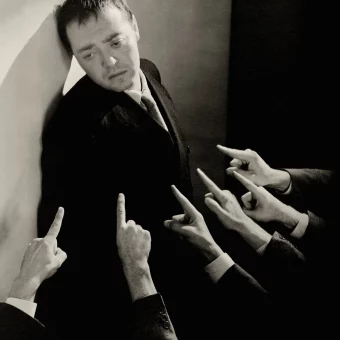
Nixon anti-drug ad, 1971-73
An uptick in illicit drug use by a number of different groups, including thousands of returning Vietnam vets addicted to heroin, became something else entirely; a pretense for widening Nixon’s ongoing revenge campaign against the wrong kinds of Americans and the wrong politics. The words of Nixon’s aide John Ehrlichman bear frequent repeating:
‘We knew we couldn’t make it illegal to be either against the war or black, but by getting the public to associate the hippies with marijuana and blacks with heroin. And then criminalizing both heavily, we could disrupt those communities. We could arrest their leaders, raid their homes, break up their meetings, and vilify them night after night on the evening news. Did we know we were lying about the drugs? Of course we did.’
—John Ehrlichman
In private, Nixon admitted he knew marijuana was “not particularly dangerous.” In public, he criminalized the drug and its users with extreme prejudice. Acting as a Nixon apologist, playwright Justin Sherin argues that the president’s anti-drug sentiments weren’t motivated by bigotry or racial animus. Nixon was just really “square.” The very same argument quotes Nixon on the Jews in conversation with Bob Haldeman, in “lines that are immortal in dorm rooms around the world” (really?):
‘You know, it’s a funny thing, every one of the bastards that are out for legalizing marijuana is Jewish. What the Christ is the matter with the Jews, Bob? What is the matter with them? I suppose it’s because most of them are psychiatrists.’
—Richard M. Nixon
Any attempt to argue that Richard Nixon did not act out of prejudice collapses into incoherence. His ‘new, all-out offensive’ (his words: the press invented the phrase ‘war on drugs’; Nixon used it only once) had two related effects. Abroad, his administration ‘sparked off a wave of extreme violence,” writes Benjamin T. Smith at Time, “which many drug producing countries in Central and Latin America are still living with today.”
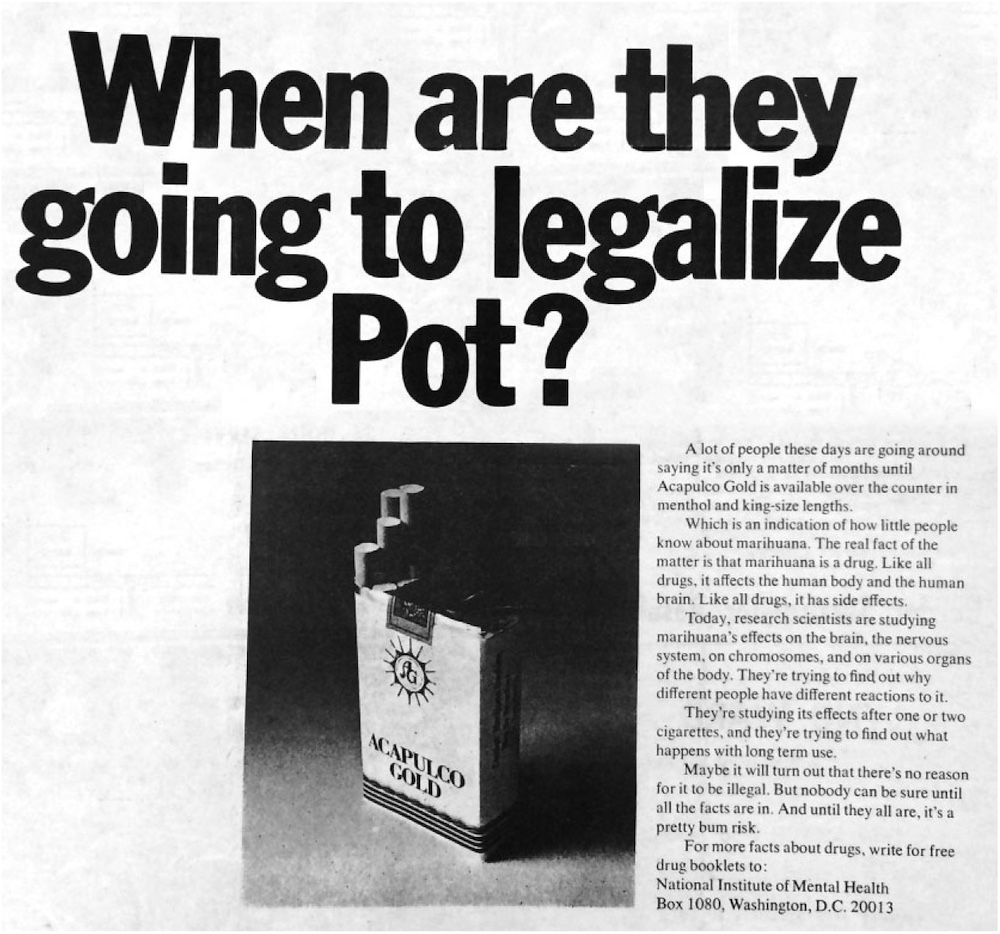
Nixon anti-drug ad (really), 1971-73
Back in the States, Nixon’s anti-drug campaign also unleashed violence against the public. But the anti-drug approach at home combined police power with soft power, in the form of an awareness campaign that had unintended consequences of raising stigma, reducing treatment, and possibly creating more demand.
The first campaign ran for three years, from 1971 to 1973, with television spots, like that above, billboards, and print advertisements in newspapers and magazines. These were created by the Advertising Council, and their attempts at shock, subversion, and the appropriation of hip, hippie aesthetics missed the mark.
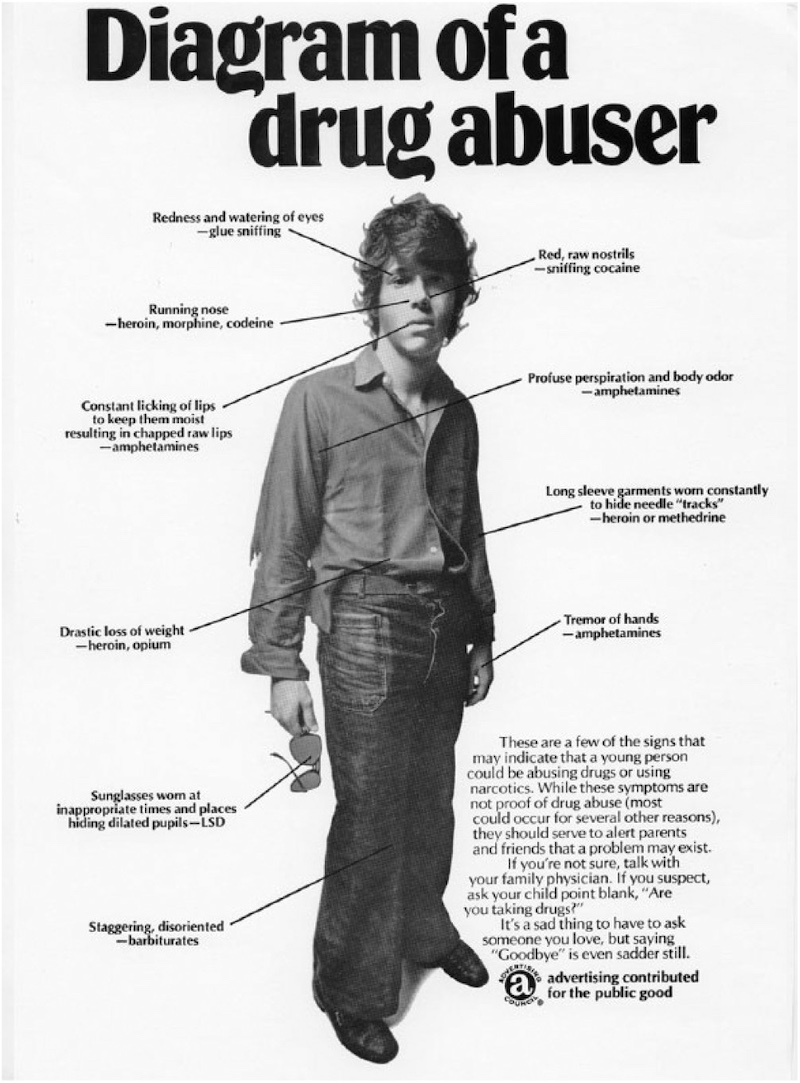

Nixon anti-drug ad, 1971-73
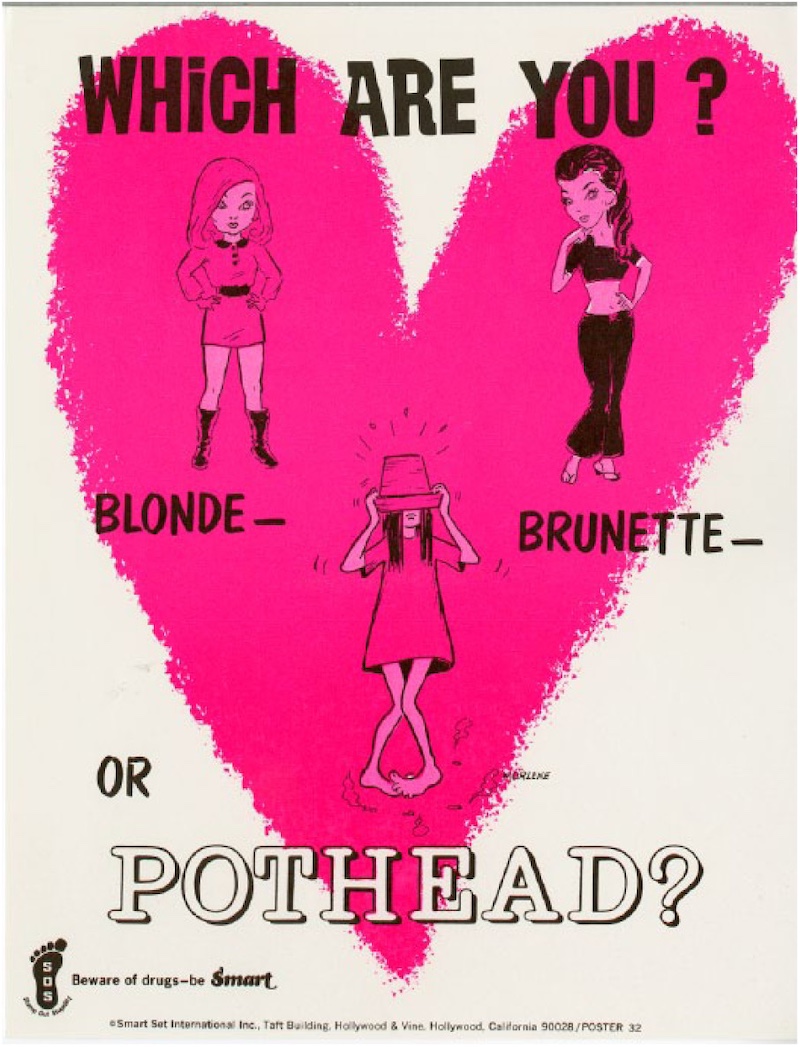
Nixon anti-drug ad, 1971-73
The Report of the Temporary New York State Commission to Evaluate the Drug Laws summed up their adverse findings after the campaign, in 1974, writing ‘When we spoke to employers about hiring reformed addicts, we found that a number of them had been persuaded, at least in part, by such advertisements as “Don’t Join the Living Dead” and “Why Do You Think They Call it Dope”, that addicts were fools who could never be effectively rehabilitated’.
The Nixon administration’s anti-drug ad campaign didn’t only increase stigma against drug users among potential employers; it made it harder for actual addicts to recover. The Commission “found widespread agreement among treatment experts that such advertisements were counter-productive and that by lowering the self-esteem of drug users even further, they were deterrents to abstinence and rehabilitation.”
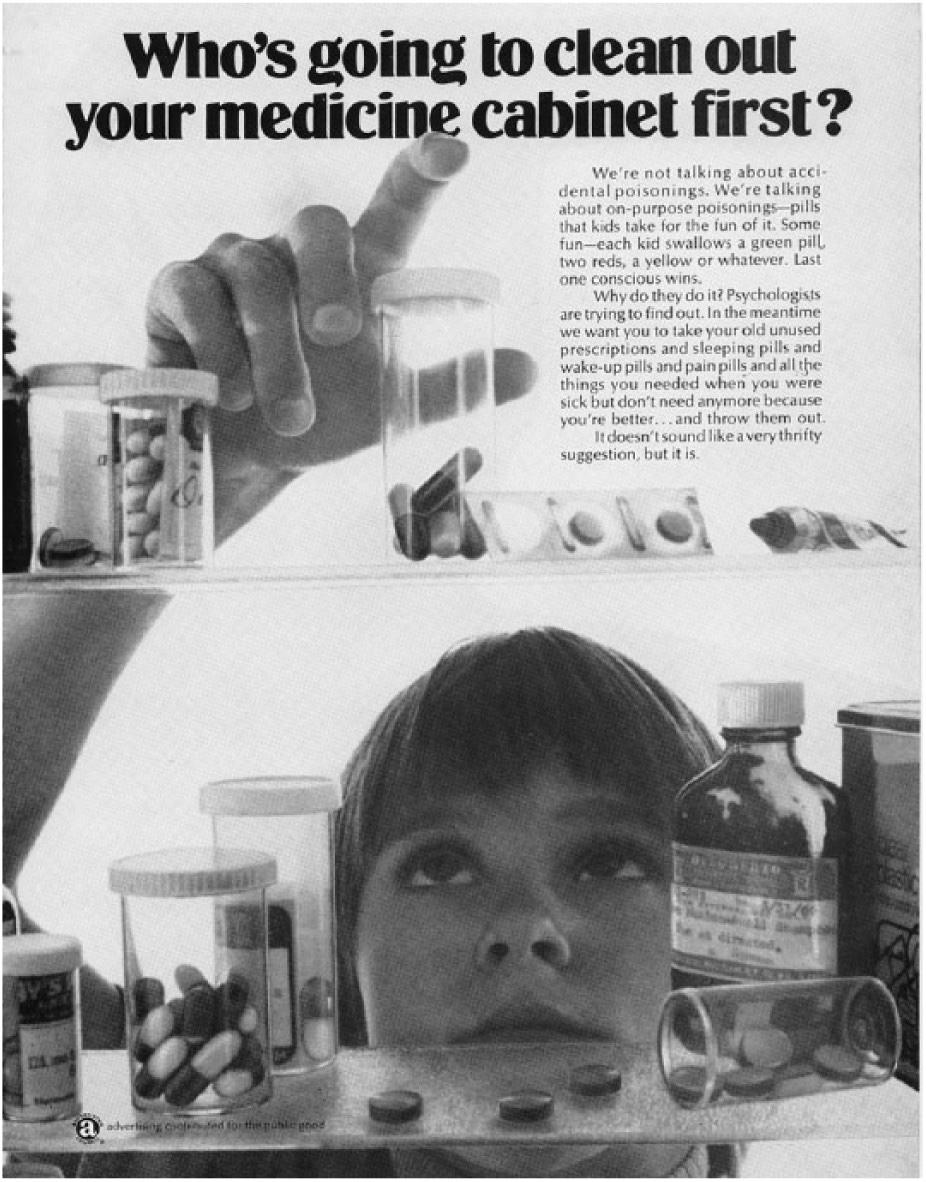

A Nixon anti-drug ad shows kids exactly where to find drugs
These were precisely the effects many experts worried about. Anti-drug ads could activate a latent desire to get high. Secretary of Health Elliot L. Richardson remarked in 1971 that anti-drug advertising might “stimulate interest in drugs rather than act as a deterrent.” The following year, Helen Nowlis, the Director of Drug Education for the Department of Health, put the same concern more colorfully, but in support of the Nixon ads, which were supposed to make drugs look uncool:
‘For those who did not use drugs and probably never would use drugs because they perceive drug use as incongruent with their values, their goals and their lifestyles … the typical information program reinforces their already strong resolve and may even add a dash of self-righteousness. For others who value adventure and are daring, whose goals and values are not traditional or are wavering, who feel that they have little to lose and possibly much to gain, the same program may indeed promote at least experimentation.’
Nixon-era anti-drug ads appealed to shame and promised ostracism, and anyone who has worked in addiction treatment can tell you how counter-productive such strategies are. Weirdly wrapping its value judgments in semiological statements indistinguishable from product marketing, Nixon’s anti-drug campaign reinforced the symbolic violence of market logics while his administration began the real violence of a never-ending drug war.
Would you like to support Flashbak?
Please consider making a donation to our site. We don't want to rely on ads to bring you the best of visual culture. You can also support us by signing up to our Mailing List. And you can also follow us on Facebook, Instagram and Twitter. For great art and culture delivered to your door, visit our shop.