“The major rager on the four-string motherfucker.”
– Dave Mustaine describing Metallica bassist Cliff Burton
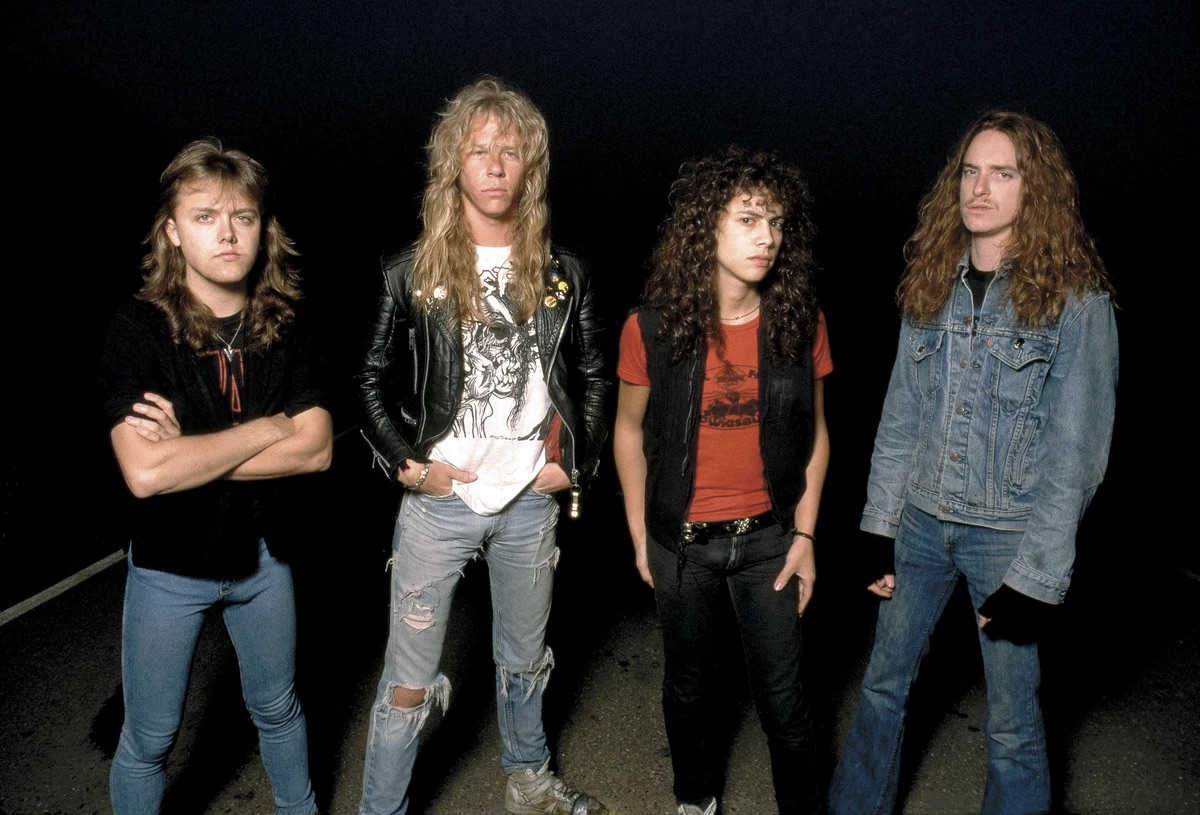
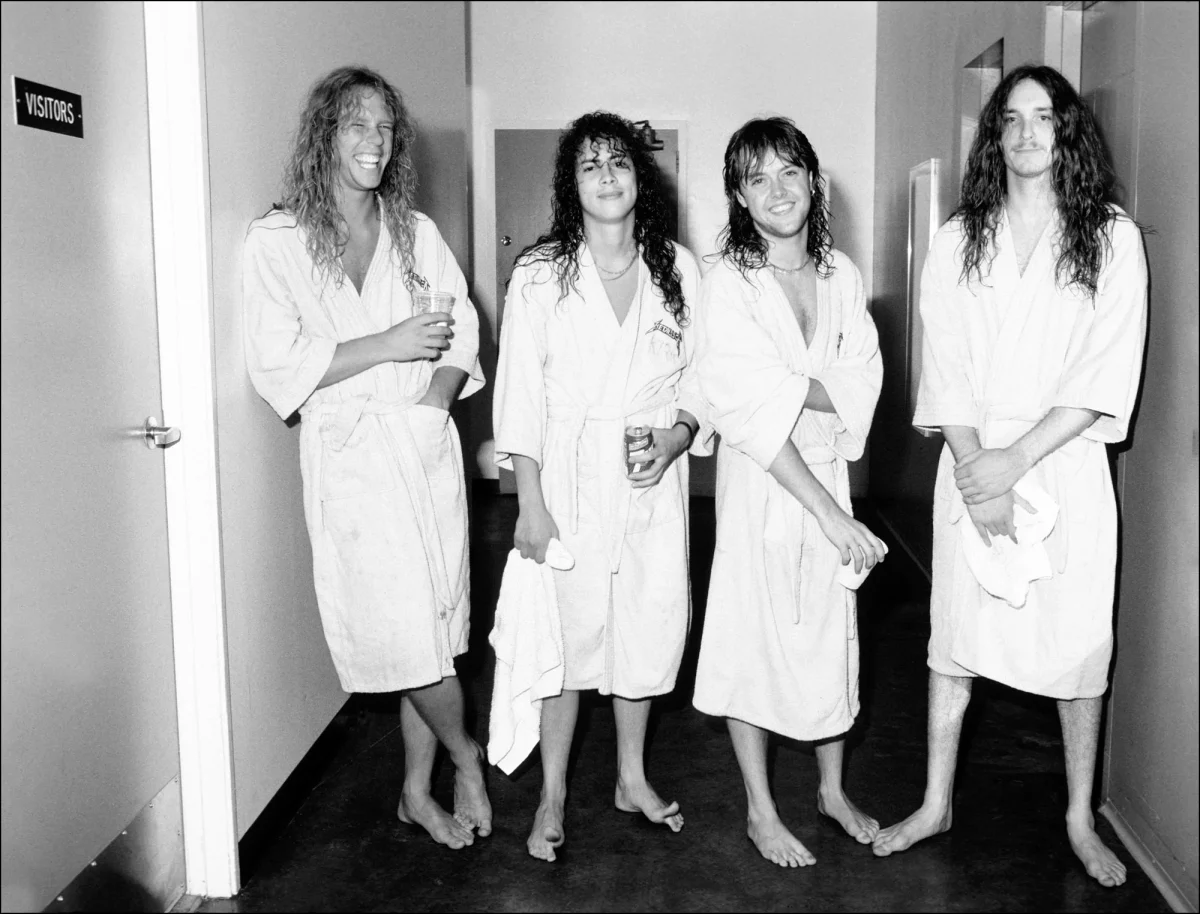
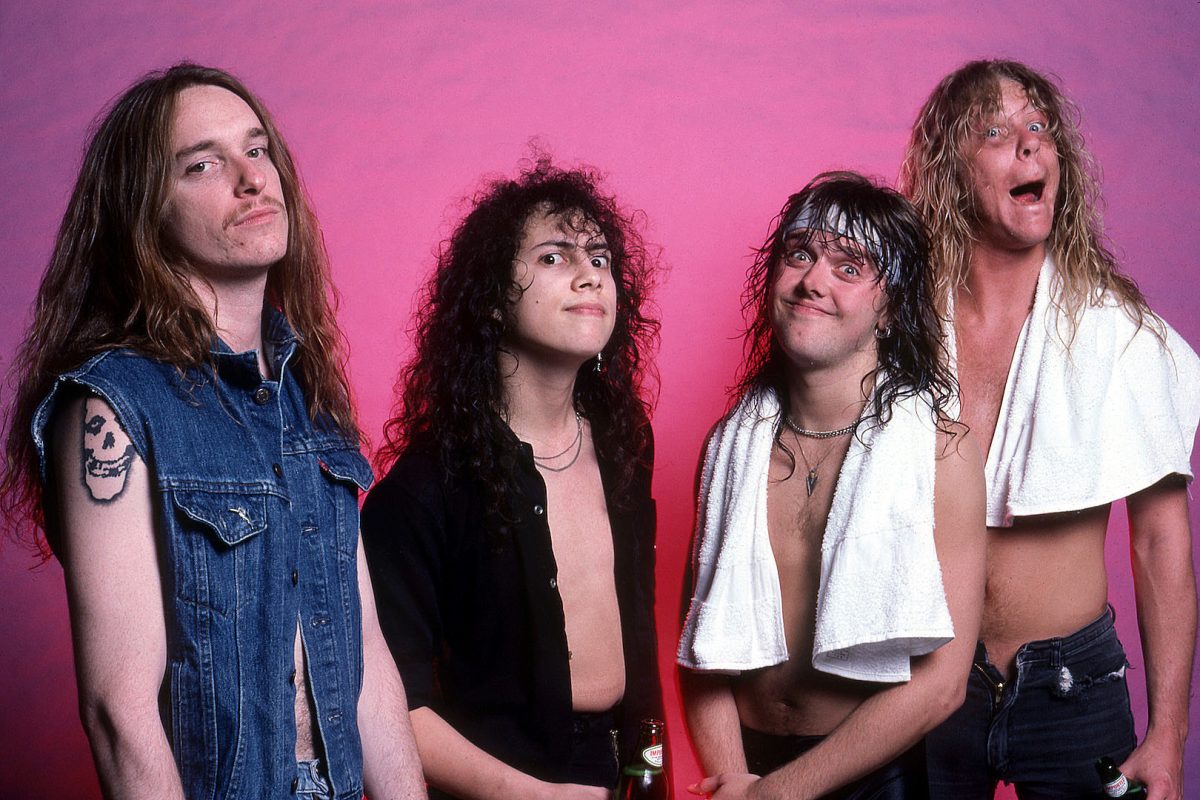
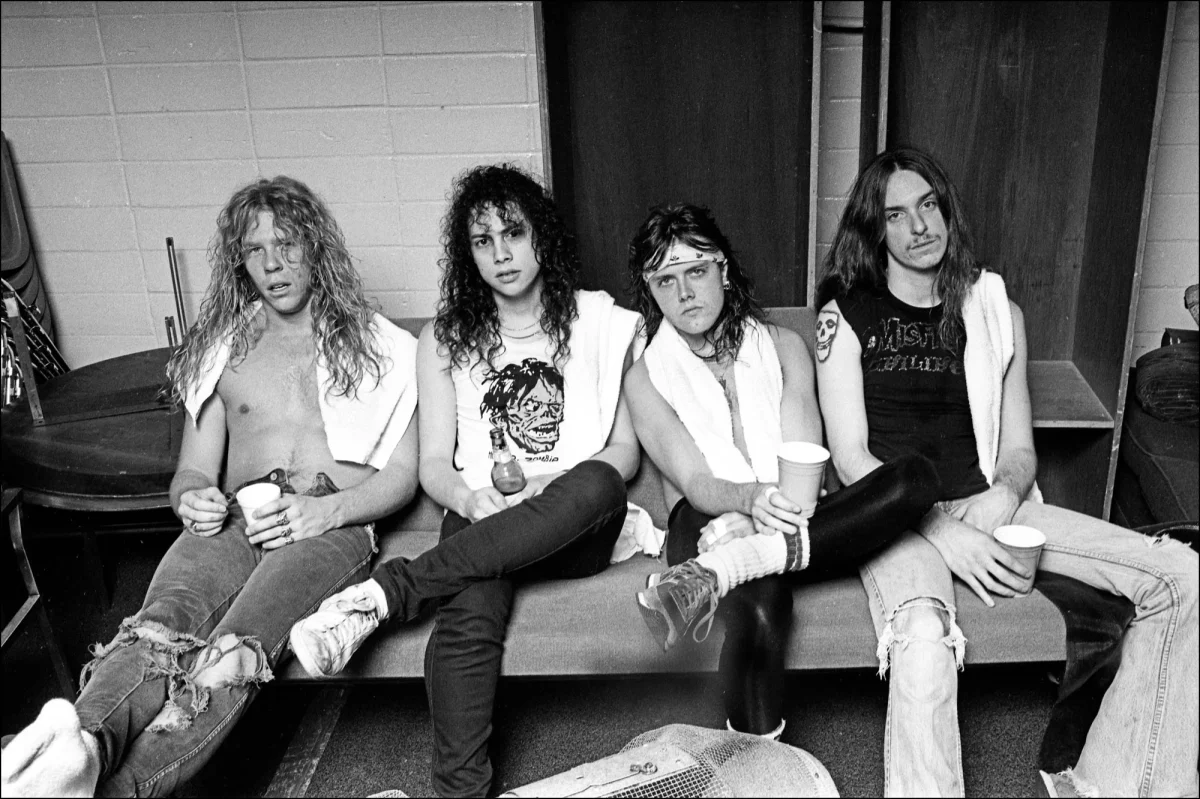
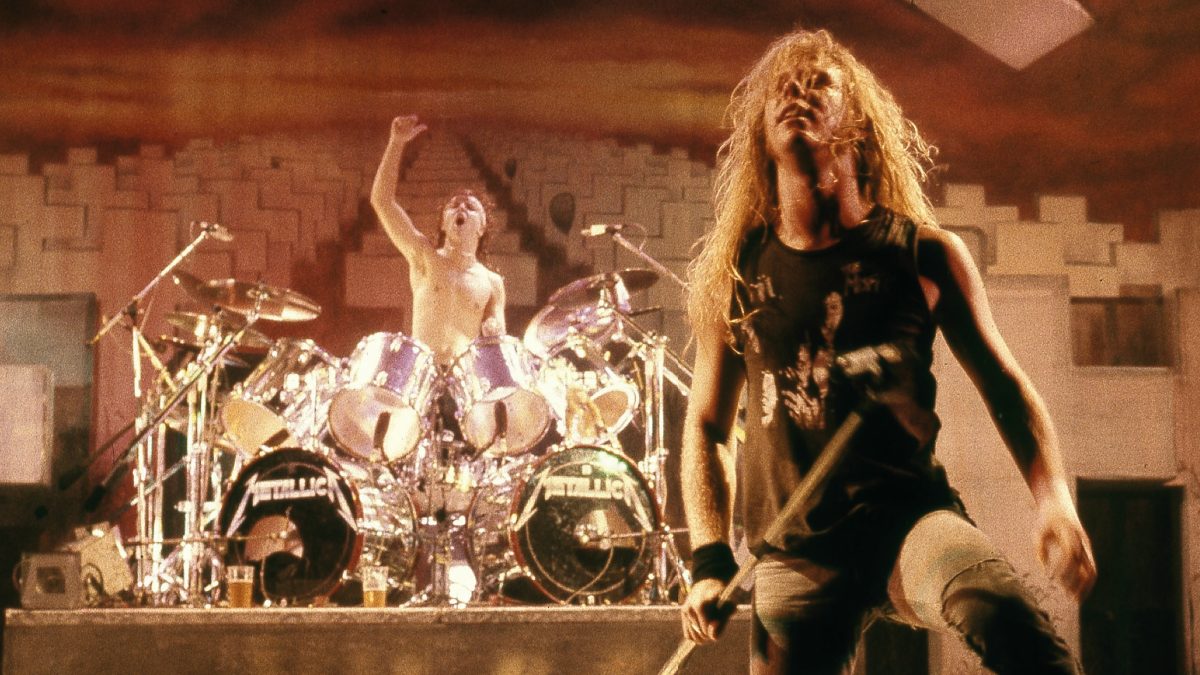
Metallica (founding bassist Cliff Burton on far right) during their 1986 Damage Tour
The appearance of Metallica in the 1980s felt as momentous to metal fans as the breakout of Nirvana for punk fans a decade later. They were harder, louder, leaner, and meaner than anyone else on the scene, and they created a new template for angry guitar rock. Like Nirvana, their no-frills approach derived from a love of punk rock and hardcore, an anti-establishment pose, and a commitment to outré topics like mental health care, and the lack thereof. Of course, Metallica embraced fame and fortune in ways Nirvana never could, but they could have gone in a different direction at one time.
Take a listen, for example, to this concert at Maple Leaf Gardens in Toronto on December 9, 1986, maybe the fastest show Metallica ever played. ‘If you watch closely,’ Greg Kennelty writes at Metal Injection, ‘you can even see [James] Hetfield’s right hand smoking as it reaches terminal velocity!’ What came to be called Grunge generally sounds slow and murky, like certain late Metallica songs. The metal sub-genre of thrash, for which bands like Anthrax and Metallica get founding credit, is nothing without speed and mind-blowing precision. (Megadeth and Slayer round out the so-called ‘Big Four’ of thrash.)
There’s another reason to highlight the December ’86 concert. It took place ‘about three months after the death of [bassist] Cliff Burton,’ Kennelty notes, and is ‘one of Metallica’s first shows with [new bassist] Jason Newsted. So mentally I’m sure this was a rough one for the group.’ Surely an understatement. It’s a testament to how Metallica shredded even harder into success after losing a important member at the midpoint of their breakout 1986 Damage, Inc. tour.
Cliff Burton’s Last Show with Metallica, Stockholm, 1986
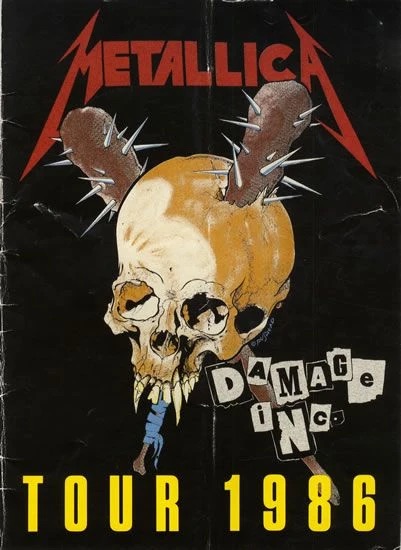
Named for the last song on their third album, Master of Puppets, the Damage, Inc. tour had seen plenty of drama in a band that had weathered more than its share in their first few years (including the firing of lead guitarist Dave Mustaine, who went on to found Megadeth, just before the recording of debut album Kill ‘Em All, and picking up and relocating from L.A. to San Francisco to accommodate Burton.)
If Hetfield hit terminal velocity in December of ’86, he can be all the more admired for it since he’d broken his wrist skateboarding the previous summer and had to give his guitar parts to the his tech for several tour dates. Moreover, band members Hetfield, Burton, and lead guitarist Kirk Hammett had been in talks about firing drummer Lars Ulrich, the band’s first original member, replacing him as Hammett had replaced Mustaine.
Every metal band worth the name has a soap opera story, with tragic deaths a sadly common motif. In 1982, Ozzy Osbourne—who Metallica supported on the first leg of the Damage, Inc. tour—lost star guitarist Randy Rhoads in a plane crash. In September of ’86, while Hetfield’s wrist healed, Metallica’s tour bus flipped during the drive through Stockholm, Sweden, pinning Cliff Burton underneath and killing him. The bassist’s death put an end to talk of firing Ulrich, and nearly ended the band.
Metallica cancelled their remaining European tour, returned to the U.S., and gradually began auditioning replacement bassists (including Les Claypool, later of Primus). They chose Jason Newsted in November, resuming shows at home in California that month, then internationally in Tokyo. They would, however, never be the same, and critics and fans would generally consider Master of Puppets their masterpiece and one of the highest bars for up and coming metal bands.
The band’s early sound, a blend of super-fast metal riffage, raw-edged punk energy, and near-classical intricacy, came as much from Burton’s influence as any of the other members. Indeed, many have said that Burton, the oldest member of the band who had more musical training than the others, did most of the musical guiding during the sessions for their classic albums, Ride the Lightening and Master of Puppets.
As Burton himself says in the press interview further up in support of the band’s third album, ‘The music gets pretty intricate now and then. A lot of thrashing bands are pretty straightforward in their approach.’ The comment downplays how diverse the band’s influences were at the time. ‘Cliff was wise in a lot of ways and very musical,’ says current bassist Robert Trujillo. ‘He had a knowledge and a palette of music that was very broad, so he would have been teaching them classical to Lynyrd Skynyrd to punk rock.”
You can hear it in tunes from ‘Battery’, Master of Puppet‘s first track, betraying its punishing speed with an intricately picked dual acoustic guitar opening, to ‘Damage, Inc.’, the album’s closer, which starts with a full minute and a half of backwards guitar feedback studio effects that lull the listener in before the song delivers its punishing riffs. Metallica began as, in their words, a ‘power metal’ band from L.A. Thanks to Cliff Burton, they became, and remain, something much more.
Hear Burton’s last show with the band further up and see more photos from the Damage, Inc. tour below.


Would you like to support Flashbak?
Please consider making a donation to our site. We don't want to rely on ads to bring you the best of visual culture. You can also support us by signing up to our Mailing List. And you can also follow us on Facebook, Instagram and Twitter. For great art and culture delivered to your door, visit our shop.