“Mr Glen Baxter betrays all the ominous symptoms of genius”
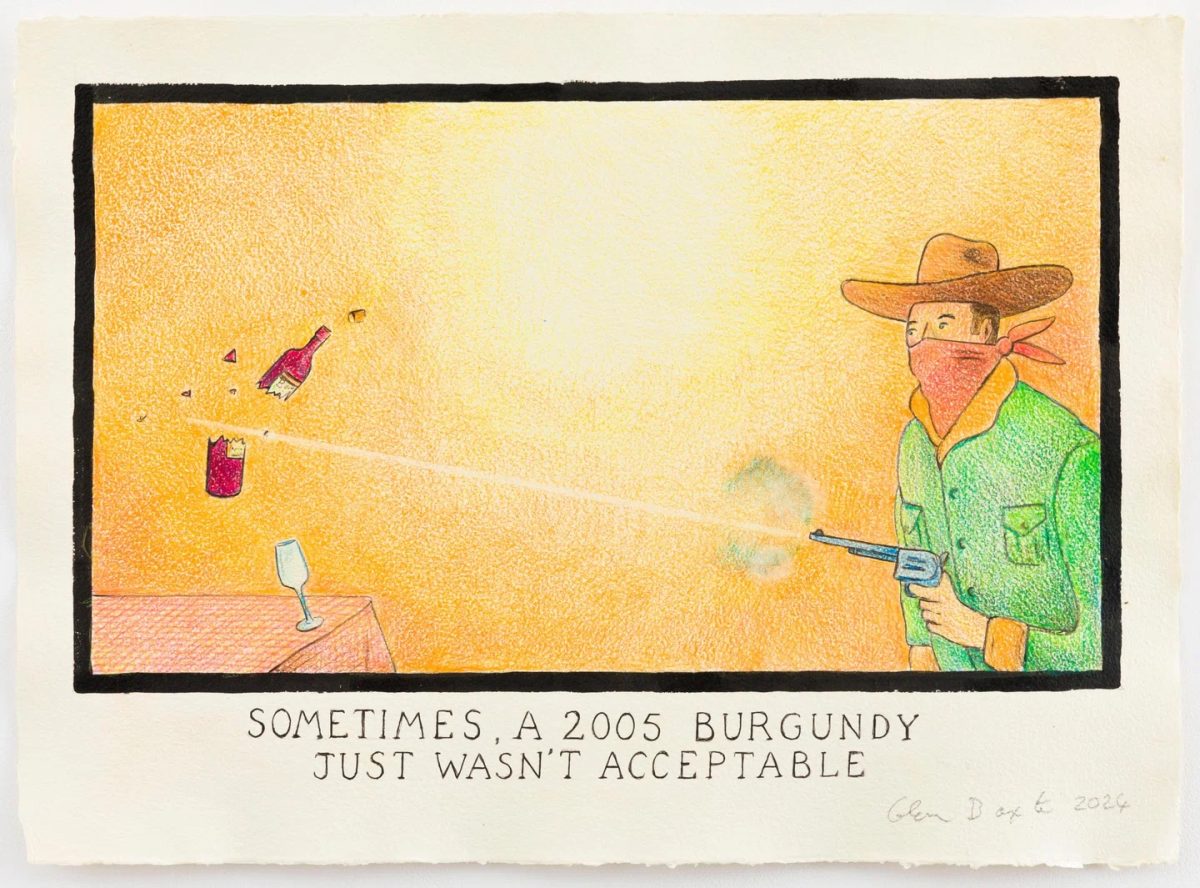
Glen Baxter (4 March 1944 – 29 March 2026) was noted for the genius of his absurdist cartoons and greeting cards. Born and raised in postwar Leeds, England, Glen spent his childhood watching black-and-white cowboy B-movies and reading Boy’s Own (1879 to 1967) and the Eagle comics.
Sent on errands by his mother, a childhood stammer caused him dread saying certain words, meaning that he often bought the wrong item from the wrong shop.
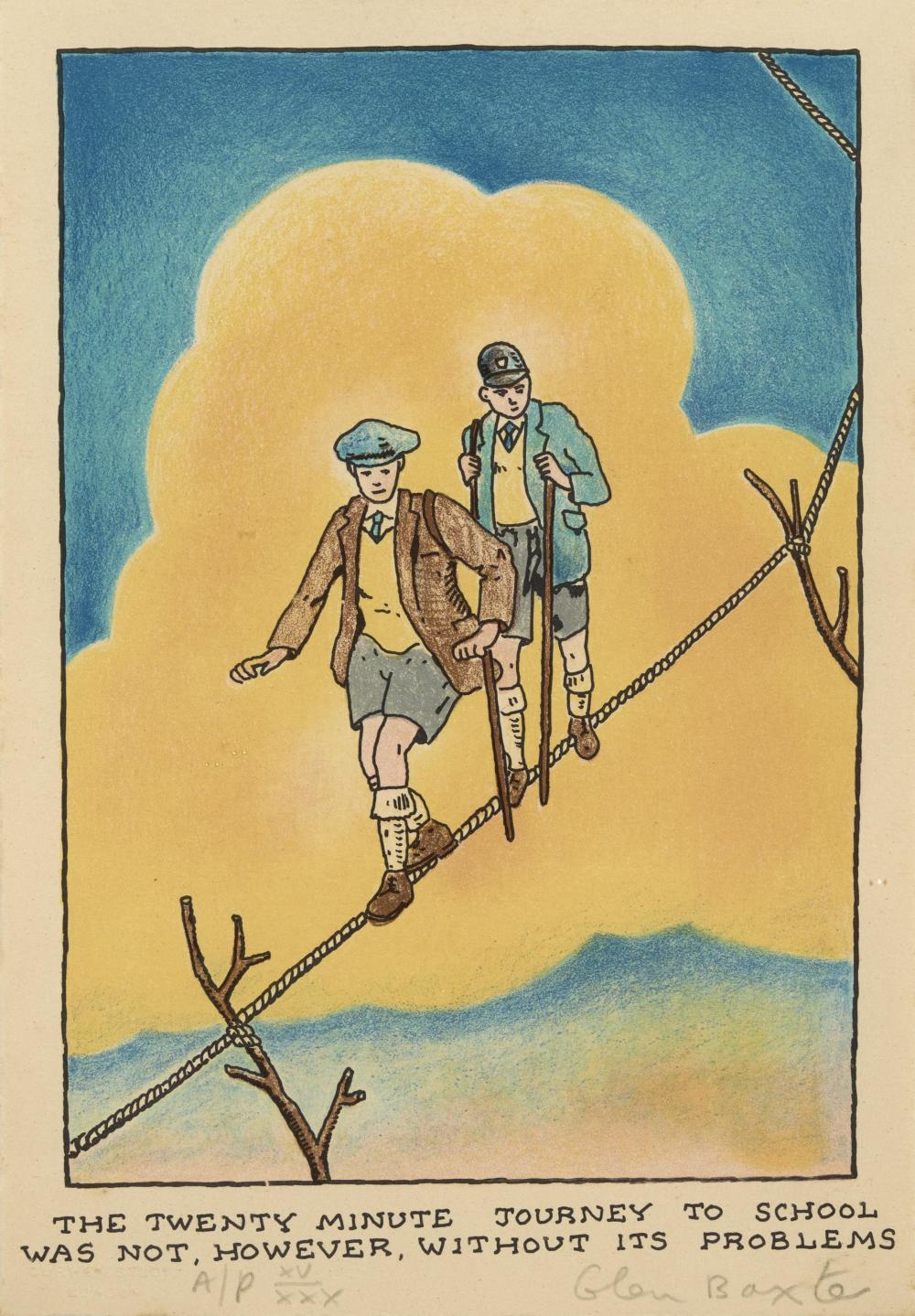
These early influences shaped his work. He placed heroic fighter pilots on missions of derring do and cowboys into surreal pop art-inspired settings, underscored by witty captions.
As he said:
‘For those who have the misfortune to stammer, certain words and letters can induce dread. Strategies are developed and this is how I began to circumvent the everyday trauma of trying to achieve fluency of speech. Each element of language has to be rearranged. At times resulting in unusual sentence formations.
‘This was the world I took with me to art school, where I discovered that this fitted in perfectly with André Breton’s description of Surrealism. I was happy to discover I was not alone, and this newfound freedom allowed me to explore the combinations of words and images that were to become the bedrock of what we now know as a Glen Baxter drawing.’
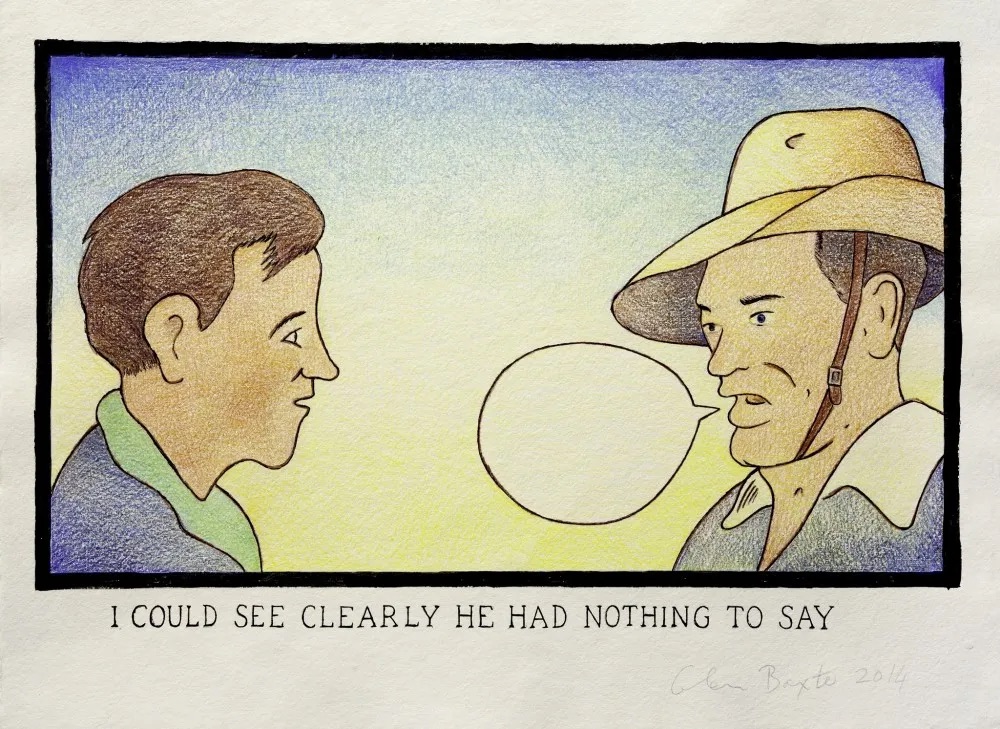
In 2024, Glen recalled one trip to the shops:
‘There was one classic case I can give you an example of. My mother sent me down to this – don’t laugh – haberdashery shop. I had to get a collar stud for my dad’s best shirt (this was the 1950s) I thought, ‘Well, God, I’m going to go into this shop and see a complete stranger and get really embarrassed, and start stammering’. I rehearsed my lines all the way down, I went straight into the shop and the man behind the counter looked at me through his rimless glasses. He said: “Yes?”, and I said, “Do you have any collar studs?”, perfectly fluently. He looked at me as if I was a complete maniac, and he said: “Maybe you should try the shop next door.”
‘I turned and realised I was standing in a furniture shop.
‘Panic had driven me to get it over with, so I went into any shop. I was saying the correct words, but in the wrong place, which is exactly like the surrealist idea. There’s a dislocation between you and reality – and that’s how I came to embrace surrealism.’
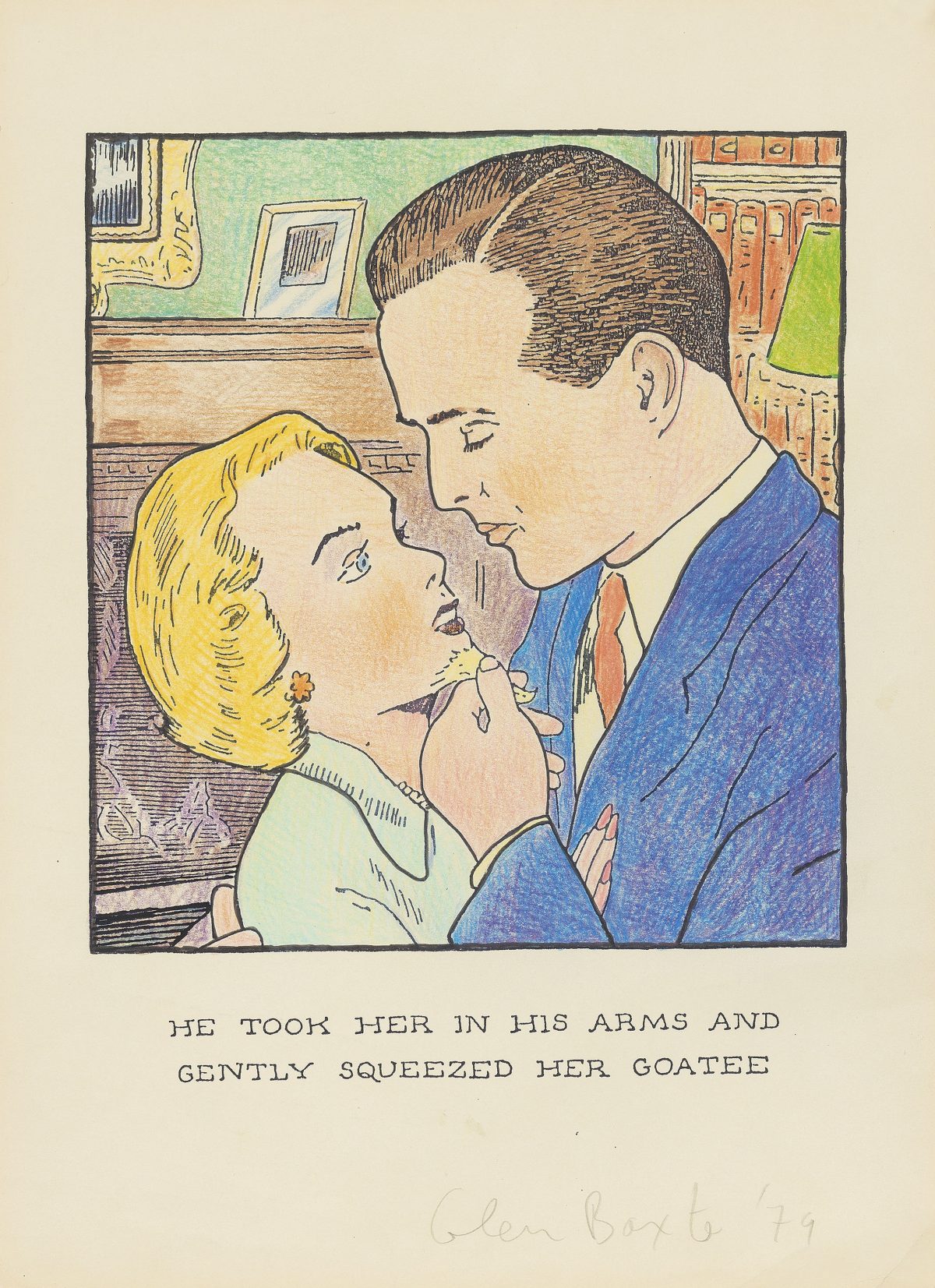

At Leeds College of Art, he studied painting and lithography and enjoyed the work of Max Ernst, and found that by using coloured pencils he could recreate the tone and style of Boy’s Own:
‘I was fascinated by my picture books as a kid, and in those days the paper and inks were rather cheap, so the colours used to sink into the paper. The colours were rather soft and muted, not like today, everything’s very flash, high vis and in your face. When I went to art school, I discovered that lithography is the technique that can create softness. Then I left art school (I didn’t have a lithographic studio) but I still had this idea of making the colours look like they were old lithographs. I found coloured pencils, and aside from kids, nobody was using them. It was a completely new medium, and I could use it quite freely without any preconceptions.’
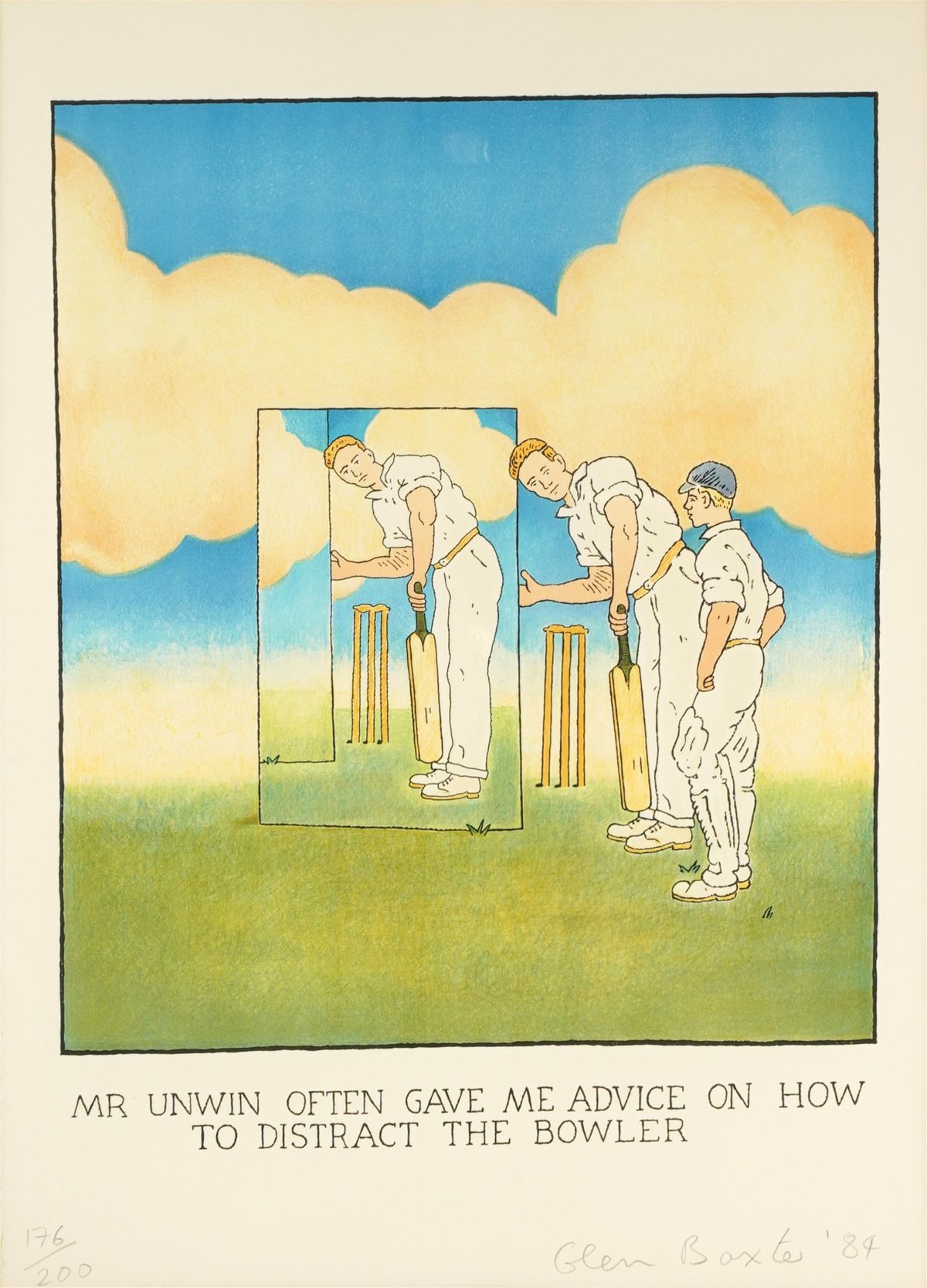
After college he moved south to Leytonstone, east London, where he taught at a local primary school, and then at the V&A museum in 1967.
In the late 1960s, he became “very disillusioned with art because it was all so compartmentalised to abstraction” and took to writing poetry and working with alternative theatre groups in London, writing scripts and performing.
In 1970 Glen began teaching at the Starcross school in Islington where he met his wife Carole. His poems and short stories were first published in a 1972 edition of Larry Fagin’s New York magazine Adventures in Poetry (1968 and 1975). As a result, Glen was invited to New York to perform on the city’s Lower East Side at St Mark’s church, where William Burroughs, Andy Warhol and many great art and literature figures had stood on stage.
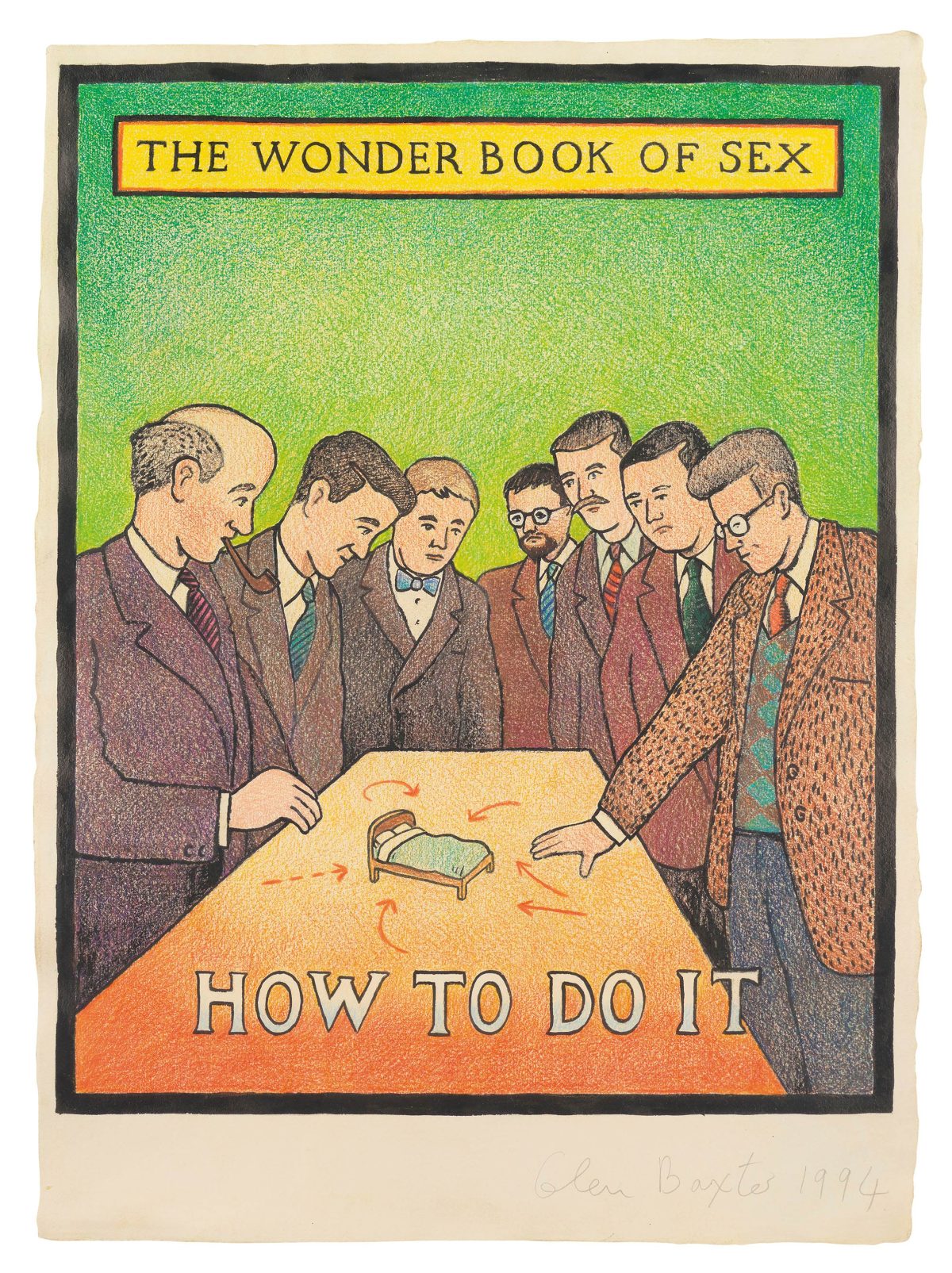

And then a kind of catharsis:
‘I was petrified. Luckily for me I was sharing the bill with an American poet [Lawrence Ferlinghetti], and he’d written this fantastic long poem about Coney Island, called Funny Place, it was absolutely brilliant. I thought ‘Oh god, if he goes on first he’s going to wipe the floor with me, and I’ll be a pathetic has-been.’ And he says to me “Do you mind if I go up first because I’ve got a train to catch.” So he gets up onto the lectern, and he doesn’t read that poem… he reads a terrible poem about the Civil War, which is so boring. And because he had a train to catch, he was getting the words out very quickly, and then he scarpered. I came up onto the stage and I thought, okay, I’m going to read it very slowly and deliberately, so these pauses came with each word. They went berserk. They loved it! So I found a fantastic round of applause.
‘Afterwards, they came up to me, the filmmakers and poets and artists, and for the first time in my life, I had a real and enthusiastic response to what I was doing, because I was getting nowhere in England.
‘It was great to be in New York and to be given this boost to my energy levels, and so that really sort of set me on the course of becoming a fully fledged maniac. I started writing these poems, and then on the side doing little, little drawings, and somehow the drawing collided with the poetry.’
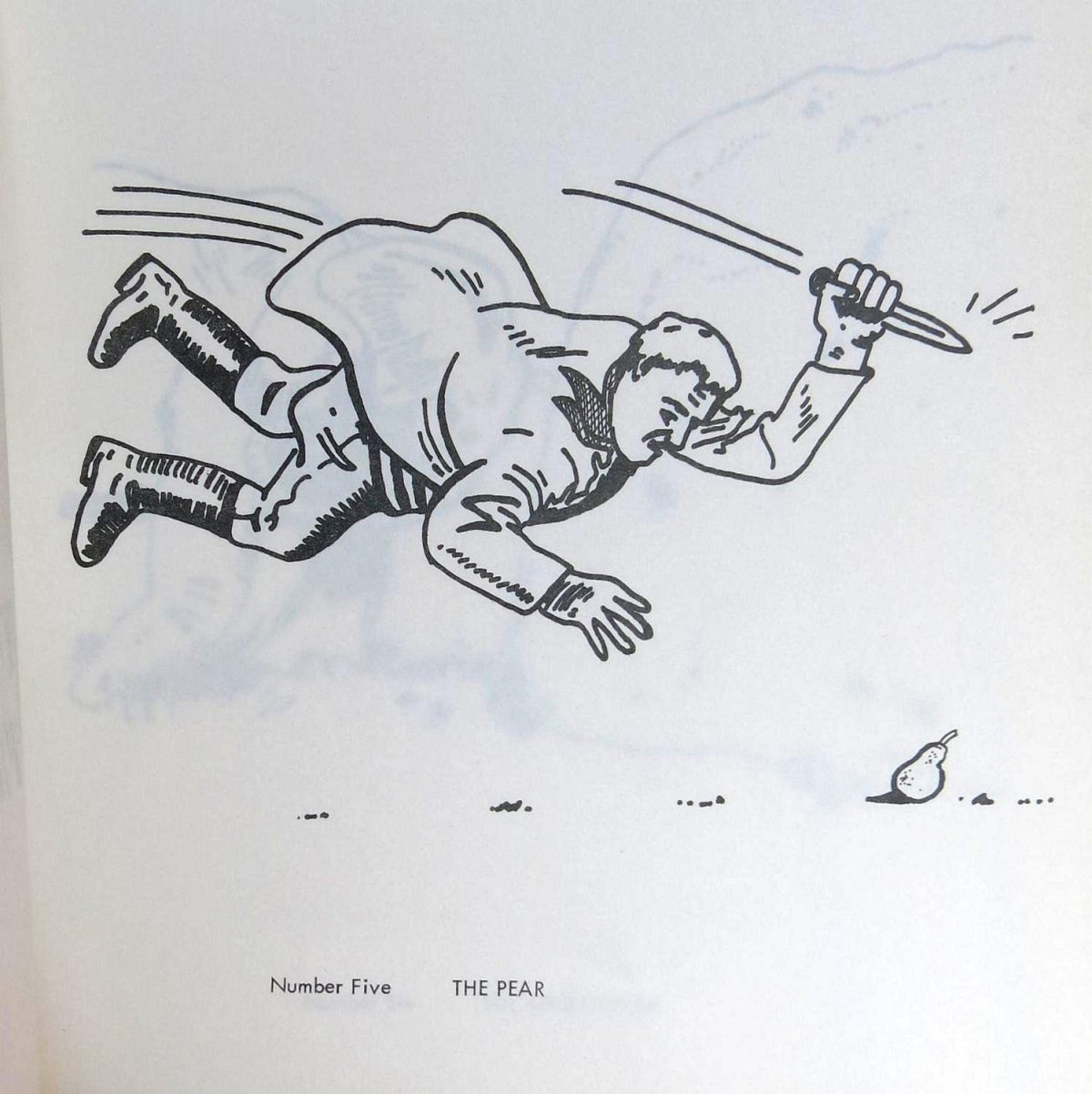
From Fruits of the World in Danger
Back in England, Glen worked part-time at Goldsmiths’ College between 1974 and 1986 while continuing to write, draw, paint and travel. In 1974, Glen had the first exhibition of his artwork, at the Gotham Book Mart gallery. In the same year, the gallery published his work in two publications, Fruits of the World in Danger and The Handy Guide to Amazing People.
An early patron was the American writer and illustrator Edward Gorey, who bought 10 of Glen’s drawings and once said of him that “Mr Baxter betrays all the ominous symptoms of genius”.
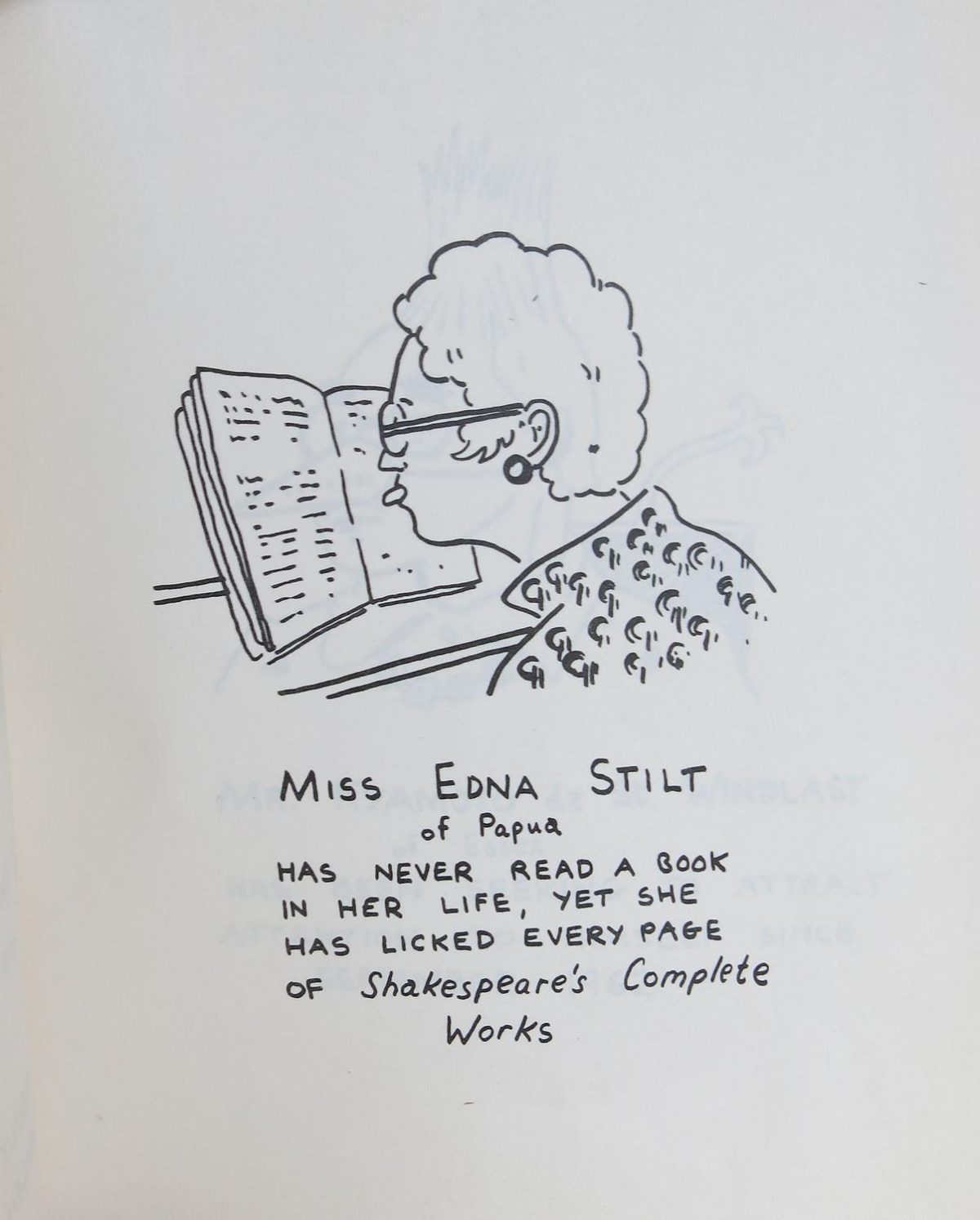
From A Handy Guide to Amazing People
And then The New Yorker called.
When Bob Gottlieb took over as editor of the New Yorker in 1987, he wanted Glen to submit cartoons for publication. Thus began an association with the magazine that would last until his death.
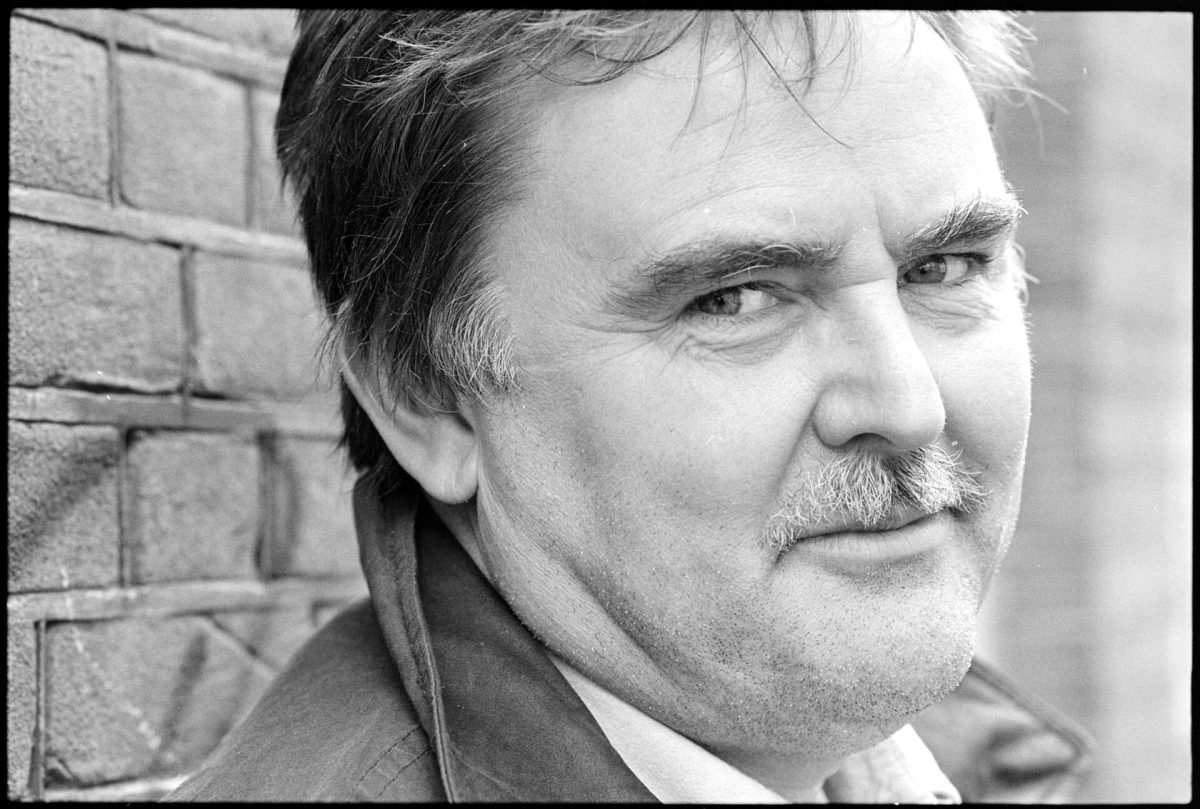
Glen Baxter was the author of many books since the 1970s, including The Impending Gleam, The Billiard Table Murders and Blizzards of Tweed. His work has appeared in The New Yorker, Vanity Fair, Elle, Vogue, Le Monde, The Observer and The Independent on Sunday. He is a Chevalier of the Order of Arts and Letters, and his art has been exhibited in New York, Amsterdam, Paris and London.
Via: It’s Nice That, Flowers Gallery
Would you like to support Flashbak?
Please consider making a donation to our site. We don't want to rely on ads to bring you the best of visual culture. You can also support us by signing up to our Mailing List. And you can also follow us on Facebook, Instagram and Twitter. For great art and culture delivered to your door, visit our shop.