The 1981 Renault 5 Turbo
In 1971, 36-year-old Renault designer Michel Boué sat down to work on a new city car for the company, a prototype called ‘Projet 122’. He could not have suspected that his humble hatchback, the Renault 5, would ferry millions of urban families through cramped city streets for 40 years, or that it would also, just ten years later, become a Formula 1-winning racecar.
‘Very clearly the work of a singular vision’, Richard Herriott argues, the Renault 5, Andrew English claims, is ‘probably the last mass-produced small car to be designed by just one man’. At least that could be said of the first 1972 model. But over the course of the auto’s quarante ans, it has been redesigned many times over, most notably when making the Group B hatchback fit for the track.
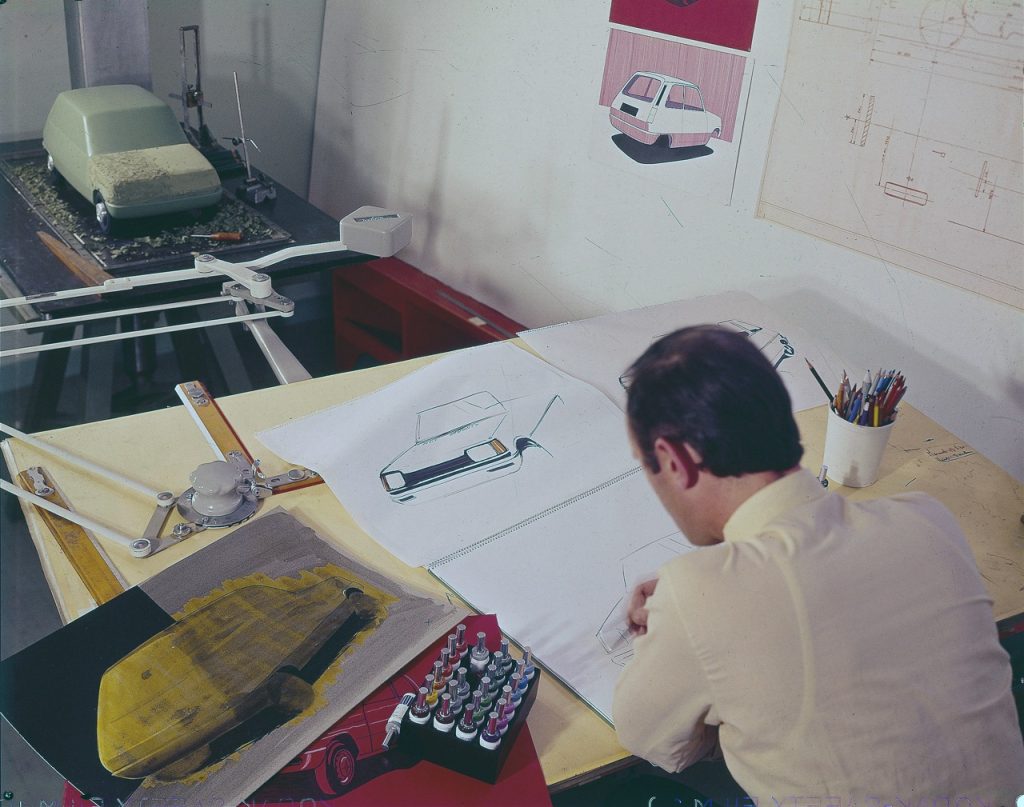
Michel Boué with design studies of the original Renault 5
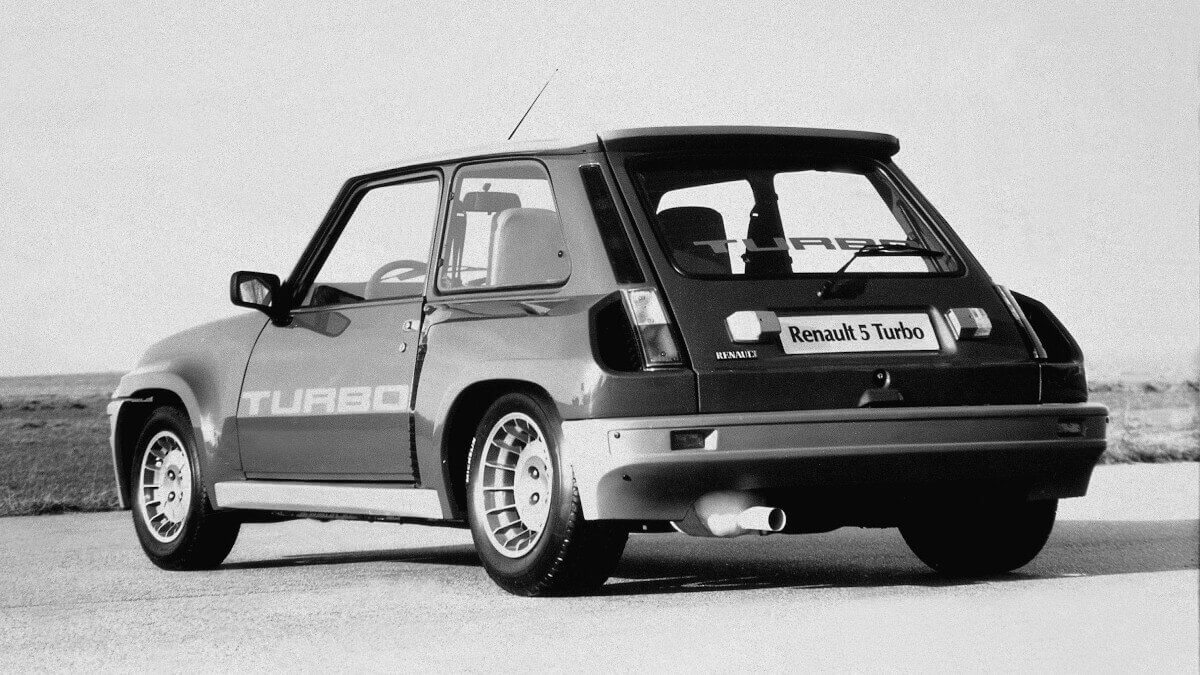
The car that started life as an affordable grocery grabber got its first turbocharged edition with a late-70s model called the Alpine. The longest-running racing version, however, was the Renault 5 Turbo (not to be confused with the Alpine or Gordini trim), which debuted in 1980. The Turbo and later Turbo 2 can be spotted easily by their flared rear fenders, with louvered air intakes. The car squats, toadlike, over wide rear tires.
‘Renault needed a new vehicle for rallying in the 80s. From 1981 the French were able to officially use the widebody R5, starting in the beginning according to the regulations of Group 4 and from 1982 according to those of the new Group B…. the factory team won the world championship events in Monte Carlo in 1981 as well as in Corsica in 1982 and 1985, in each case with Jean Ragnotti behind the wheel’.
—Matthias Kierse
Marc Deschamps of Italian car house Bertone styled the Renault 5 Turbo’s body and interior, under the direction of Marcello Gandini. (Renault used the moniker ‘Projet 822’, nodding to Boué’s moment of creation.) Bertone built on a 1977 Alpine model as a platform, but the result was a very different car, with rear-wheel drive, a mid-mounted engine where the rear seats used to be, an acceleration of 6.9 seconds to 62 miles per hour, and a top speed of 127 mph.
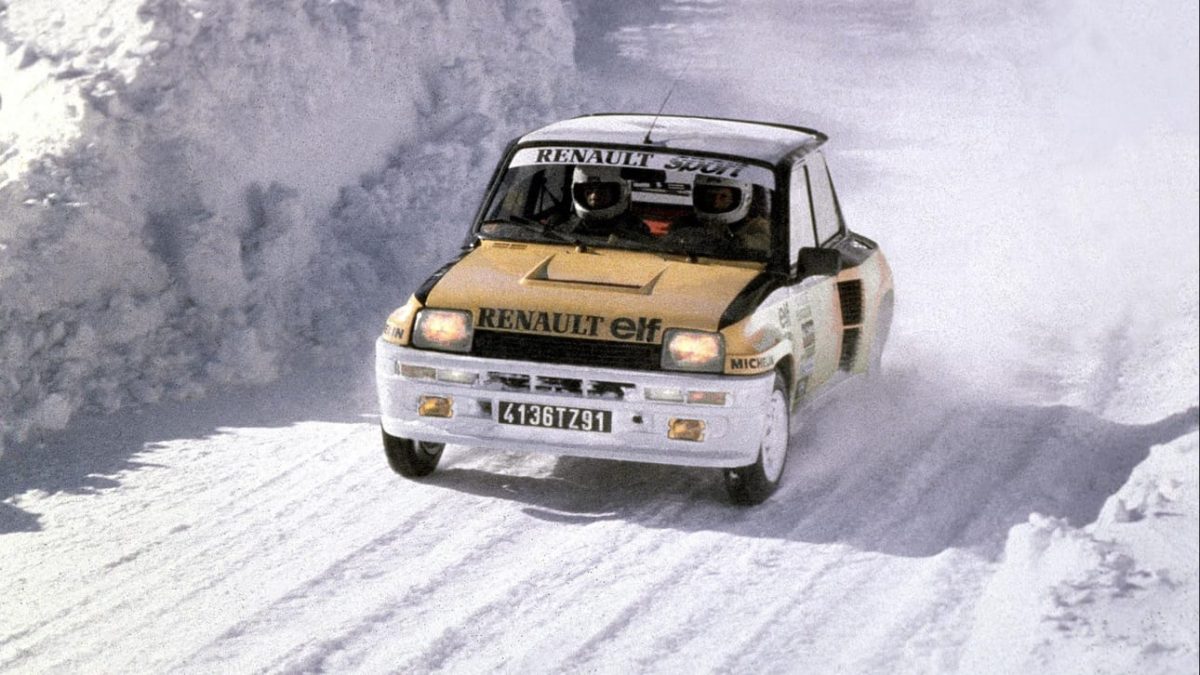
Jean Ragniotti wins the 1981 Rallye de Monte-Carlo with co-driver Jean-Marc Andrié
Built to compete against the Lancia Stratos (also designed by Gandini at Bertone), the R5 Turbo generated much more demand than the minimum number of production cars needed for homologation. ‘Originally Renault wanted to produce only 400 pieces to meet the regulations of Group 4 for the World Rally Championship,’ Mattias Kierse writes. Consumer versions of the car had wider appeal than they imagined. ‘The first series was followed in 1983 by the Renault 5 Turbo 2, as there was still high demand from customers’.
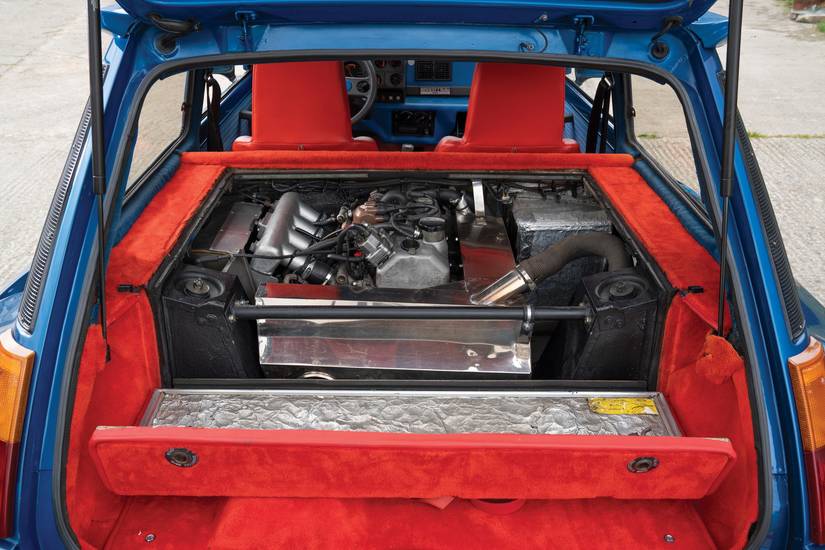

The Renault 5 Turbo’s rear-mounted engine
‘You’d forgive Renault for keeping this 5 Maxi as a mollycoddled museum piece, but experiencing it driven within an inch of its life is infinitely more gratifying. The side exhausts spit so much flame on the overrun that as we pull into the pits, a ball of orange is still in the air as my door opens; I’m convinced the whole thing must be ablaze. Thankfully, “that’s just what it does”’.
—Stephen Dobie
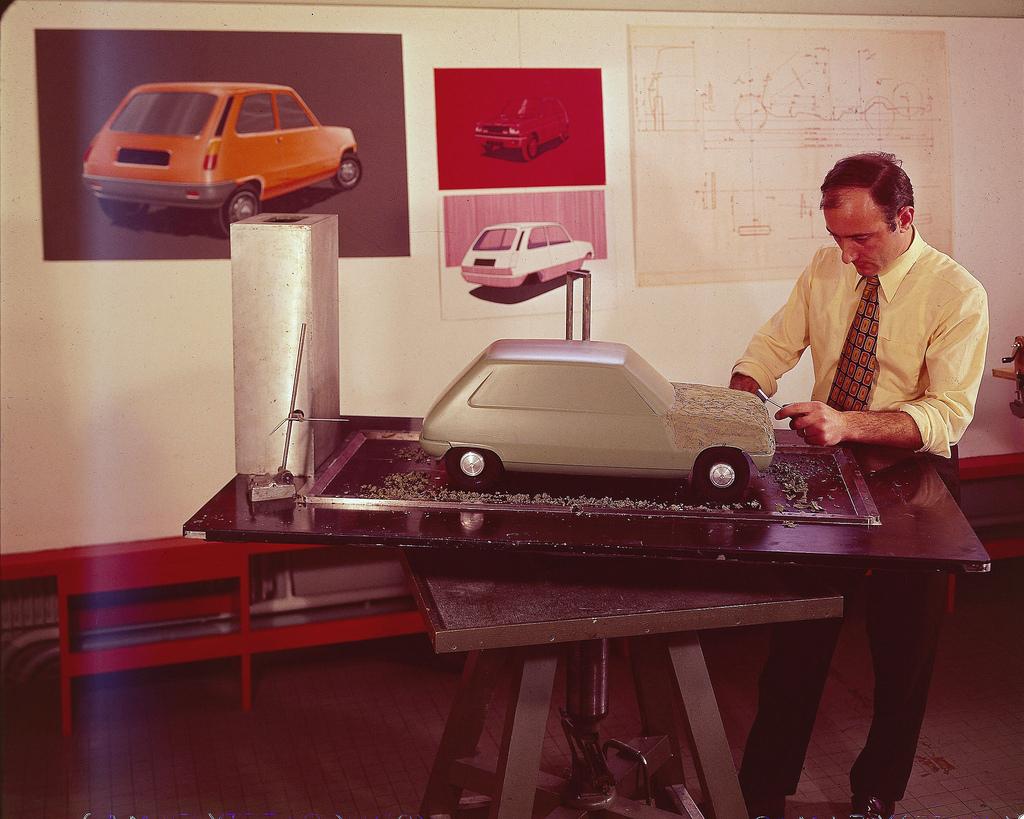
Michel Boué with a model of the #Renault 5 c.1969. Boué died in 1972, just after the car’s launch.
Buyers were willing to pay a premium for the 160 hp French pocket rockets. For reference, Kierse points out that a base model R5 cost less than 10,000 deutsche marks in Germany at the time, while a Turbo would run up to 44,600 DM. Nonetheless, ‘the Turbo 2 was on the price lists of Renault until 1986 and came off the production line 3,180 times’.
It’s easy to see why the R5 Turbo and Turbo 2 became legends among enthusiasts with means. The iconic redesign of an already iconic design represents the best of mid-80s small European car-making. Despite a tiny 1.4 litre engine, the addition of a Garrett turbocharger made the R5 Turbo ‘the most powerful production car to emanate from France,’ a genuine joy to drive, according to Ragnotti himself, who still drives the cars.
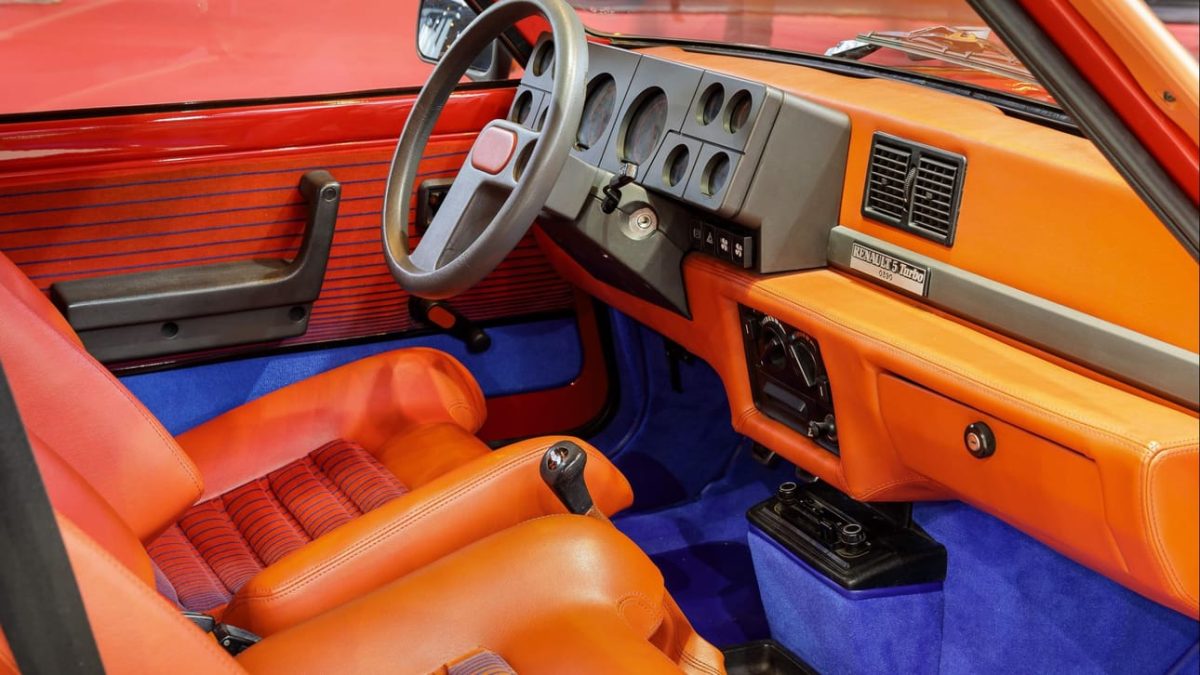

Bertone designed the sleek, modern interior of the orginal Renault 5 Turbo
‘The wheelbase is short but the engine is quite central,’ the French racer tells Top Gear’s Stephen Dobie during a spirited ride in a special Maxi model. ‘Except when you really wanted to be a show-off! The rear wheels were really wide and so on dust, gravel or in the wet you had to be an acrobatic stunt driver to keep on top of it. But it was very amusing and a fun car to drive’. Now in his seventies, with back problems, Ragnotti avoids the acrobatics.
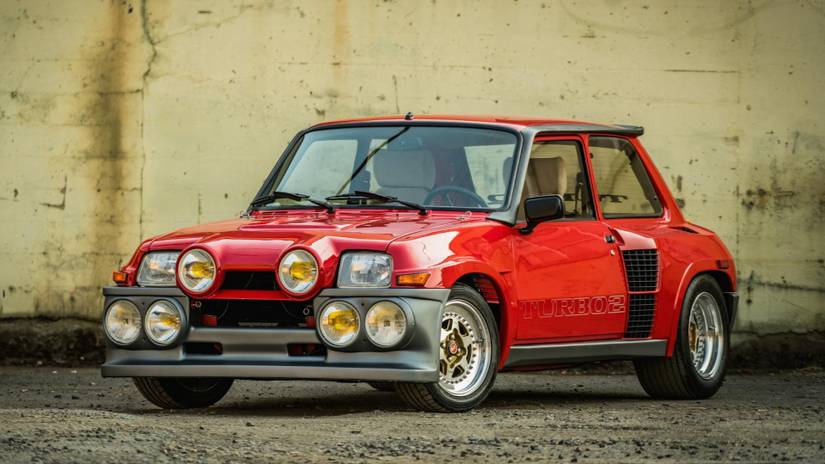
A 1985 Renault 5 Turbo 2
The Renault 5 Turbo has plenty of niche appeal for drivers. It’s also a machine seemingly tailormade for the 80s nostalgia of the 2020s. ‘Technology has given us many great things’, note Los Angeles-based auto restorers Legende Automobiles, ‘but it has also taken away the tactile experience that we, as car nuts, are missing in today’s driving’. It’s a note Renault could take in future interations of the Renault 5 EV, which debuted in 2022 to mark the 50th anniversary of the classic French car, especially if they decide to make a revived EV ‘Turbo’.
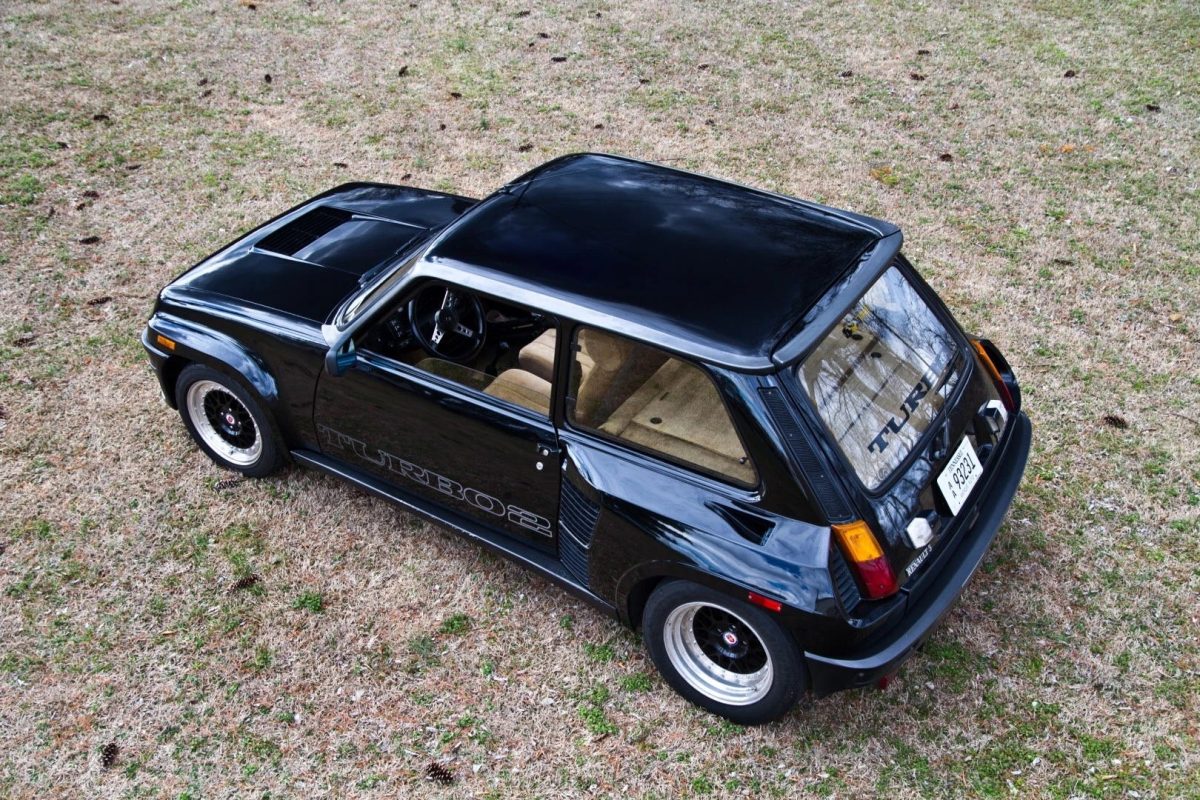
A 1983 Renault 5 Turbo 2
Would you like to support Flashbak?
Please consider making a donation to our site. We don't want to rely on ads to bring you the best of visual culture. You can also support us by signing up to our Mailing List. And you can also follow us on Facebook, Instagram and Twitter. For great art and culture delivered to your door, visit our shop.