“Death must be so beautiful. To lie in the soft brown earth, with the grasses waving above one’s head, and listen to silence. To have no yesterday, and no tomorrow. To forget time, to forgive life, to be at peace.”
— Oscar Wilde, The Canterville Ghost
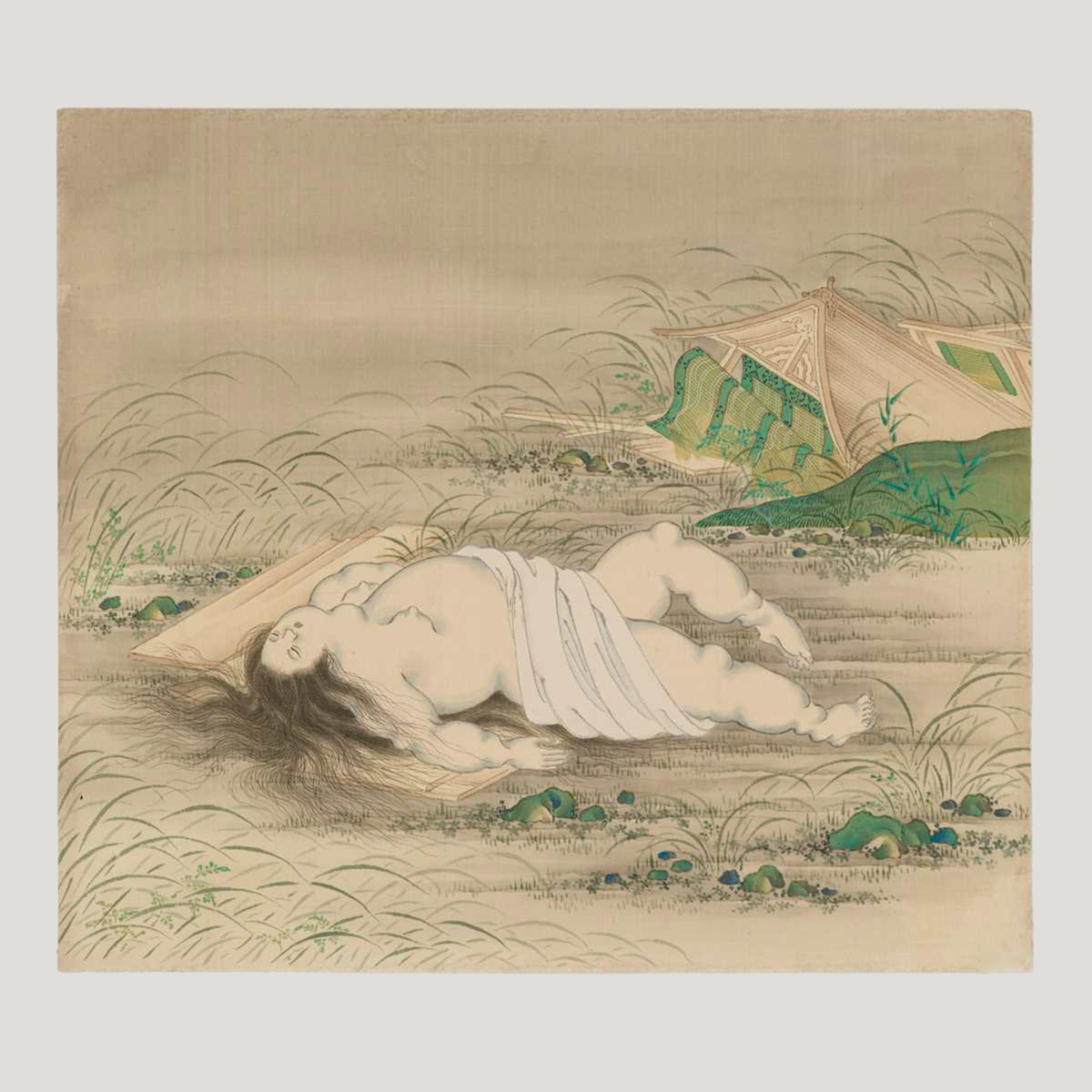
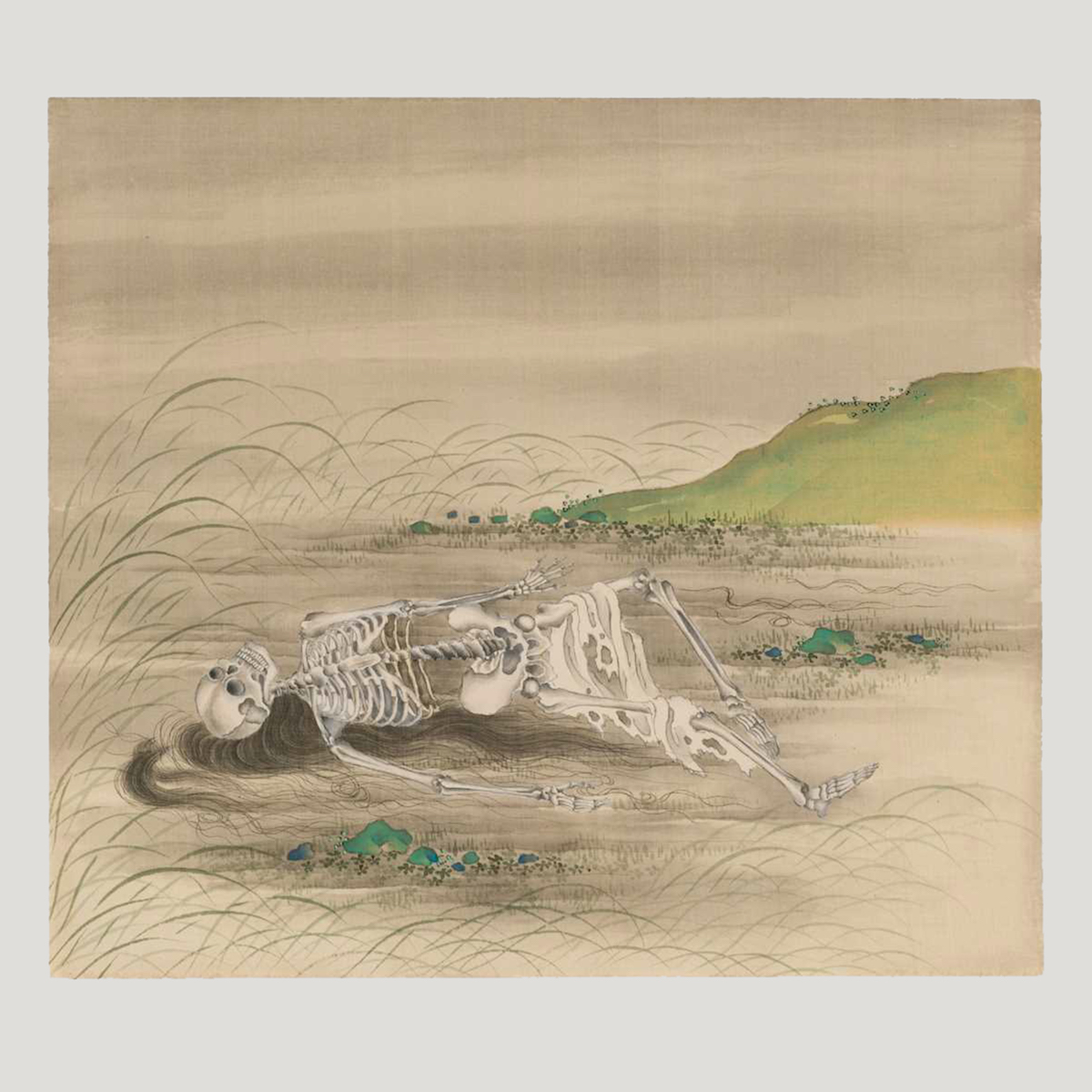
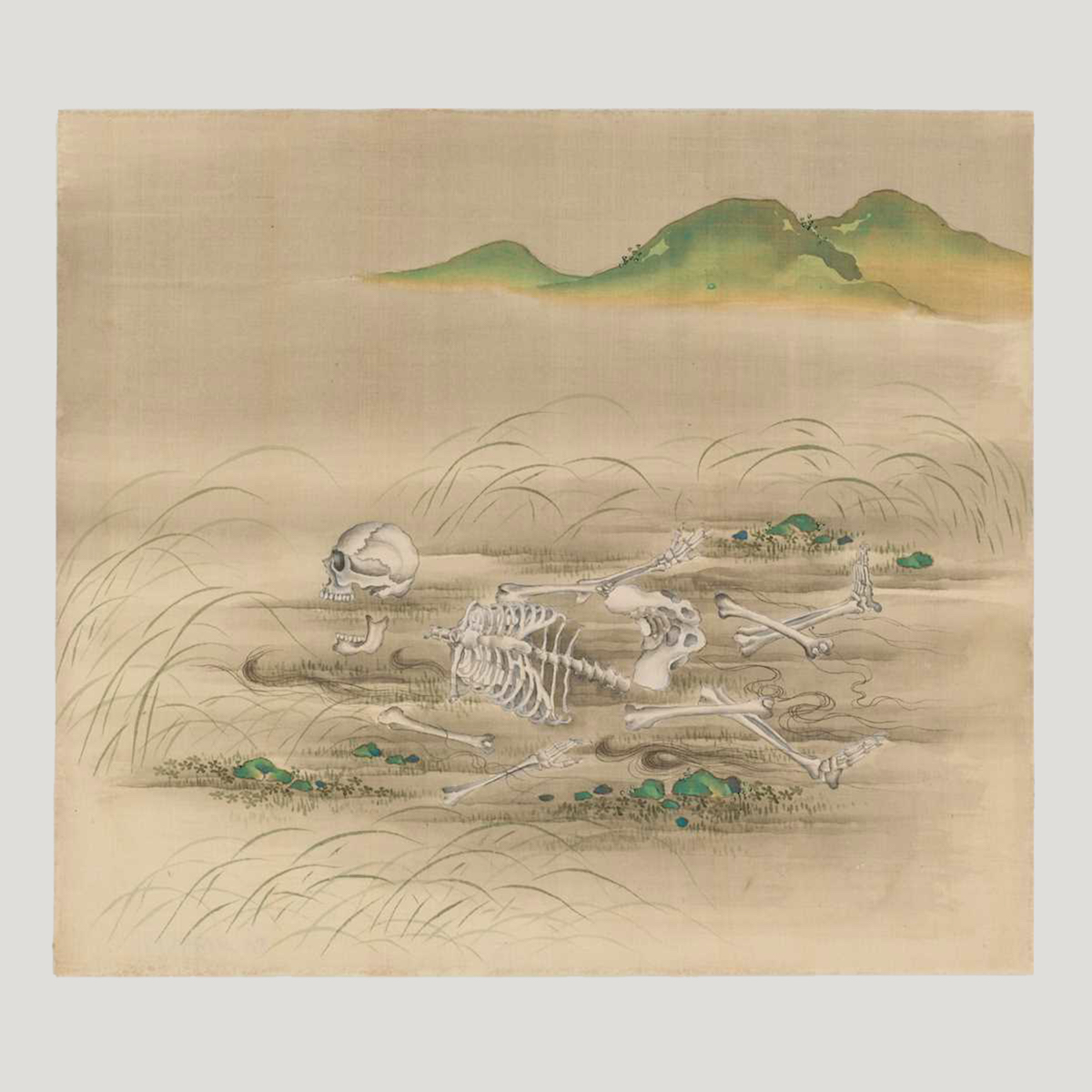
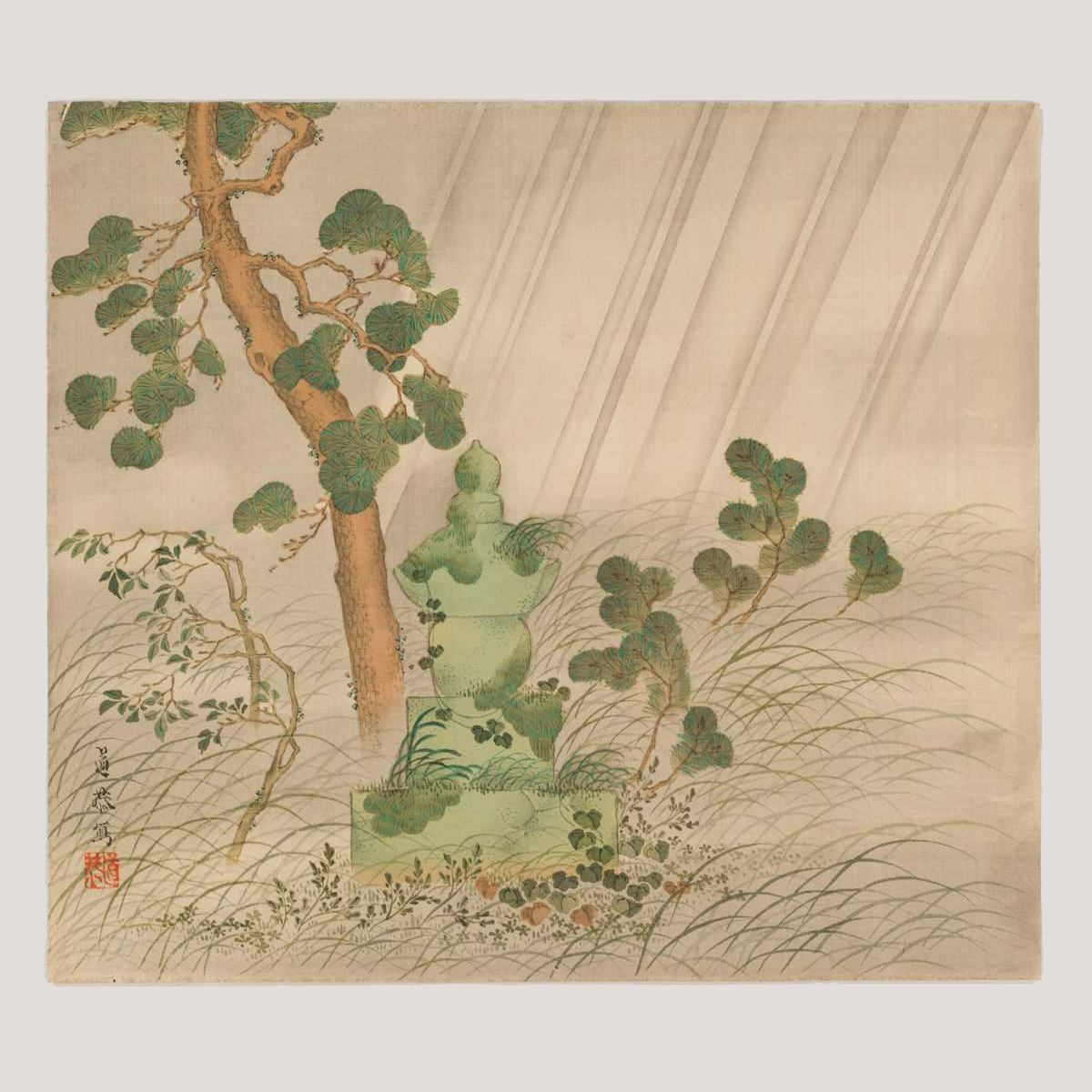
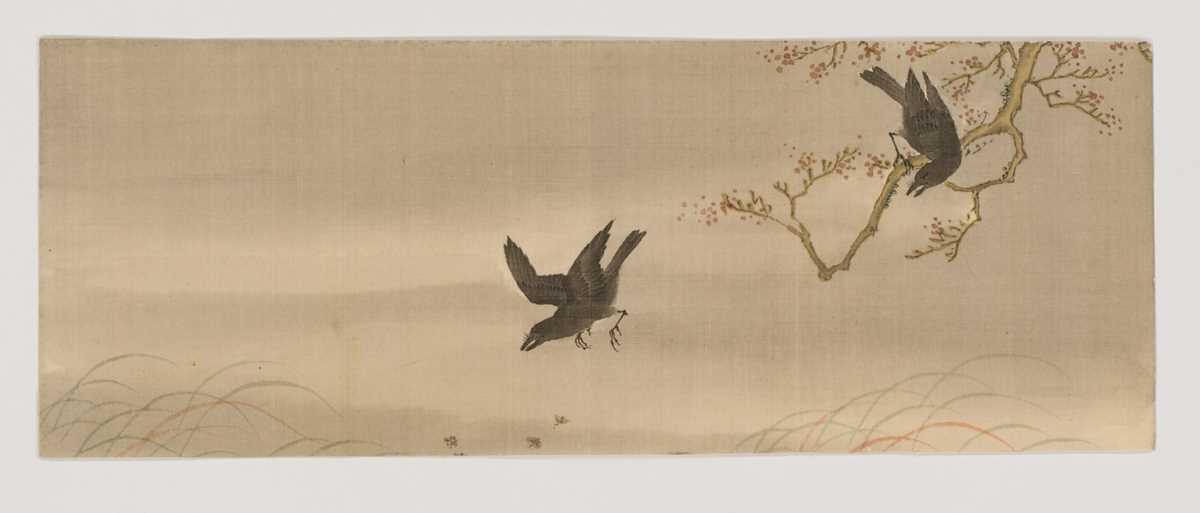
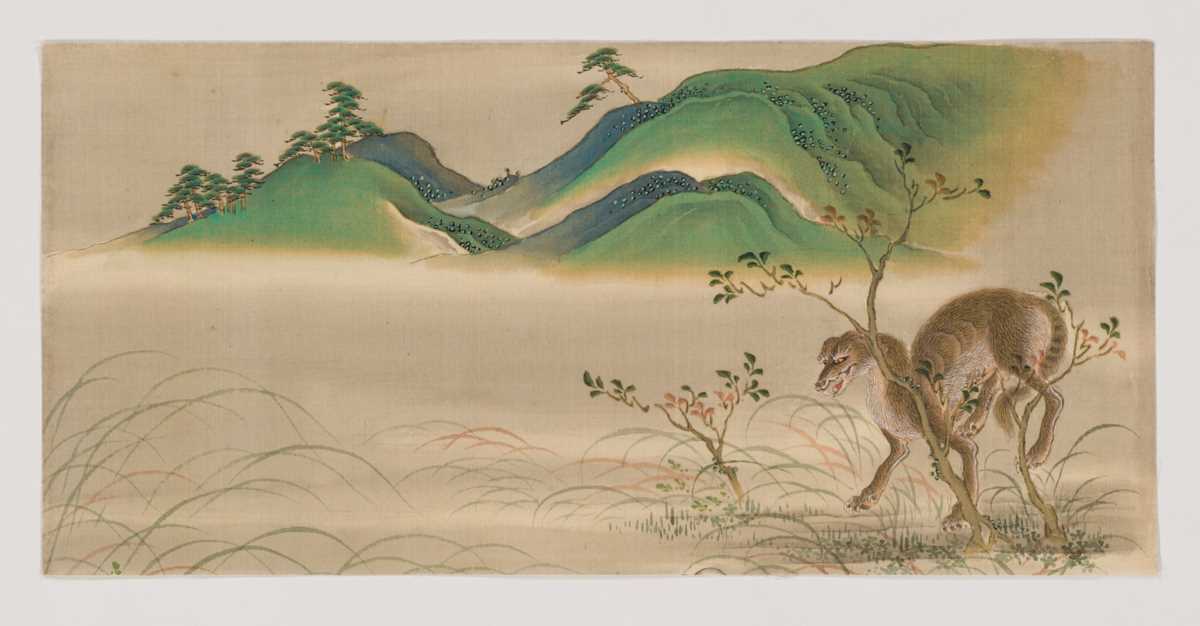
For Kitō Dōkyō (鬼頭道恭; 1840 – 1904) death and decay can be elegant. In The Decay of a Corpse in Eight Panels and Monument for the Dead, the painter delivers a story of human fragility for the ages in ink, watercolour and gouache on silk, mounted on paper.
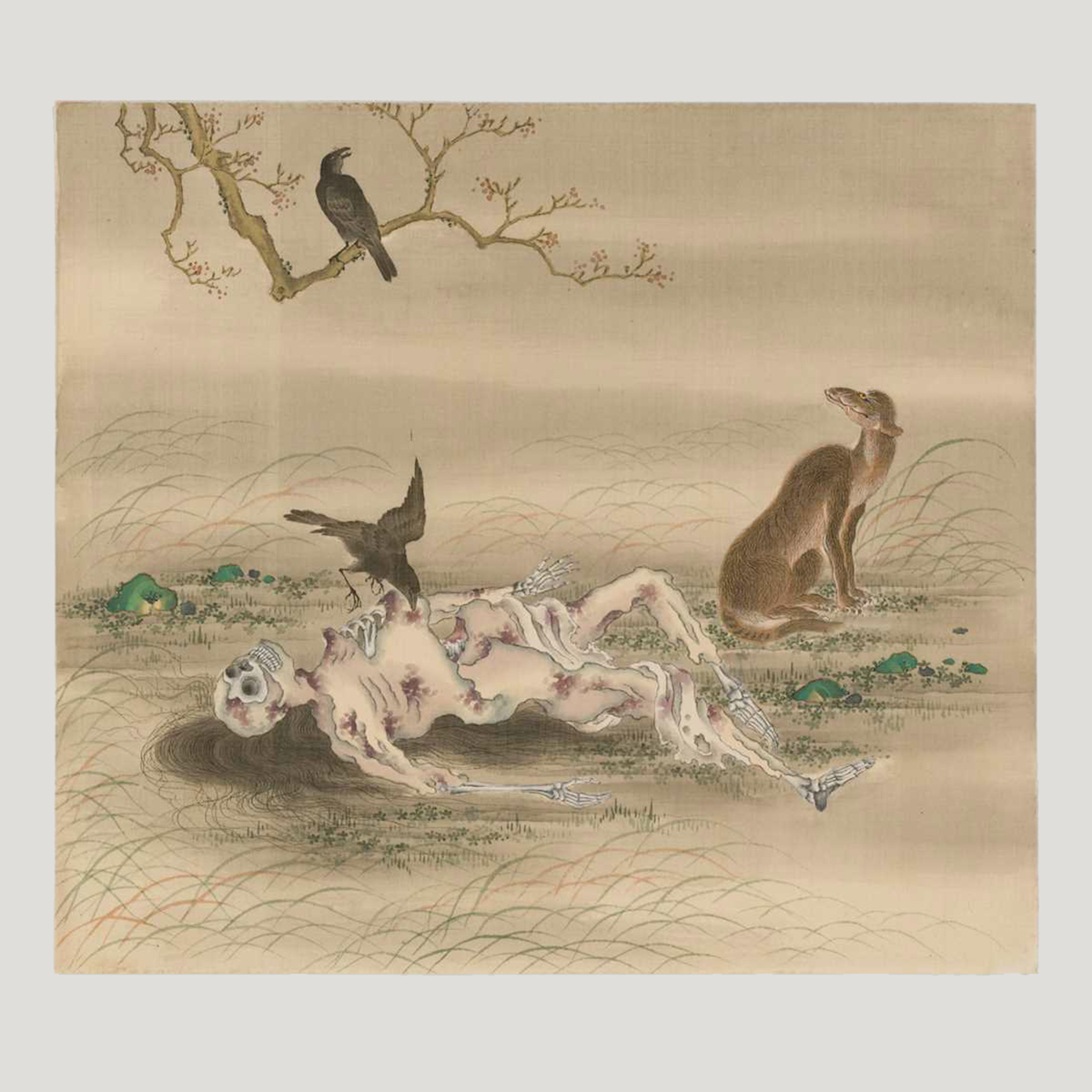
Kusōzu (九相図): Nine Stages of Decomposition
The series The Decay of a Corpse in Eight Panels and Monument for the Dead) is in the Buddhist tradition known as kusōzu (九相図 – “pictures of the nine stages”). Kusōzu (九相図) art emerged in Japan during the 13th century and was produced until the late 19th century in various formats – including handscrolls (emaki), hanging scrolls (kakejiku), and printed books.
Diverging from the standard nine-stage, Dōkyō composed this work across eight panels.
His story starts with a dead woman lying in a natural landscape. She is almost naked. It moves through the stages of the woman’s body decomposing into a skeleton before it’s eventually scattered to the winds.
We then see a gravesite in the form of a gorintō (a five-tiered stone stupa), symbolising the memorial dedicated to the deceased. Having experienced the gruesome process of decomposition, the body of the deceased young woman ultimately returns to nature.
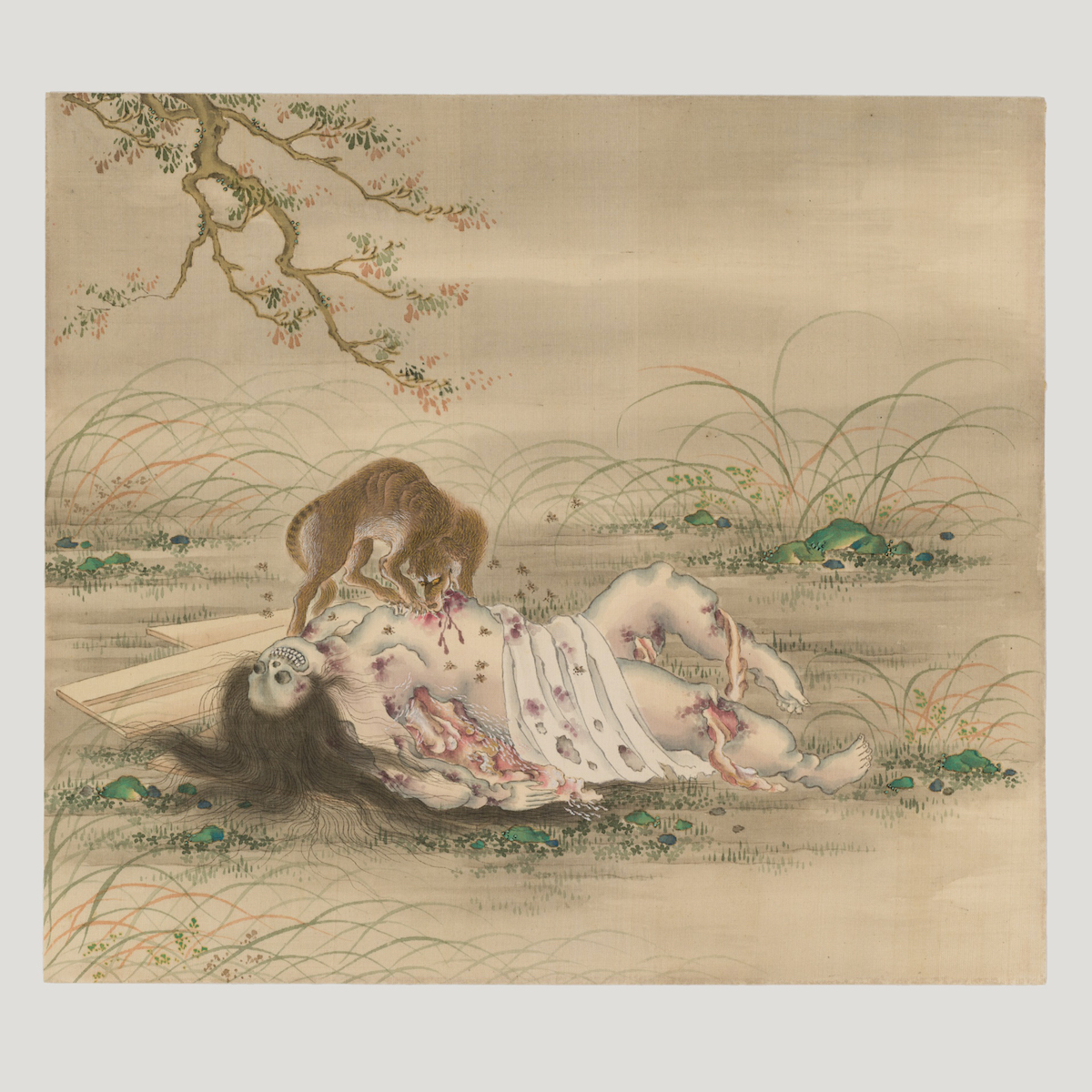
The setting for kusōzu is always outdoors, where a corpse would be left exposed to decay in a field, graveyard, or charnel ground. The stages included vary between sources. But that the body is of a woman is not accident. The narrative serves to remind the male monks sworn to live a life of chastity that no woman is worth deviating from the path.
So the stages of bodily decay are an aid to meditation. Believers were encouraged to construct and reflect on mental images of each of the stages. Beyond quelling sexual desire, the images might also help viewers mourn and come to terms with the loss of a loved one and their own state of being.


Kitō Dōkyō
Dōkyō was a Japanese painter of the late Edo (1603–1867) and Meiji (1868-1912)periods. Born in Nagoya, he travelled to Kyoto to study Buddhist art and the techniques of the Tosa School with artist Okada Tamechika (岡田為恭; 20 October 1823 – 8 June 1864). Afterwards, he returned to Nagoya where he became known as an expert in producing Buddhist-themed artistic works.
Via: Zacke
Would you like to support Flashbak?
Please consider making a donation to our site. We don't want to rely on ads to bring you the best of visual culture. You can also support us by signing up to our Mailing List. And you can also follow us on Facebook, Instagram and Twitter. For great art and culture delivered to your door, visit our shop.