“God forbid that I should do this thing and flee away from them… let us die manfully let us not stain our honour” – Maccabbees, quoted in Shadow Land, or Light From the Other Side, 1897
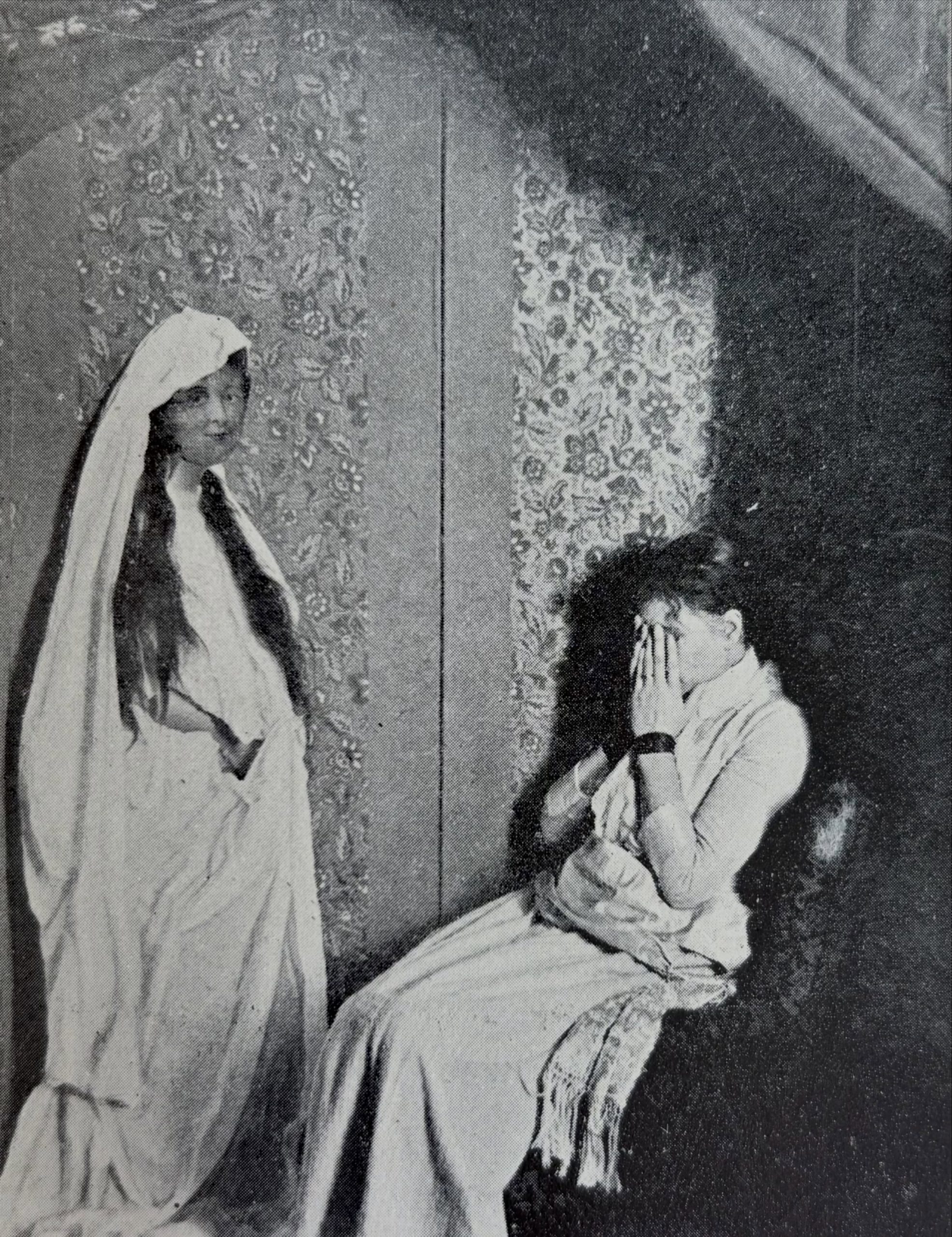
Madame Elizabeth Hope d’Esperance was a physical medium and spiritualist, well-known for her materialised forms which bereaved sitters often recognised as their dead relatives.
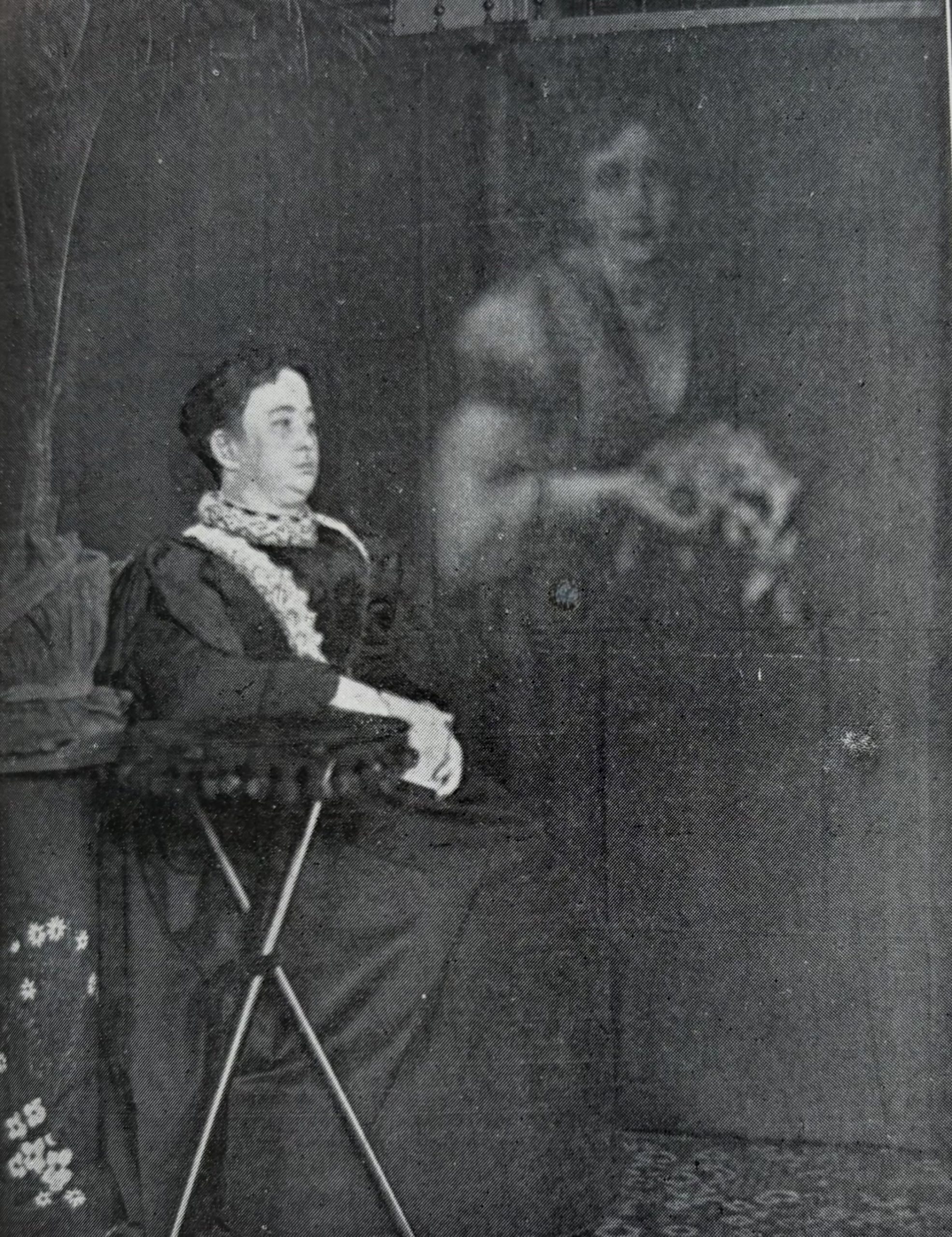
In her acclaimed biographical account, Shadow Land, or Light From the Other Side, we find a particular focus on her activities, first in Newcastle, England, and then in Gothenburg, Sweden. The book describes how she developed her psychic abilities, the experiments she performed with psychical researchers and her circle. And throughout her incredible career, ‘Madame d’Esperance used what she called ‘ghost photographs’ to record and prove her powers.
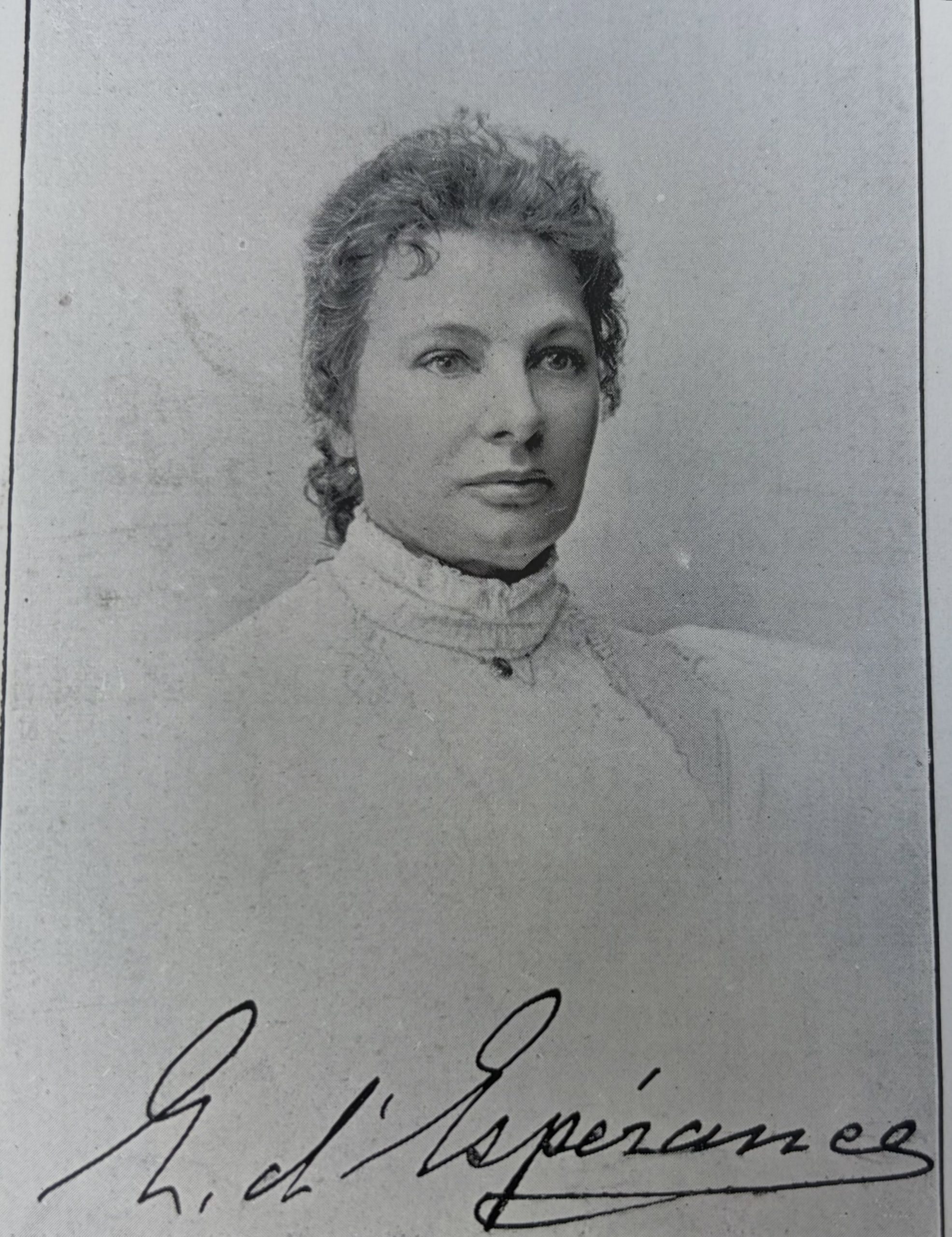
Born Elizabeth Jane Puttock (20 November 1848 – 20 July 1919), she grew up in London. Elizabeth claimed to have lived a rather lonely childhood in a haunted mansion with many empty rooms she liked to explore. She claimed to have experienced psychic visions by what she called ‘Shadow People’.
Elizabeth discovered spiritualism in the early 1870s in the form of mediumistic powers including automatic writing, ectoplasm, premonitions and table-turning. She married a Mr. Reed and move to Newcastle when she became Mme. d’Esperance. Under that name, she began travelling through Europe, giving séances in Denmark, France, Norway, Belgium, Sweden and Germany. She gained notoriety for performances in which she seemed to materialise flowers and spirits in the séance room.
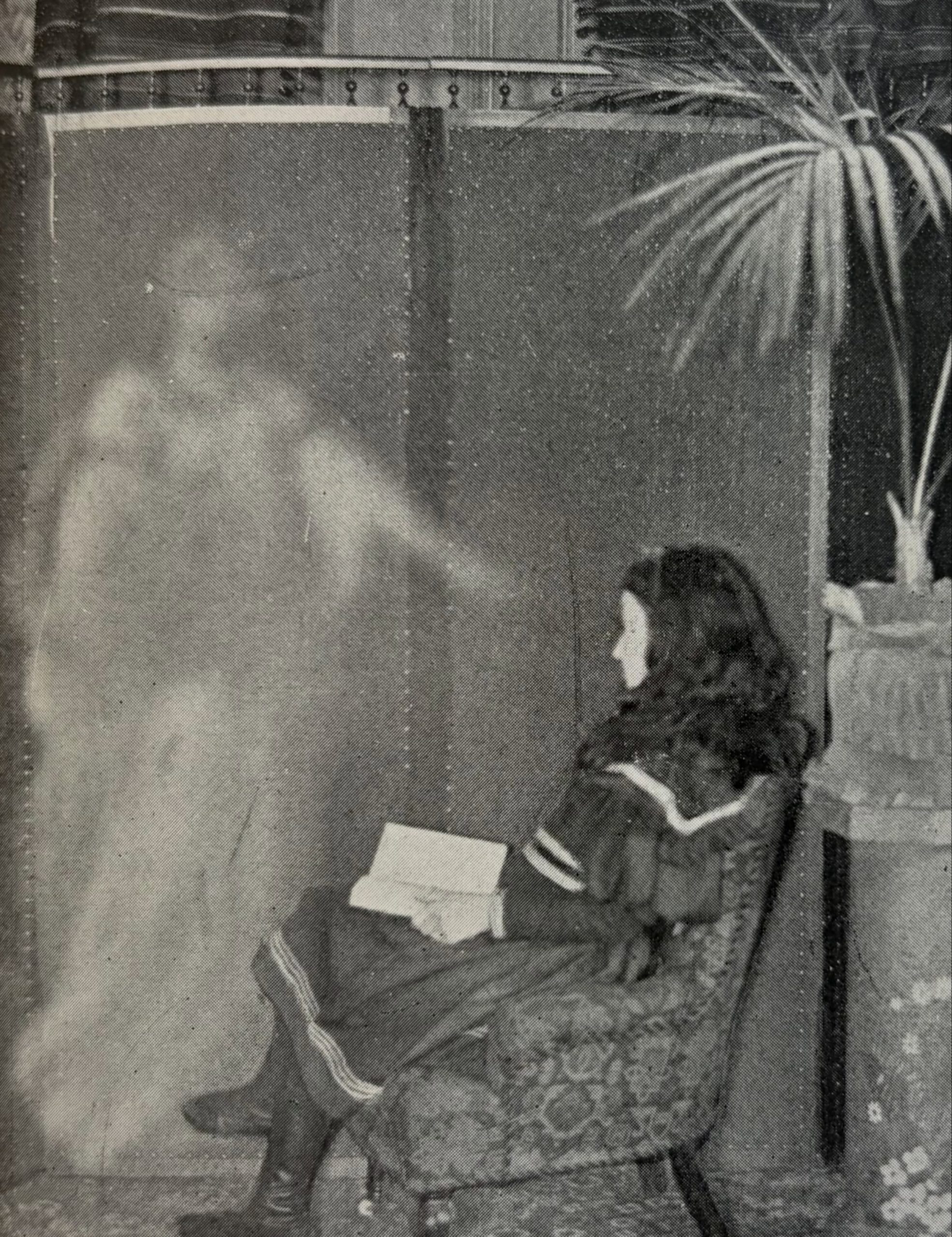
Come in Yohlande
It was a career not without controversy.
In 1880, where during a séance a spirit named ‘Yohlande’ appeared, a sitter grabbed it. As M. Lamar Keene wrote in his book The Psychic Mafia:
“Madame D’Esperance, was exposed- – literally. Ectoplasm grabbed in the dark by a sitter turned out to be the medium in total dishabille. After that embarrassing interlude, Madame D’Esperance apparently became more careful since she wasn’t busted again for thirteen years.”
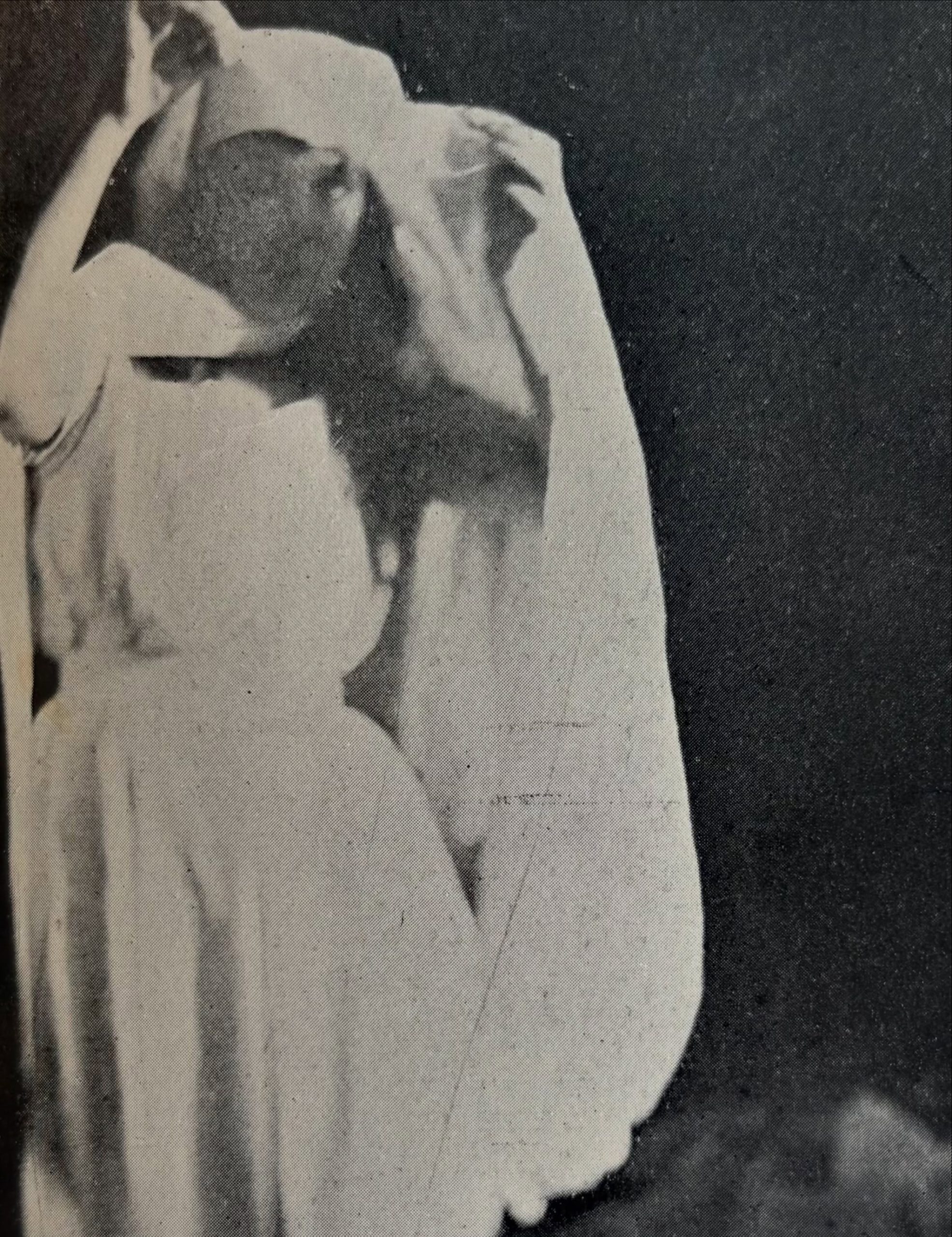

In Helsinki, Finland, on 11 December 1893 Elizabeth claimed to have vanished the lower part of her body and that only her head and stomach remained. Psychical researcher Hereward Carrington noted:
“The back of the chair was partially open, and of sufficient size to allow the medium to thrust her legs through as far as the hips, when the dress had been drawn up, and spread over the seat of the chair. The medium would, therefore, be in a kneeling position behind the chair, with the upper part of her body in front of the chair-back, and, of course, visible to the investigators who made the examination.”
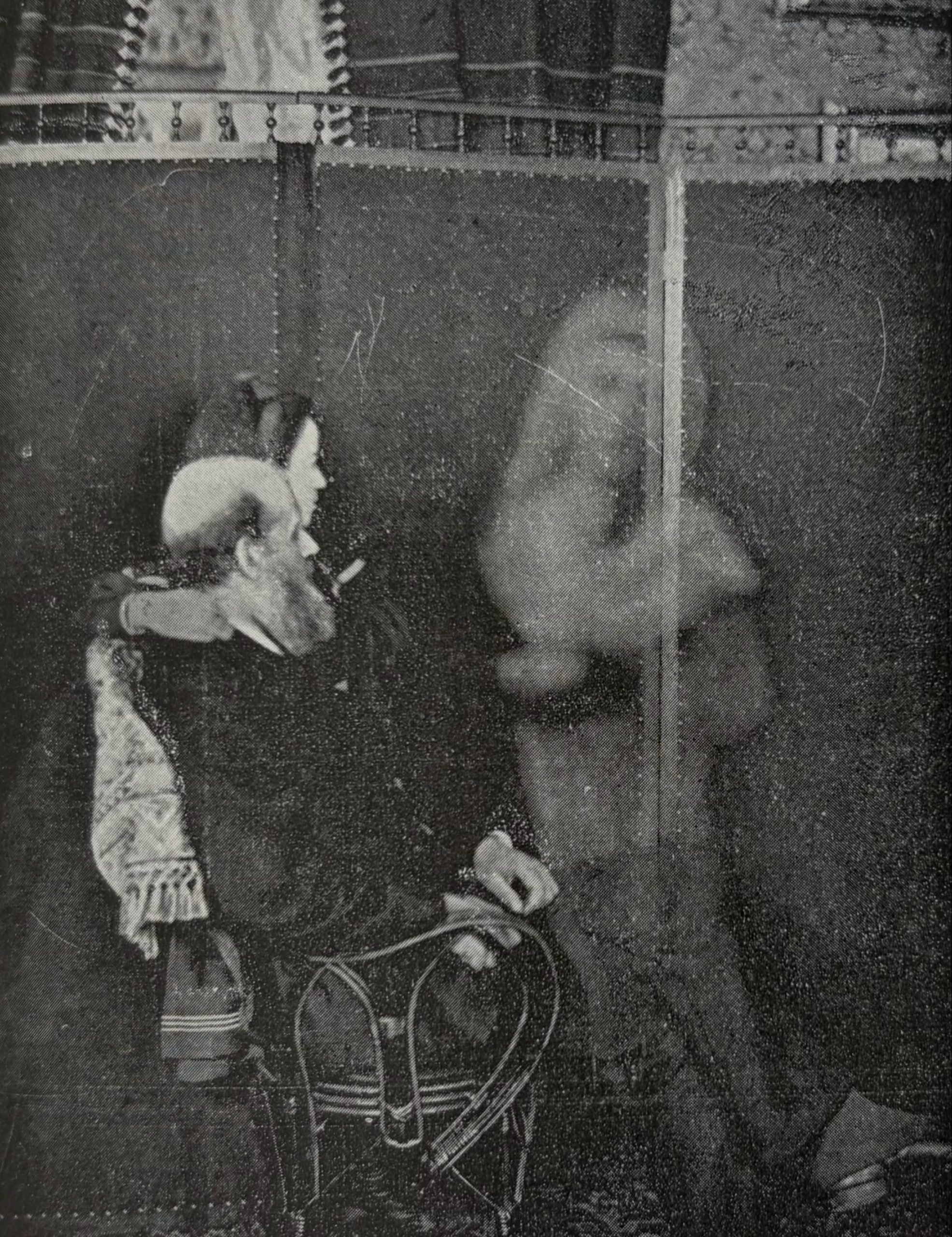
Charles Richet, a scientistswho investigated psychic phenomena, added:
“These diverse experiments, which have not been repeated, and which are testified to only by certain observers possibly devoid of the necessary scepticism, do not seem to me such as to shake the negative convictions of scientists. But this is not the case with the phenomena recorded of Home, Florence Cook, Eusapia, and Miss Goligher which are unassailable. Those of Marthe-Eva, of Linda Gazzera, Mrs. Salmon, Eglinton, and Mme. Lacombe acquire full value from the others, and this value is considerable; nor do I see reason to dismiss entirely those of M. Corrales, Sambor, and perhaps those of Mme. d’Esperance.”

So was she a fraud or someone lucky enough not to get caught?
In July 2013, a small collection of her personal papers was discovered in the archives of the College of Psychic Studies in London (formerly the London Spiritualist Alliance) where a painting of her is still displayed.
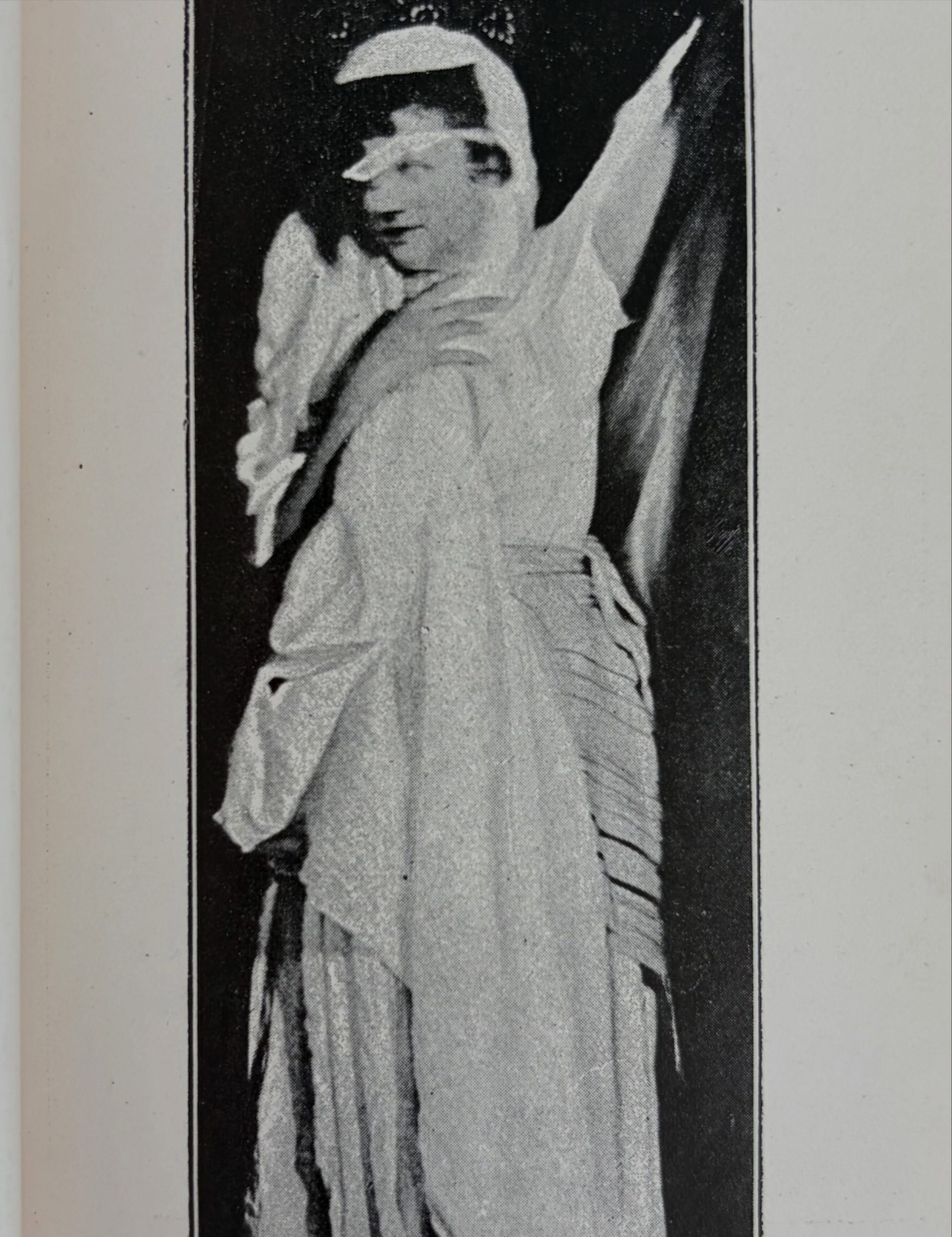
‘I can recall no time when they were not familiar and natural; so that the only curious thing to me seemed the fact that other people should not have the same experiences. As a child I could not understand this fact; indeed the refusal of my companions to accept my version of what was going on around us sometimes irritated me beyond measure, and my frequent exhibitions of temper at their incredulity, gained for me the reputation of being “a little vixen” as well as “decidedly queer”. To my mind it was always the other people who were “queer”; and I thought it a great trial to have to listen to the wonder and incredulity, which frequently greeted my narration of something that to me seemed a trifling incident of every day life. However, as I grew older I began to understand that all were not gifted alike….’
– Shadow Land, or Light From the Other Side by Elizabeth Hope d’Esperance, 1897
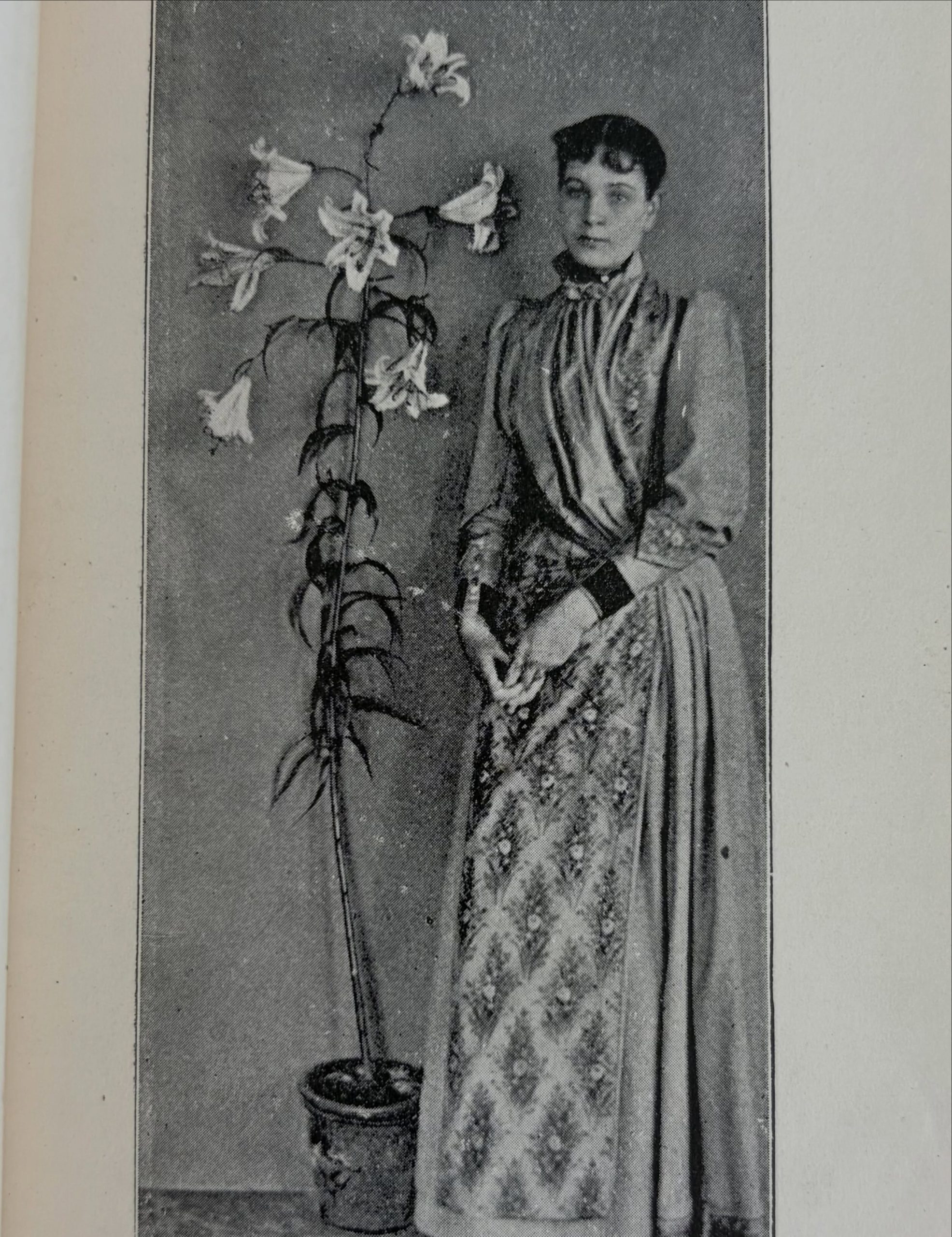
It was a dark and stormy night when the seance was in session…
Walter gave us a message requesting us to keep as quiet and composed as we could and that no one was to talk to me, because Yolande was about to bring us a flower; and the external conditions being so bad we must do all we could to help her.
We did what we could, and the fact that we had something to expect helped to put us in a better humour. We had sand, water, and a flowerpot in readiness, as we were accustomed, though they had never been asked for during many months.
The strong scent was so overpowering, that I felt half suffocated. I put out my hand expecting to feel flowers, but there was 1 nothing. Immediately afterwards, something , large, heavy, cold, and damp fell against me. My first thought was that it was some dead clammy body or object, and it gave me such a horrid sensation that I almost fainted. I was holding the hand of Mr. Aksakof, when it began to feel as though I was receiving a succession of electric shocks, making it painful for me to come in contact with anything, each shock causing the perspiration to rush from every pore in my skin.
The pain from my scorched arm left me, and the toothache also was forgotten; and strangely enough every one noticed that Yolande carried her arm as though she were in pain, and when accidentally touched she flinched as though hurt. I felt very thirsty and drank much water, but that was nothing unusual during a séance. What went on outside the curtains I learned afterwards from Mr. F’s notes. Yolande with the assistance of Mr. Aksakof had mixed sand and loam in the flower pot and she had covered it with her veil, as she had done in the case of the water bottle in England when the Ixora Crocata was grown.
The white drapery was seen to rise slowly but steadily, widening out as it grew higher and higher. Yolande stood by and manipulated the gossamer-like covering till it reached a height far above her head, when she carefully removed it, disclosing a tall plant bowed with a mass of heavy blossom, which emitted the strong sweet scent I had complained of. Notes were taken of its size, and it was found to be about seven feet in length from root to point, or about a foot and half taller than myself. Even when bent by the weight of the eleven large blossoms it bore, it was taller than I. The flowers were very perfect, measuring eight inches in diameter; five were fully blown, three were just opening, and three in bud, all without spot or blemish, and damp with dew. It was most lovely, but somehow the scent of lilies since that evening has always made me feel faint. Yolande seemed very pleased with her success and told us that if we wanted to photograph the Lily we were to do so, as she must take it away again. She stood beside it and Mr. Boutlerof photographed it and her, twice. Mr. B. said “They are not very beautiful specimens of the photographic art,” but there they were, and taking into consideration the woeful conditions the only thing to wonder at is that they could be obtained at all. The photographing was done by aid of the magnesium flash light.
Via: Hill of Dust Books and Haunted Ohio Books
Would you like to support Flashbak?
Please consider making a donation to our site. We don't want to rely on ads to bring you the best of visual culture. You can also support us by signing up to our Mailing List. And you can also follow us on Facebook, Instagram and Twitter. For great art and culture delivered to your door, visit our shop.