“Our altar is raised, adorned with all its ornaments, sparkling with all its lights, ready to receive the almost divine word from the Beyond.”
– Nos Invisibles, 1907

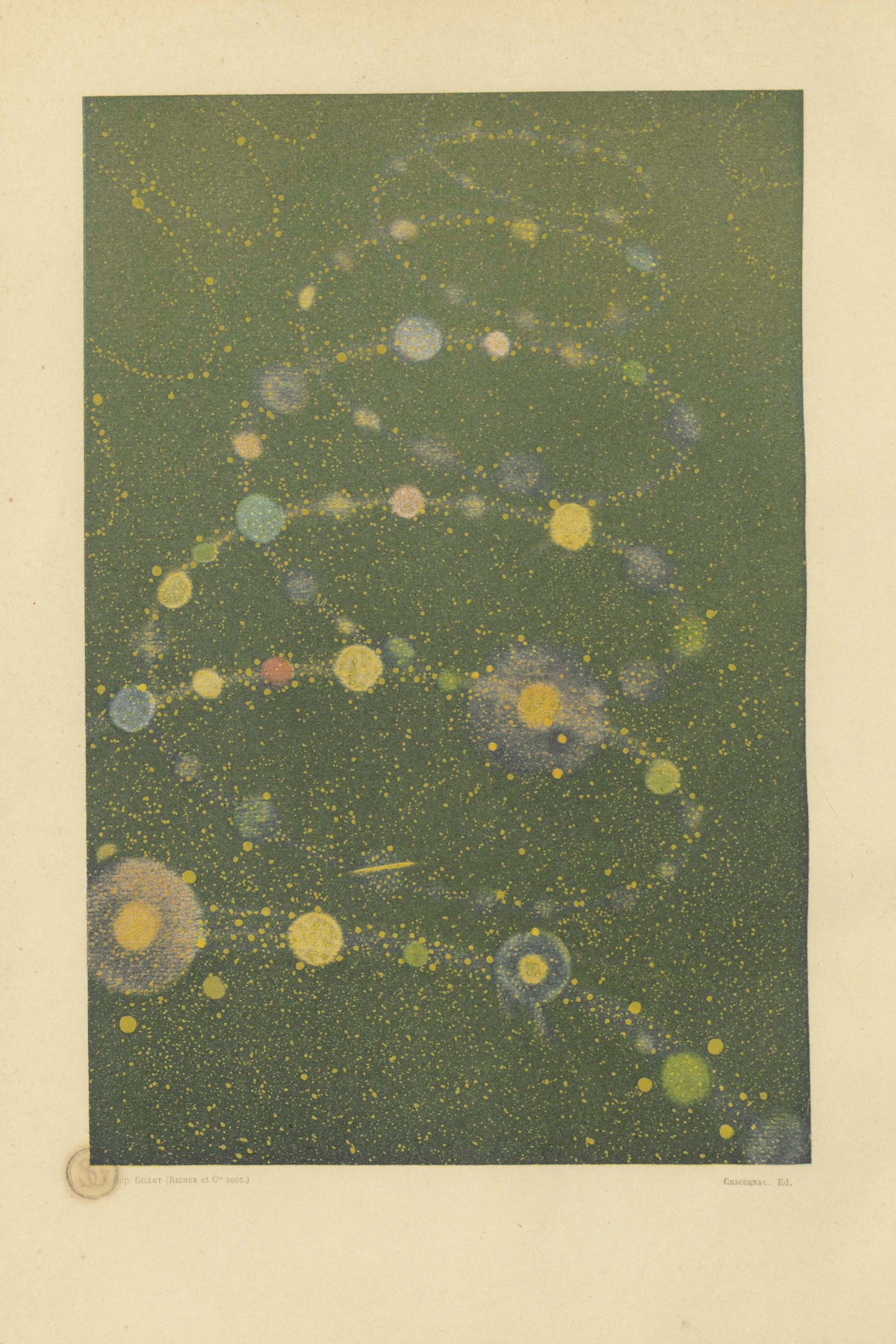
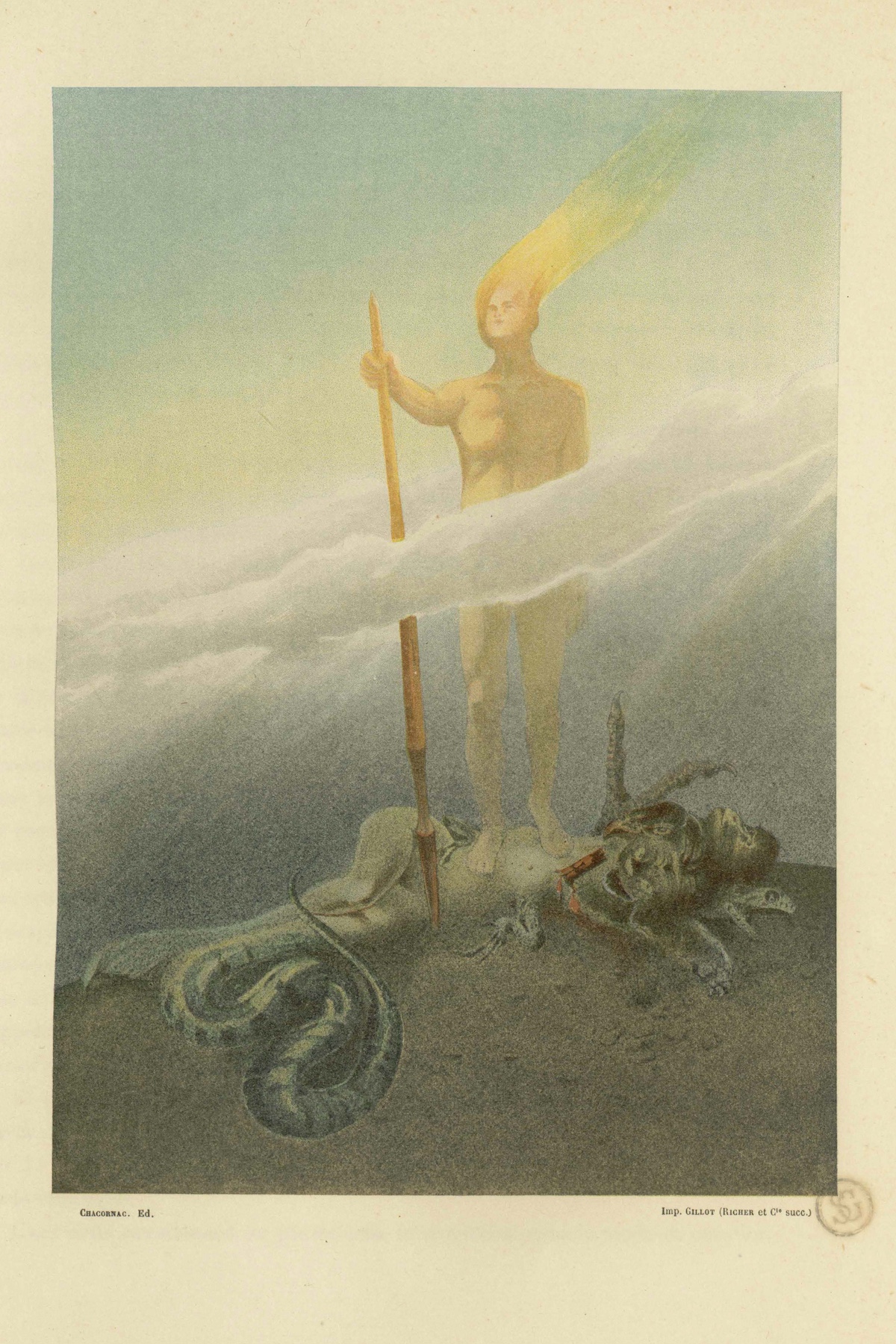
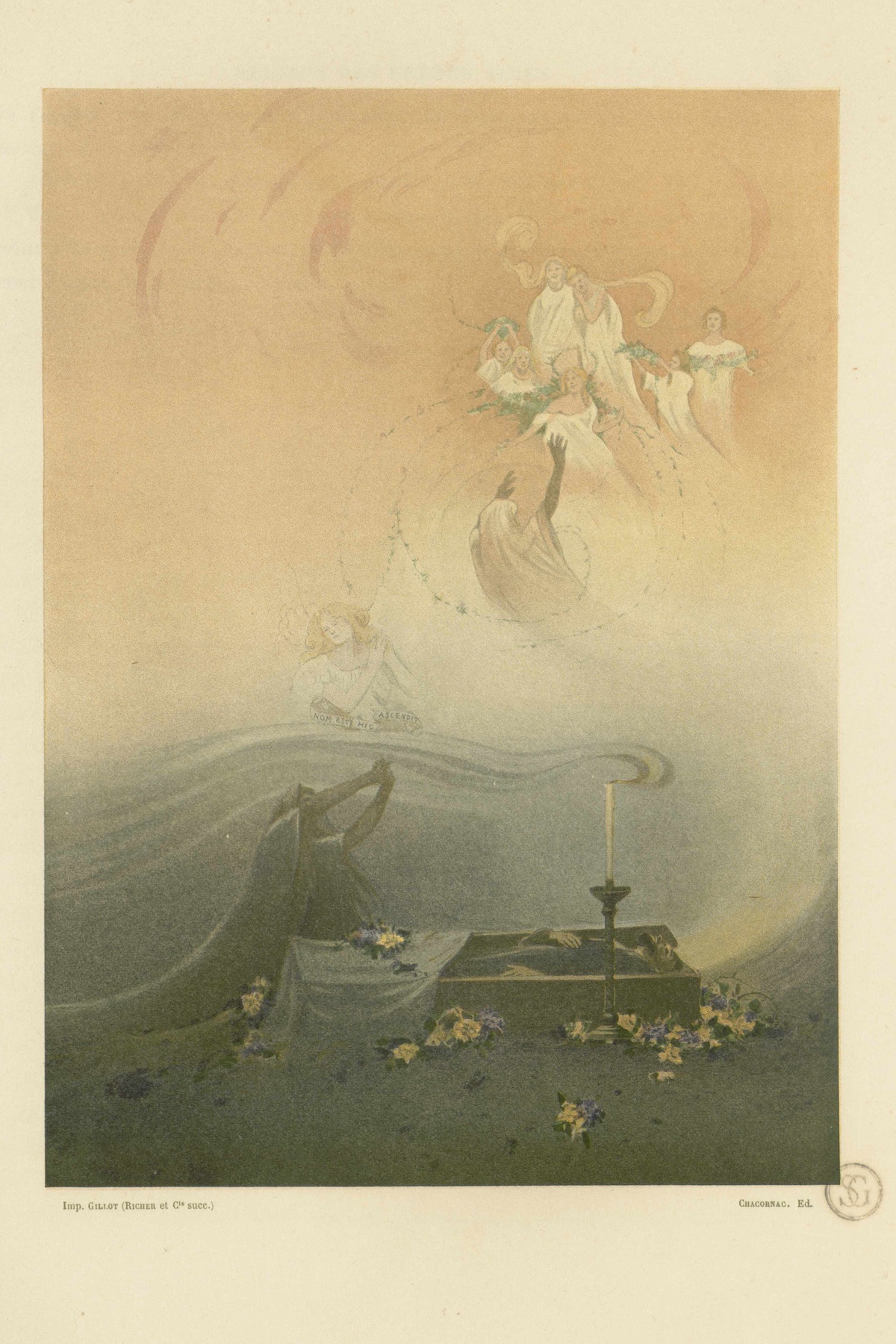
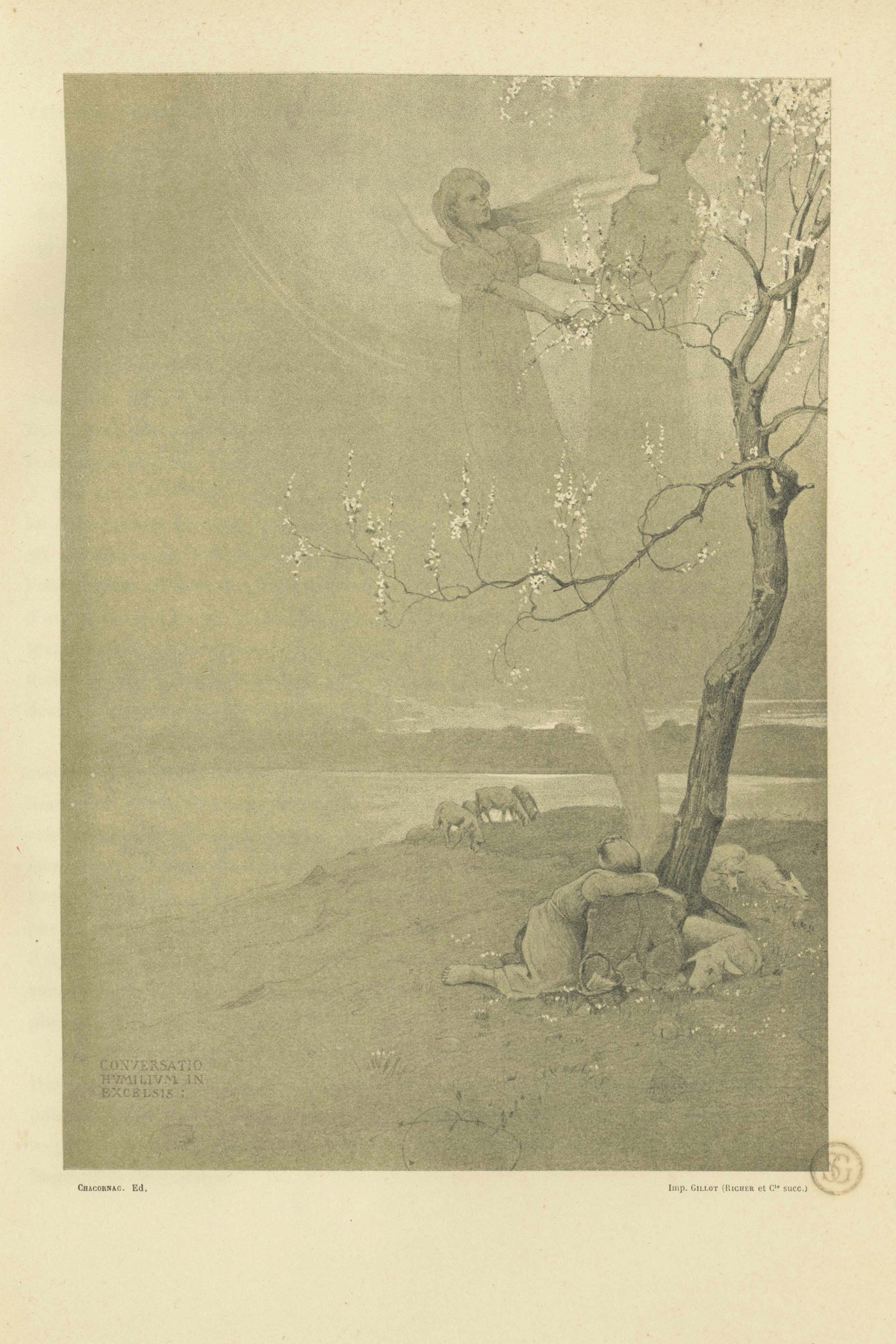
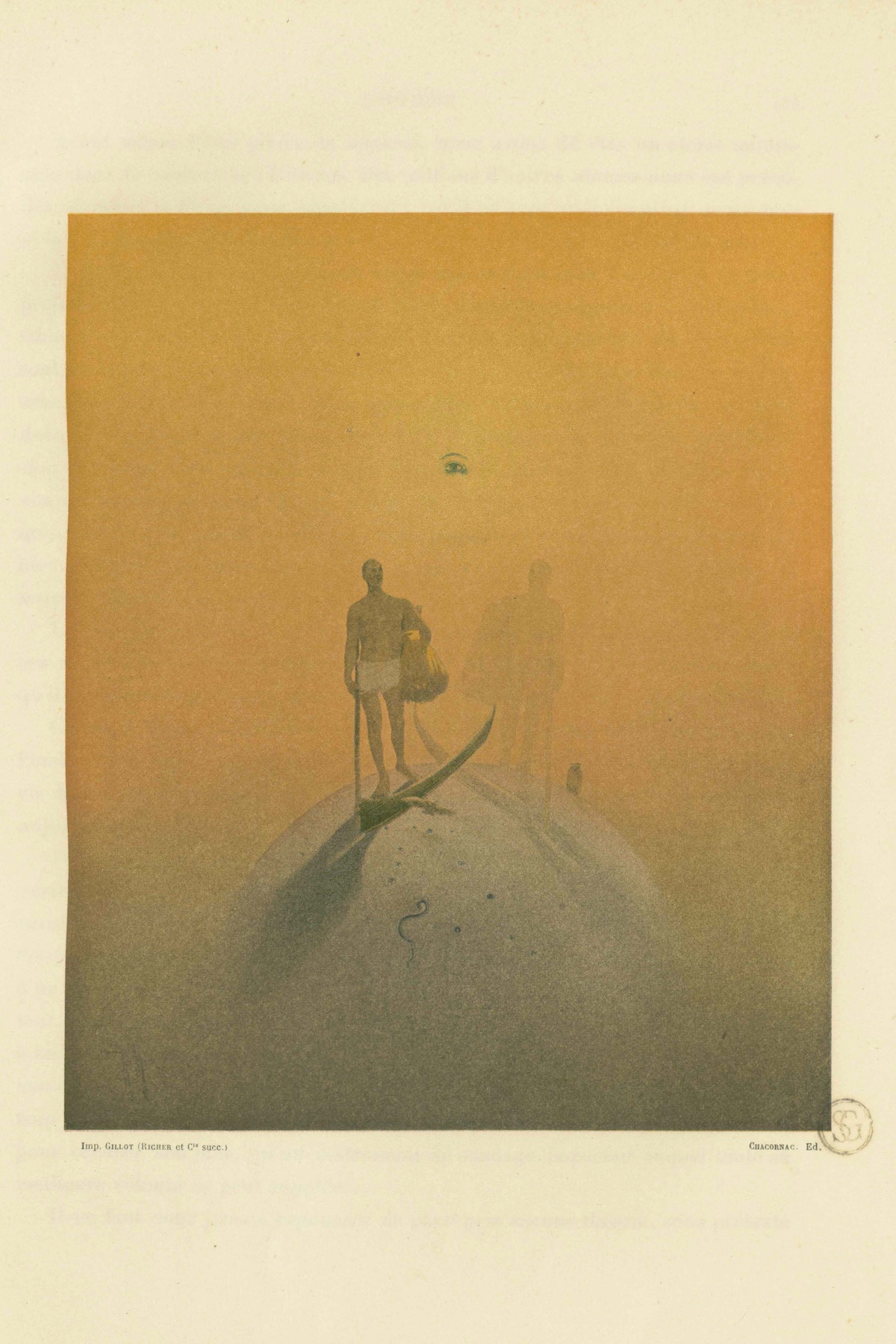
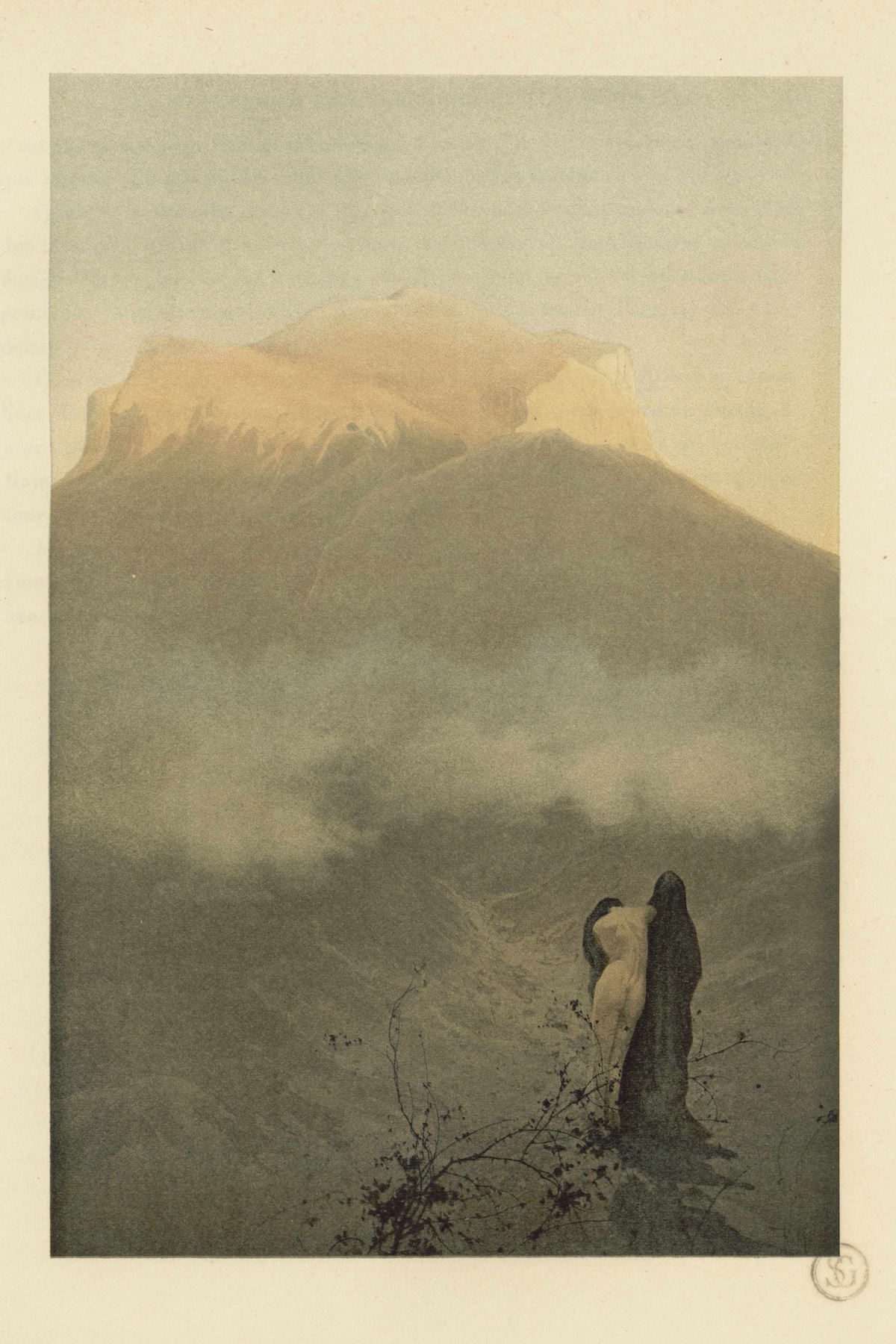
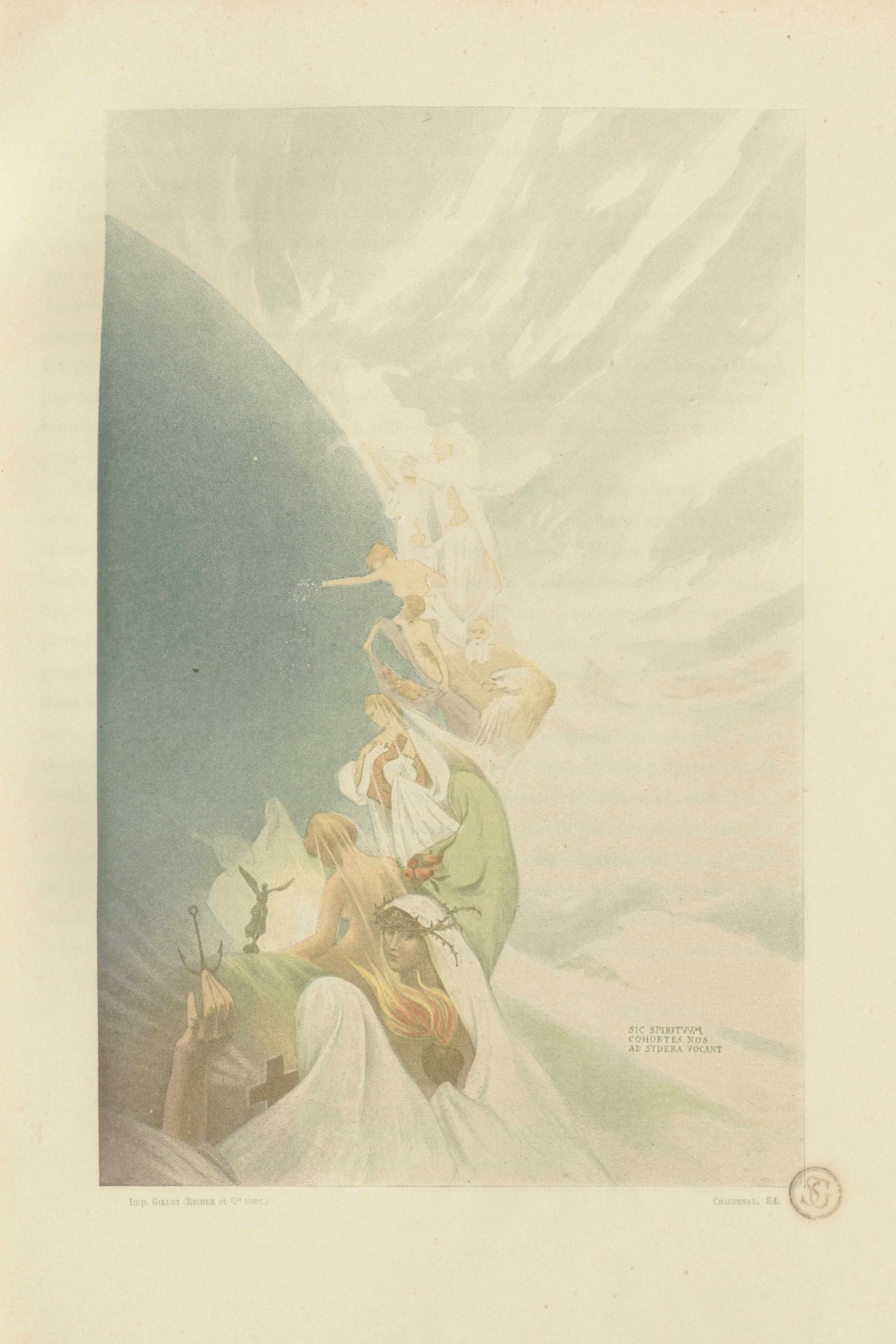
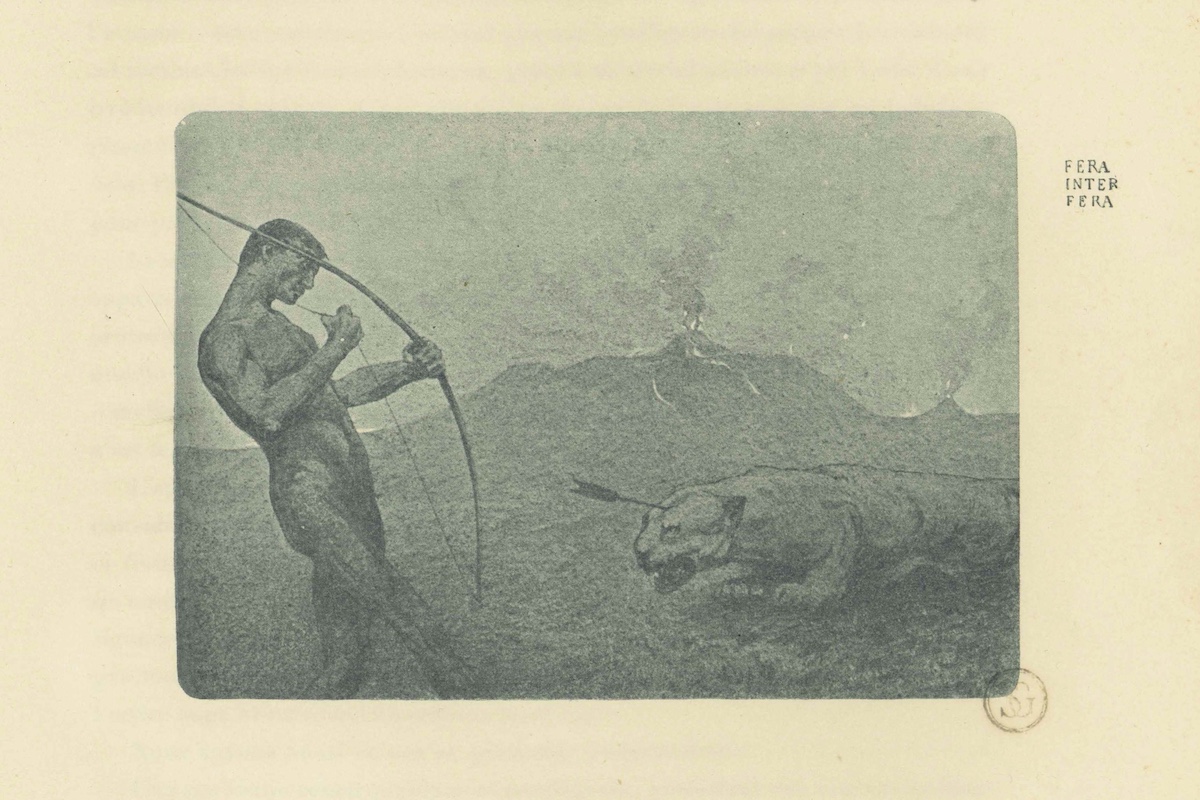
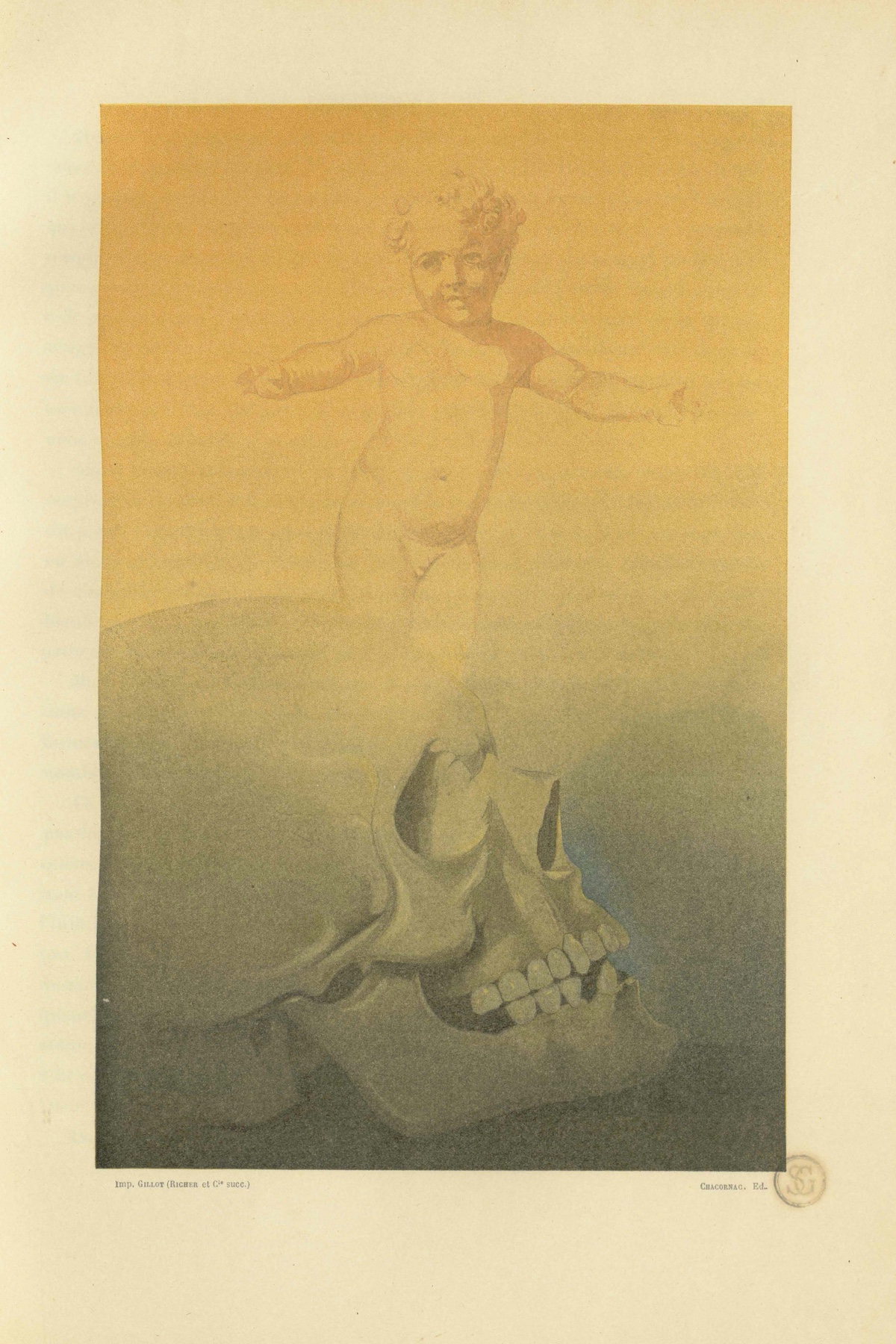
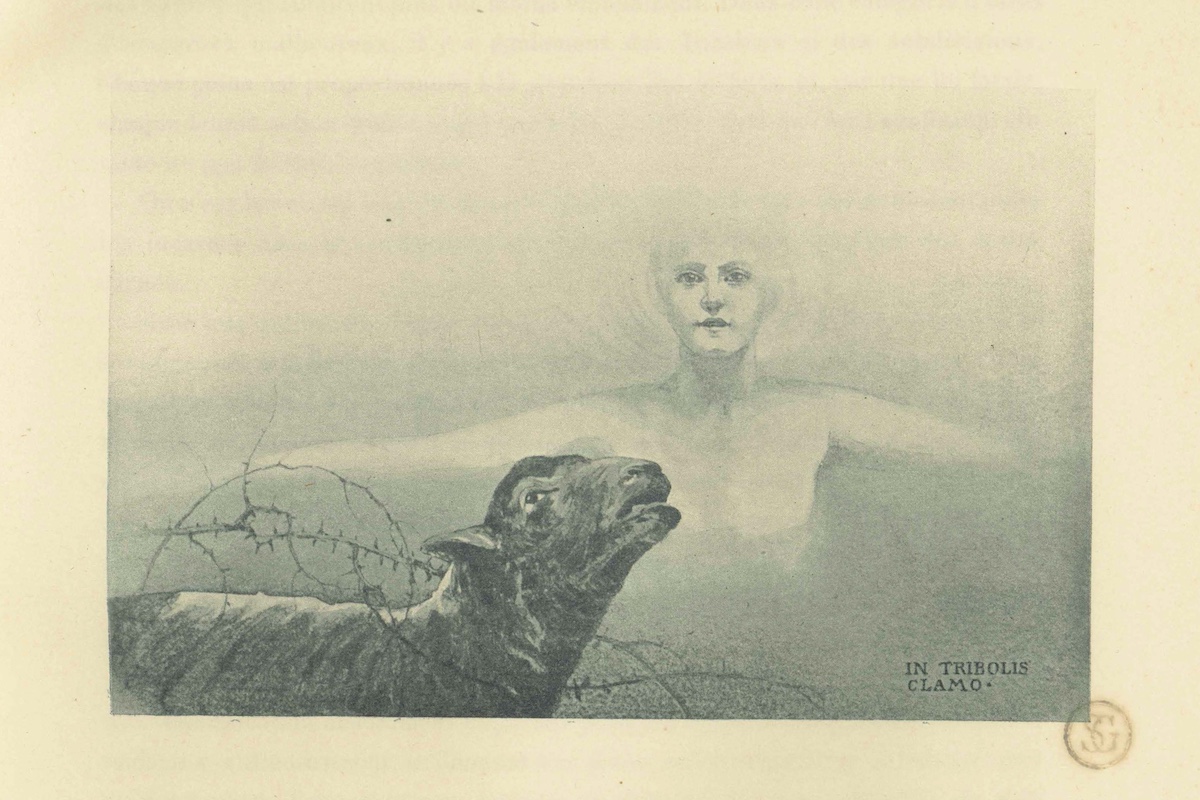
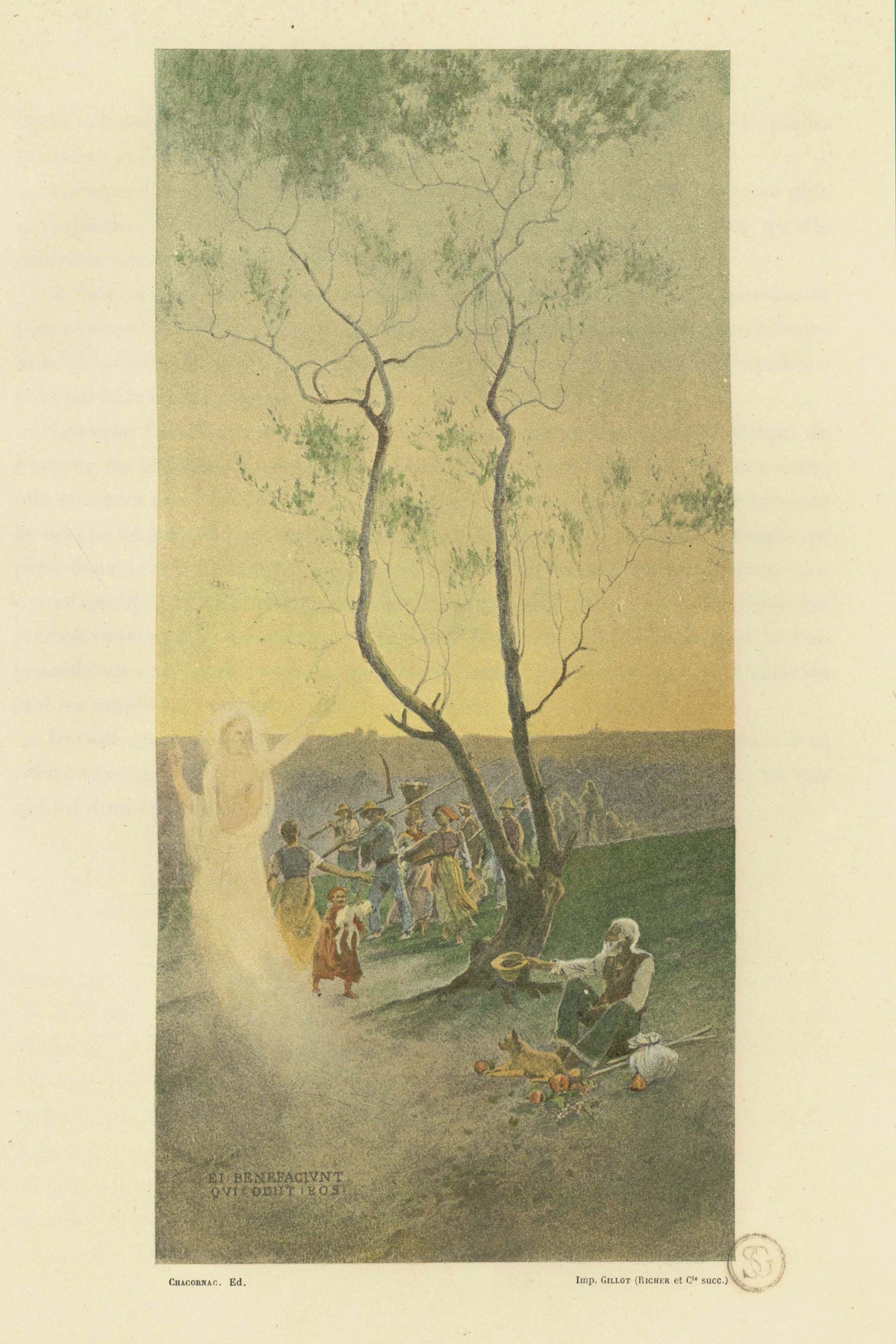
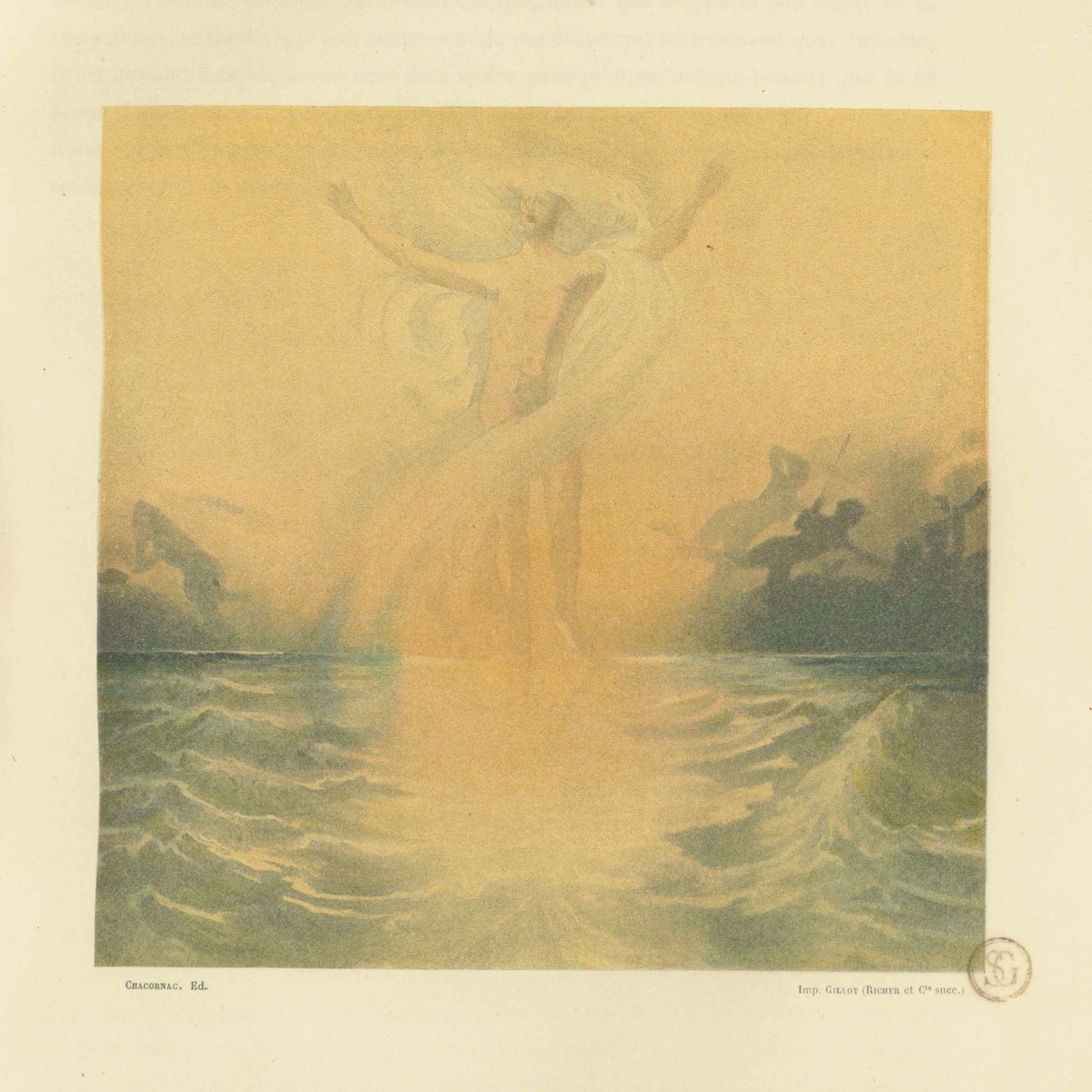
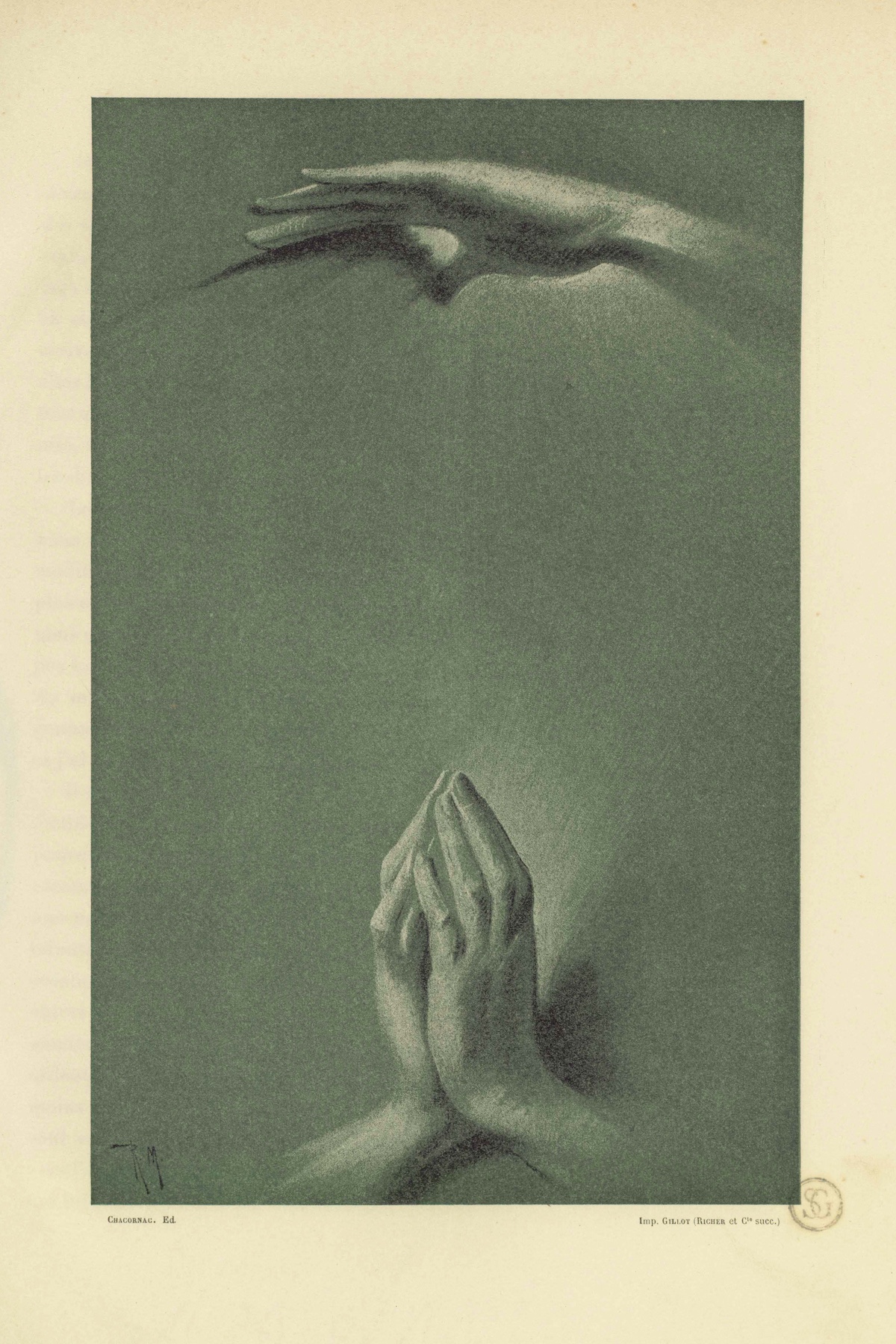
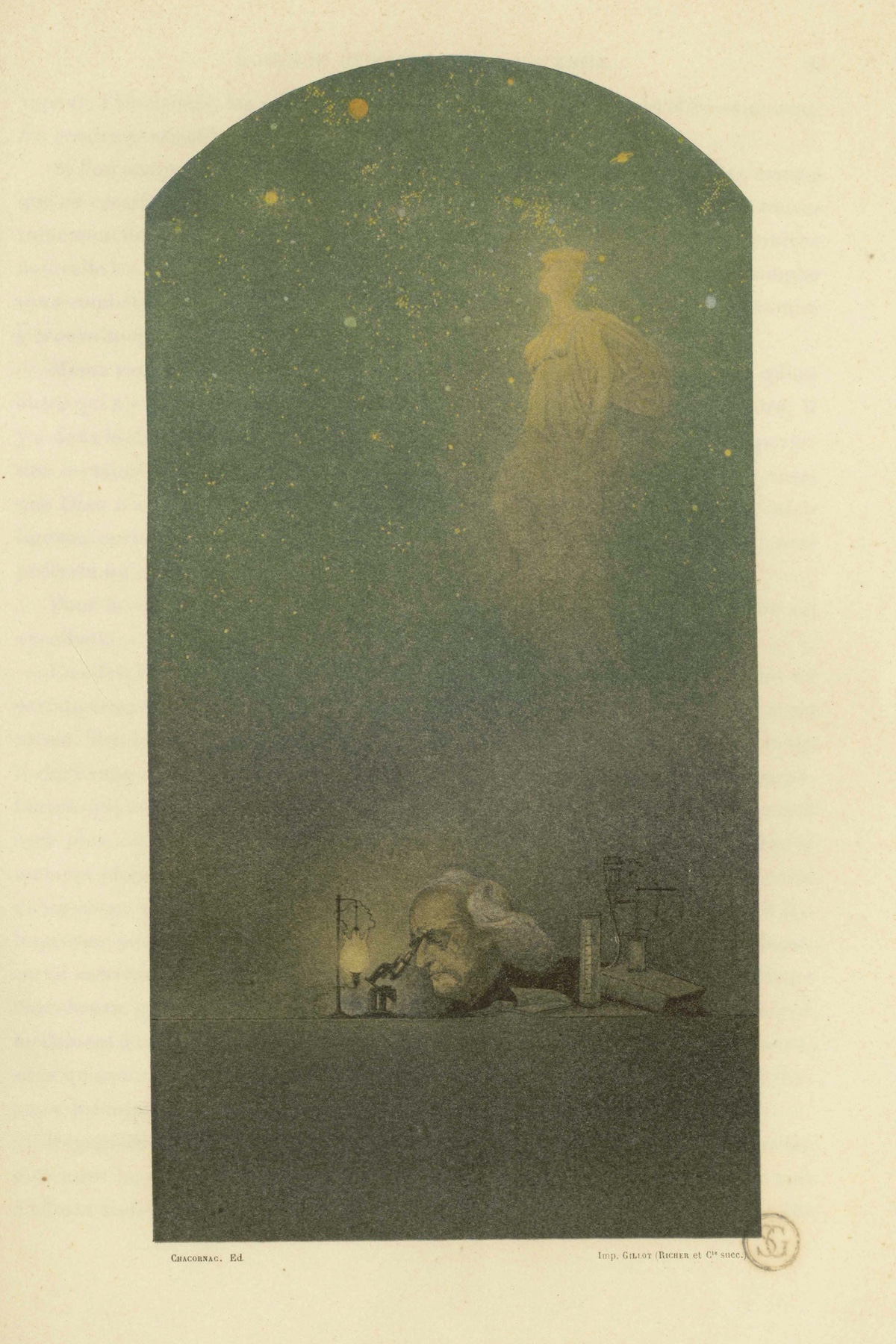
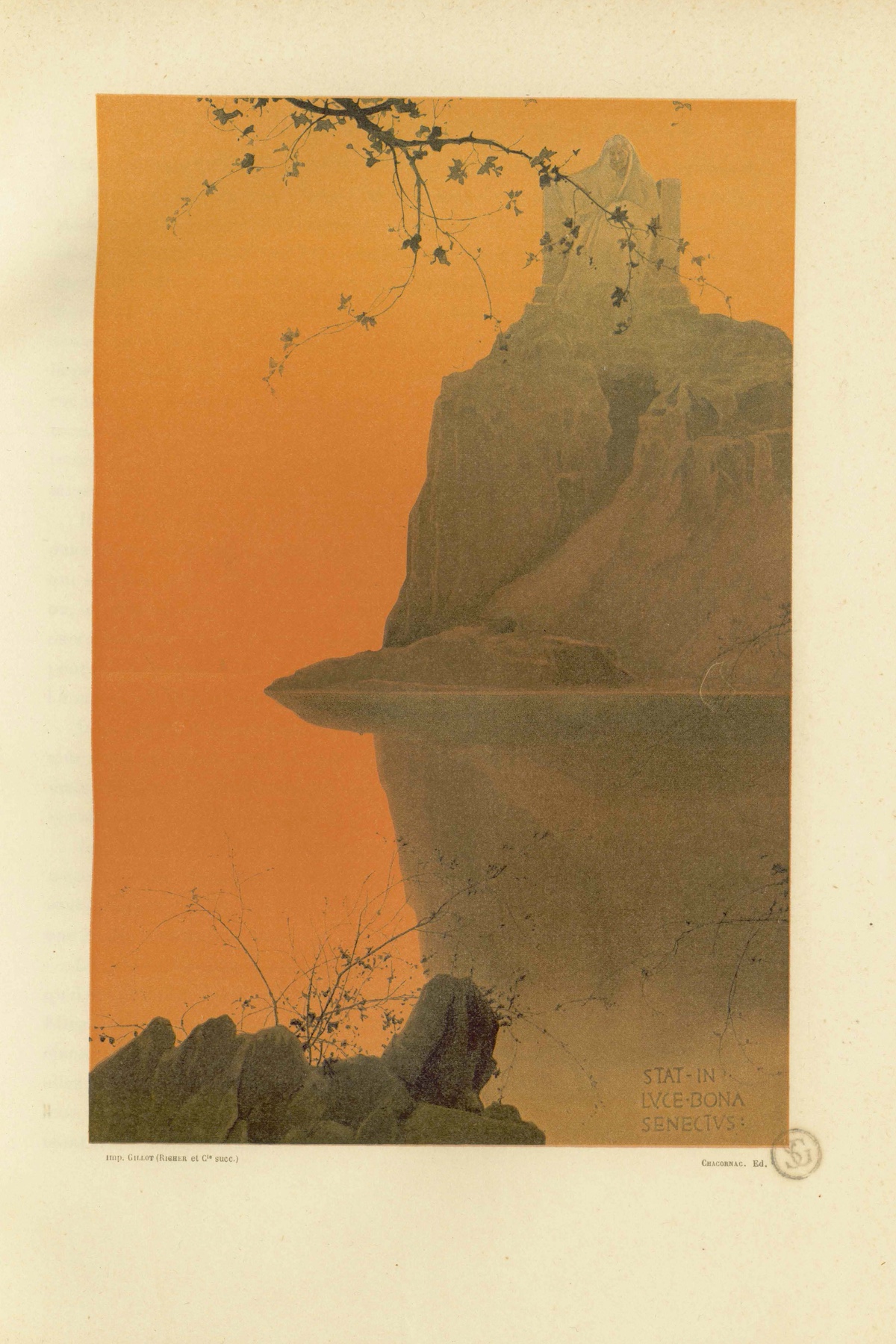
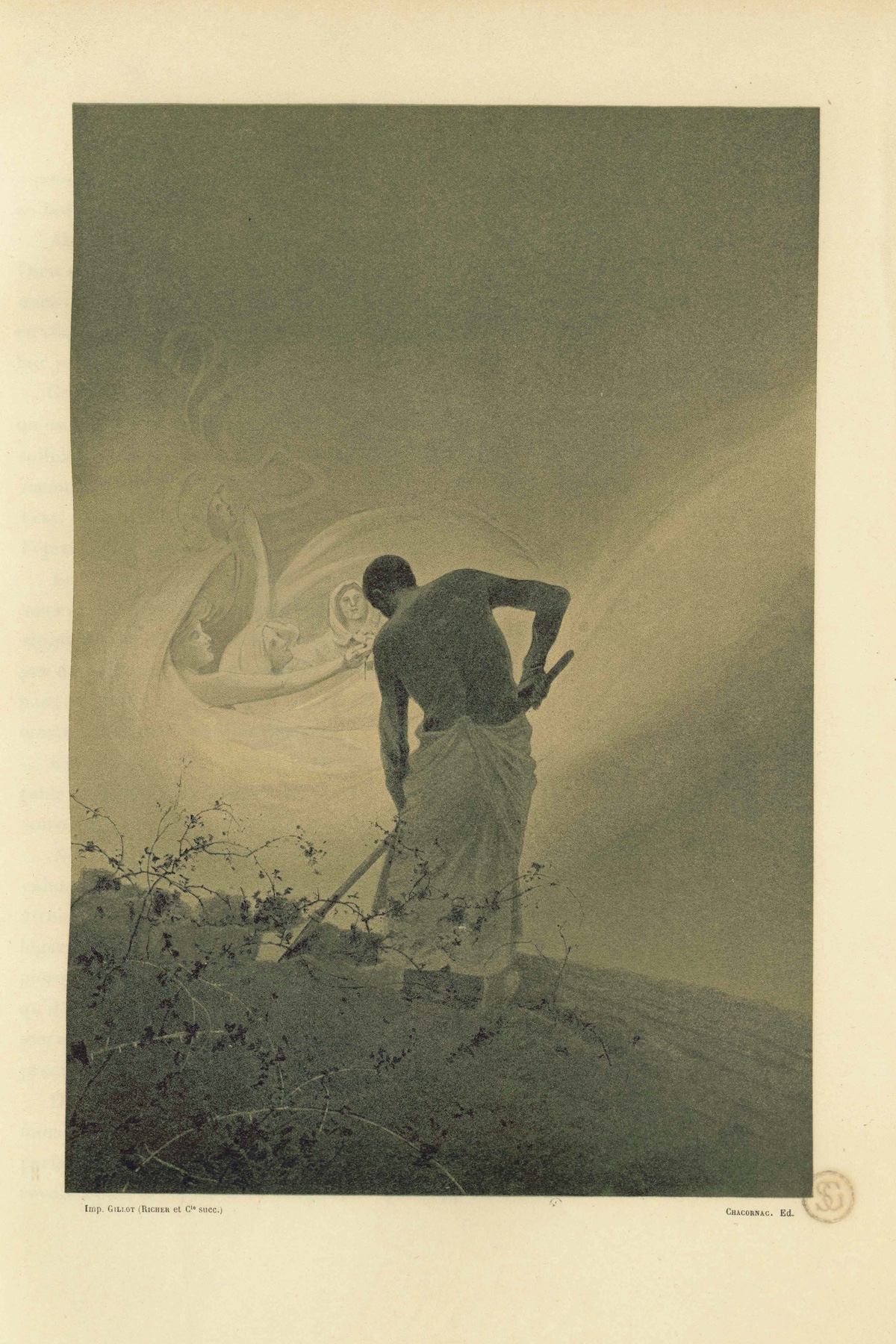
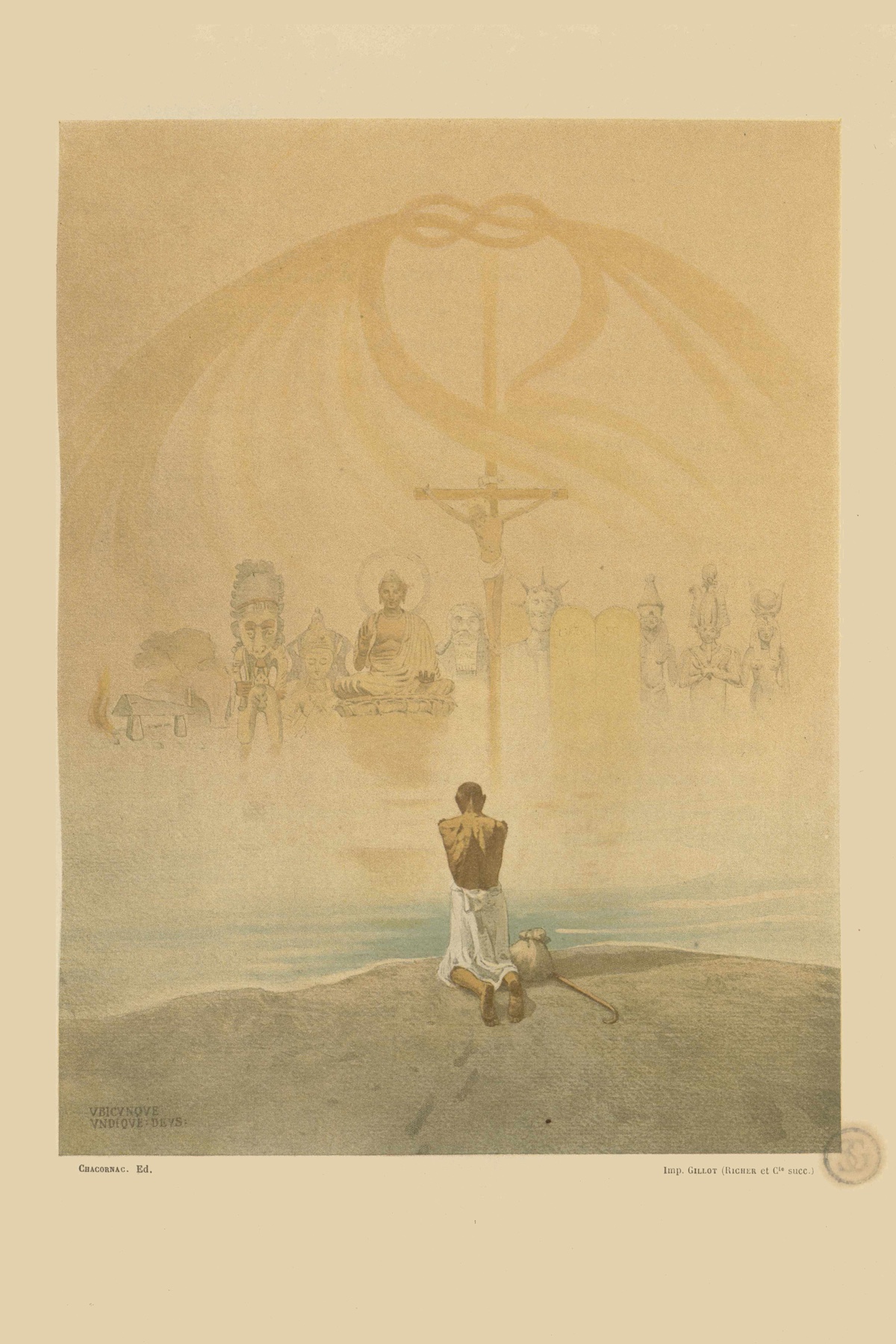
In Nos Invisibles (1907) we join Charles d’Orino on a universal quest for spiritual serenity and eternal life. The journey into mystery and light is illustrated by watercolour paintings from Raffaele Mainella (1856 – 1941).
For added oomph the writer acted as medium, channelling famous names – Honoré de Balzac, Emile Zola, Gustave Flaubert, Alphonse de Lamartine and other major writers and thinkers – from beyond the grave.
Not everyone was convinced that d’Orino was a passive transcriber of messages from the spirit world. As French journalist Jean de Bonnefon (1867 – 1928) noted in 1909:
“Unfortunately, the deceased all have the same style, make the same mistakes in French and repeat the same nonsense as soon as they’re channelled via the medium of Mme d’Orino.”
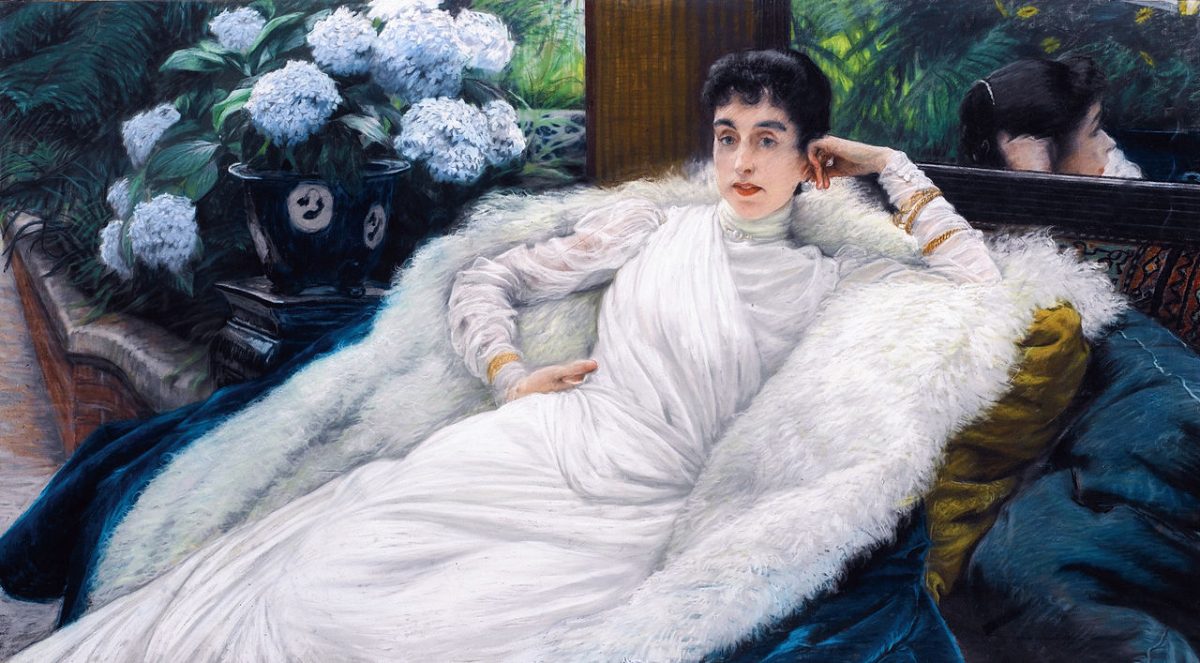
James Tissot (1836–1902) – painting of Clotilde BriatteDaisy Sainsbury
The (Not So) Mysterious Madame d’Orino
Charles d’Orino was the a nom de plume for Jeanne Marie Clotilde Briatte, Comtesse Pillet-Will (1850–1910), a Parisian socialite married Frederic Pillet-Will (1837 – 1911), scion of banking dynastry and governor of the Banque de France.
Pillet-Will had the money and time to publish six volumes of spiritualist works between 1904 and 1908. Her books consisted mainly of essays and short fictions which she attributed to the spirits of writers, including Balzac, Guy de Maupassant and Alexandr Dumas.
She also found time to pose for a portrait (above) by James Tissot (15 October 1836 – 8 August 1902), the hymned illustrator and caricaturist best known for his paintings of contemporary European high society produced during the peak of his career, which focused on the people and women’s fashion of the Belle Époque and Victorian England.
Automatic Writing
As with the art of Emma Kuntz and Hilma af Klint, Pillet-Will claimed to have made the invisible visible, albeit through writing.
Not everyone was pleased. She was accused of standing on the graves of the dead to further her own agenda. One critic noted in Gil Blas:
“Madame d’Orino n’est pas la seule femme qui écrive dans le monde spirite. Mais elle est la seule qui soit dangereuse en donnant une fortune pour véhiculer ses livres.”
(“Madame d’Orino is not the only woman who writes in the spiritualist world. But she is the only one who is dangerous by spending a fortune to distribute her books.”)
To her critics, Pillet-Will argued that the distinctiveness of the styles in her spirit writing proved the authenticity of her intimate contact with the departed. “On remarquera que leur style devient plus familière”, she wrote of these spirits in the 1905 preface to her Échos d’un autre monde (Echoes from another world). “Ils reprennent peu à peu les qualités brillantes de leur style terrestre” (We will notice that their style is becoming more familiar. They are gradually regaining the brilliant qualities of their earthly style”).
It was mere chance that the names of dead men from the French canon helped to promote a woman’s work and get her into print.
But Balzac et al did augment her credibility in certain circles. As Daisy Sainsbury notes:
“After the development of spiritualism in the United States in the 1840s, France was quick to embrace the trend for communicating with the dead and publishers soon cropped up to profit from the fruits of their labours. Some of the country’s finest writers developed a penchant for the spirit world: Victor Hugo (1802–1885) presided over seances that contacted literary greats of the past, even assisting Shakespeare to conjure one last play from the afterlife. Briatte was therefore not alone. However, her wealth, the whiff of vanity publishing that hung around her oeuvre, and the fact that she was a woman whose every outfit was reported in painstaking detail in the society pages, made her an easy target.”

Nos Invisibles:
Nos Invisibles appeared in a limited edition of 500 copies priced at 100 francs each. A smaller run of 20 copies, numbered and printed on fine Japanese paper, commanded 200 francs. Both editions contained 33 plates by the Italian watercolourist Raffaele Mainella (1856–1941).
As the preface to Nos Invisibles suggests, Mainella was hired to create “astral images” of “as-yet unknown spheres” to stir “the dormant memory in soul that is asking only to rediscover its intensity”. And he does a tremendous job. The light in his work suggests auras from other words, as if we are seeing anew through heavenly clouds.

Nos Invisibles – The Preface
We had dreamed of offering the communications of the Great Spirits a setting worthy of their exceptional value. Our lucky star placed in our path a high-caliber artist, wholly imbued with the spiritist faith, who gave us his assistance without reserve, thereby earning our boundless gratitude. He delighted in endowing Nos Invisibles with watercolours which, through the science of their composition and the extraordinary power of their colouring, would scarcely find rivals.
A very skilled professional, to whom we owe our heartfelt thanks, devoted all his art to reproducing and applying to the volume – faithfully and brilliantly – these masterpieces.
None of the material details by which publications of great luxury are distinguished has been neglected. The printing of the book attests that the art of typography holds no secrets for us, and the paper is that of the most magnificent editions.
And thus our dream is fulfilled. Our altar is raised, adorned with all its ornaments, sparkling with all its lights, ready to receive the almost divine word from the Beyond.
Those who so generously bestowed it upon us, contributed in the last century some of the most memorable pages in the history of human thought. They are Lamartine and Musset – “emperors of poetry,” as Henri Heine called them; Balzac, Gautier, Flaubert, Maupassant, Zola, Dickens; Renan, “the emperor of exegesis”; Lamennais, the philosopher gentle to the humble; Monsignor Dupanloup, the prelate formidable to the powerful; Father Henri, learned theologian and impeccable dialectician; and finally, the admirable Curé of Ars.

Via: Balzac’s voice from the beyond by Andrew Watts
Would you like to support Flashbak?
Please consider making a donation to our site. We don't want to rely on ads to bring you the best of visual culture. You can also support us by signing up to our Mailing List. And you can also follow us on Facebook, Instagram and Twitter. For great art and culture delivered to your door, visit our shop.