“Words divide, pictures unite”
– Otto Neurath
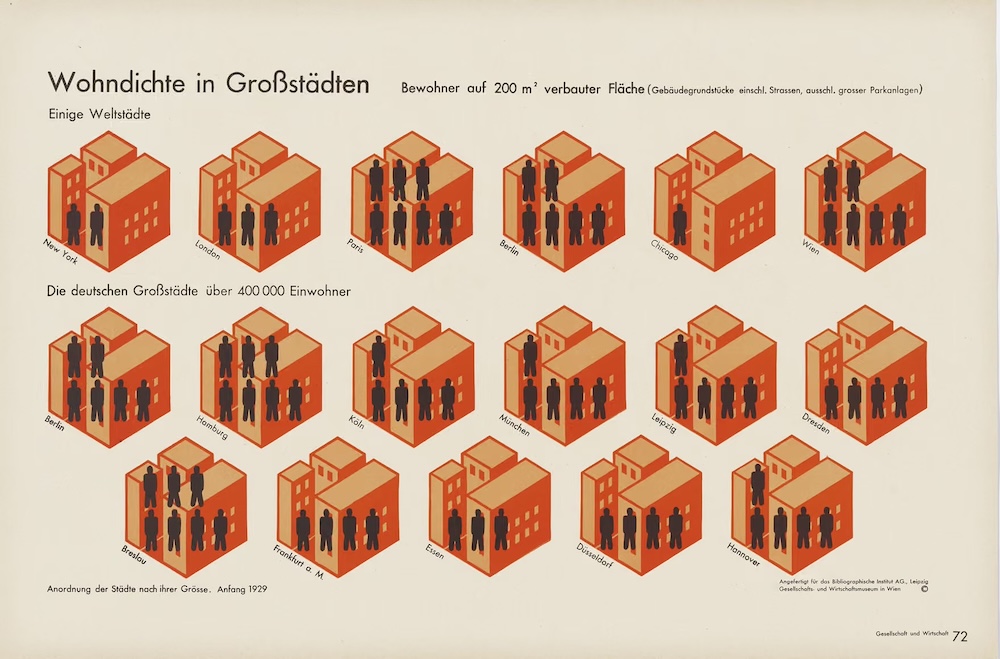
A graphic showing residential density in large cities, designed by Marie Reidemeister (later Neurath). Photograph- Otto and Marie Neurath Isotype Collection, University of Reading copy
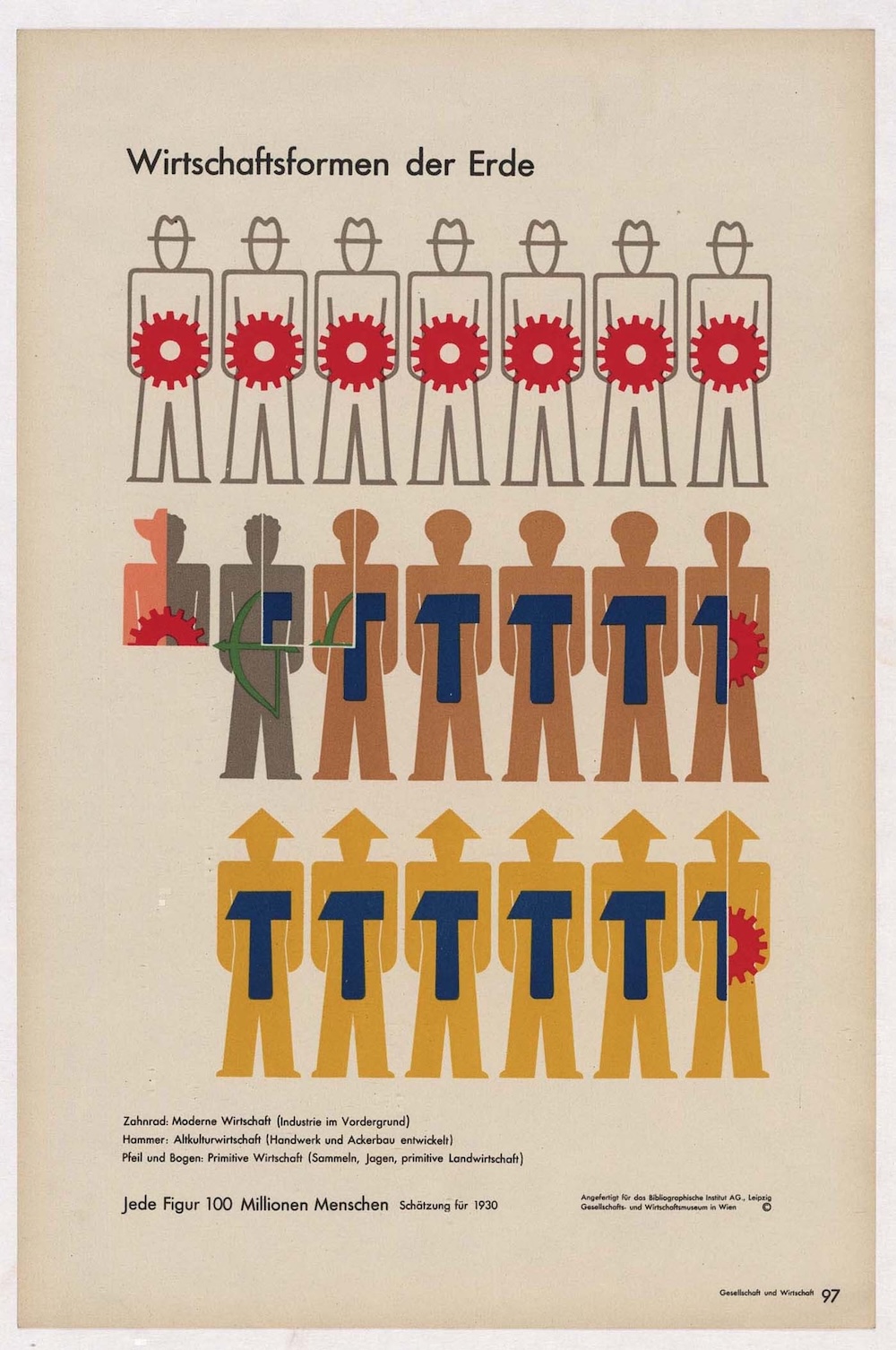
Otto Neurath (December 10, 1882–December 22, 1945) created a new visual language in which the most important element of a message, theory or story could be captured at first glance.
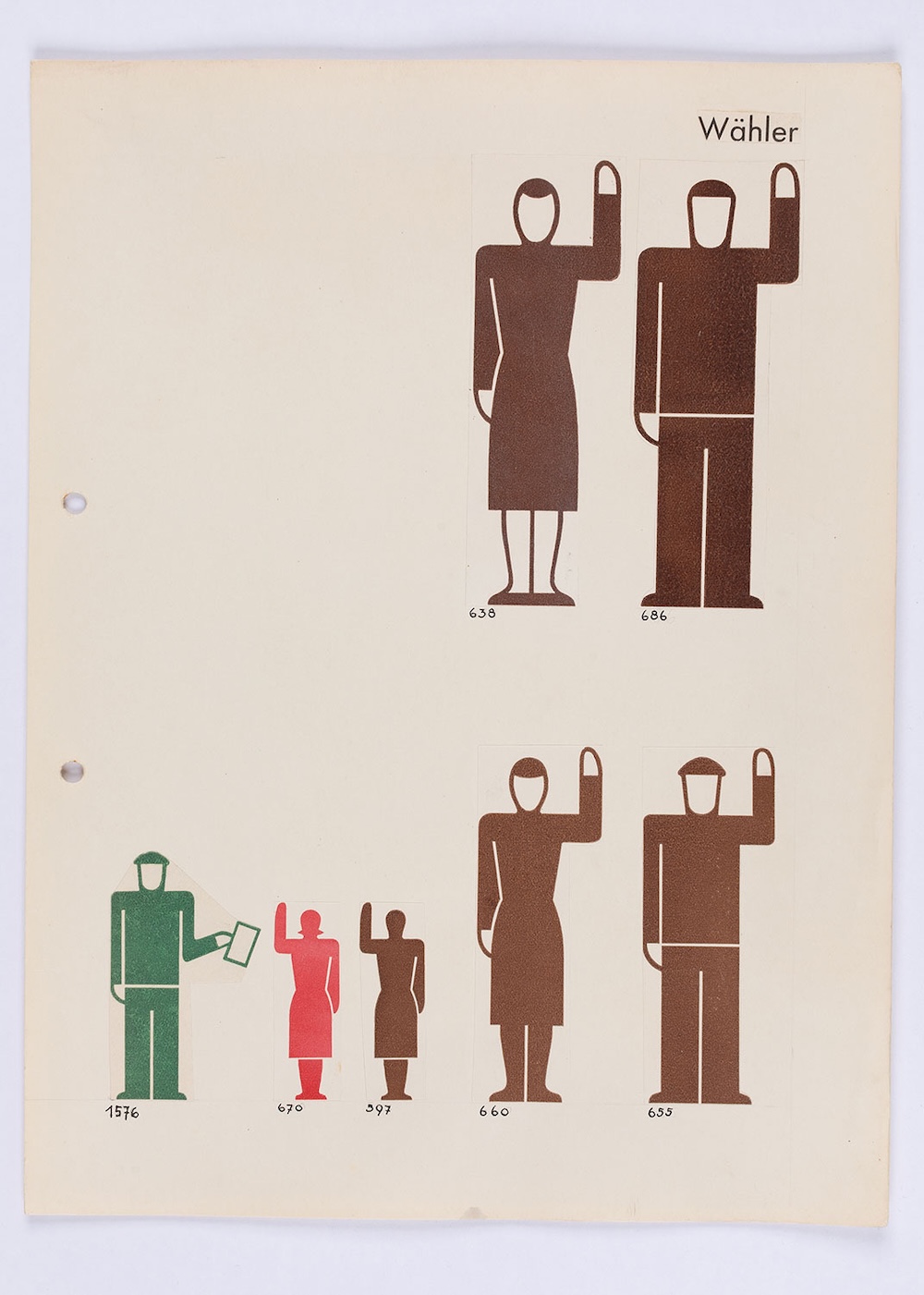
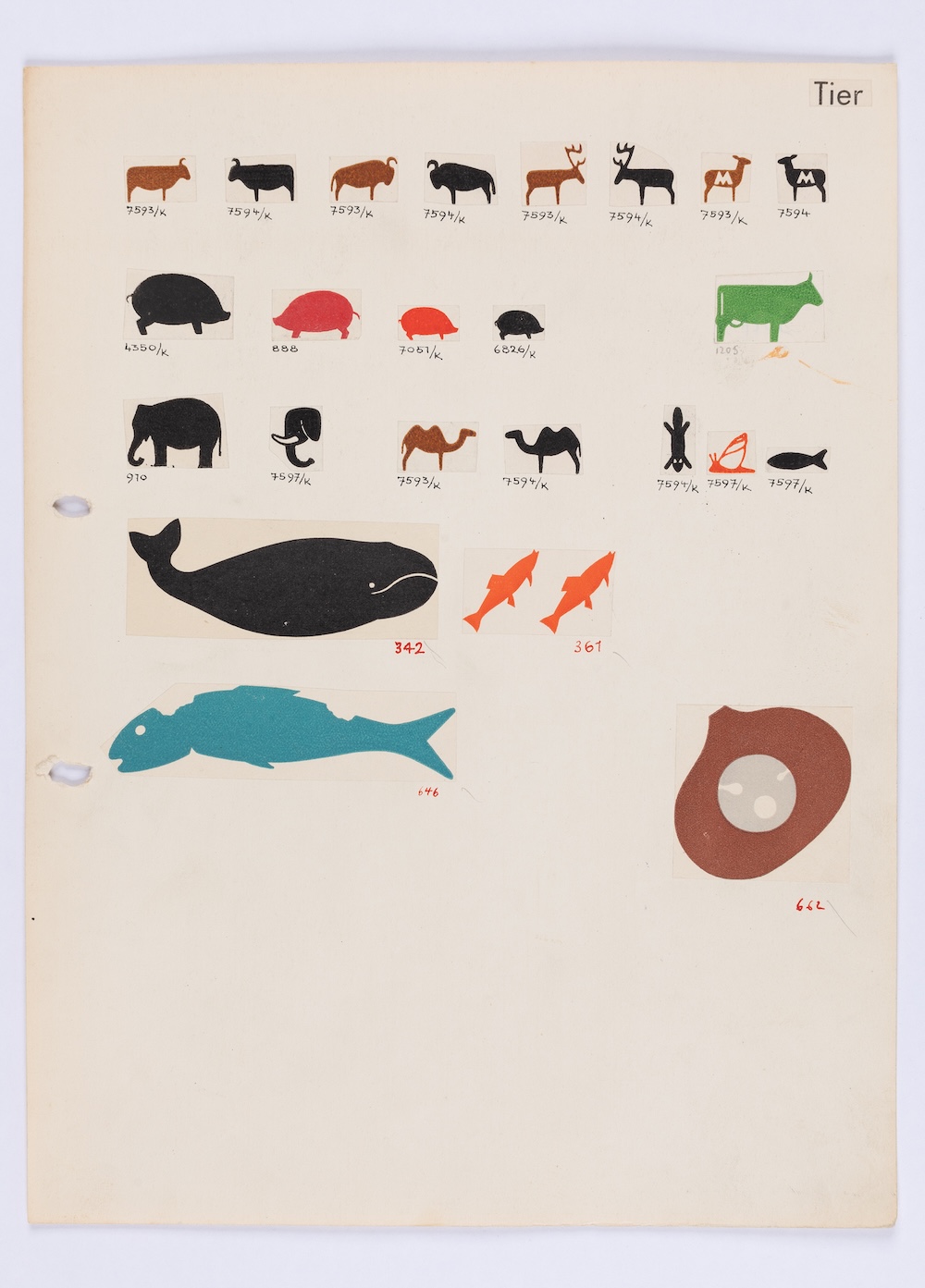
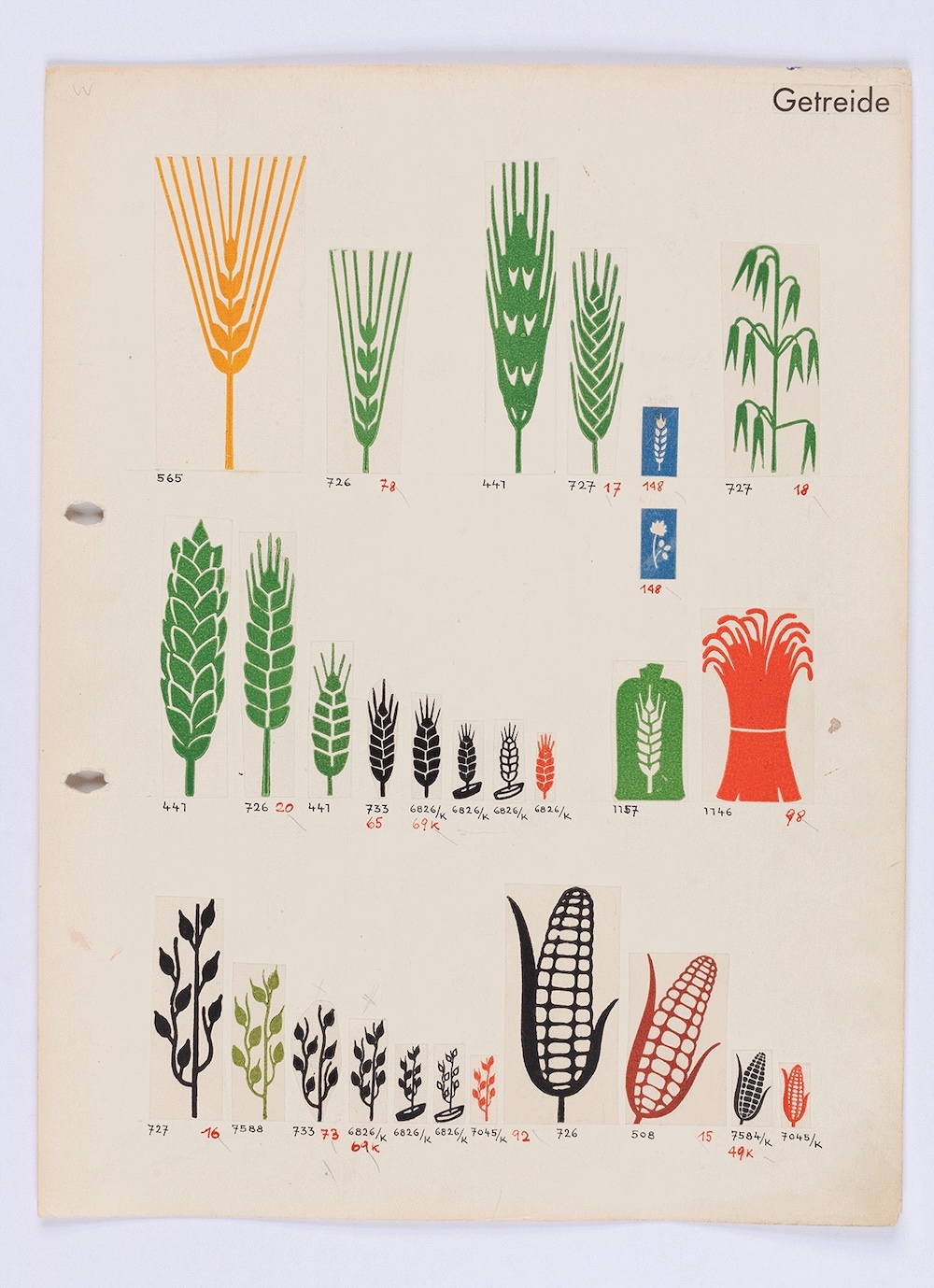
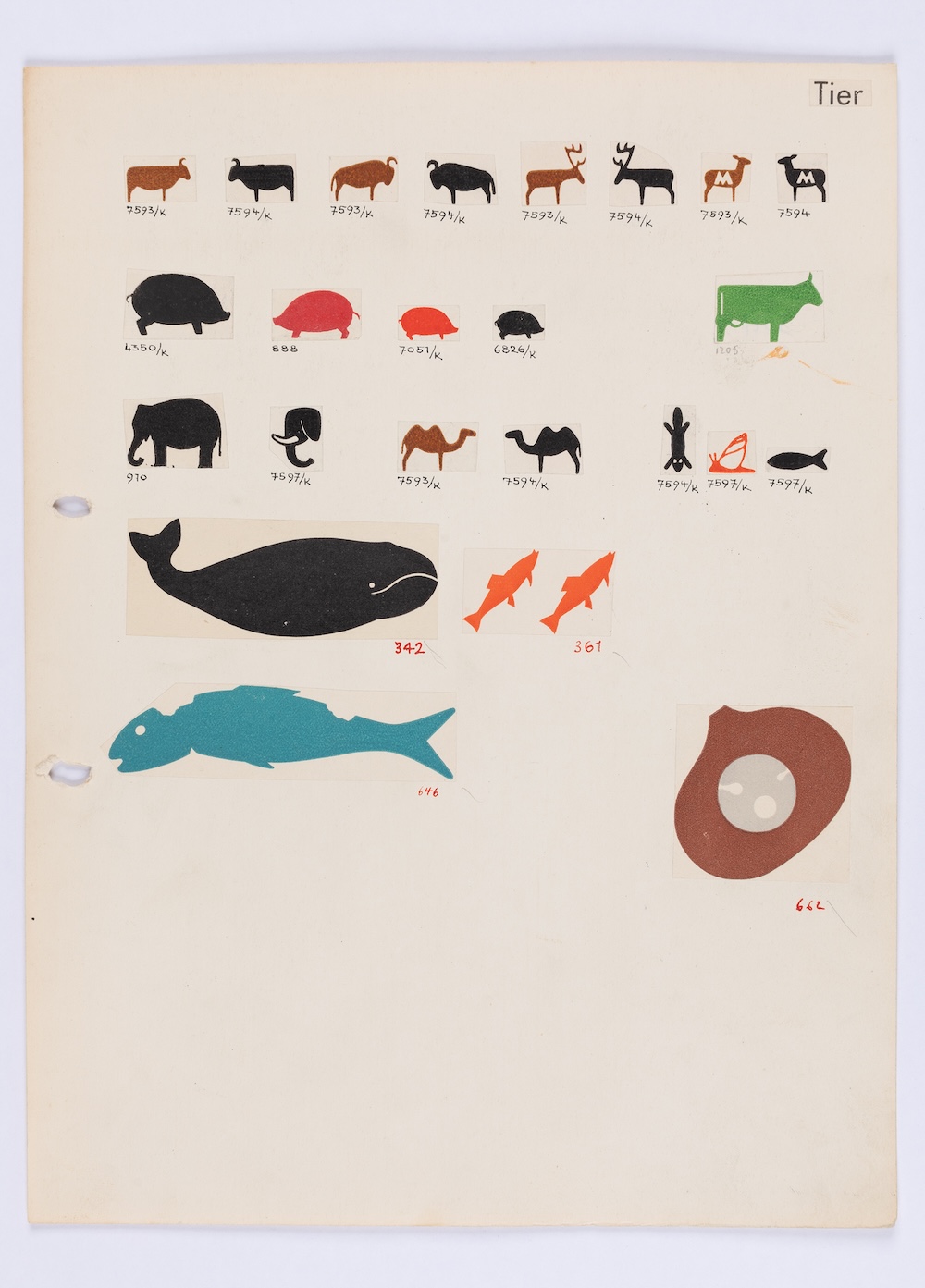
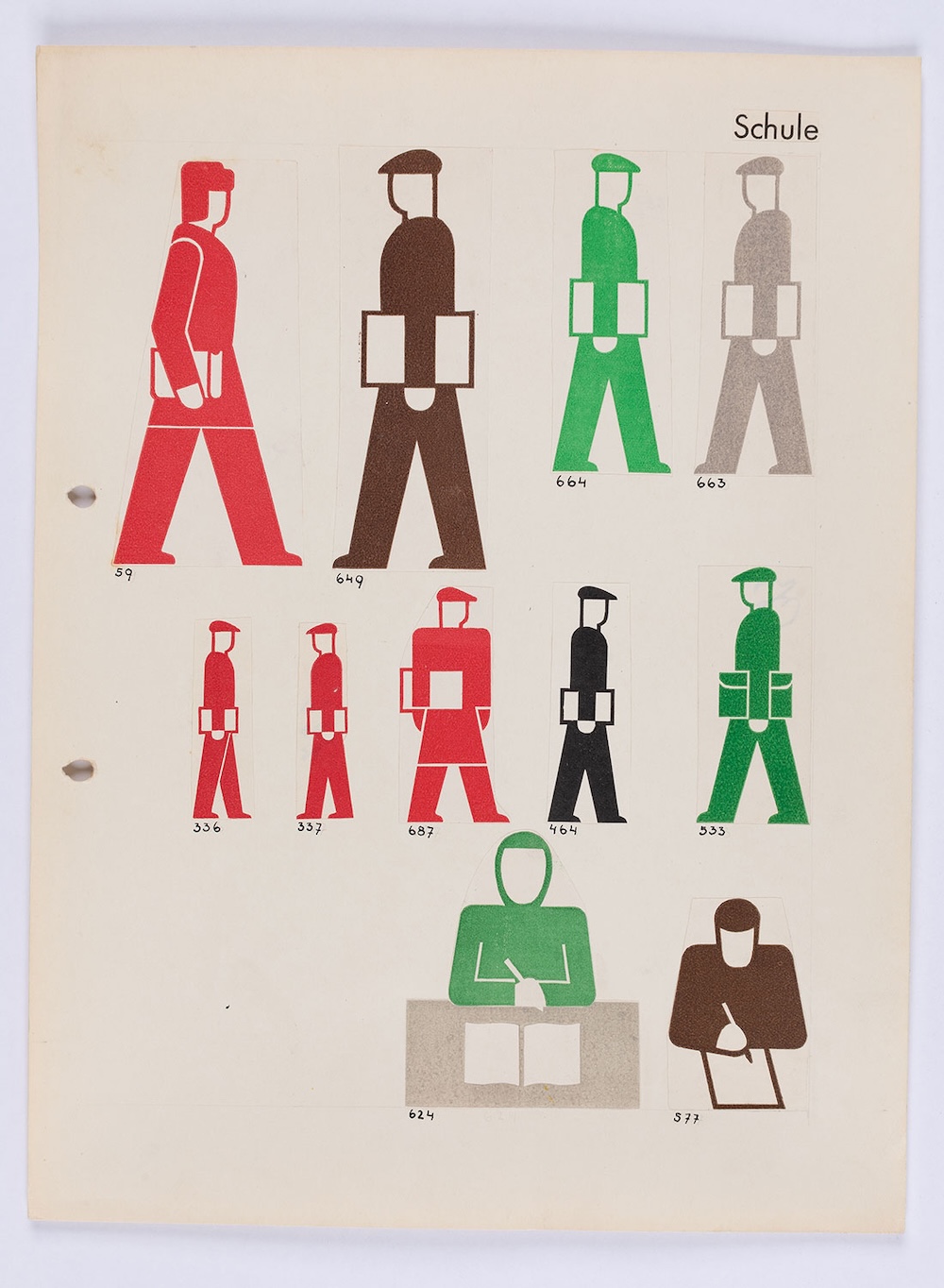
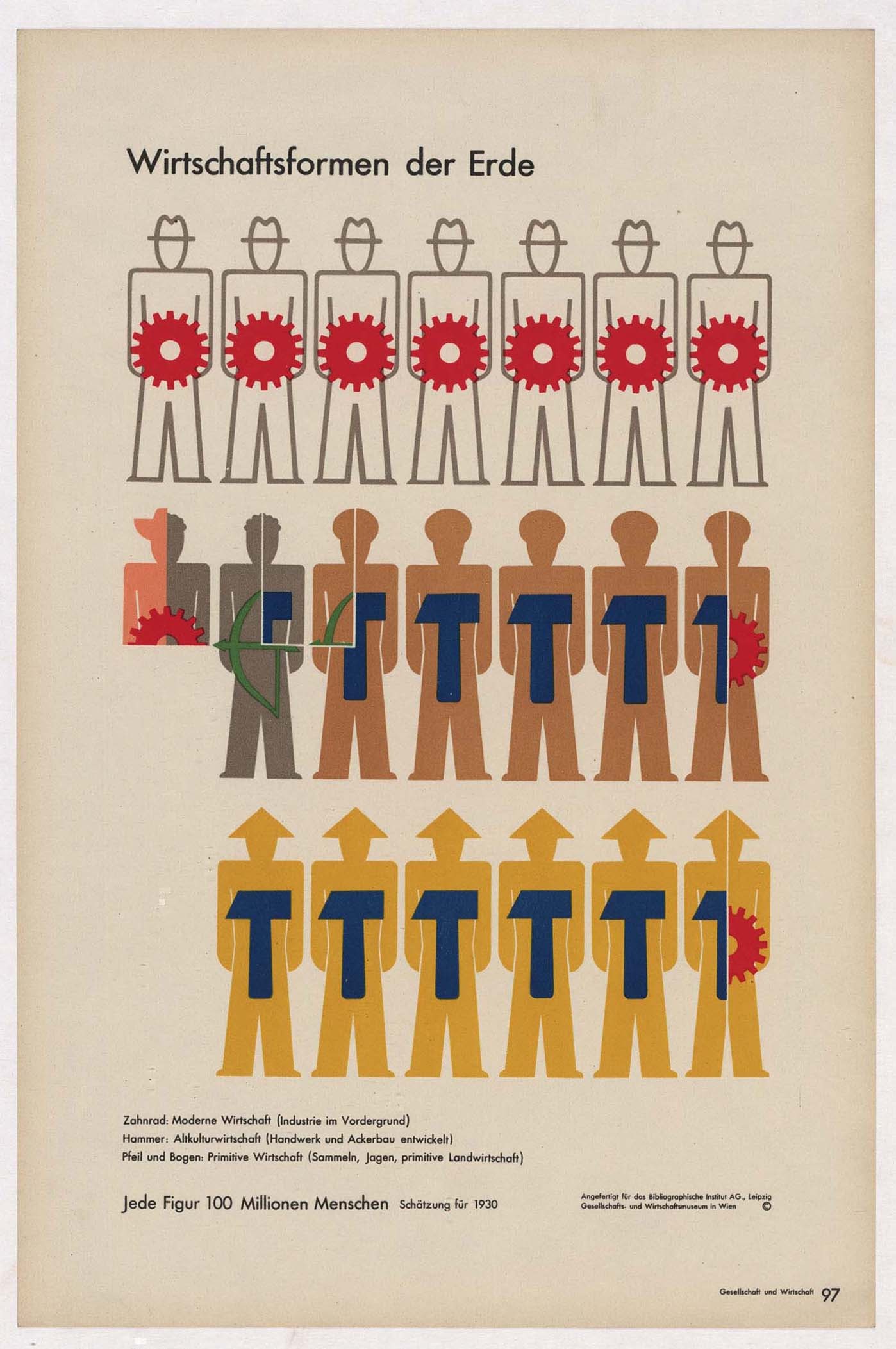
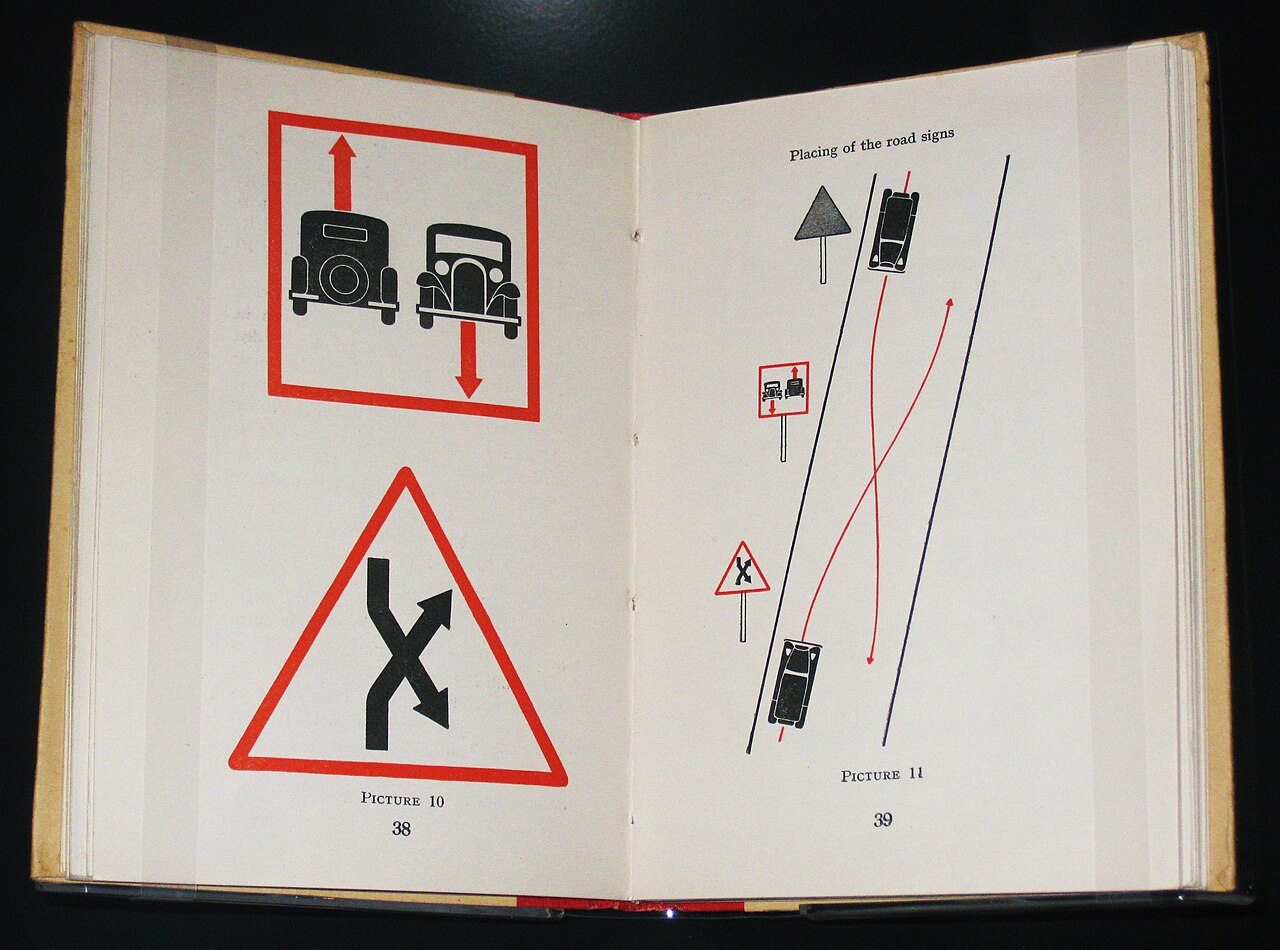
The philosopher, economist and sociologist called his invention the International System of Typographic Picture Education, or Isotype for short, a pictorial language for presenting complex sociological, techno-logical, biological and historical information in arresting visual form.
The Istotype used graphical representation to explain facts, data, statistics in accessible ways. Through it he thought social science and policy would be transmitted to a wider public, democratising knowledge via visible chains of reasoning.
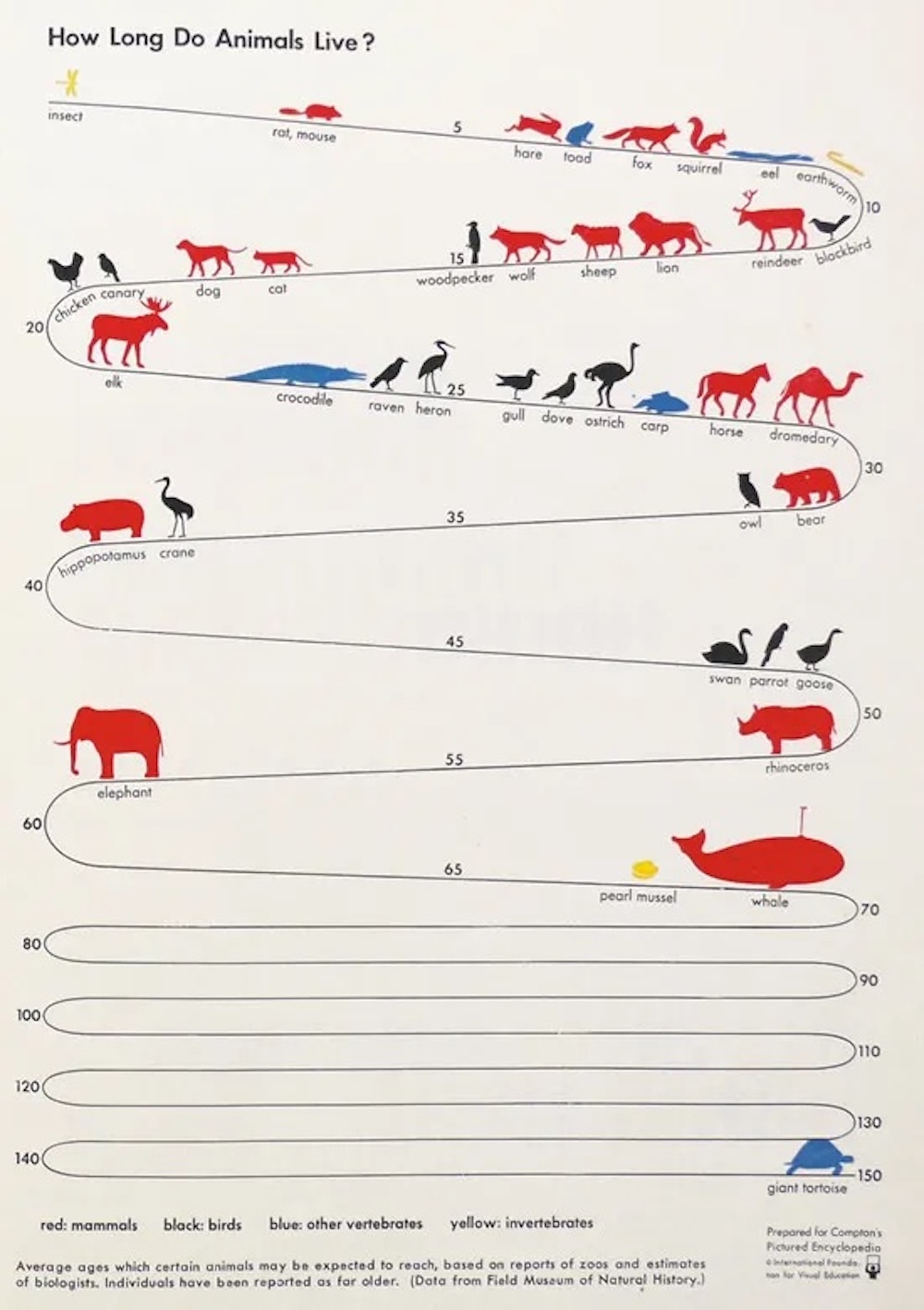
In the 1930s, Neurath his not-yet-wife Marie and illustrator Gerd Arntz pioneered the Isotype, a new visual language for capturing quantitative information in pictograms, sparking the golden age of infographics in print.
The Isotype could illustrate complex societal issues, like population, productivity, globalisation and war’s impact on economies, prioritising visual recognition through symbols to aid in memorability.
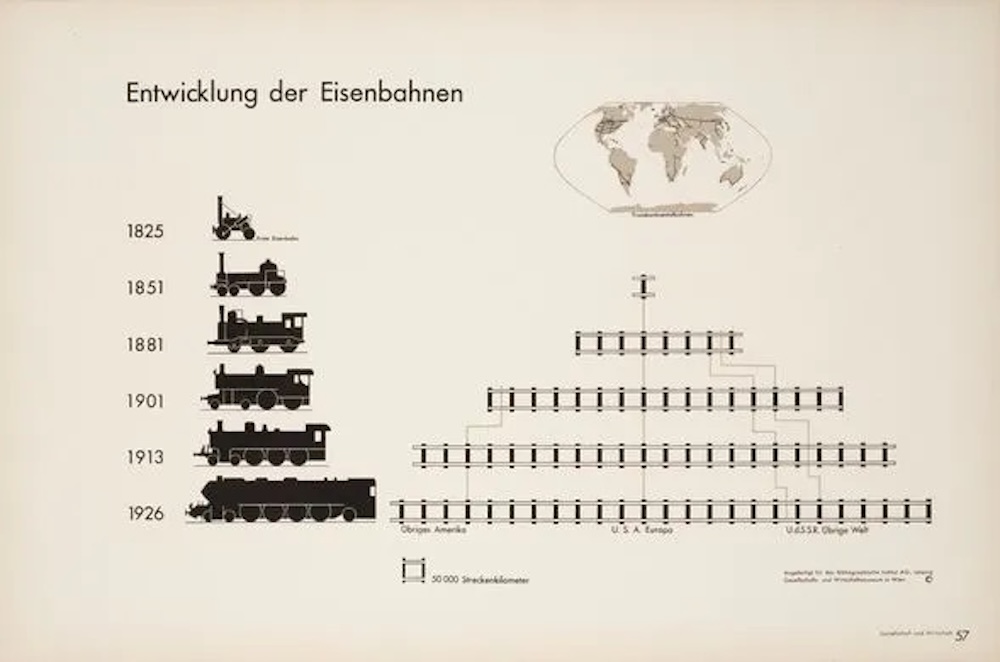
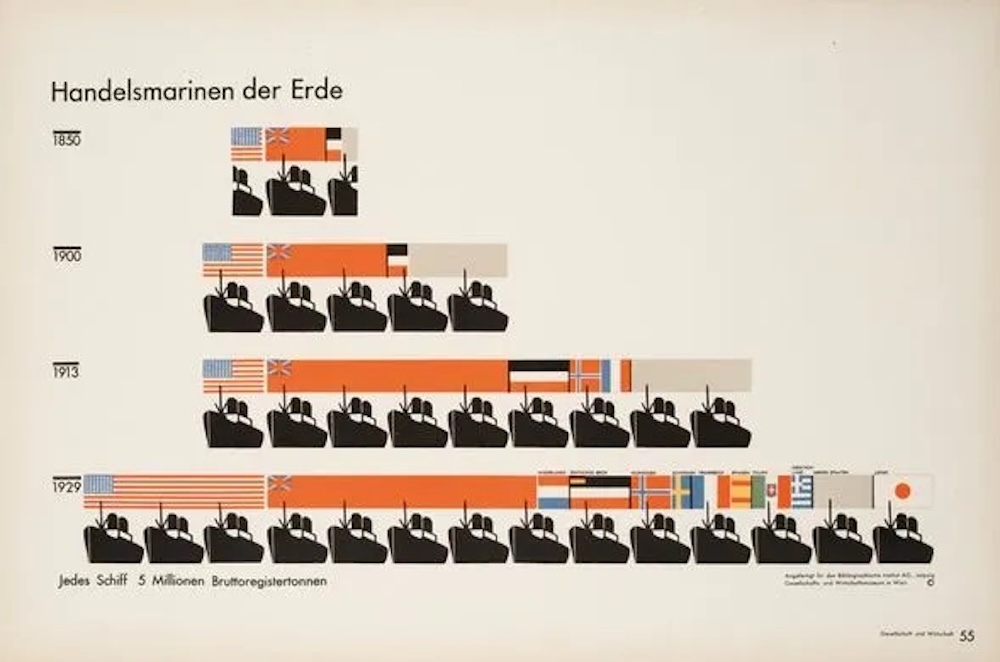

Neurath was a founder of the Museum of Society and Economics (Gesellschafts- und Wirtschaftsmuseum, founded as the Siedlungsmuseum in 1923 and renamed in 1925) and the Vienna Circle (Wien Kreis). He worked with leading planners, architects and artists of his time – Adolf Loos, Rudolf Carnap, Margarete Schütte-Lihotzky, Josef Frank, László Moholy-Nagy and Le Corbusier. He promoted participatory forms of democratic exchange, in an effort to create what he termed a ‘global polis’.
He fled his native Vienna after the Anschluss to escape the Nazis, first going to the Netherlands and then to the UK. He set up the Isotype Institute in Oxford, where he died, and, after his death, his widow Marie, who was a member of the Isotype design team, kept it going for many years.
Their design principles were applied in popular science books, documentary films and even the wartime publications of the UK’s Ministry of Information.
The institute’s archives were given to Reading University in 1971 and have recently been examined in detail via the “Isotype revisited” project carried out by the university’s department of typography and graphic communication and funded by the Arts and Humanities Research Council.
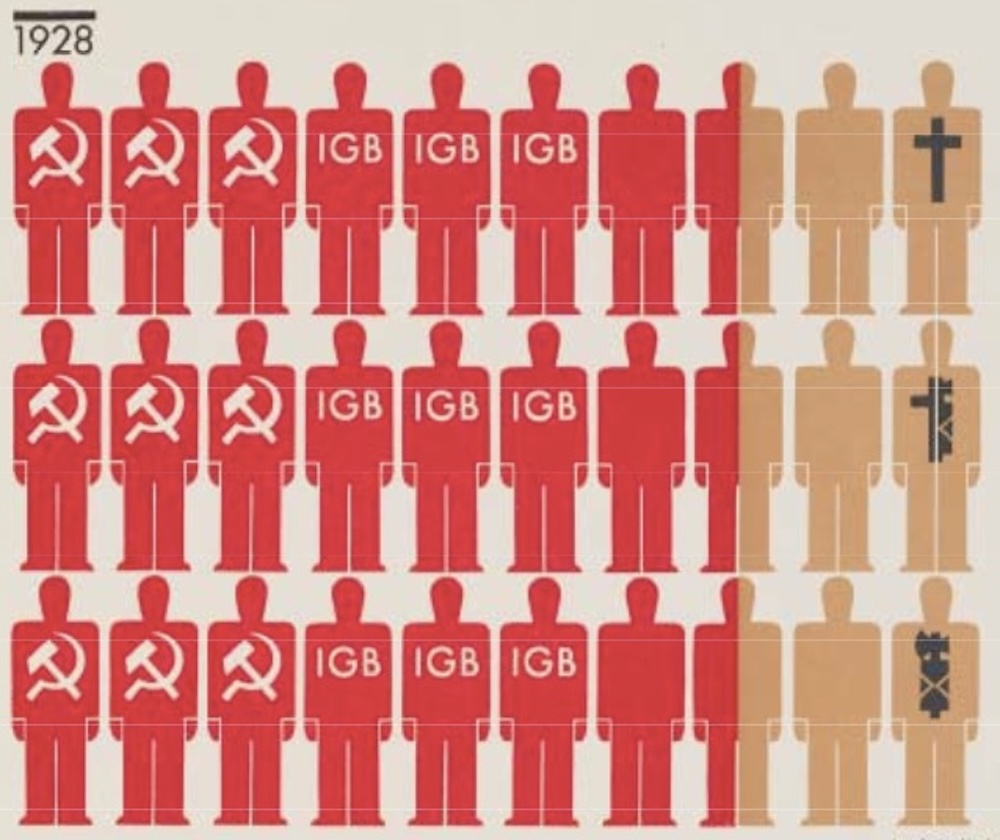
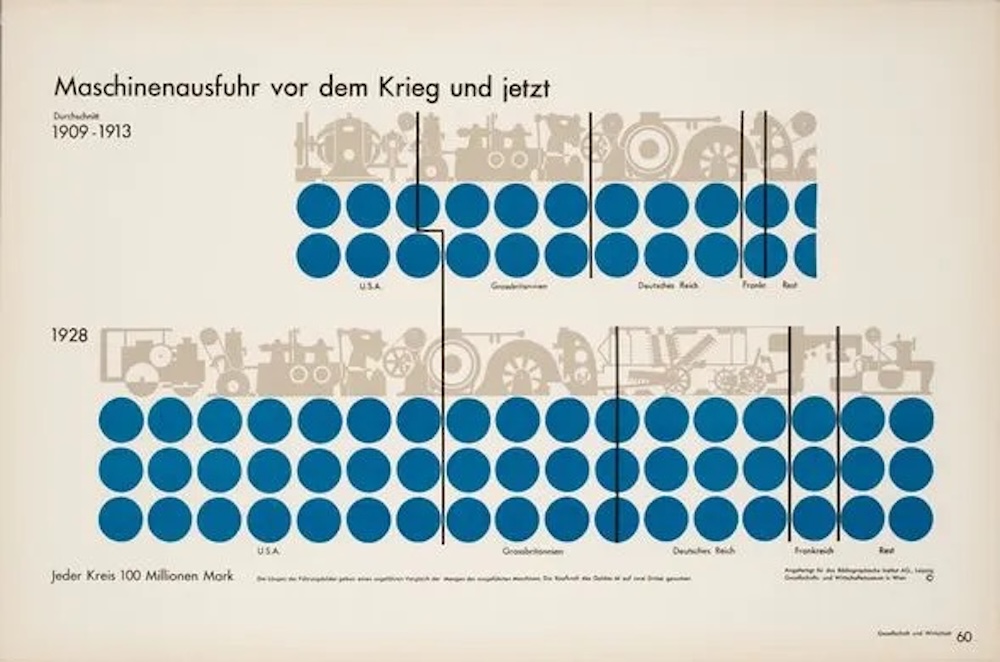

“The normal citizen should be able to acquire unlimited information on any subject that may interest him, just as he can obtain geographical information from maps and atlases”
– Otto Neurath
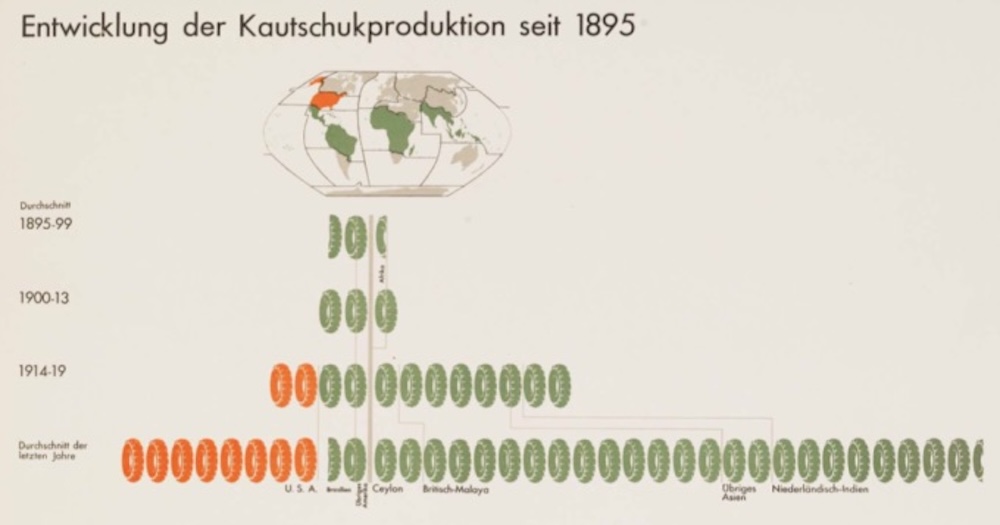
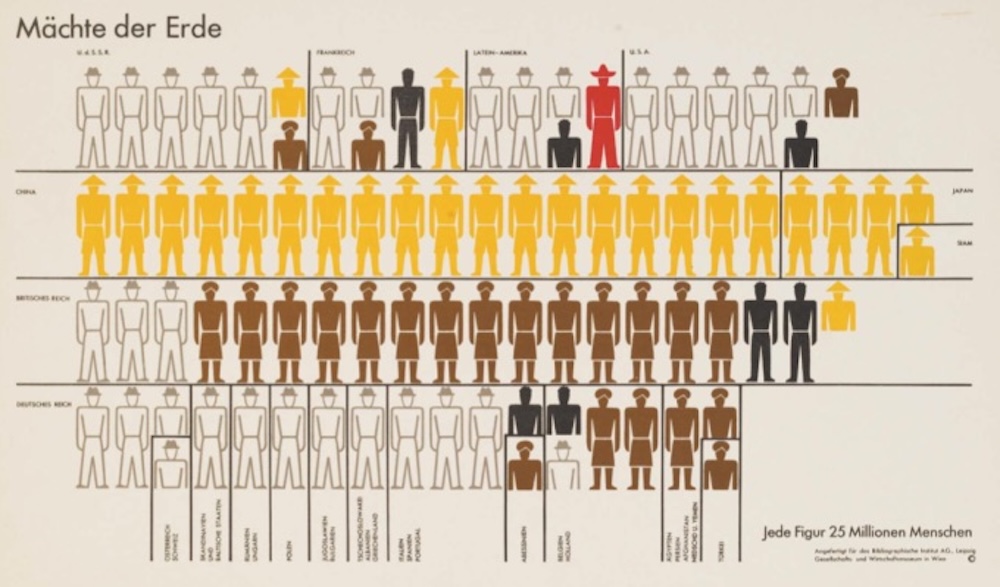
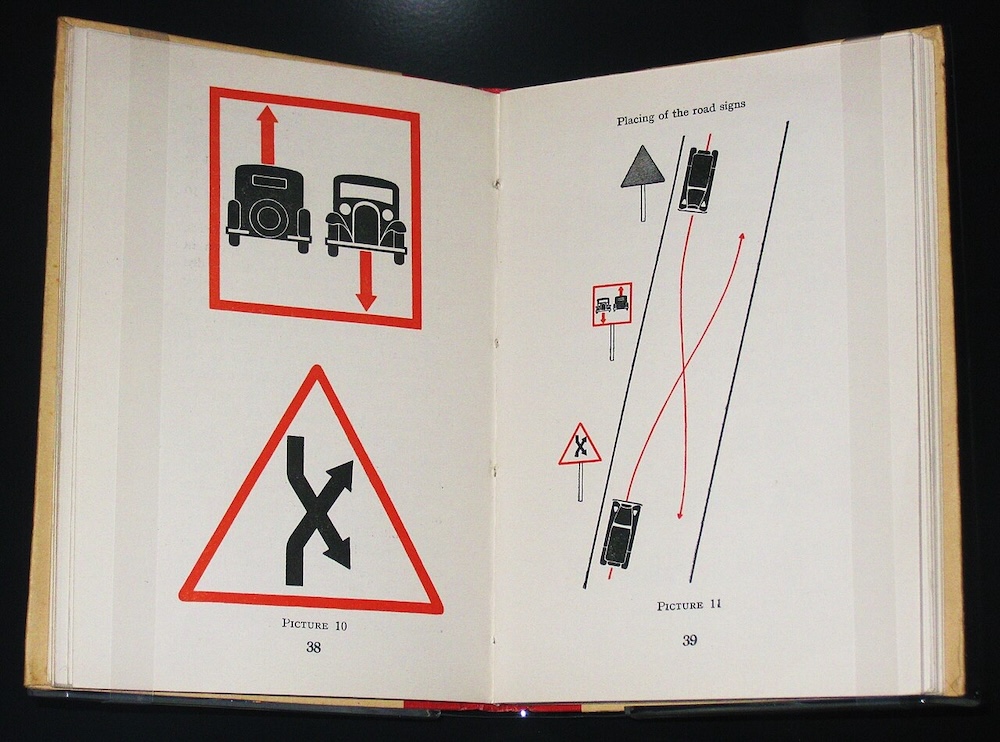
“We are like sailors who on the open sea must reconstruct their ship but are never able to start fresh from the bottom. Where a beam is taken away a new one must at once be put there, and for this the rest of the ship is used as support. In this way, by using the old beams and driftwood, the ship can be shaped entirely anew, but only by gradual reconstruction.”
— Otto Neurath
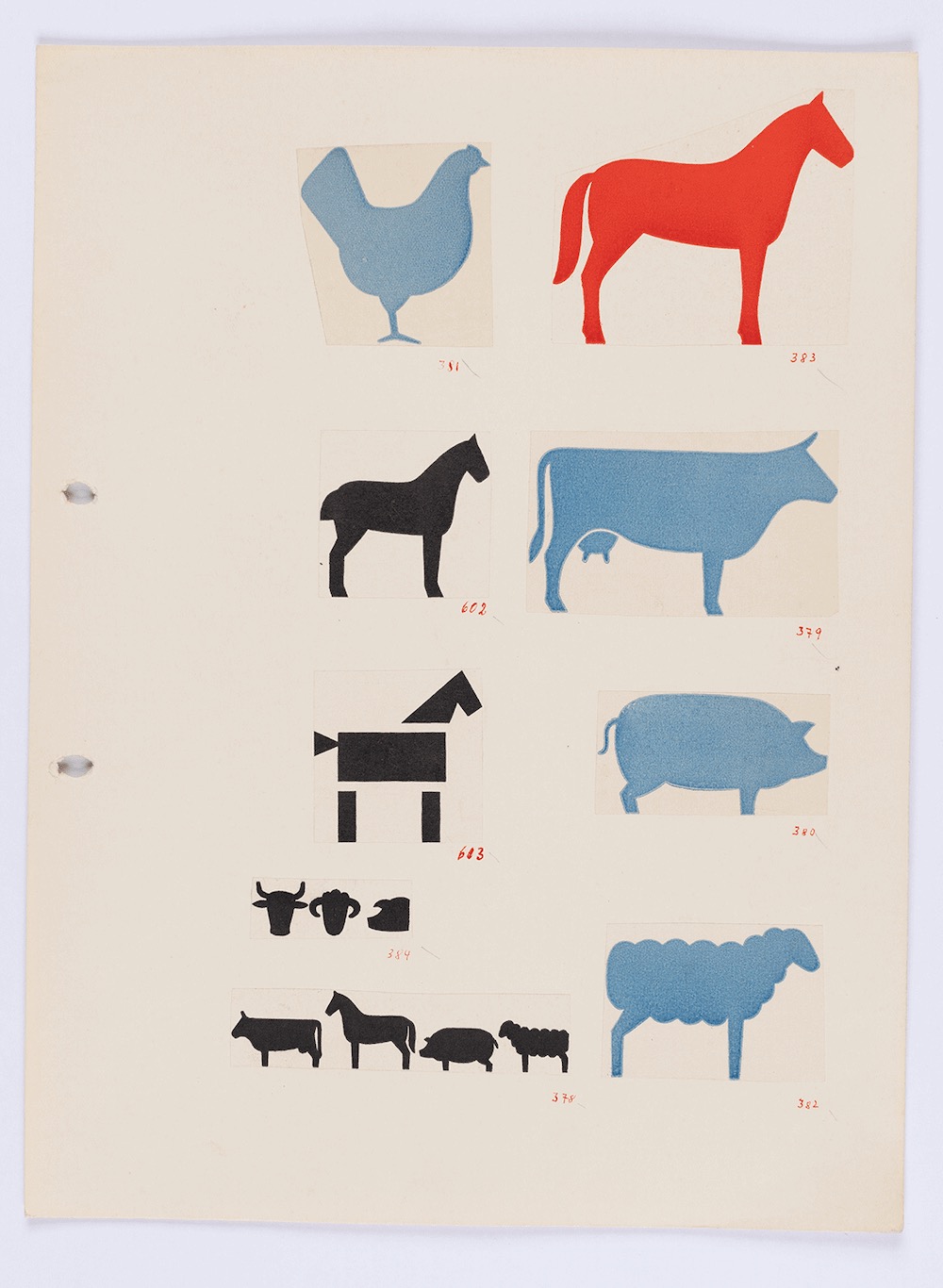
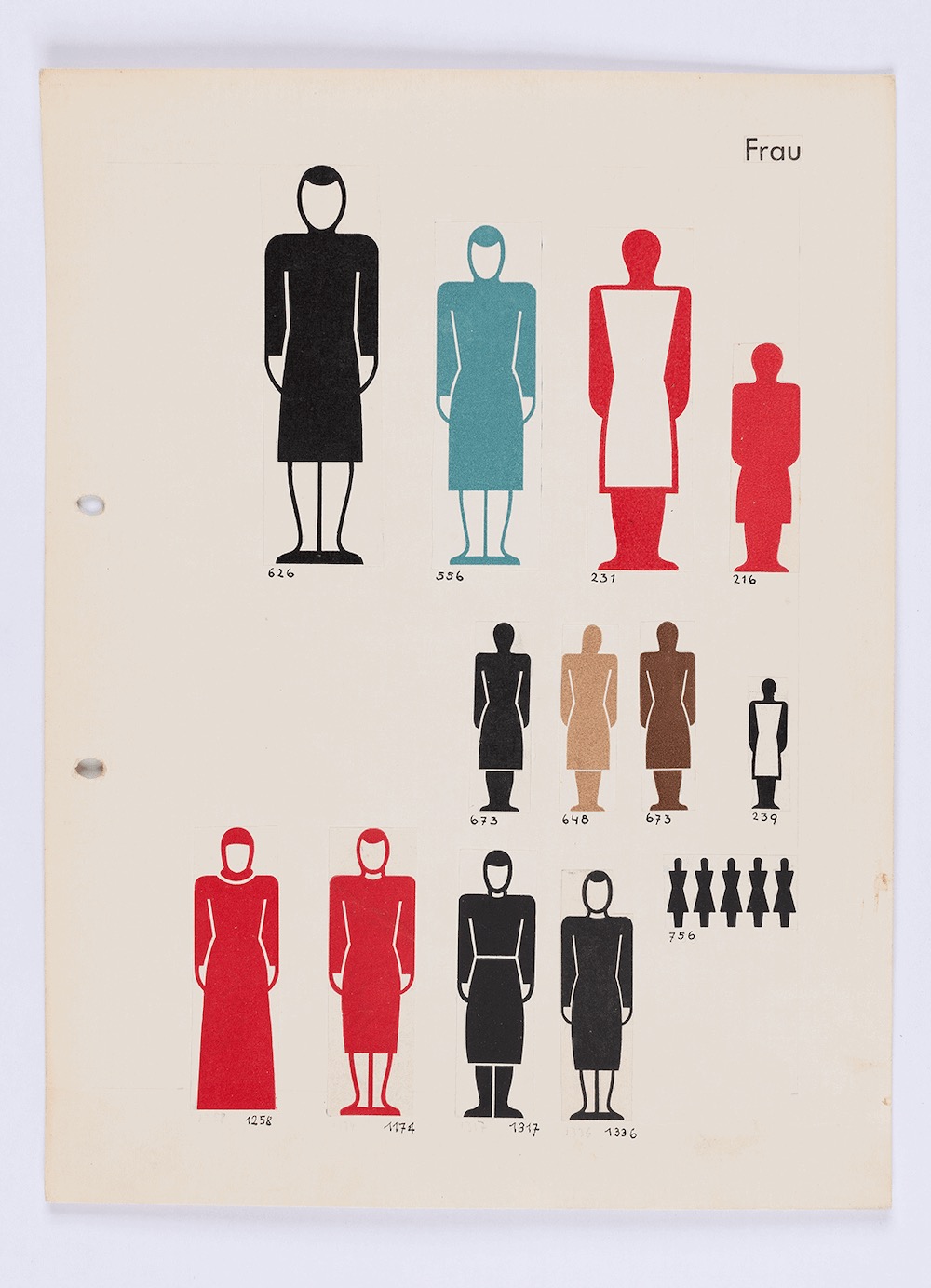
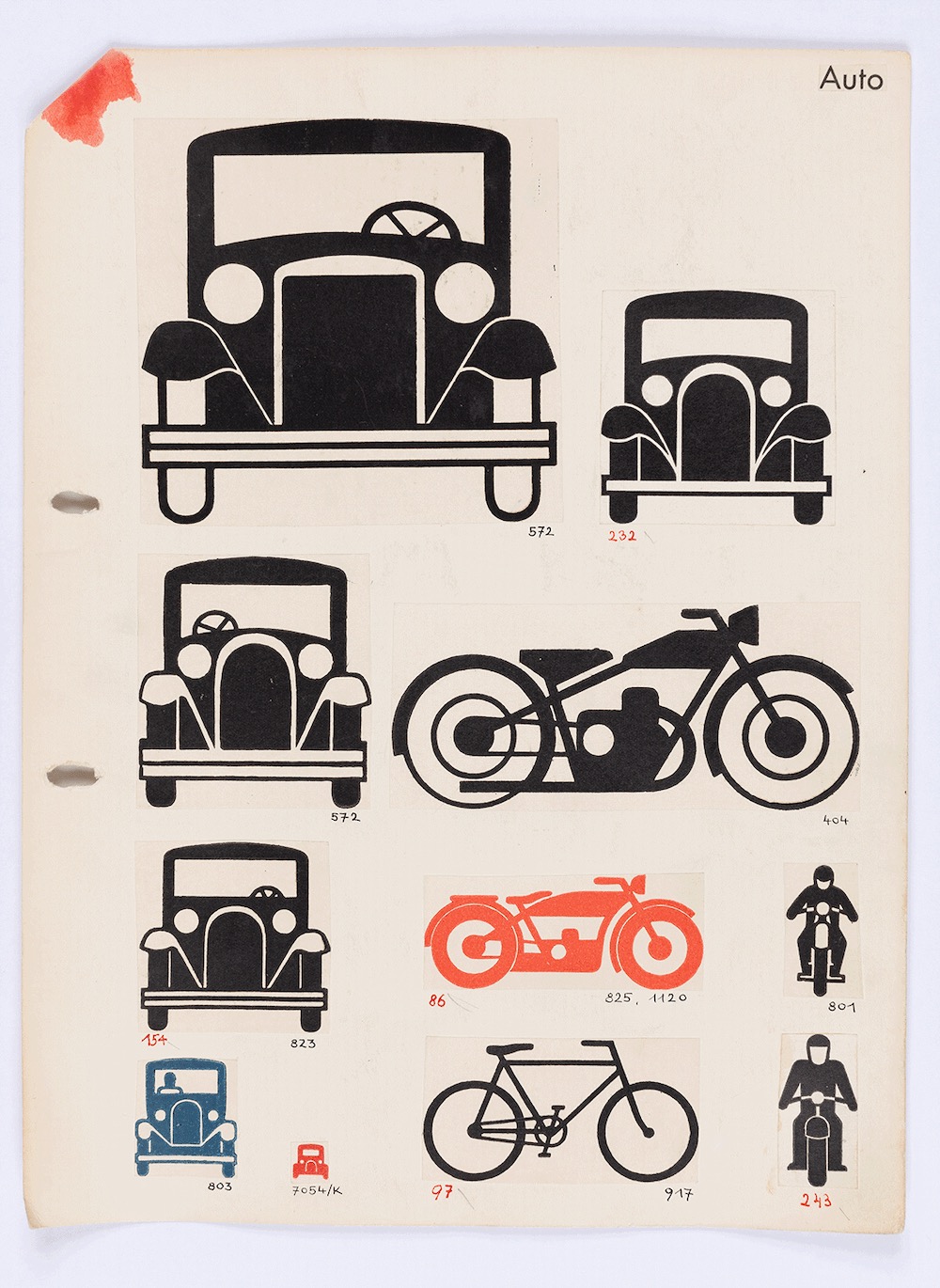
Via: WienMuseum, Mak
Would you like to support Flashbak?
Please consider making a donation to our site. We don't want to rely on ads to bring you the best of visual culture. You can also support us by signing up to our Mailing List. And you can also follow us on Facebook, Instagram and Twitter. For great art and culture delivered to your door, visit our shop.