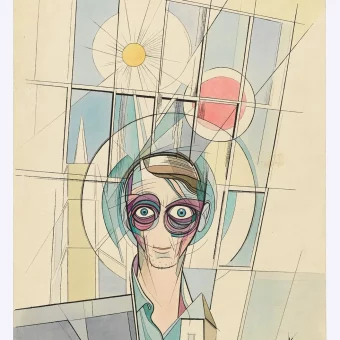
“Chesley is the original – he’s been there ahead of them all. Neil Armstrong? Well, Tranquility Base was established over Bonestell’s tracks and discarded squeezed-out paint tubes.”
– Arthur C. Clarke on Chesley Bonestell
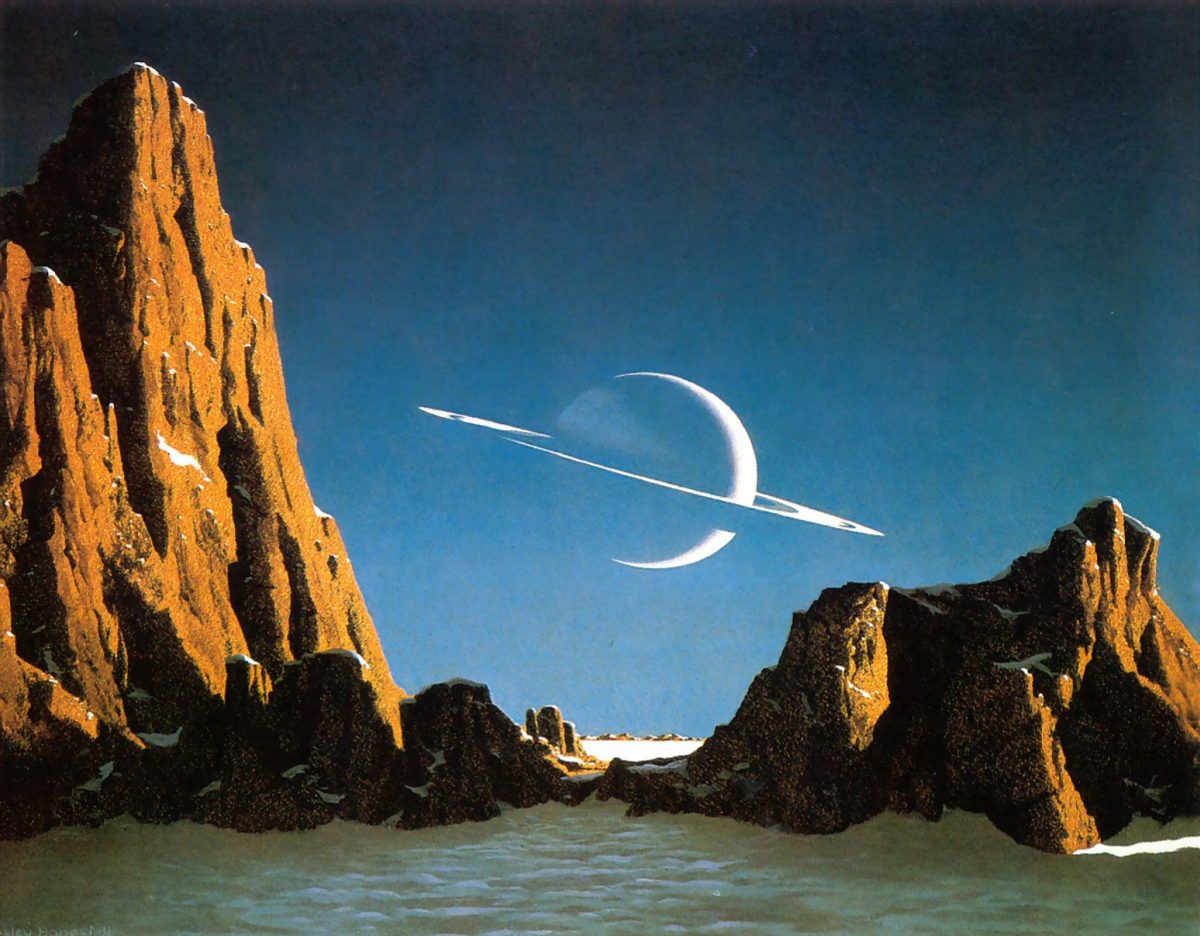
Saturn as Seen From Titan, Chesley Bonestell
One can feel disappointed when finding out that technicolor pictures of towering nebulae from the Hubble Space Telescope first show up in black and white, then later get colourized by scientists. This fact does not cheapen the beauty of the photos, nor diminish their accuracy. The colours are awaiting discovery through broadband filters placed over each monochromatic image. Their enhanced vibrancy shows what they look like through lenses far more sensitive than the human eye.
Before Hubble, NASA, and every kind of space exploration, public and private, visions of outer space came from cruder sources, rough sketches drawn from human imagination and ingenuity, using instruments that stayed put on the Earth. The foremost painter among the 20th century’s space art visionaries combined a lifelong interest in astronomy with professional work in architechure and cinema to create some of the most compelling, if not always scientific, images of space the world had seen.
You’ve surely seen the work of Chesley Bonestell (pronounced BONN-e-stell), on the covers of vintage Life and Collier’s magazines, or in the matte background paintings of classic films like The Hunchback of Notre Dame and Citizen Kane. Educated as an architect, he was first employed by the firm that rebuilt San Francisco after the 1906 earthquake. He then helped design both the Chrystler Building and the Golden Gate Bridge.
Moving from spectacular buildings to cinematic spectacle, Bonestell (January 1, 1888 – June 11, 1986) went to work painting backgrounds in Hollywood, while also pursuing his obsession with astronomy. His first series of space images, made in 1944, showed Saturn as seen from Titan, Jupiter’s moon, and made him instantly influential. Saturn as Seen From Titan, above, has been called “the painting that launched a thousand careers,” popularizing the genre of space art, or “astronomical art,” as it was called.
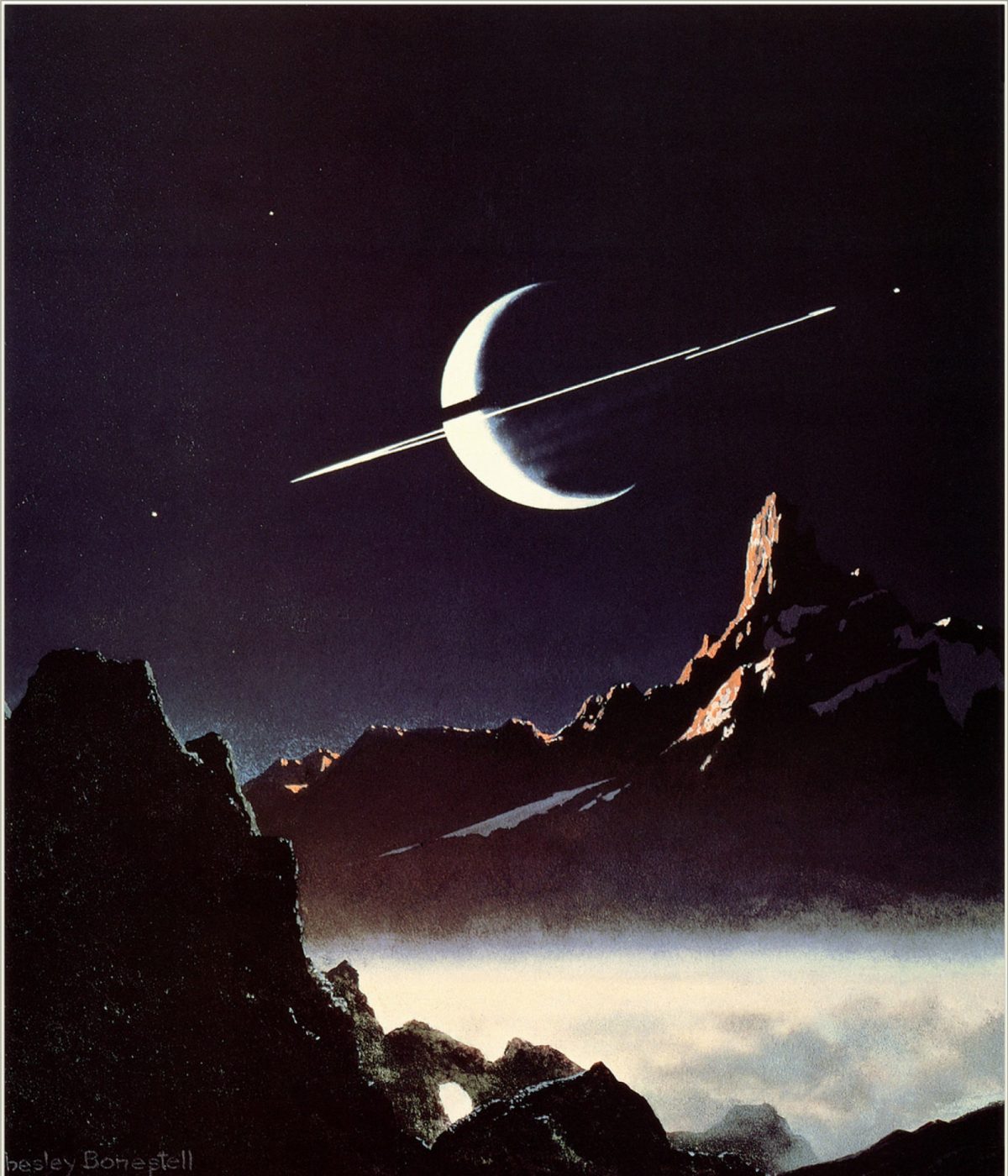
Chesley Bonestell had the prescience of the century’s best science fiction writers, painting images of satellites orbiting the Earth before any such thing existed. Like the best sci-fi writers, he also kept up a close watch on the hard science, and began collaborating with NASA in the 60s and 70s. “Many of his spaceship designs are based on real engineering drafts that NASA was developoing in real time,” notes the Adler Planetarium.
Bonestell was particularly attuned to angles and light in his work, especially planetary landscapes and views of distant celestial bodies. He used a unique combination of techniques, including building detailed three-dimensional miniatures to map light, shadow, and scale before translating them into his iconic paintings.
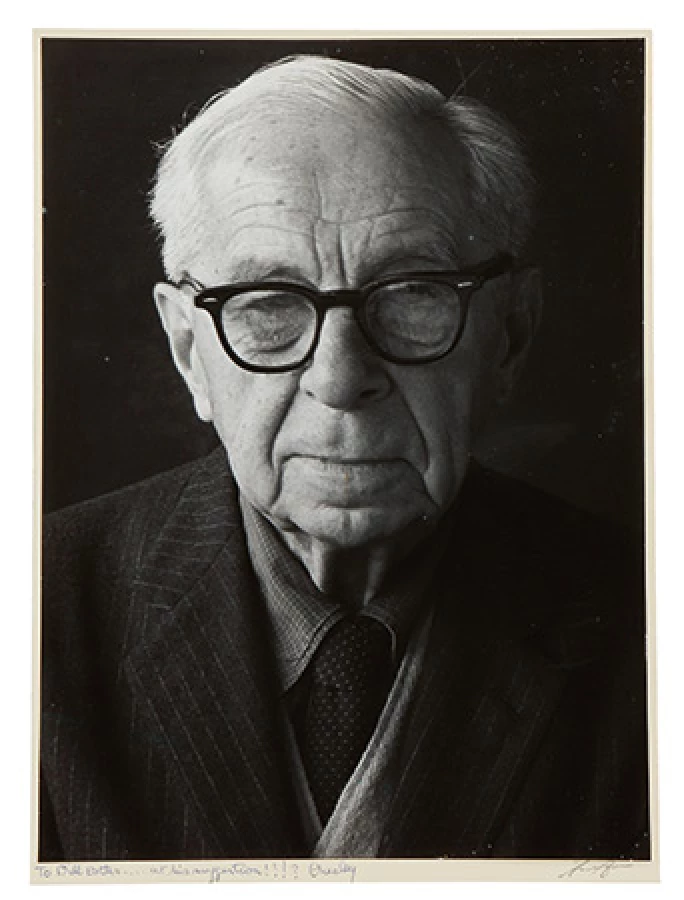
Chelsey Bonsetell by Ansel Adams, via Sotheby’s
It’s said Bonestell helped get NASA to the moon through the sheer force of his creative will, which seems only a little far-fetched, given the role that imagination played during the space race. Paul Spudis at Smithsonian describes one of Bonestell’s most towering pre-moon-landing acheivements:
Bonestell made great efforts to get the technical details of his paintings correct. He read the scientific literature so that his planetary landscapes reflected the most current knowledge of how his imagined scenes might really appear. One of his classic pieces of work was for the influential film Destination Moon, produced in 1950 and based on stories by the classic science-fiction writer Robert Heinlein. Bonestell did matte paintings for the Earth departure and lunar approach scenes. His masterpiece in that effort was a fourteen-foot long, full panoramic view of the surface used during the lunar stay scenes in the movie.
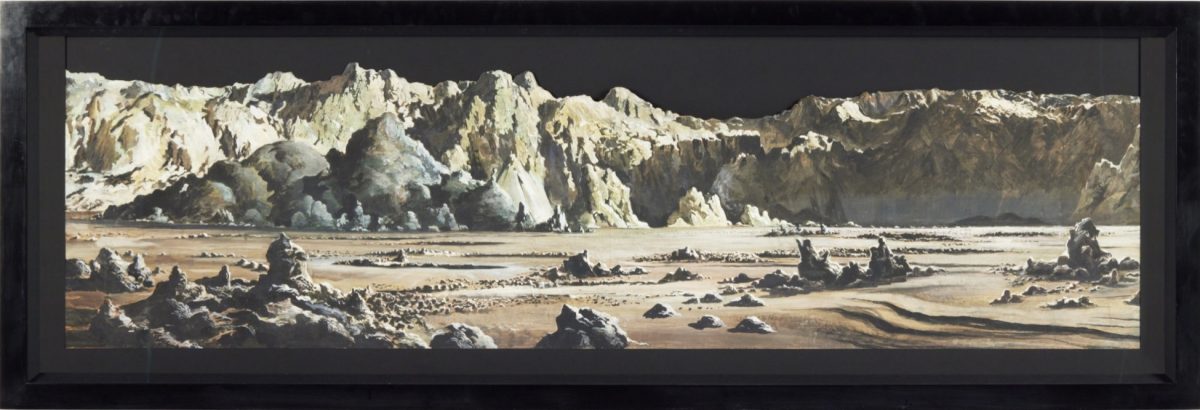

Destination Moon matte painting study (1950)
Chesley’s unique skills brought spectacle to science. The year before Destination Moon saw the publication of a book of images by Bonestell, The Conquest of Space, “58 illustrations with near photo-realistic detail,” writes Erik Shilling at Atlas Obscura, of “astronauts actively exploring our solar system.” The book inspired a film of the same name, and Bonestell’s work “hit America like an atom bomb,” says biographer Ron Miller. The 50s would be his most productive decade.
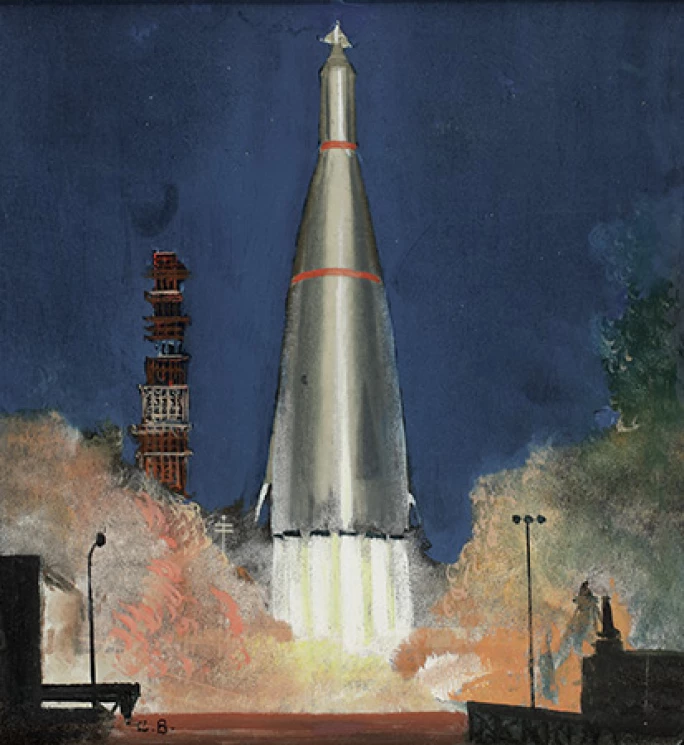
Take off of the Rocketship by Bonesell for the 1950s TV series Men Into Space
How accurate were these paintings? Bonestell got a few things right; he seemed to know, for example, the importance rockets would have in space travel, in addition to how rockets would burn in stages before separating. And his lunar landers were also reasonably realistic, for having been imagined in 1951. Elsewhere, though, he missed the mark, as with his depiction of a circular space station, or a “baby satellite,” that, for some reason, still has a rocket nose cone attached.
—Atlas Obscura

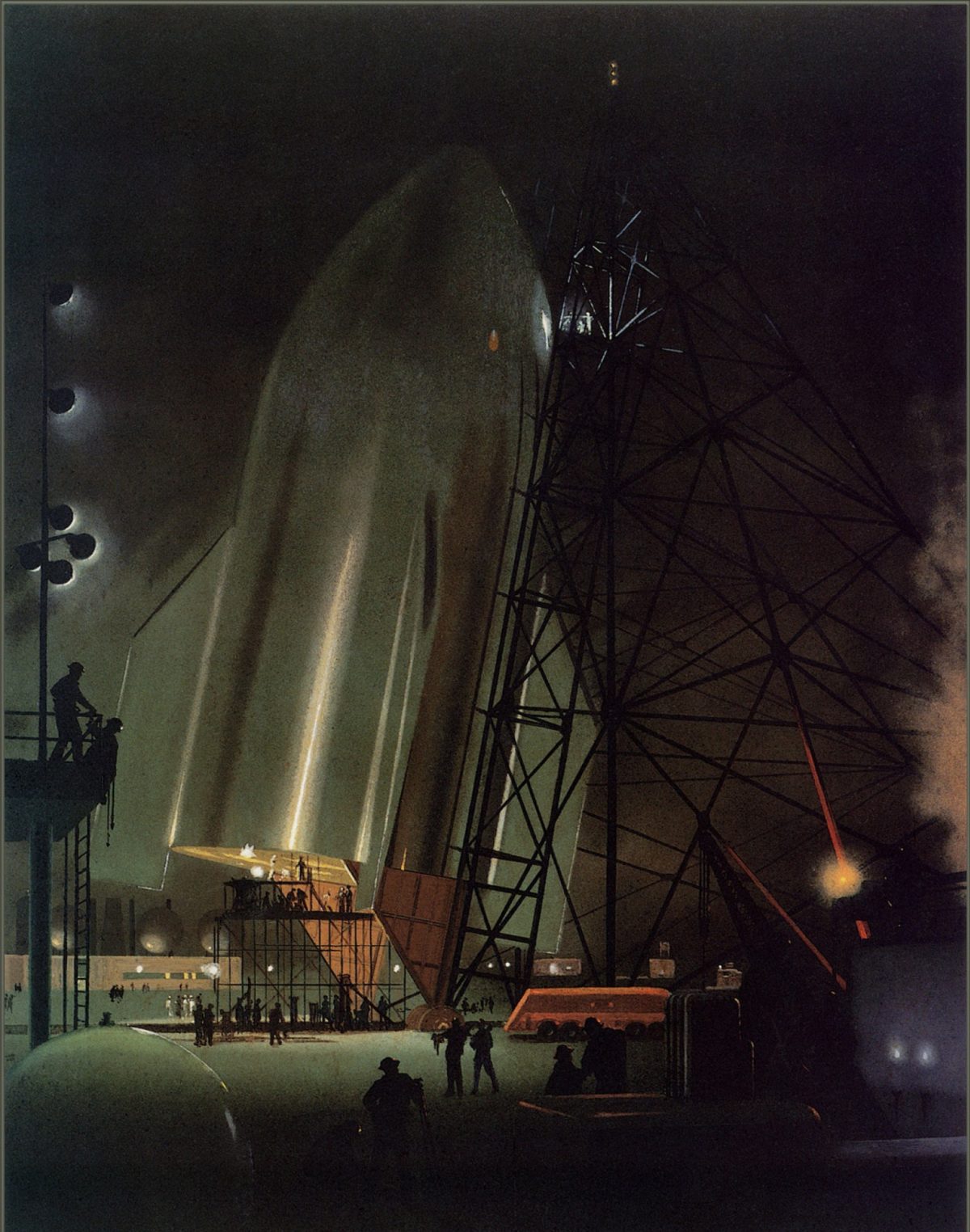
Moon Ship
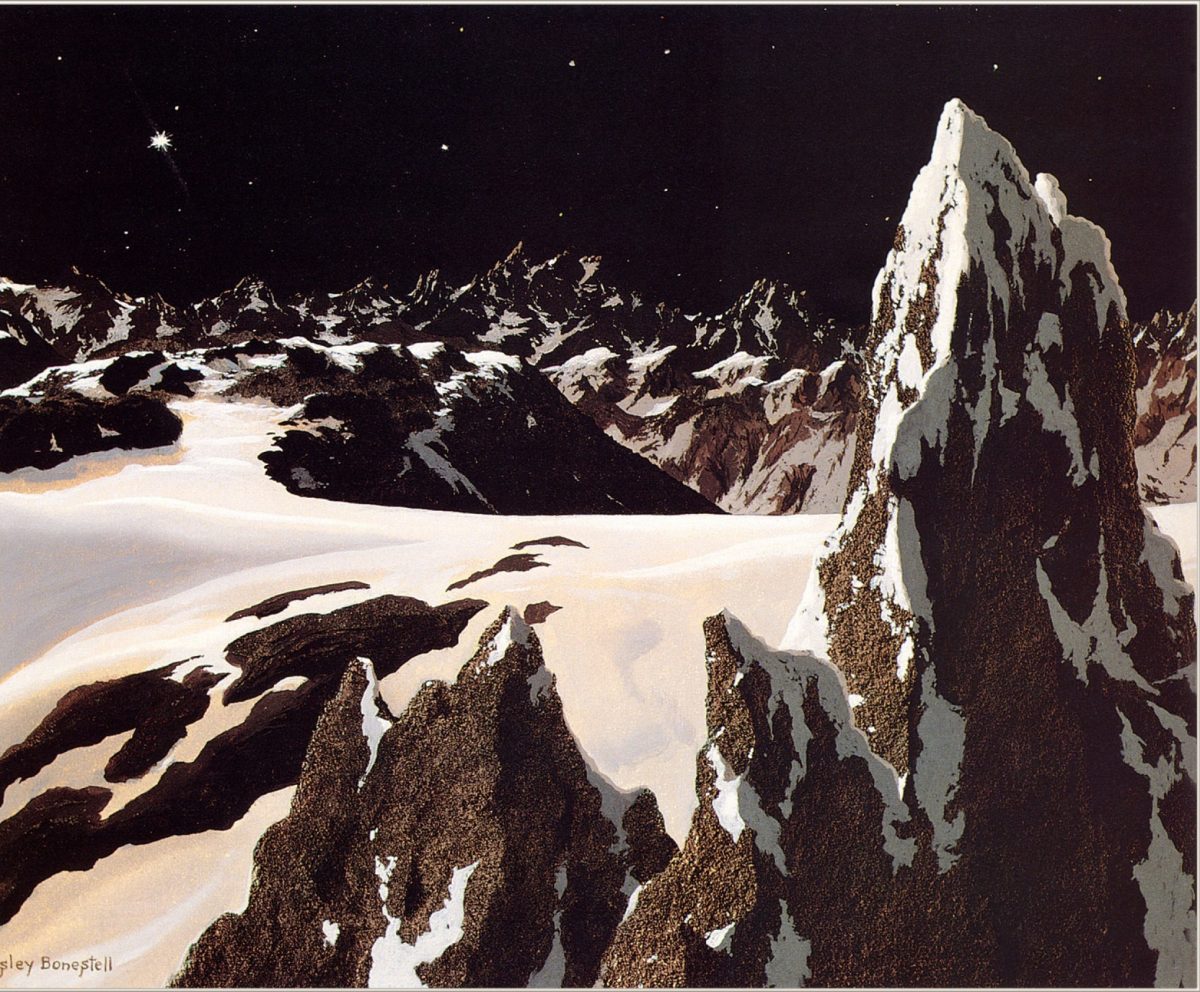
Bonestell’s moon is covered in sharp, jagged peaks. When he saw actual photos of the Moon’s smooth surface in the mid-1960s, he remarked with disappointment that they looked ‘for all the world like the Berkeley Hills’. These soft rolling hills ‘wouldn’t have looked very interesting’ in his moon art, he admitted.
The artist’s biographer Miller has suggested that Bonestell painted the Moon ‘as it should have been’. He more or less admitted as much, saying, “I tried to make it as dramatic as I could.” He was working in cinema, after all, then selling popular illustrated books to the masses, spectactular scenic backdrops for their daydreams.
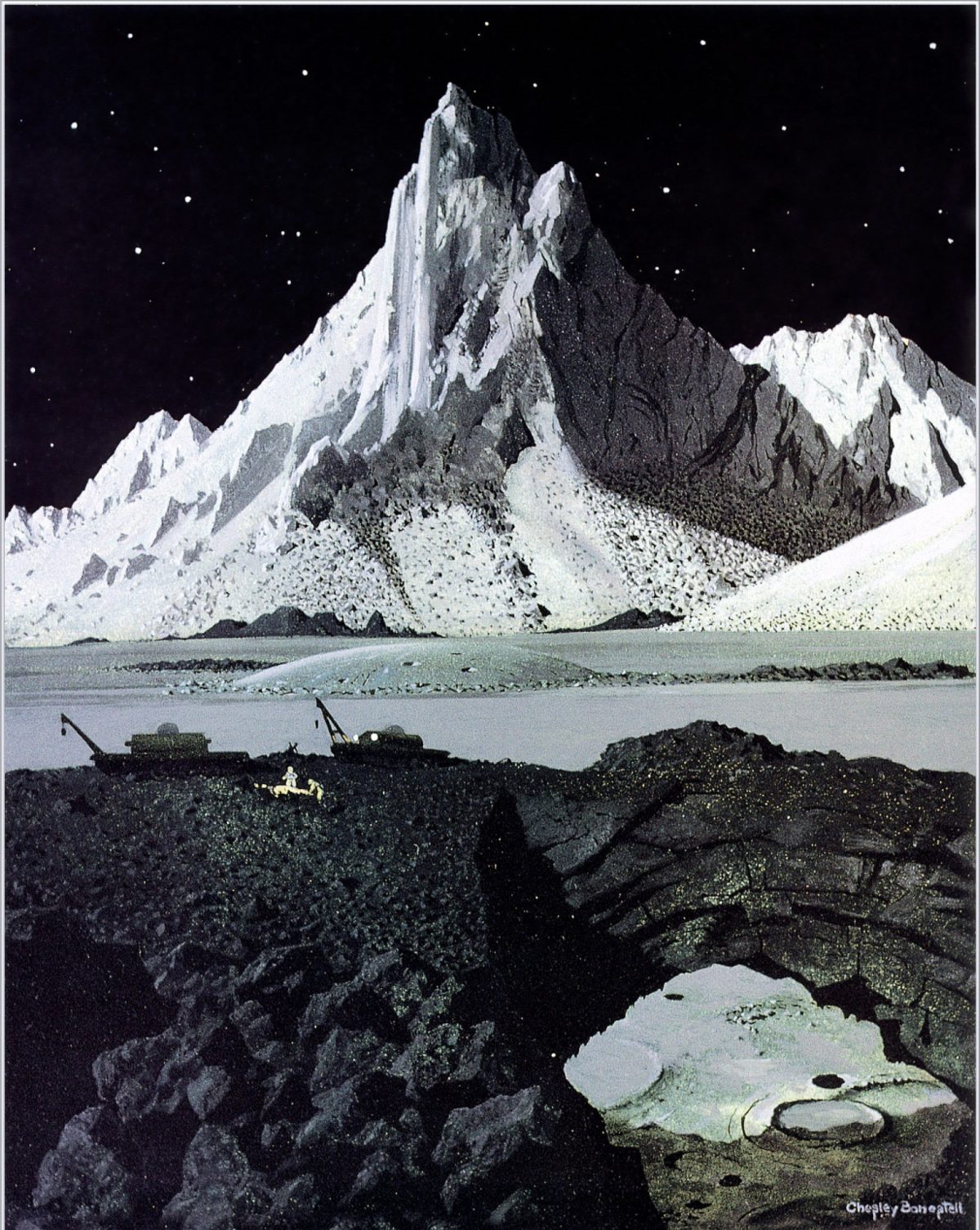
The Study of the Moon by Chesley Bonestell
Bonestell’s art became more informed by space photography over the years, but it never lost any of its sci-fi cinematic quality. The artist continued to collaborate with science fiction writers like Heinlein and Arthur C. Clarke, as well as rocket scientists like von Braun. Like all brilliant polymathic thinkers, he realized that the best way—maybe the only way—to make great leaps in science is to also make great leaps of imagination.
Chesley Bonestell: A Brush with the Future
See more of Bonestell’s fantastic space art below, and a trailer for a documentary about his life and work just above.
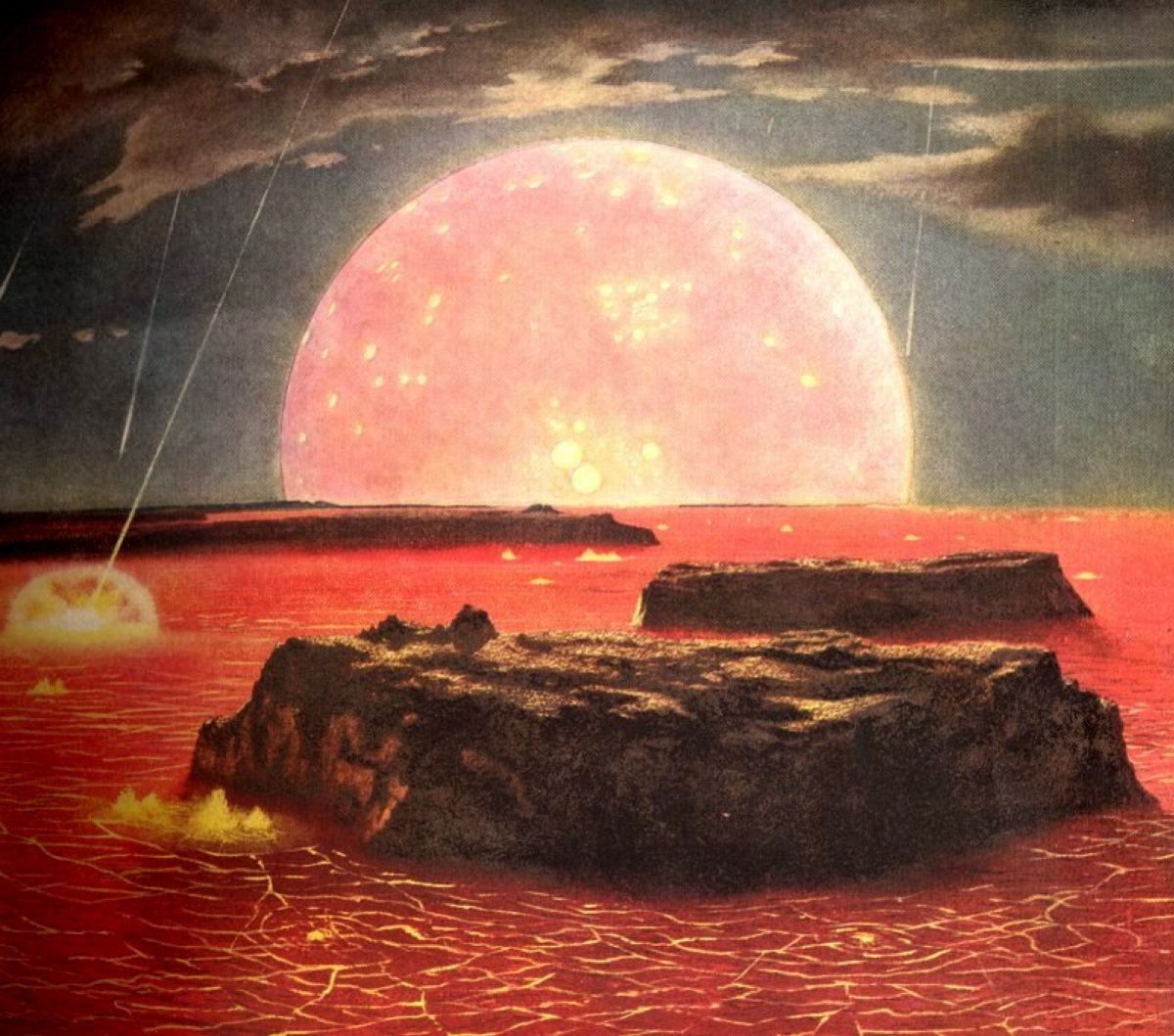
Birth by Chesley Bonestell
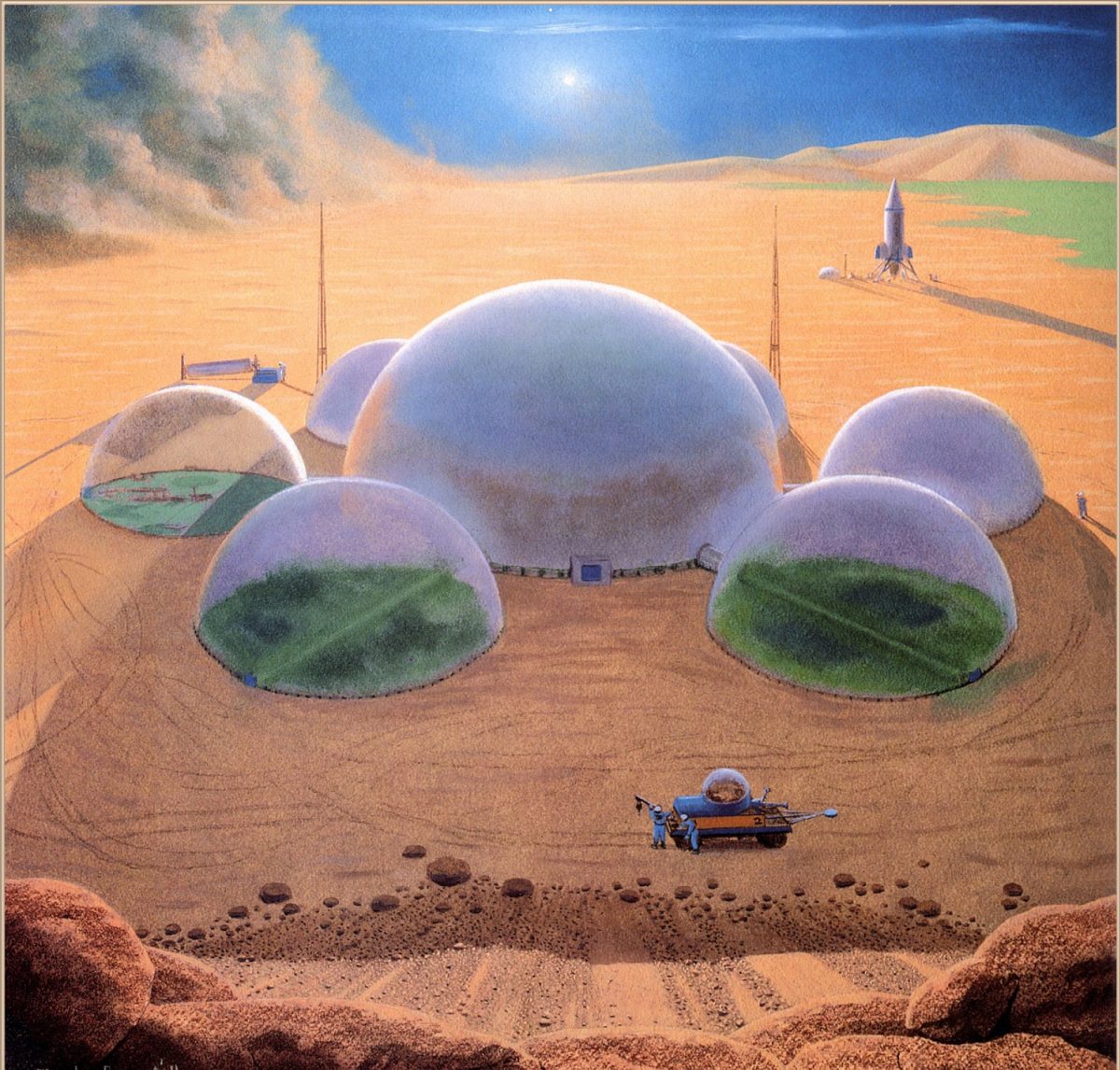
Dome on Mars
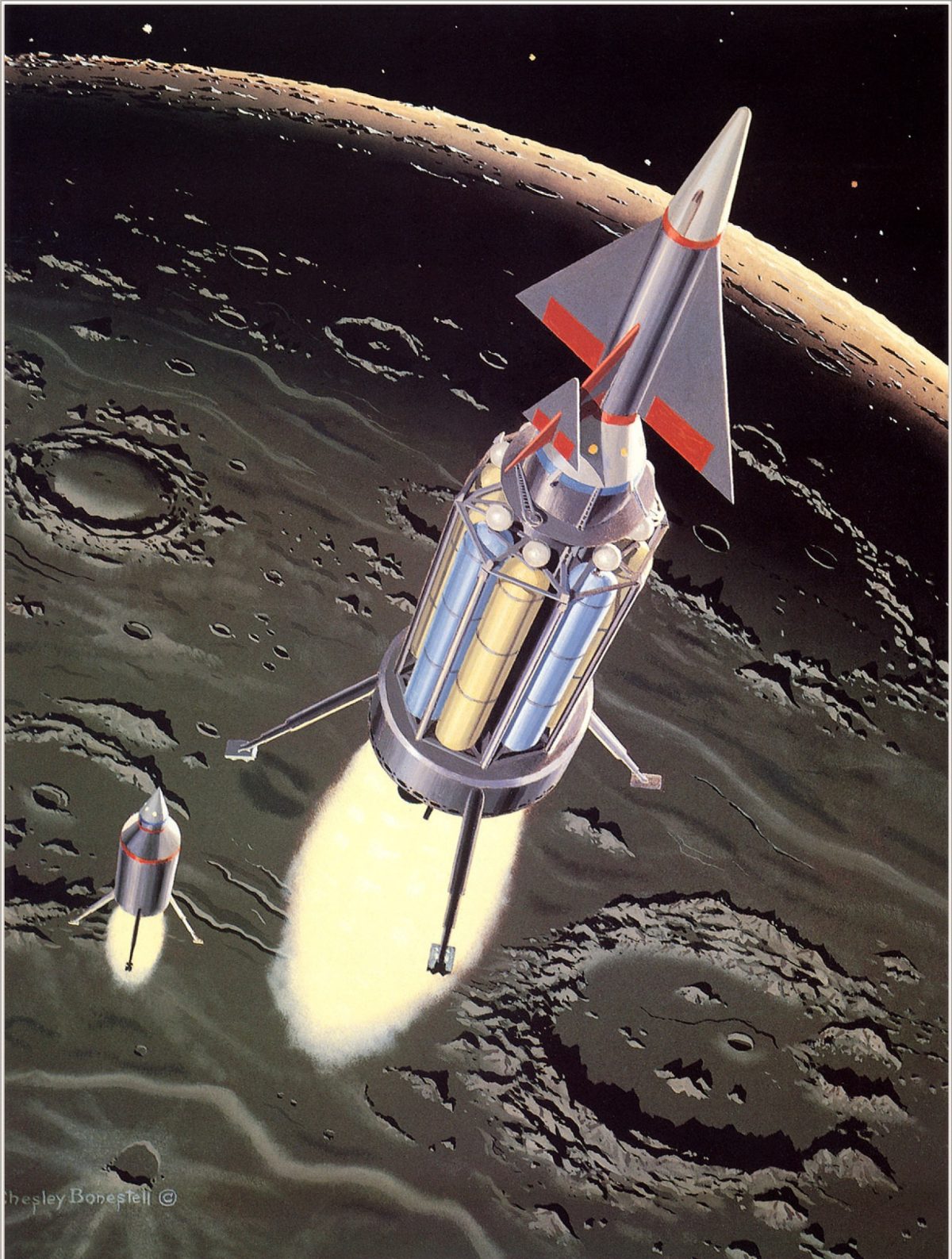
Rocket by Chesley Bonestell
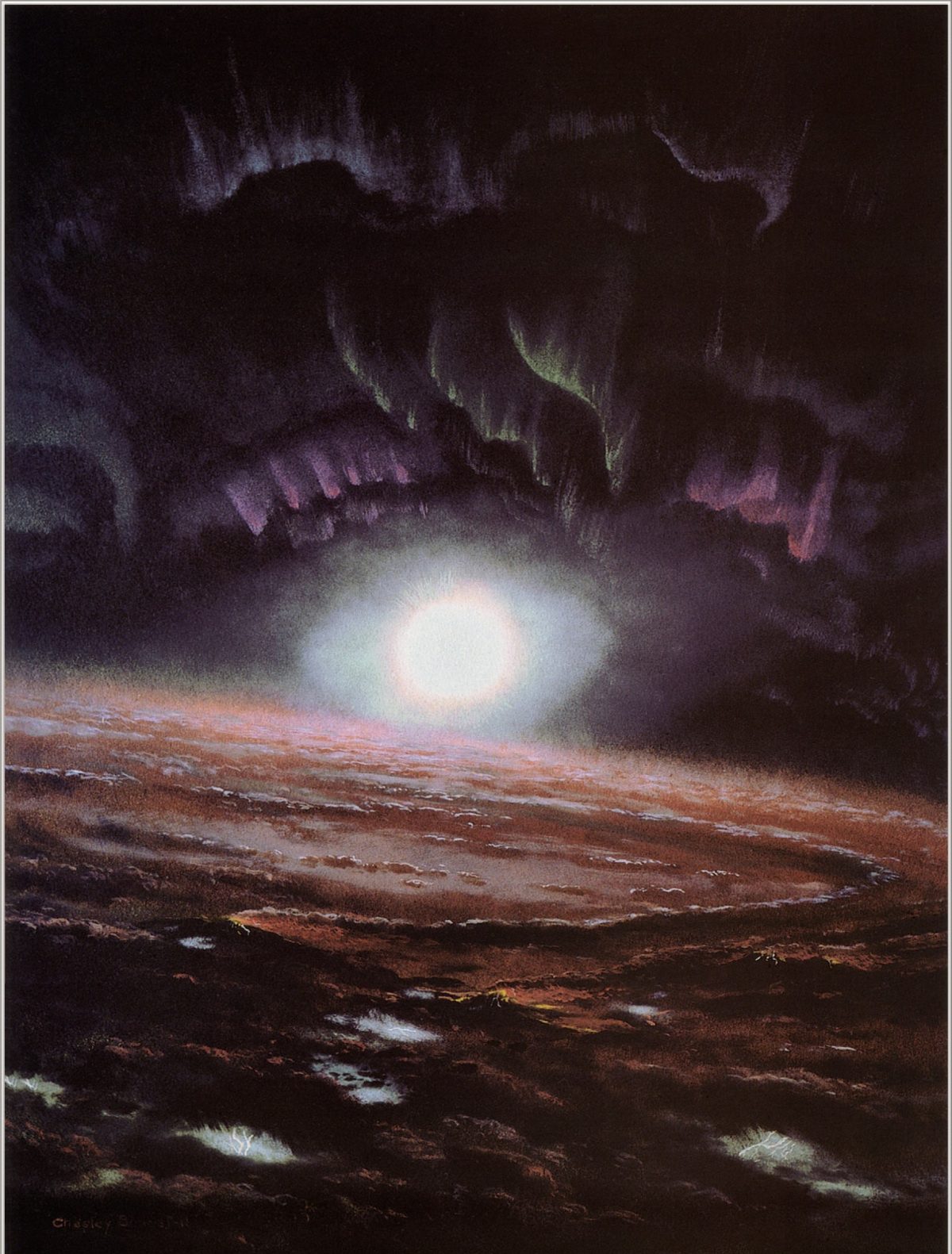
Cosmic Light
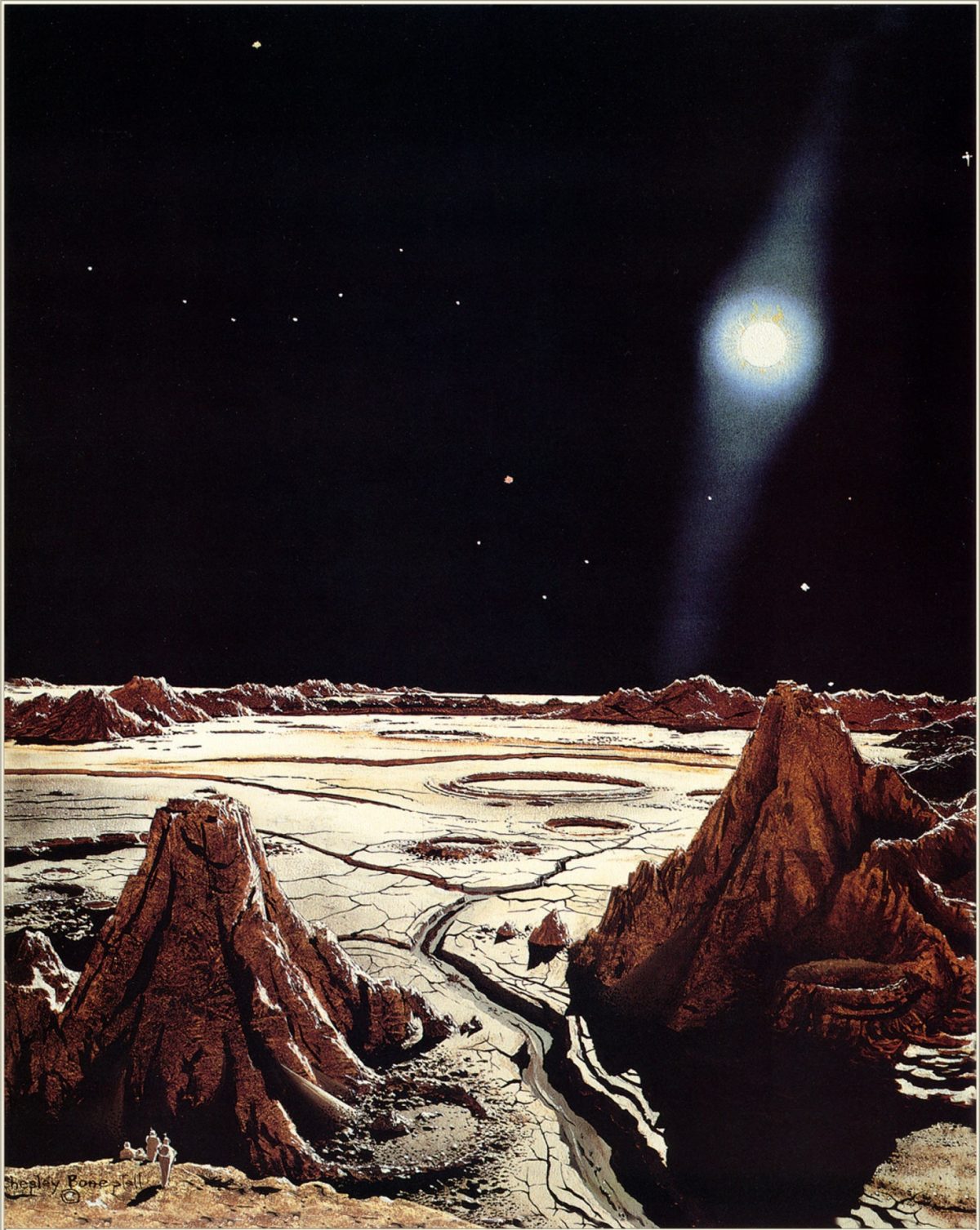
The Surface of Mercury
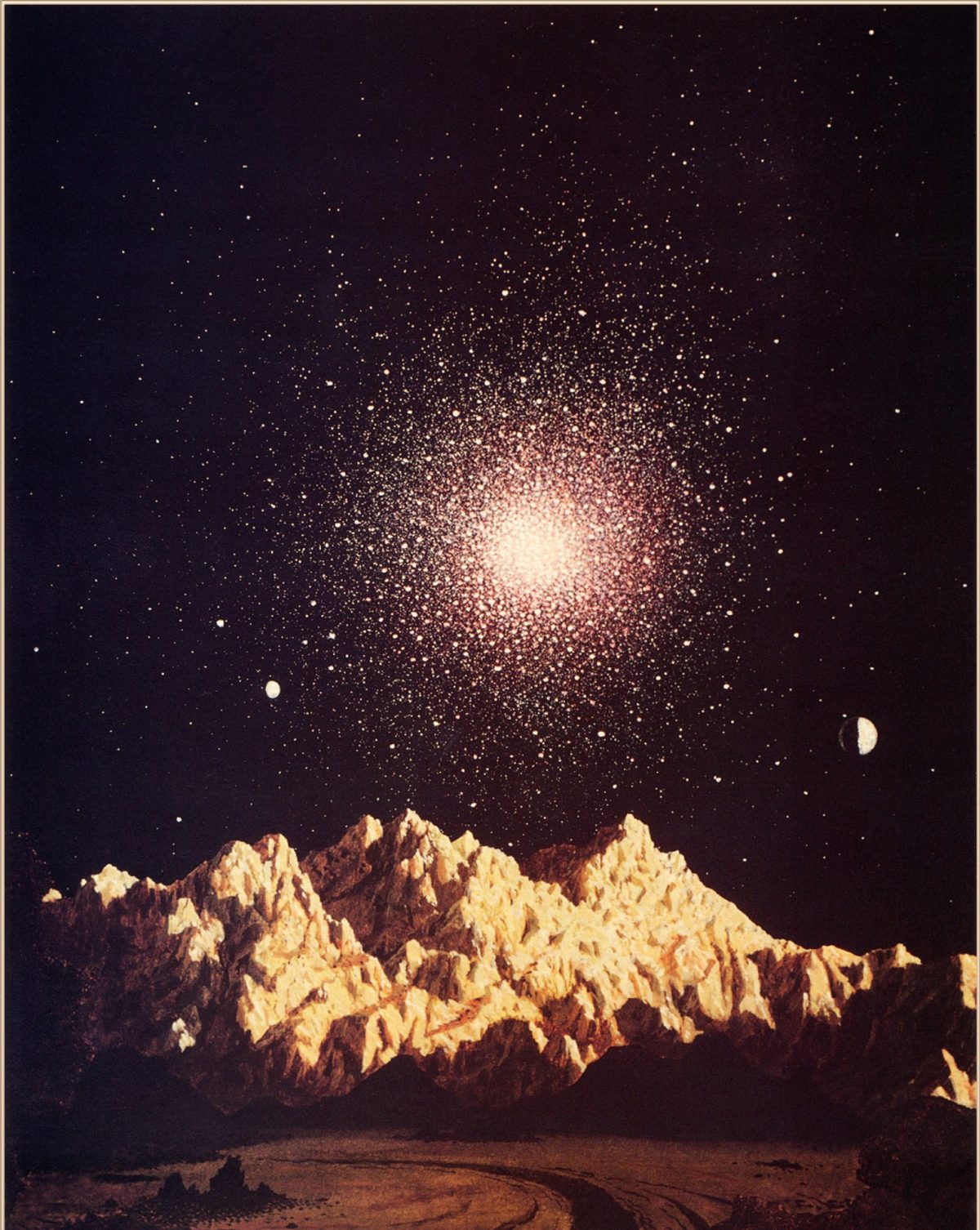
Globular Cluster
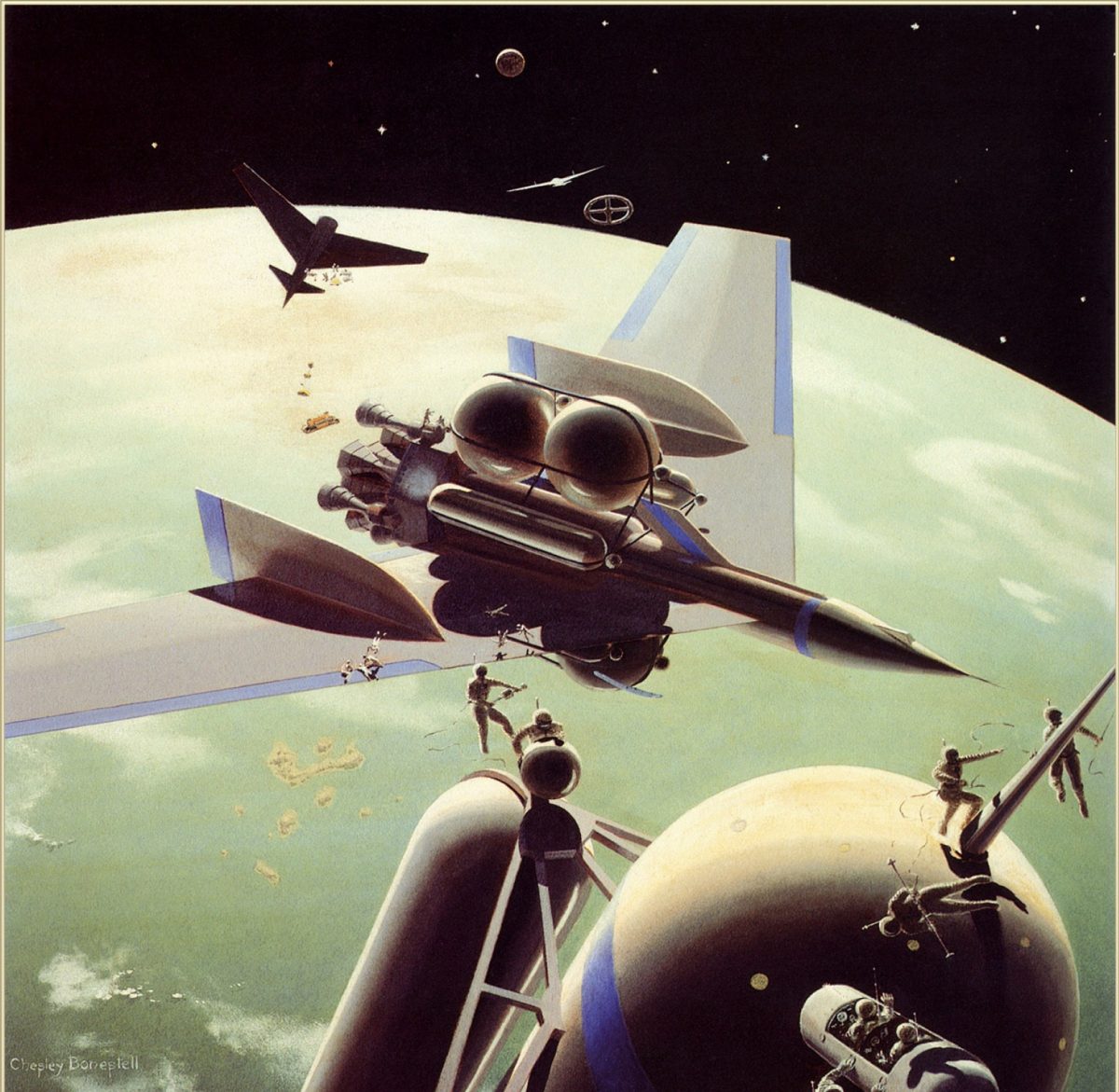
Cosmic History
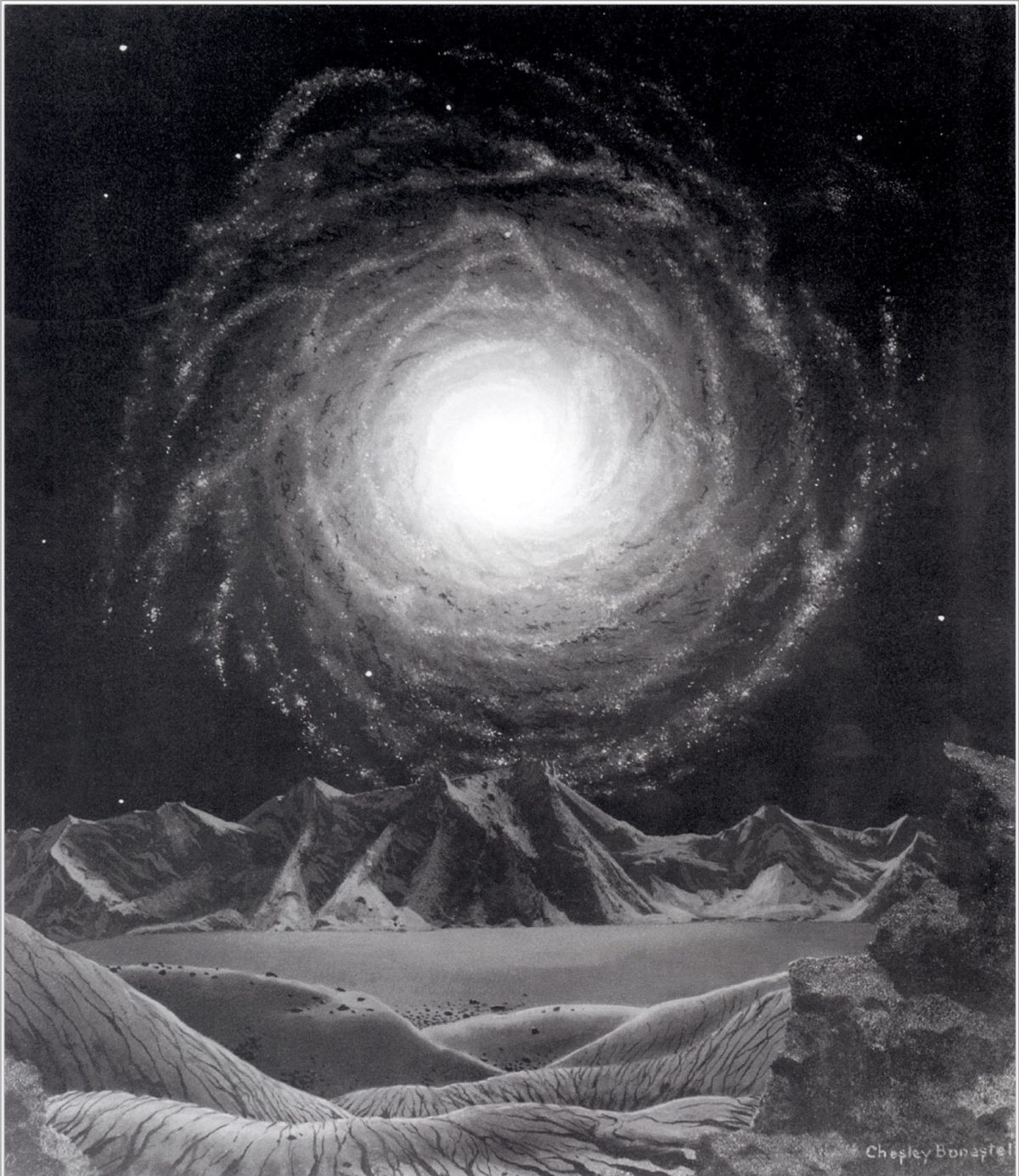
Milky Way
Would you like to support Flashbak?
Please consider making a donation to our site. We don't want to rely on ads to bring you the best of visual culture. You can also support us by signing up to our Mailing List. And you can also follow us on Facebook, Instagram and Twitter. For great art and culture delivered to your door, visit our shop.