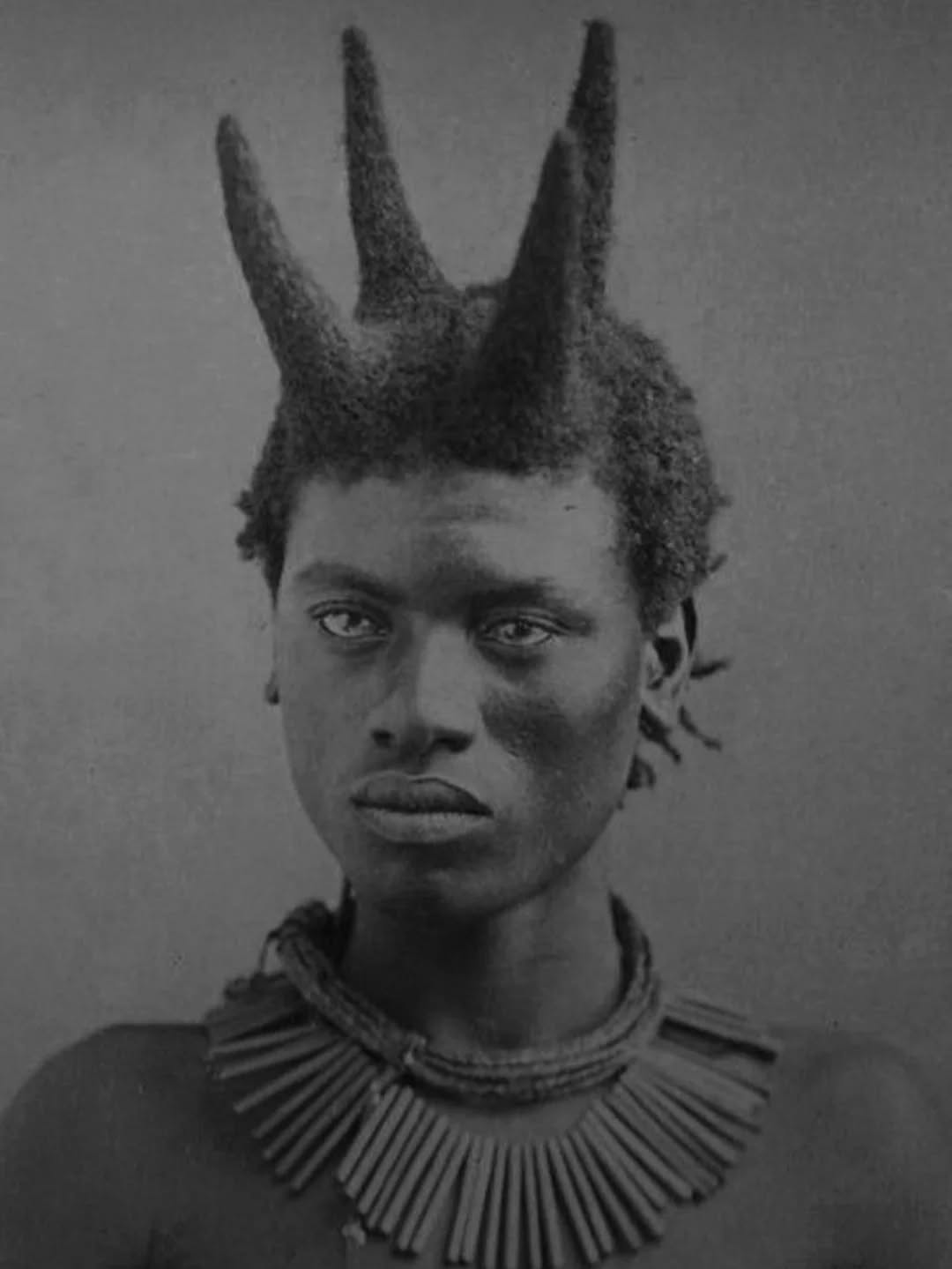
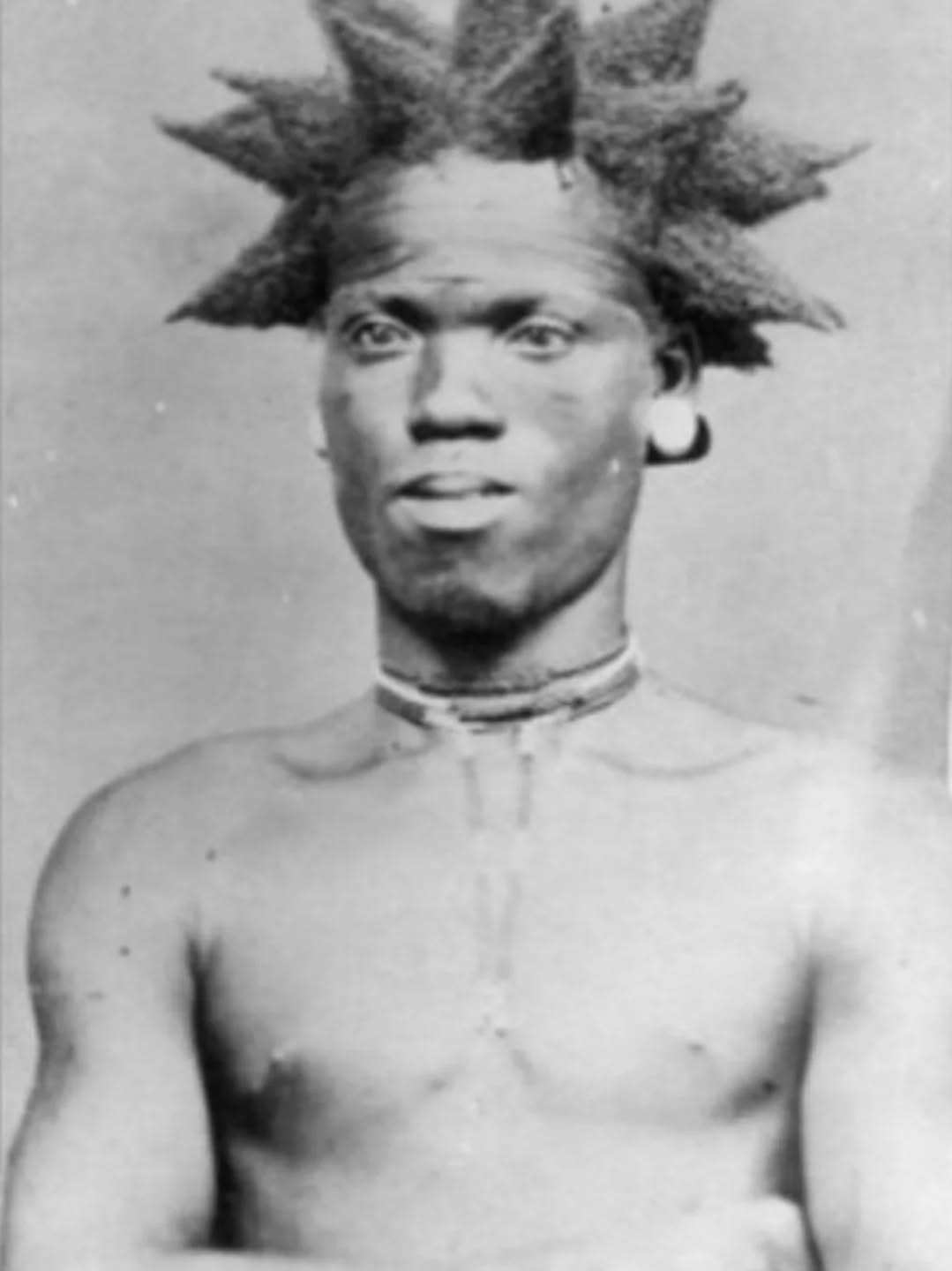
Zulu man, Africa 1879.
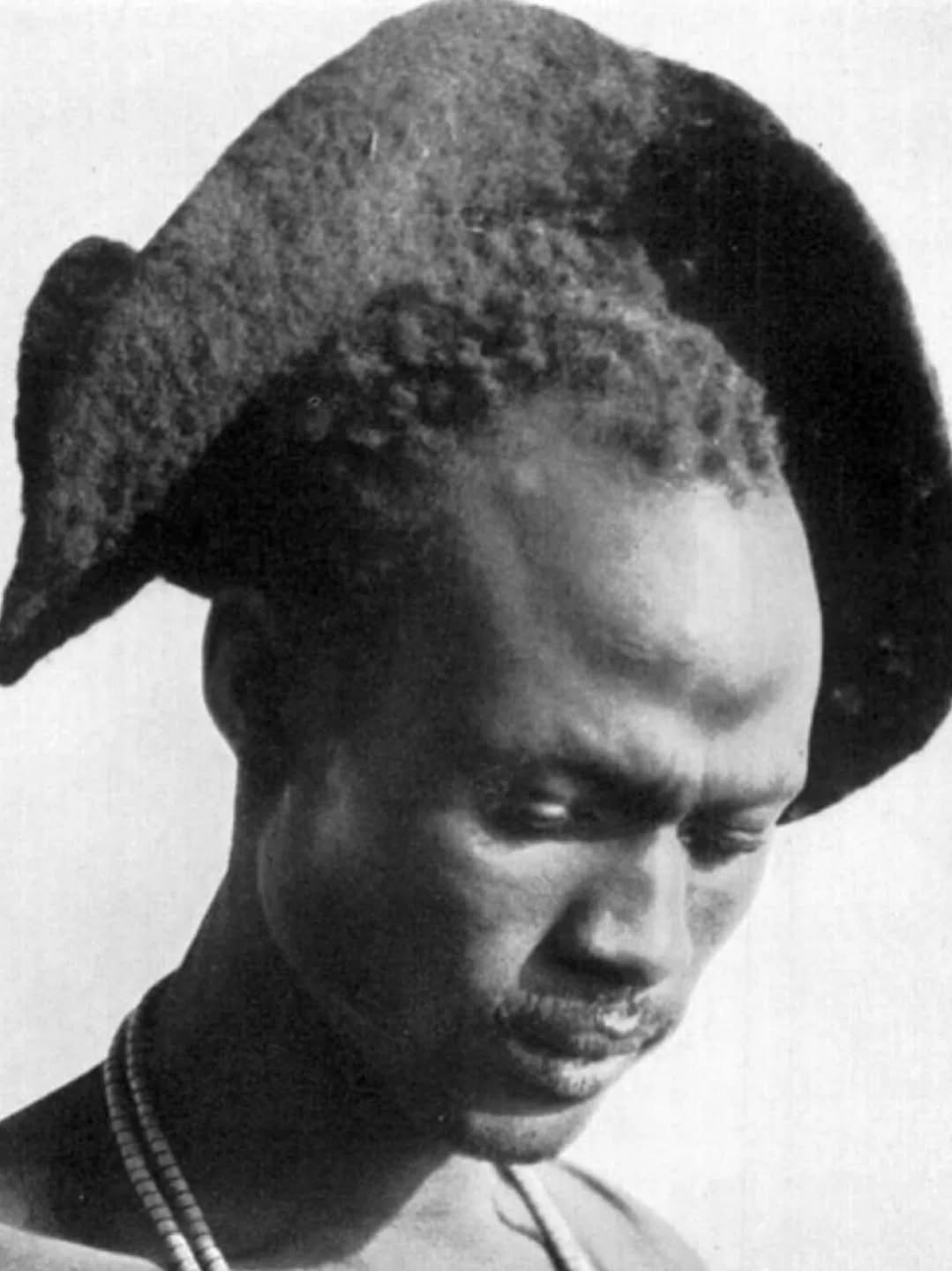
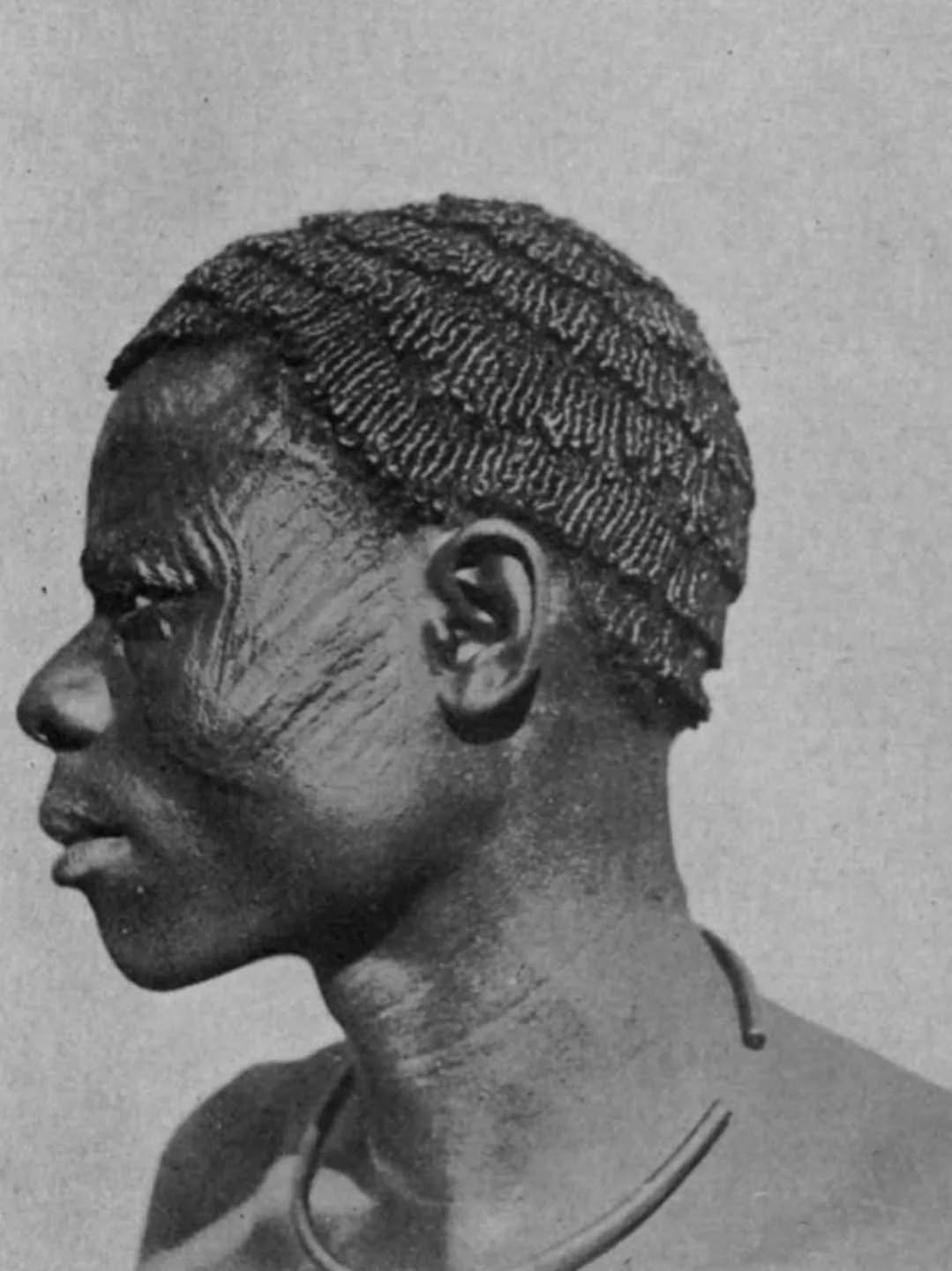
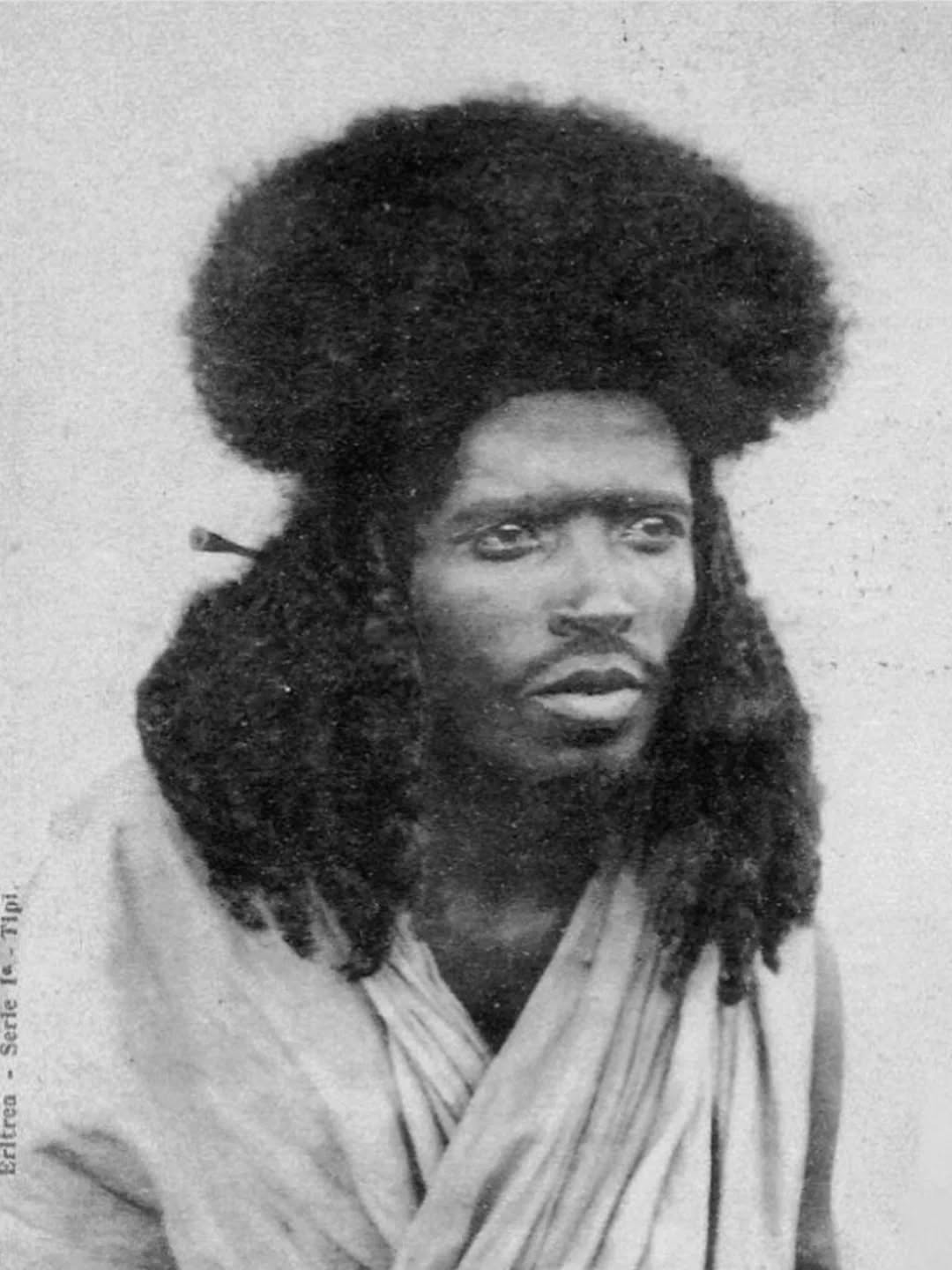
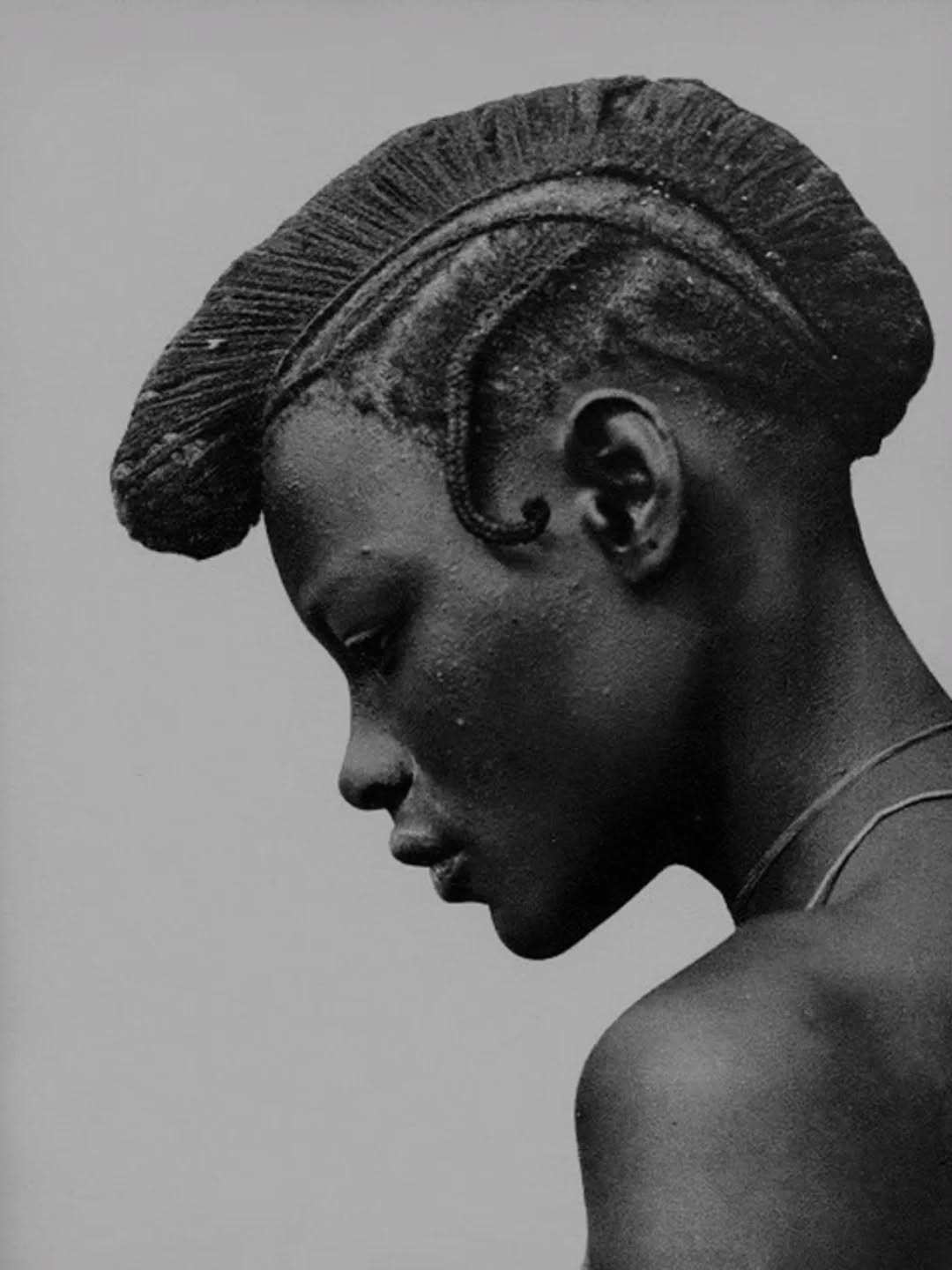
In pre-colonial African societies, men’s hairstyles served as visual markers communicating ranking, religion, wealth, ethnic identity, and marital status.
“Just about everything about a person’s identity could be learned by looking at the hair,” says journalist Lori Tharps, who co-wrote the book Hair Story about the history of black hair.
When men from the Wolof tribe went to war they wore a braided style. While a woman in mourning would either not “do” her hair or adopt a subdued style.
“What’s more, many believed that hair, given its close location to the skies, was the conduit for spiritual interaction with God,” she adds.
Among the Yoruba people of West Africa, intricate hairstyles were once reserved for royalty, while men of some tribes cut their hair only to mourn the death of a close relative, believing a mourner’s spirit was desolated by loss, and they had to dispose of it in a ceremonious way.
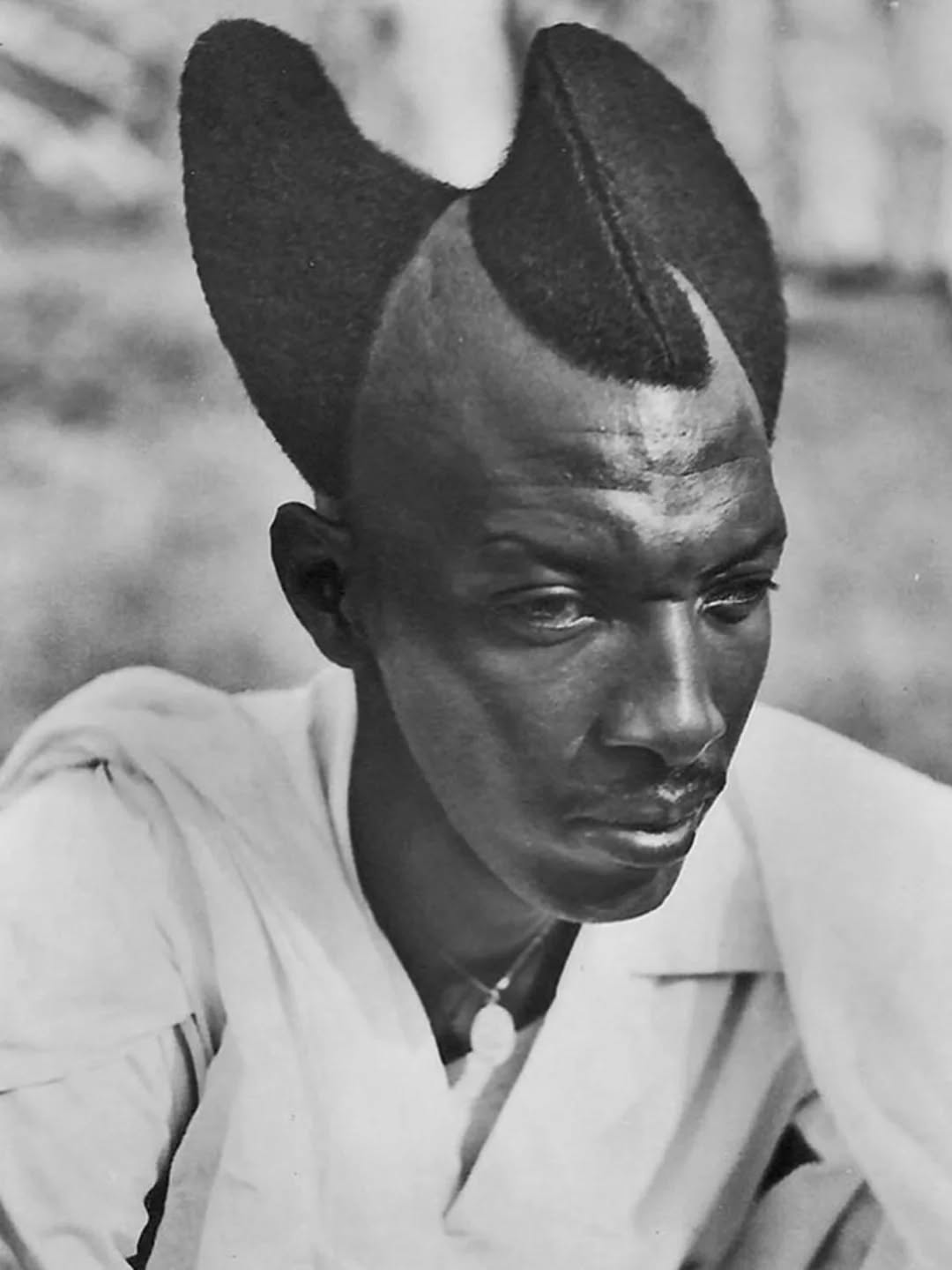
Amasunzu hairstyle used in Rwanda by single men and women to inform the public that they were available and of eligible age.
Dreadlocks, which could be formed naturally or intentionally and varied in thickness and length, were worn by men of cultures like the Maasai, Nubian, Berber, and Rastafari.
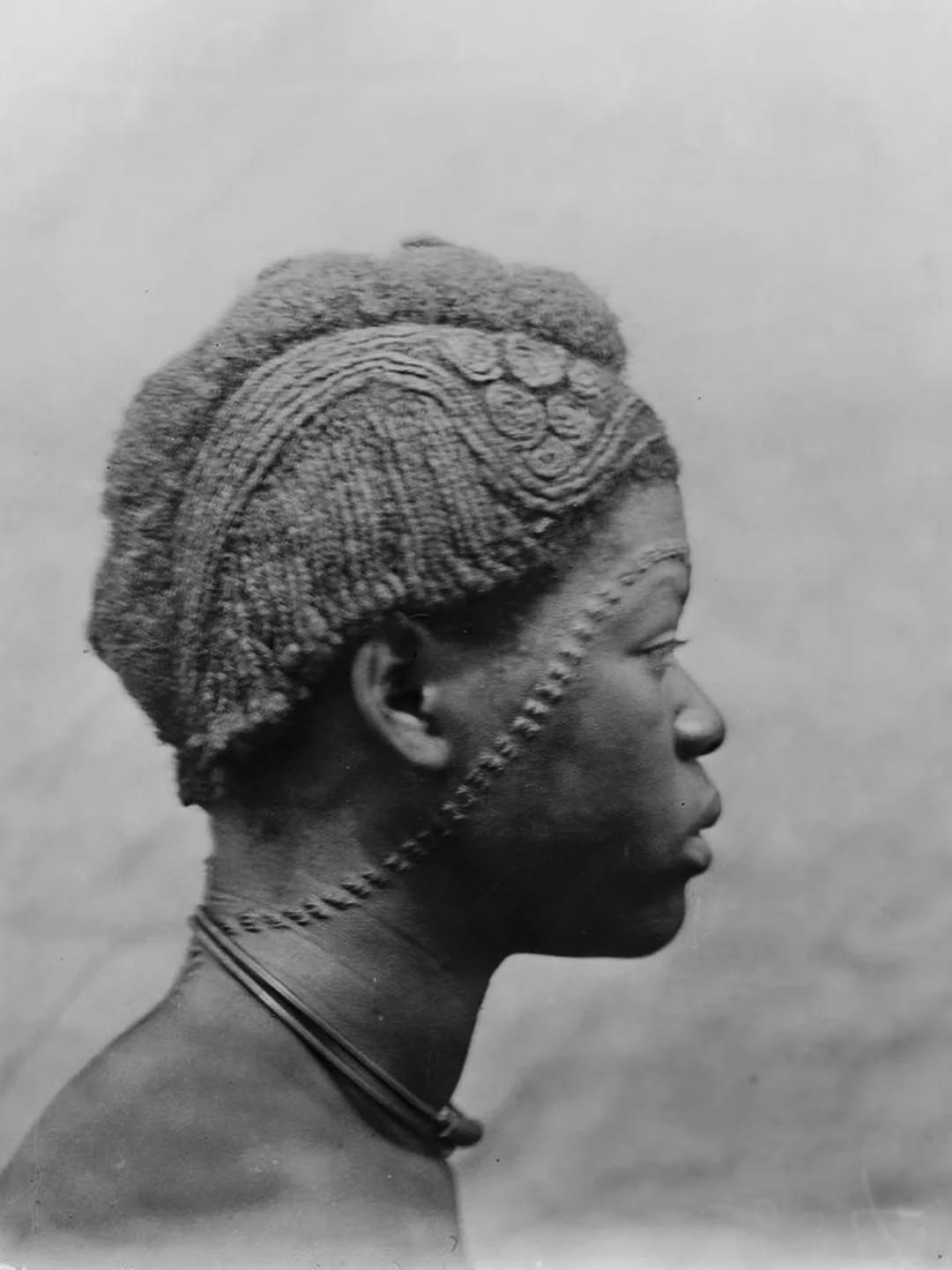
Cornrows were worn by men across cultures including the Ewe, Ashanti, Igbo, and Yoruba, plaited close to the scalp in geometric or symbolic patterns that could create mohawks or crowns.
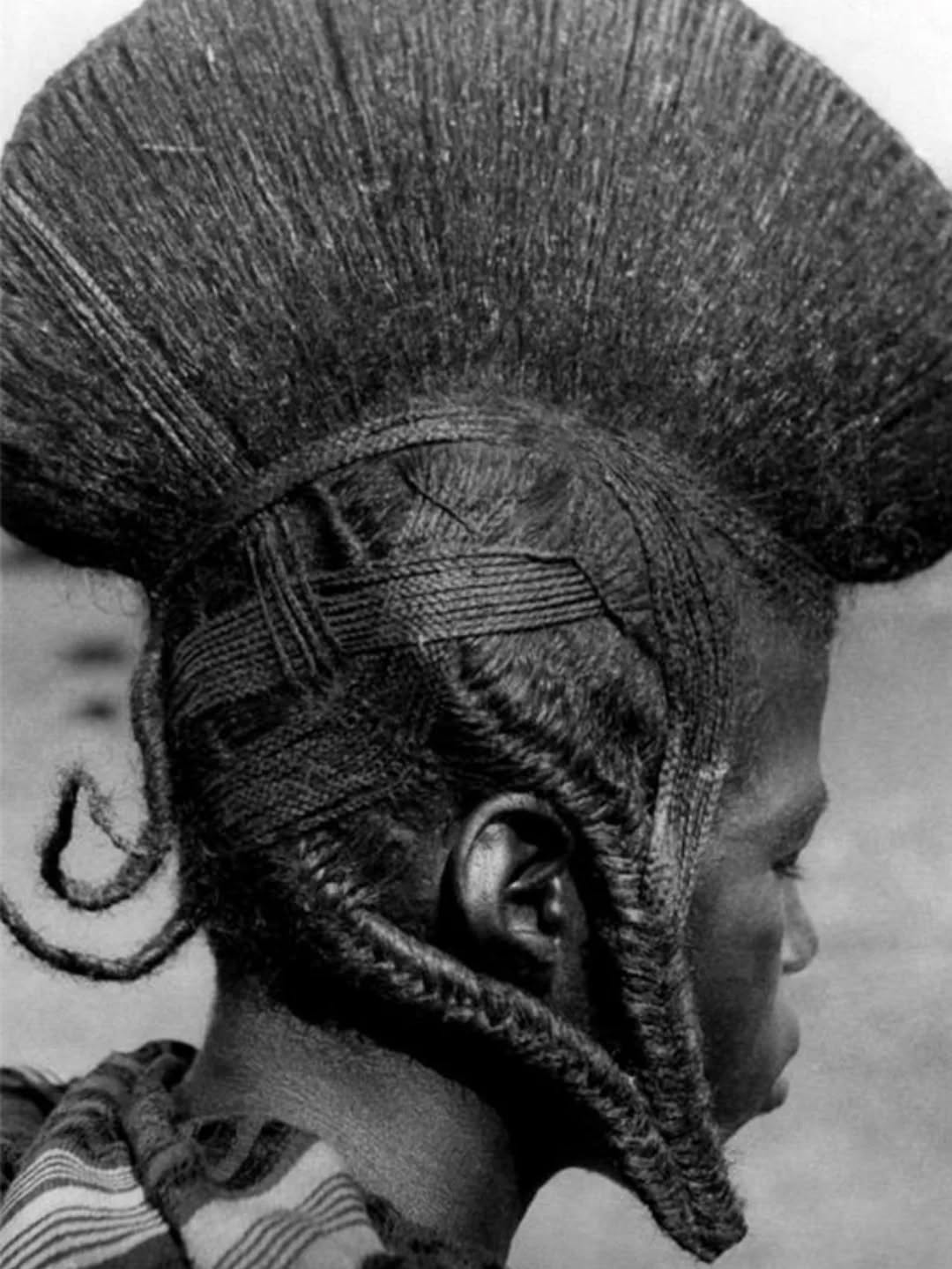
Fulani, Burkina Faso, 1930.
The Himba people of Namibia used red ochre and butter to style their hair, representing their connection to beauty, tradition, and the earth. Hair held spiritual significance and was believed to connect men to ancestors and the divine, making it far more than decoration. It was a language written on the body, readable to anyone who understood the codes of their culture.

“Relaxing your hair is like being in prison. You’re caged in. Your hair rules you. You didn’t go running with Curt today because you don’t want to sweat out this straightness. You’re always battling to make your hair do what it wasn’t meant to do.”
— Chimamanda Ngozi Adichie, Americanah

Via: Equator
Would you like to support Flashbak?
Please consider making a donation to our site. We don't want to rely on ads to bring you the best of visual culture. You can also support us by signing up to our Mailing List. And you can also follow us on Facebook, Instagram and Twitter. For great art and culture delivered to your door, visit our shop.