Having seen the tattoos collected by Alexandre Lacassagne, a French physician and criminologist, we now get to show them on the flesh from a book of 1930s tattoos.
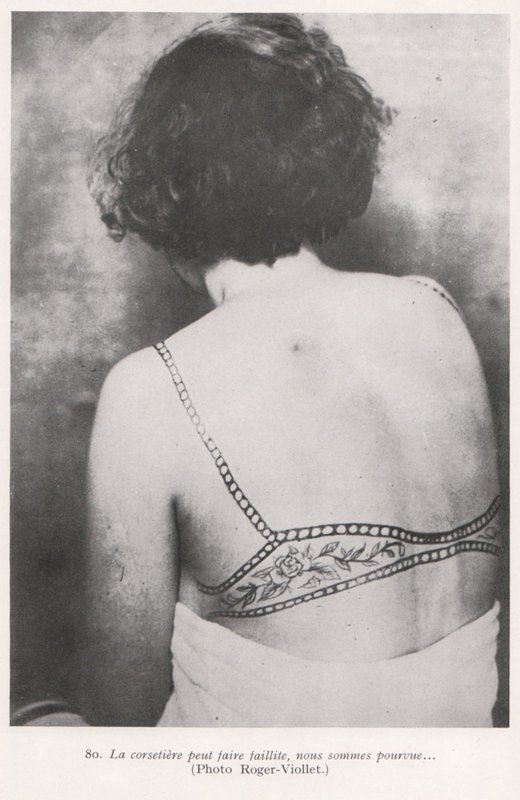
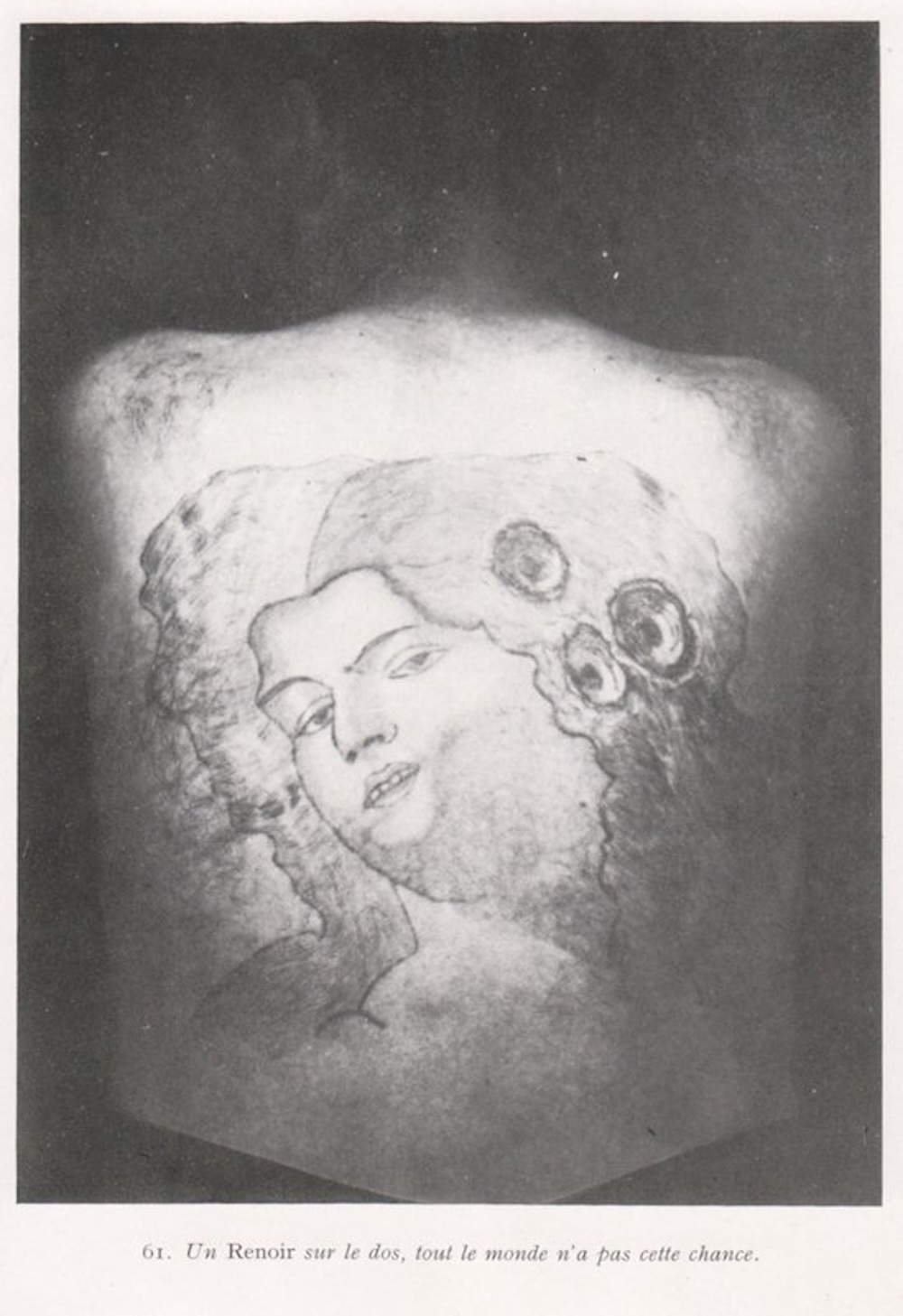
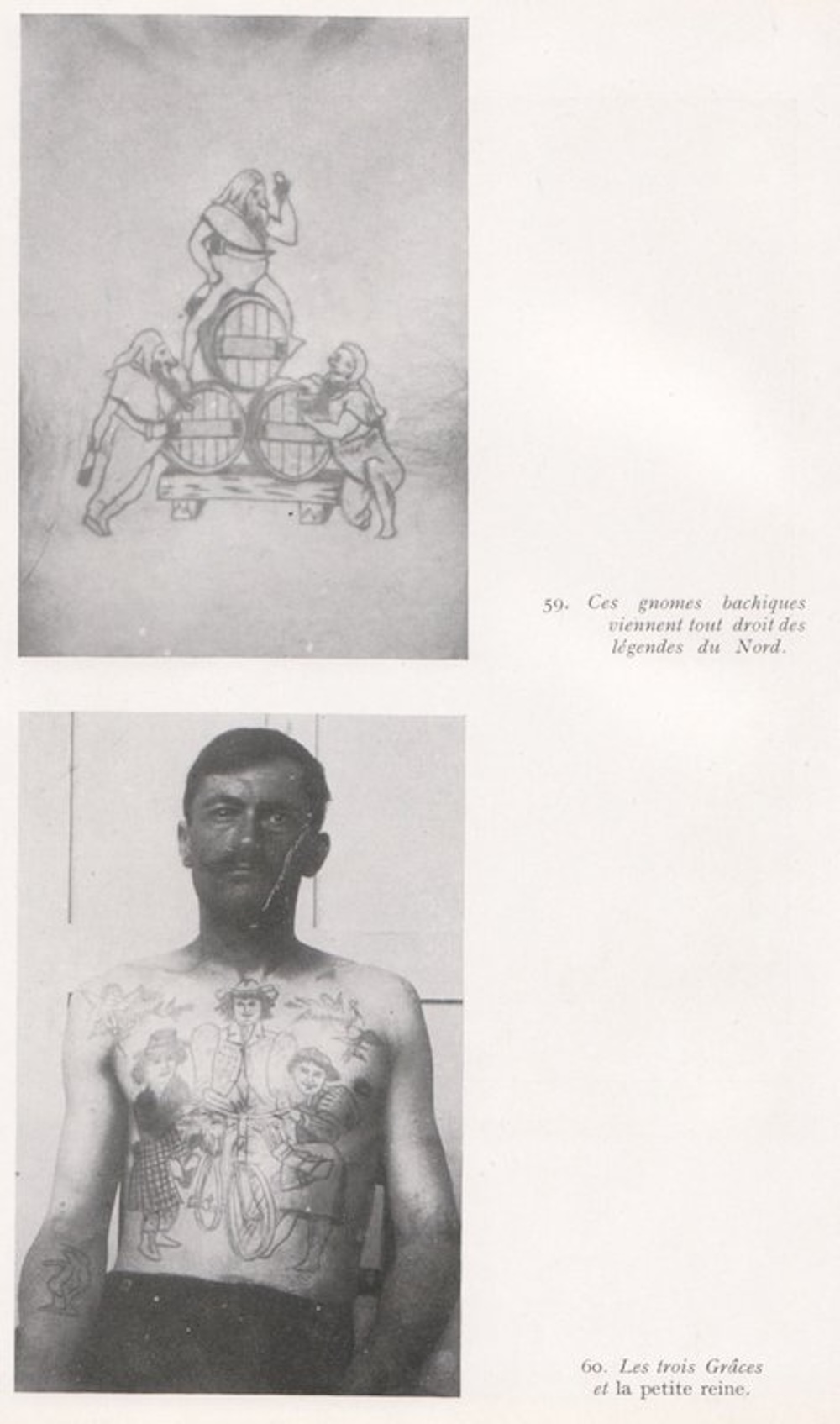
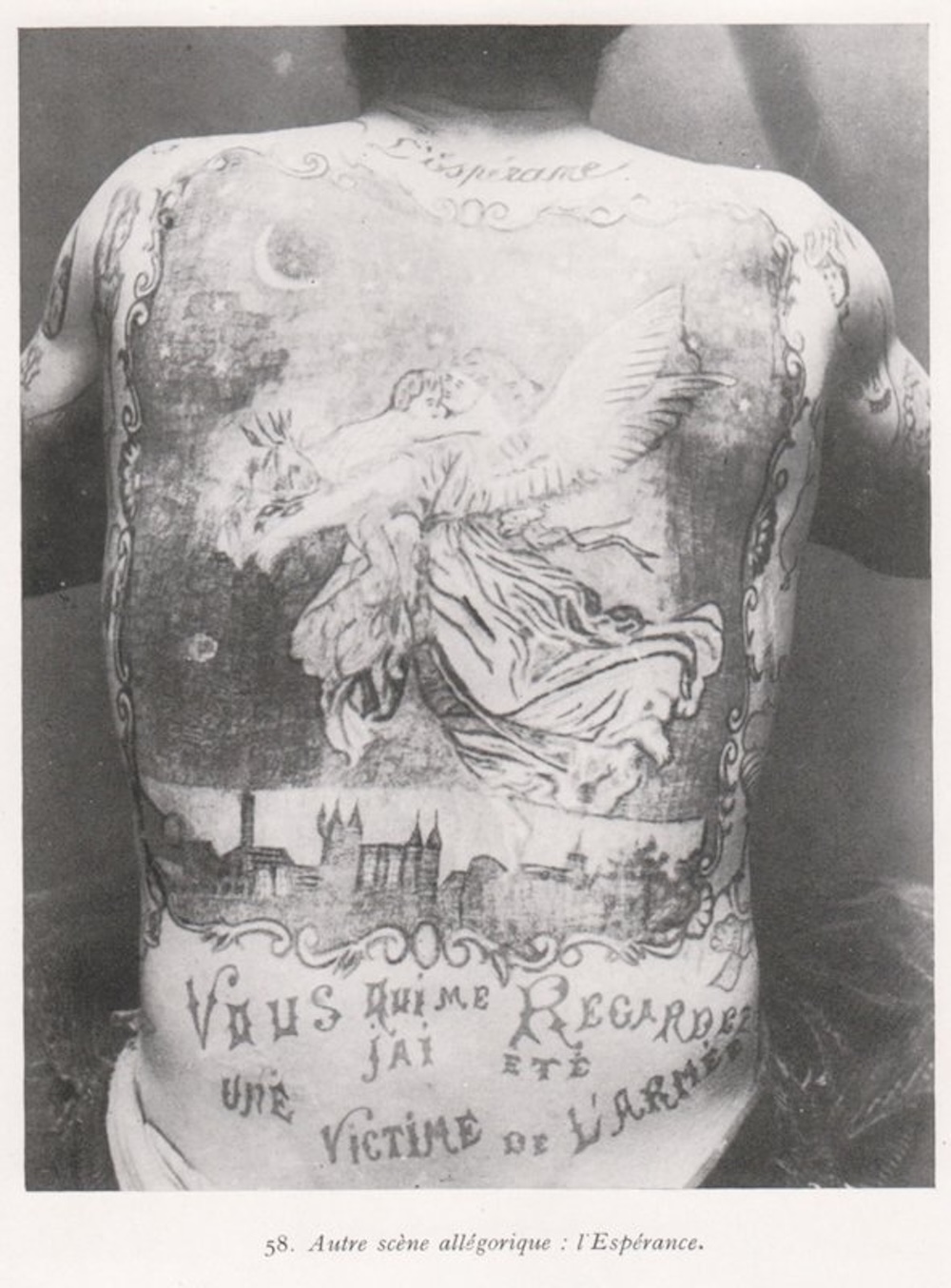
These pictures are from the journal Crocodile, bi-monthly bulletin of the General Association of the medical internship of the Civil hospitals in the city of Lyon. A special issue was published to accompany 2nd year, issue V, September-October 1934, dealing with the physiognomy of tattooing in France.
The journal was illustrated with photos of tattooed people (torso, face, back, genitals, whole body), including sailors, pimps, prisoners and prostitutes.
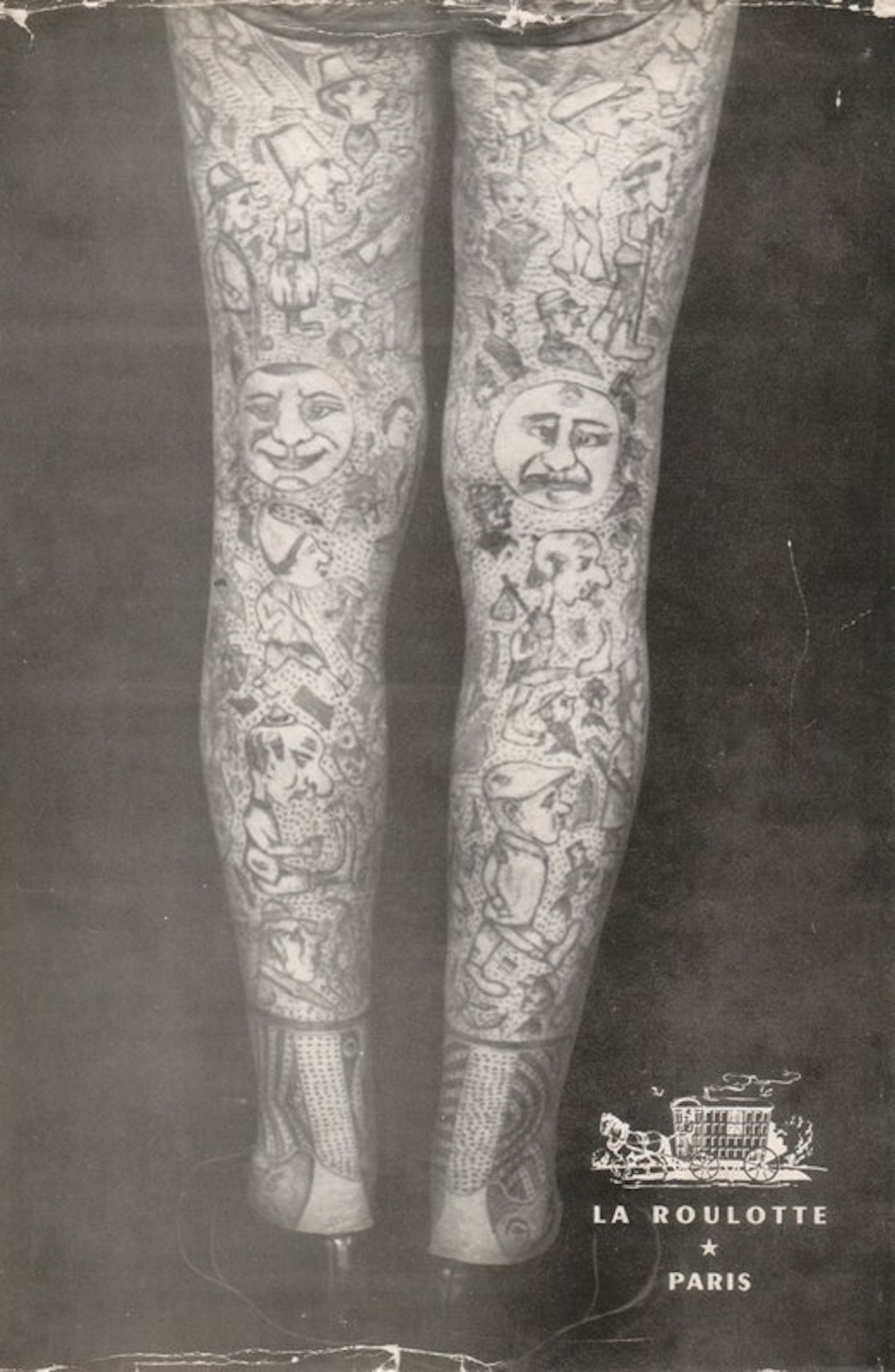
Dermatologist and medical historian, Dr Lacassagne was also a prison doctor. He treated criminals and prostitutes, which aroused his curiosity about the art of tattooing, then reserved for people on the edge of society. He wanted to show how ‘speaking scars, – his nickname for tattoos – revealed the inner person.
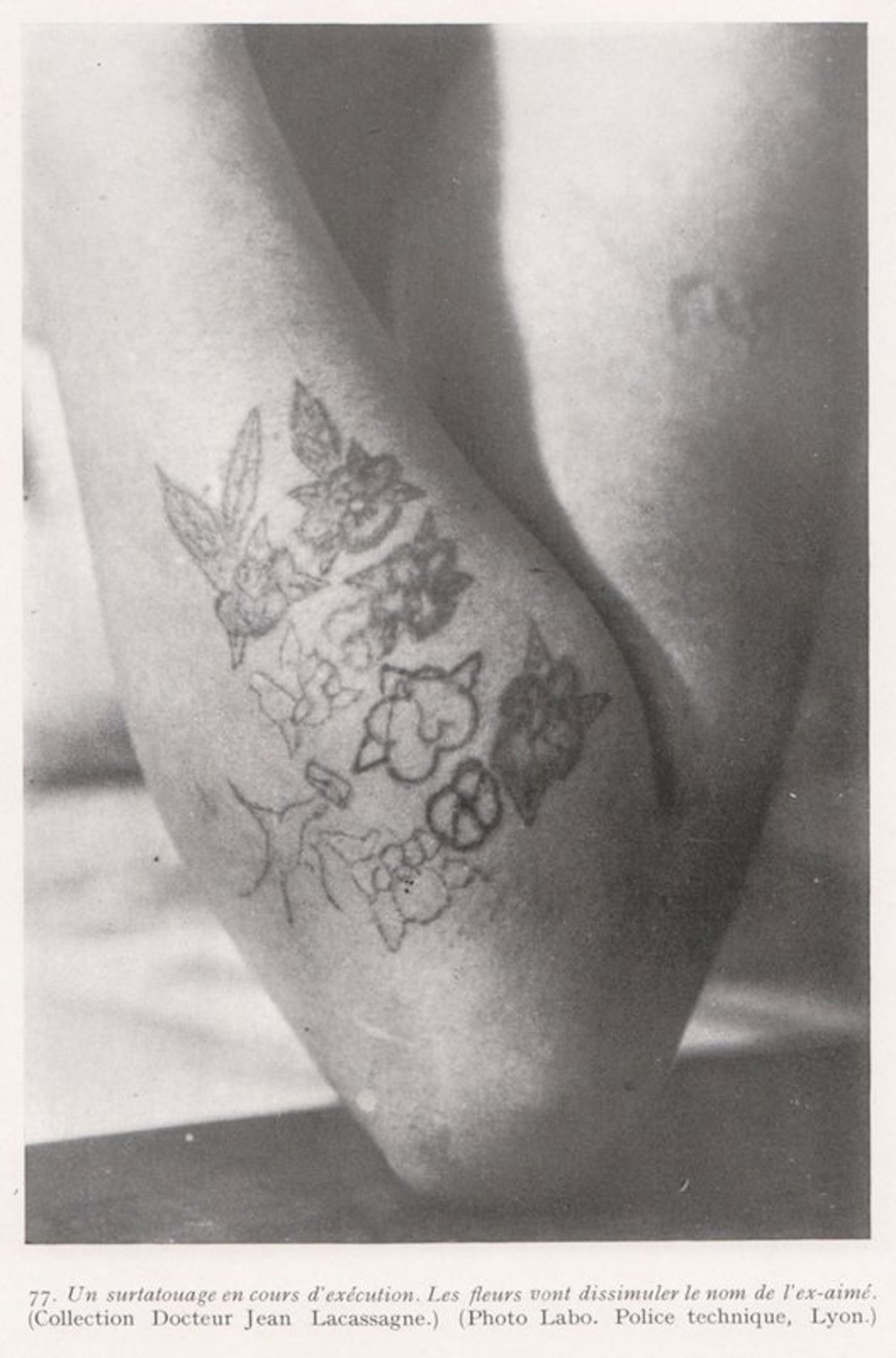
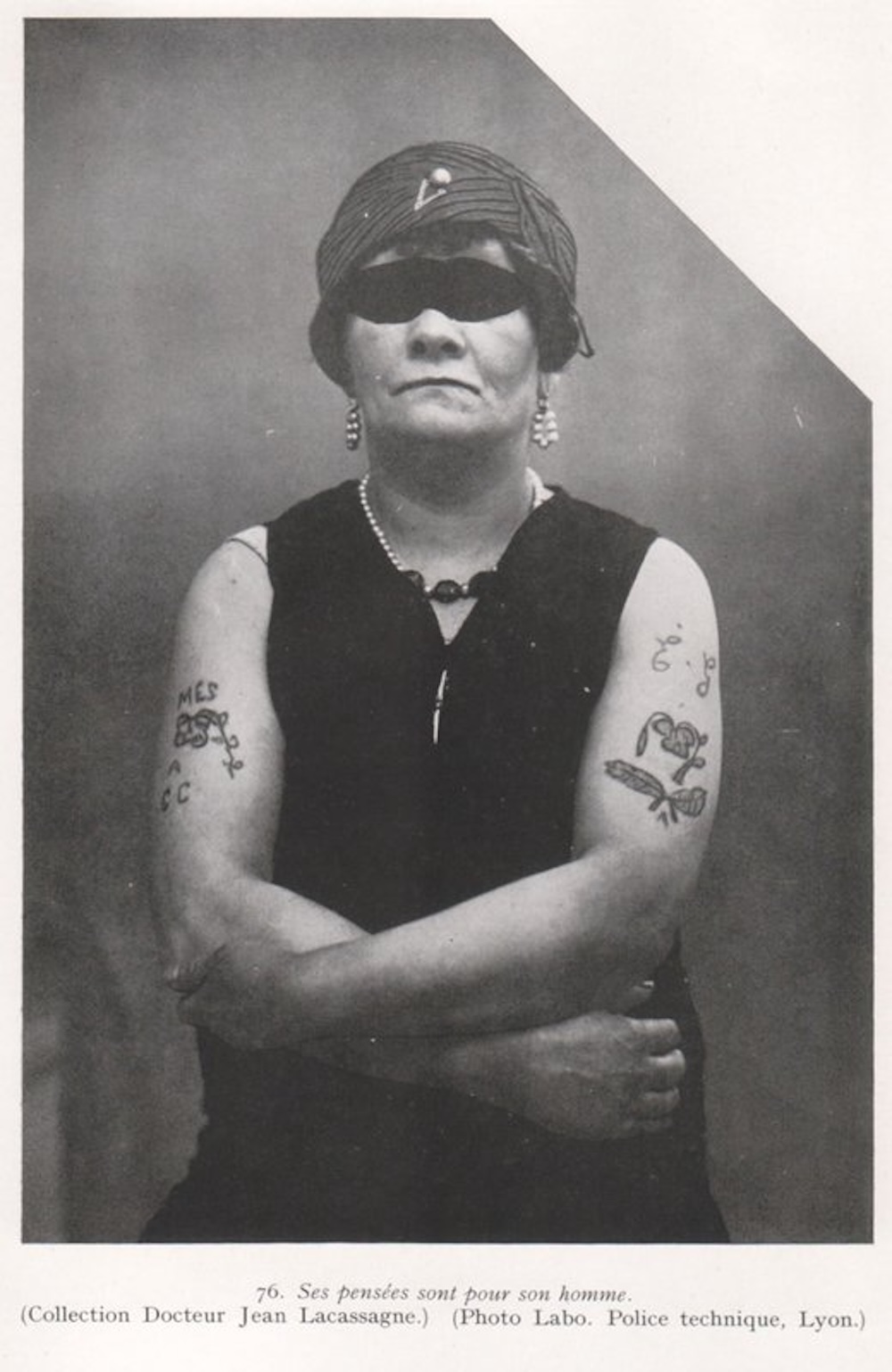

In Crocodile, we learn that the back allows the tattooist to mislead the tattooed person about the nature of what he or she is engraving, that the eye area and the toes are the most sensitive zones, and that tattoos can be punitive.
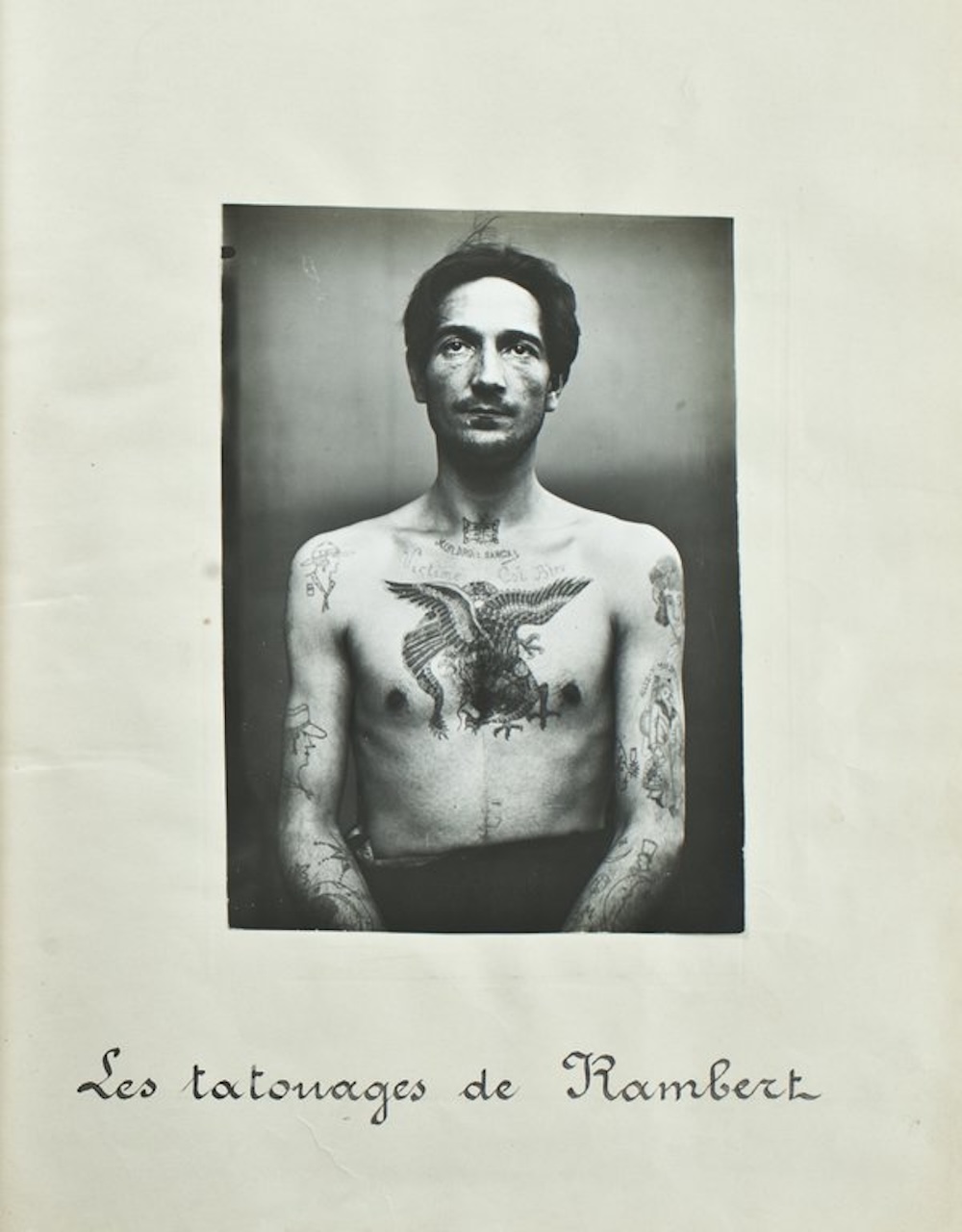
It includes a photo of the torso of the notorious criminal Louis Rambert (below; he bequeathed his tattooed skin to Lacassagne), who left his skin adorned with a magnificent polychrome tattoo to the doctor.
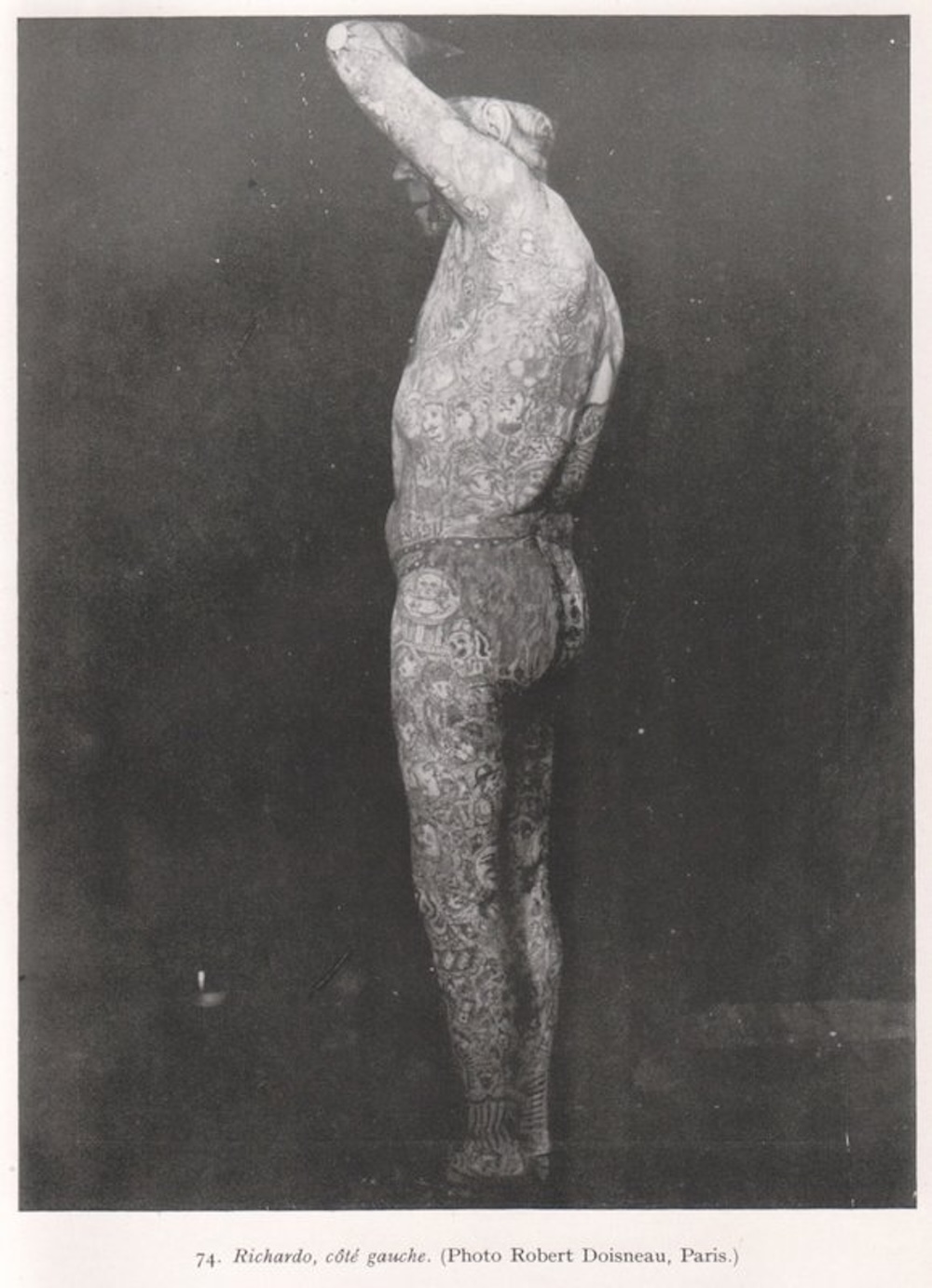

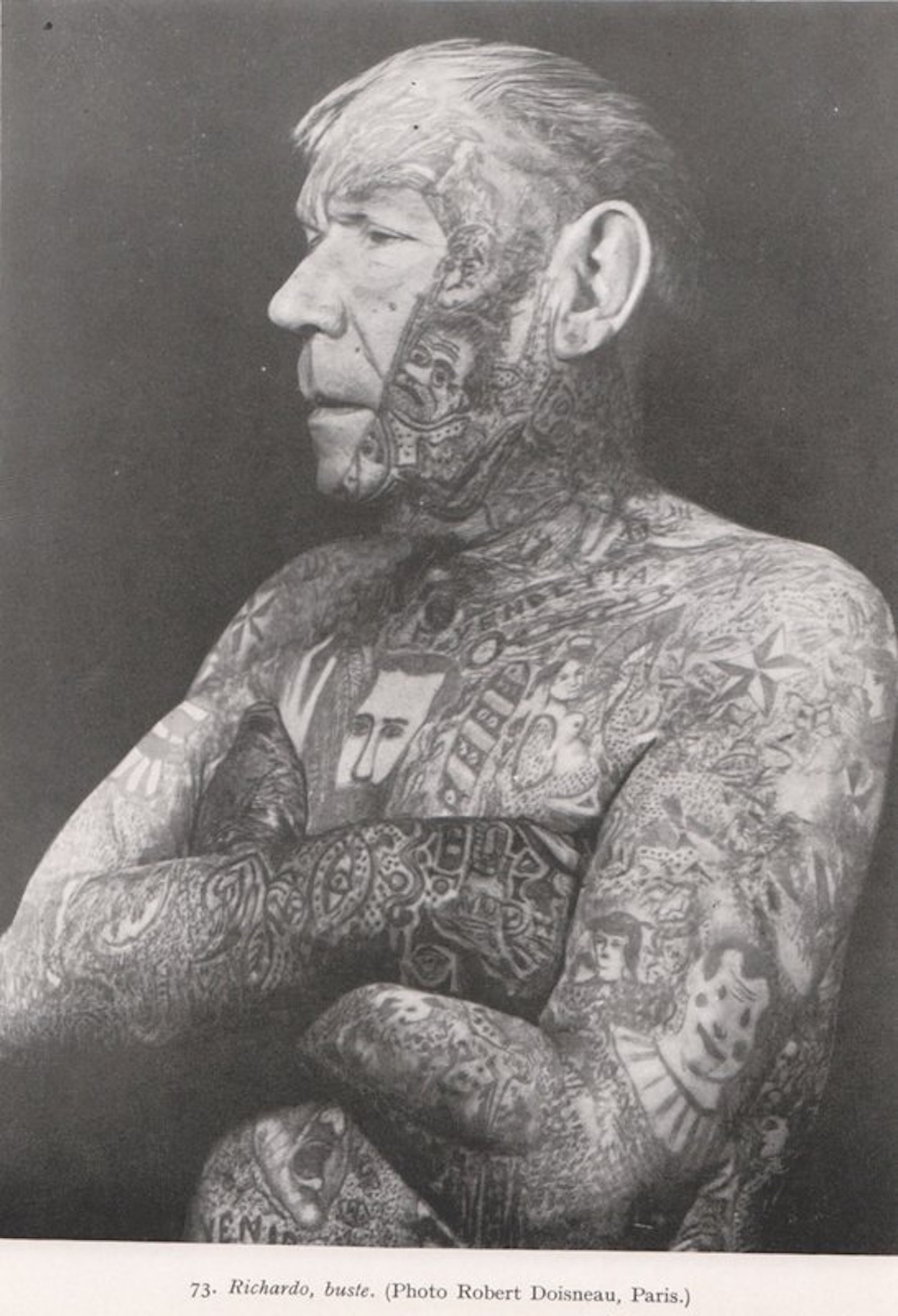
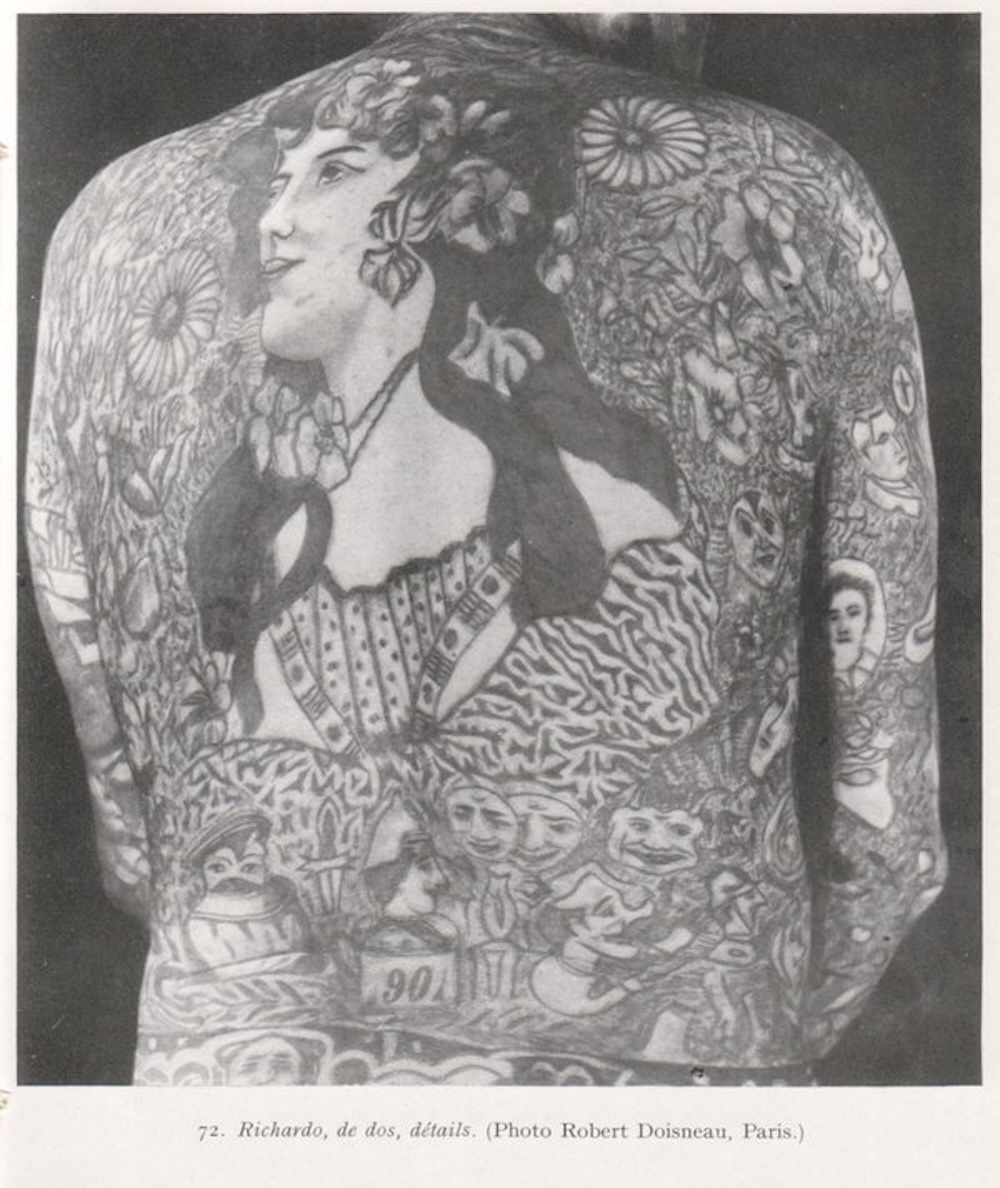
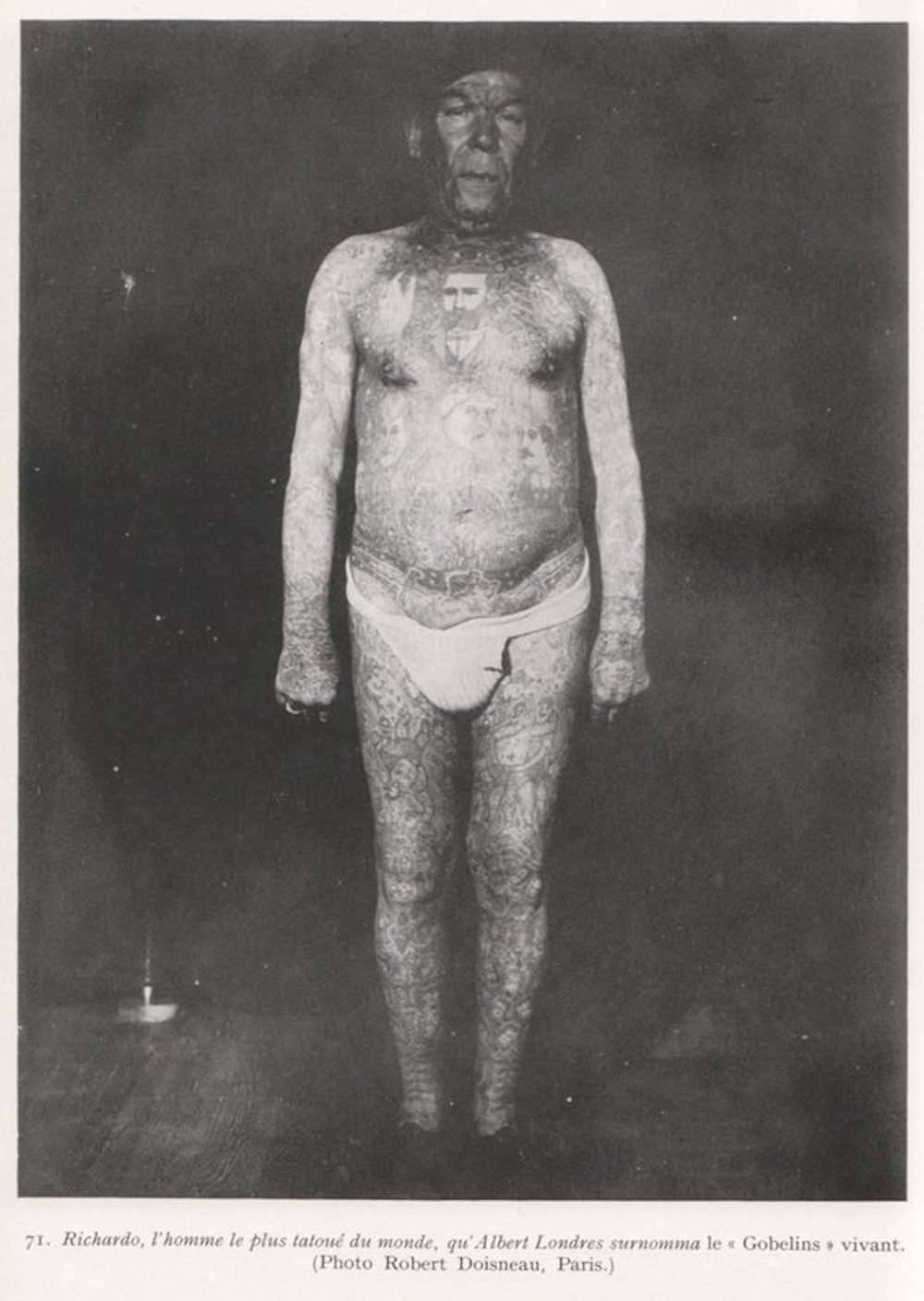
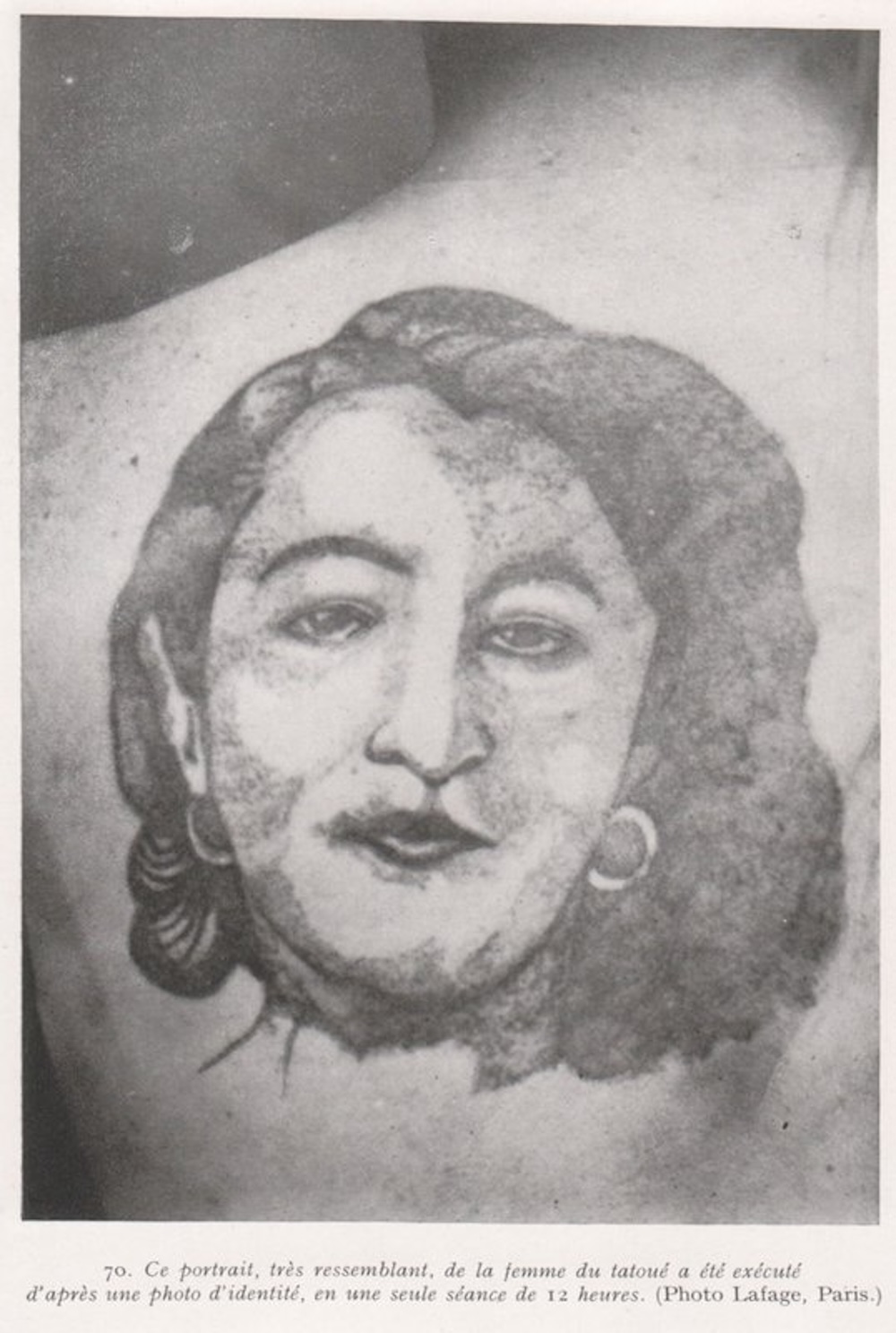
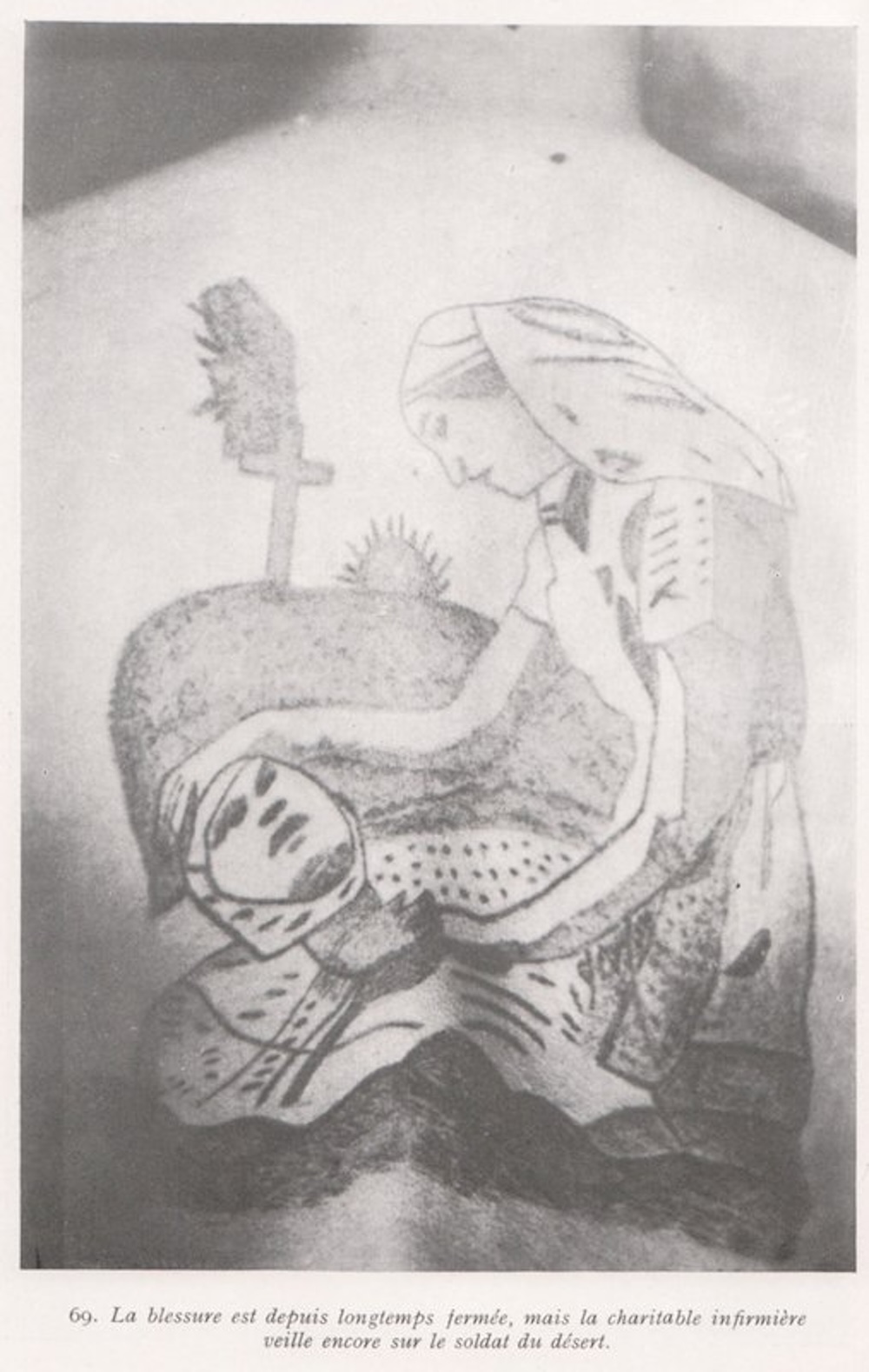
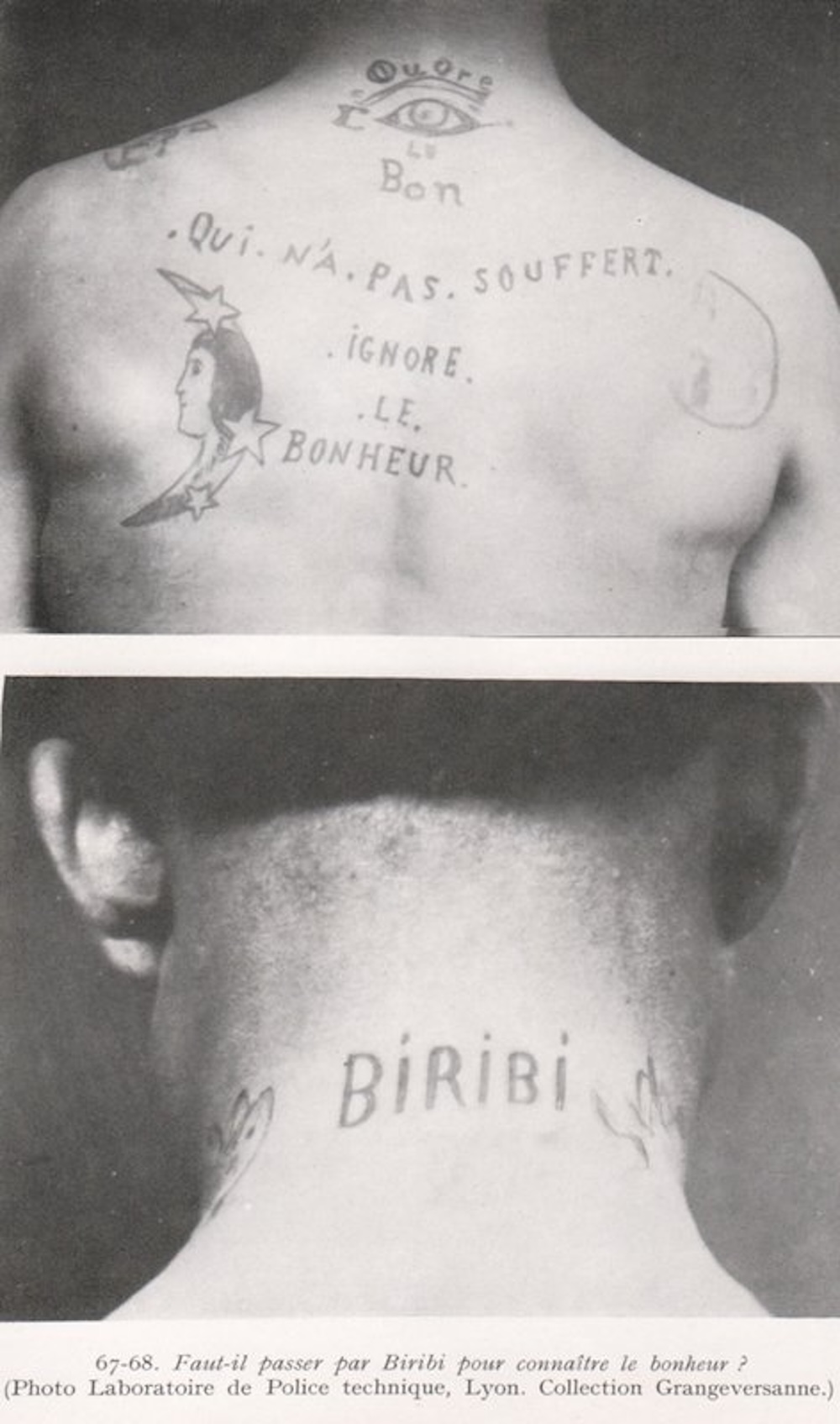
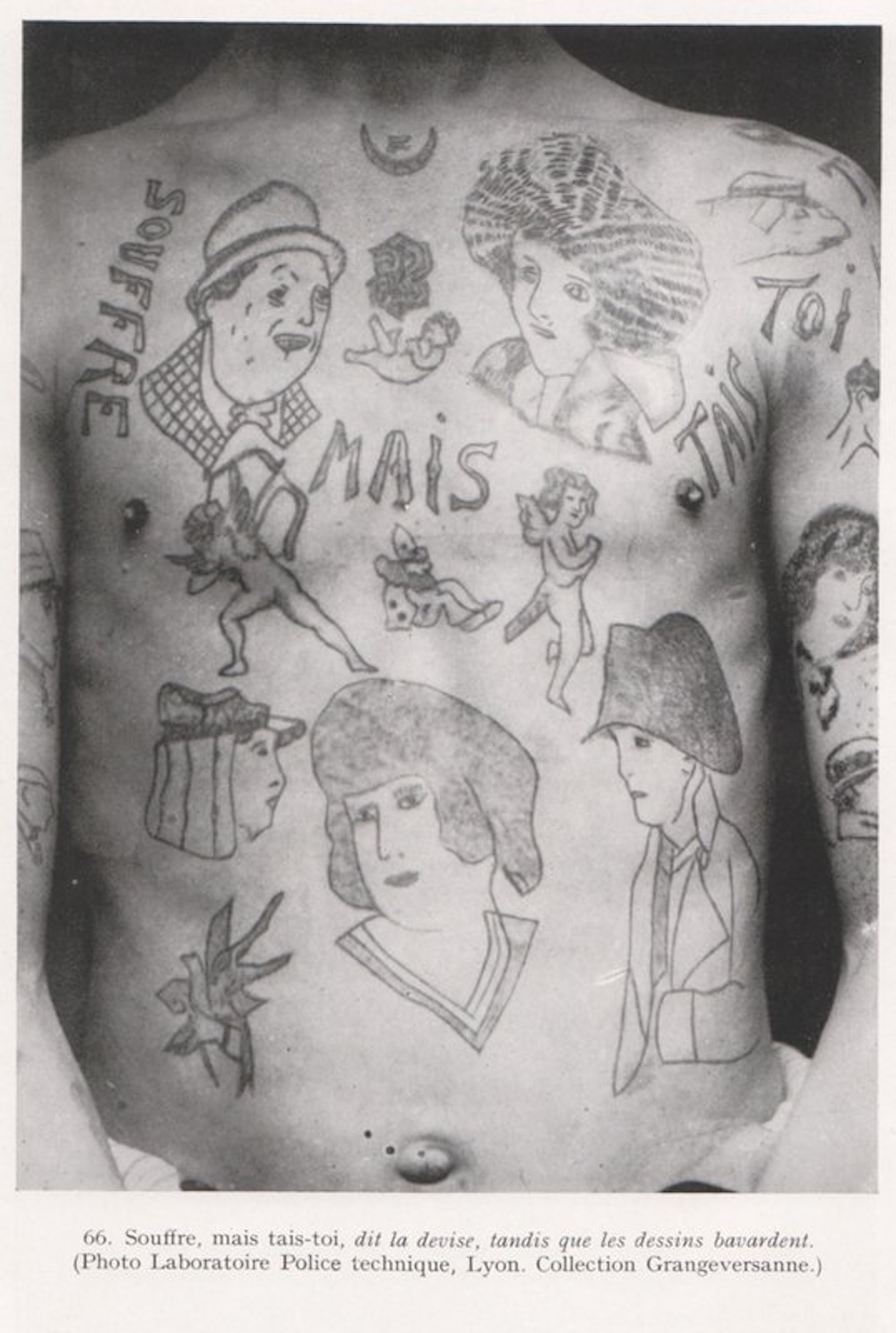
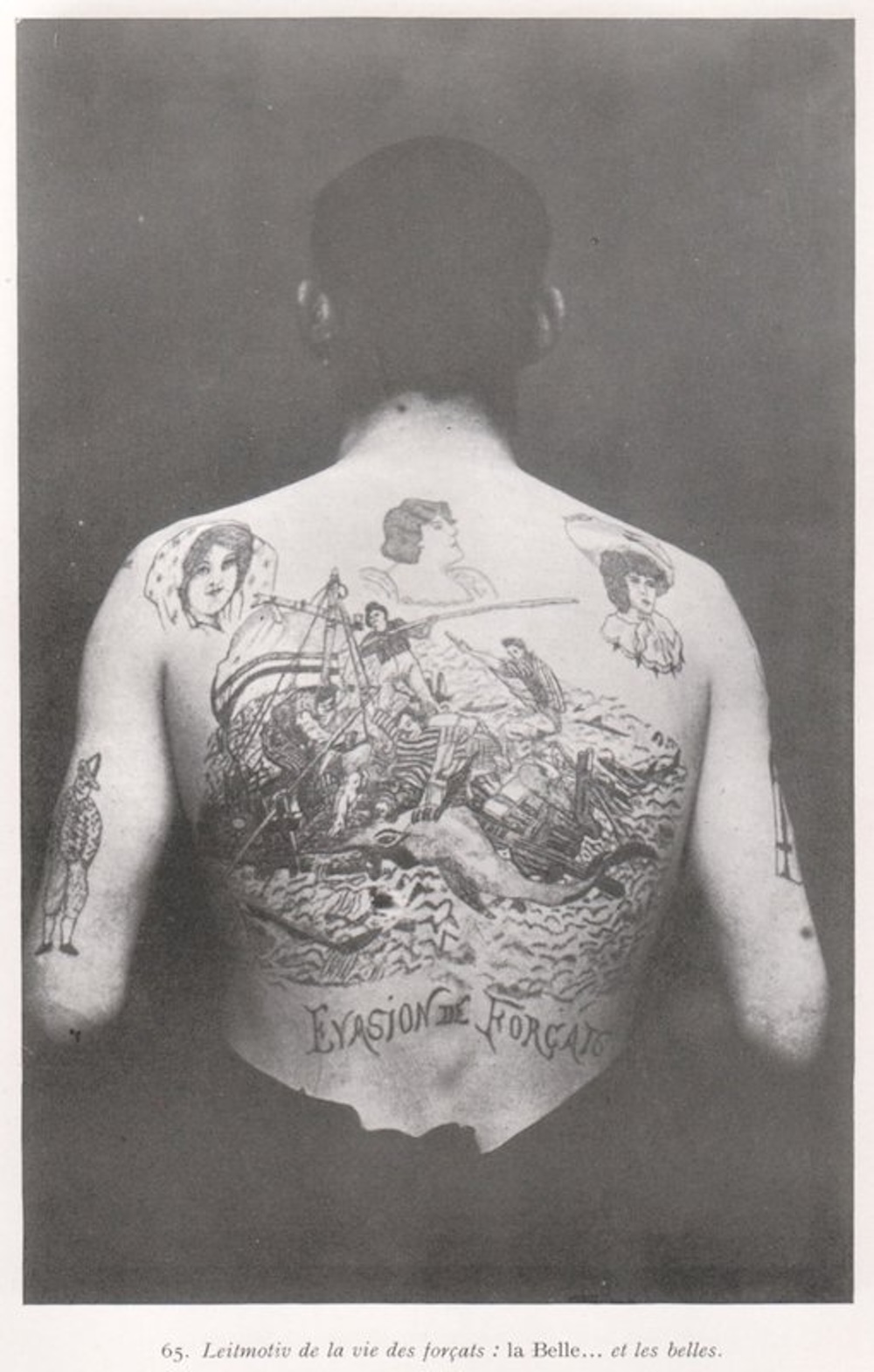
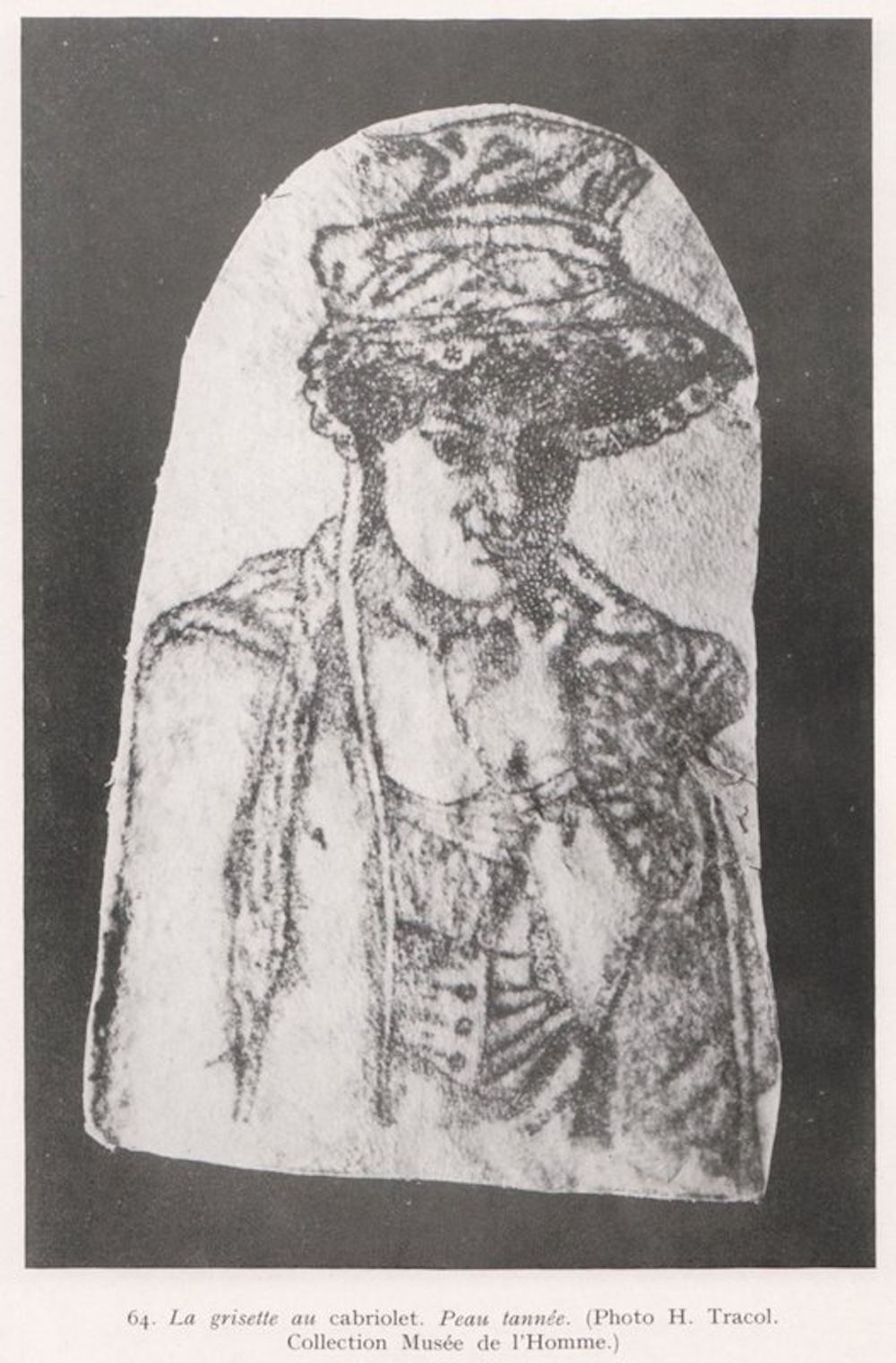
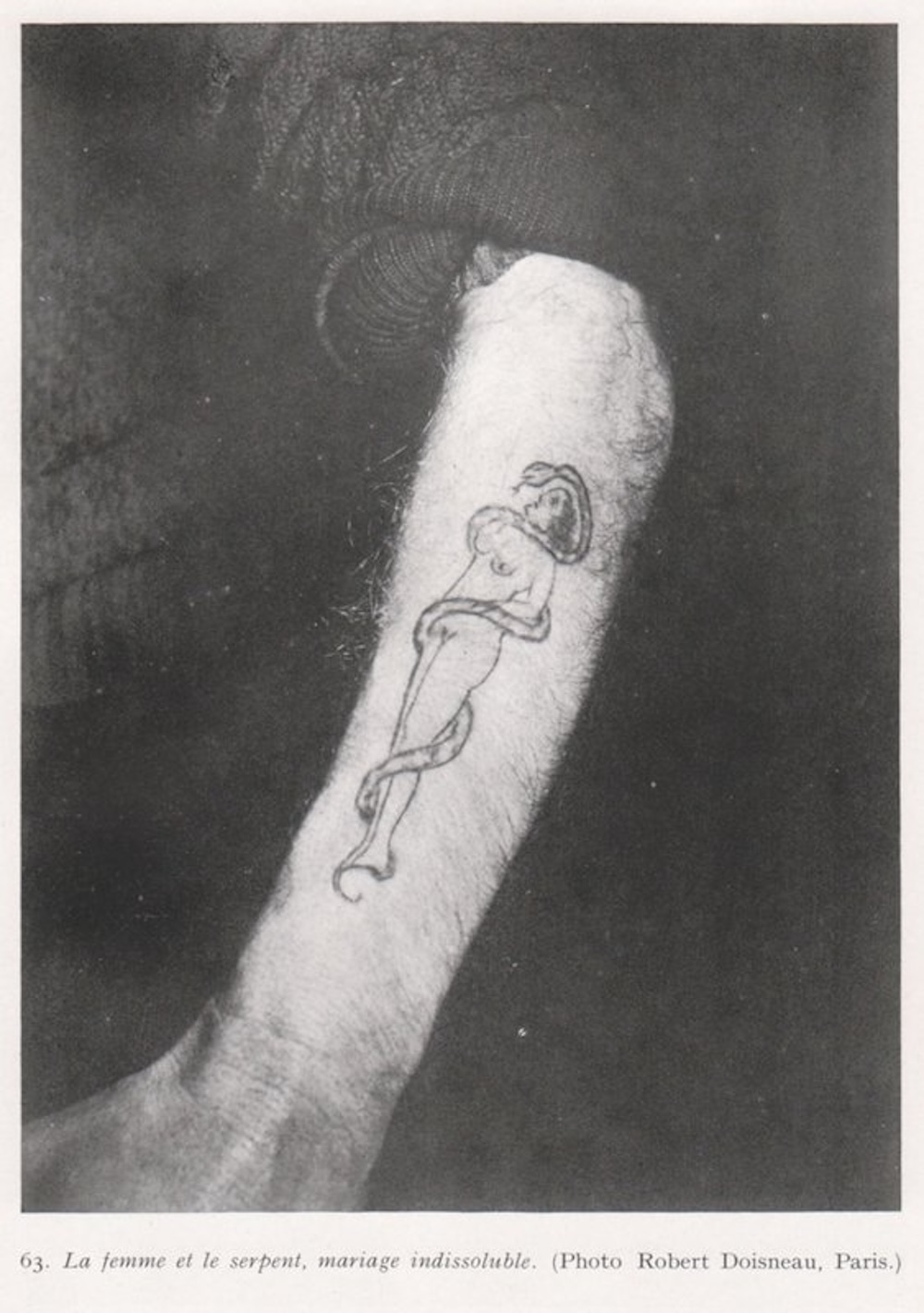
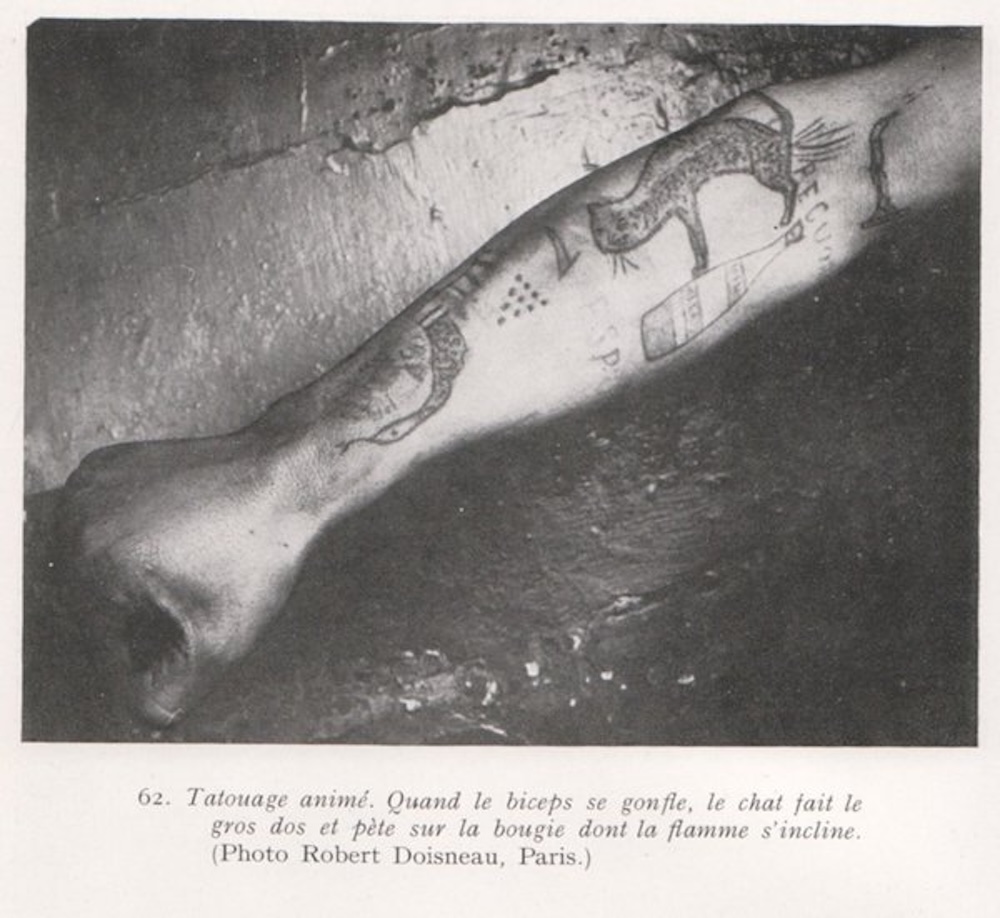
1930s tattoos via: Criminocorpus
Would you like to support Flashbak?
Please consider making a donation to our site. We don't want to rely on ads to bring you the best of visual culture. You can also support us by signing up to our Mailing List. And you can also follow us on Facebook, Instagram and Twitter. For great art and culture delivered to your door, visit our shop.