“To me, the act of taking a photograph is a moment of trance in which you can capture many hundreds of things happening at the same time and through which you can feel them and see them, consciously or not.”
– William Klein (1926 – 2022)
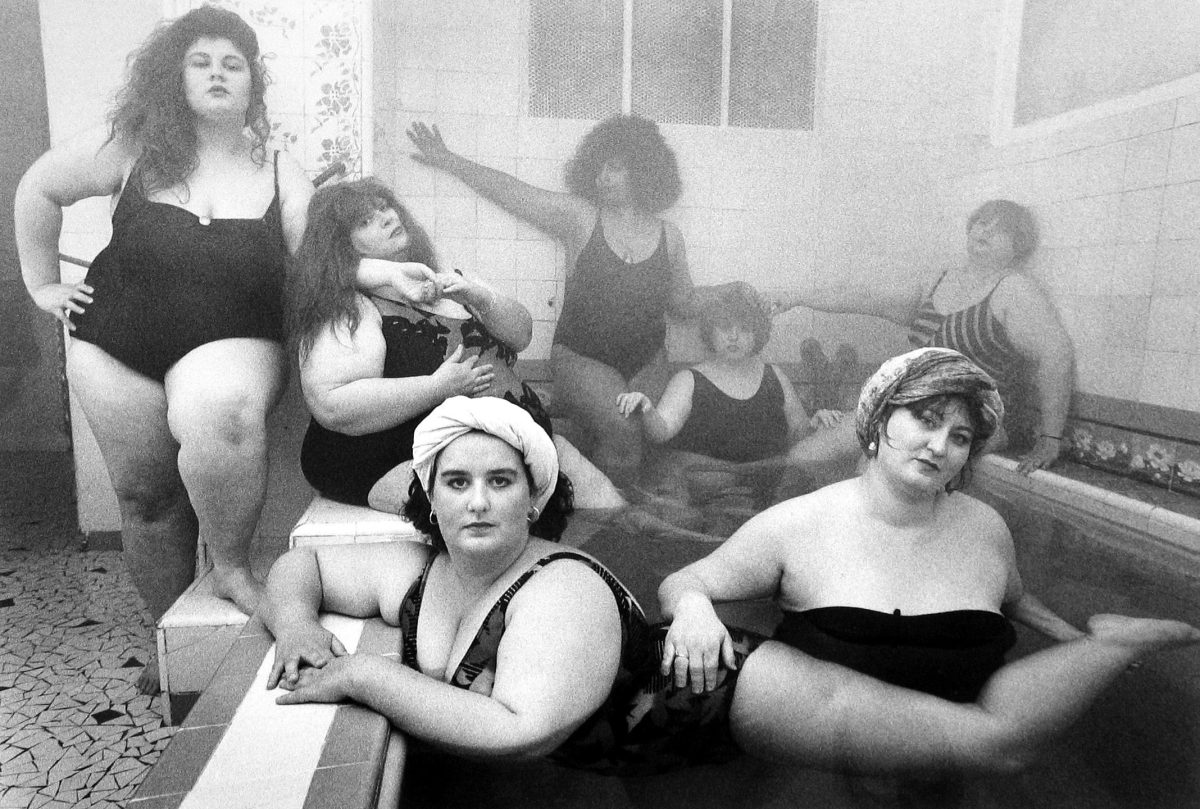
Club Allegro Fortissimo, Paris, 1990
Some of these dynamic ‘In Your Face’ pictures from American photographer William Klein (1926 – 2022) appeared in his book Life Is Good & Good for You in New York: Trance Witness Revels (1956) and in the pages of Vogue magazine.
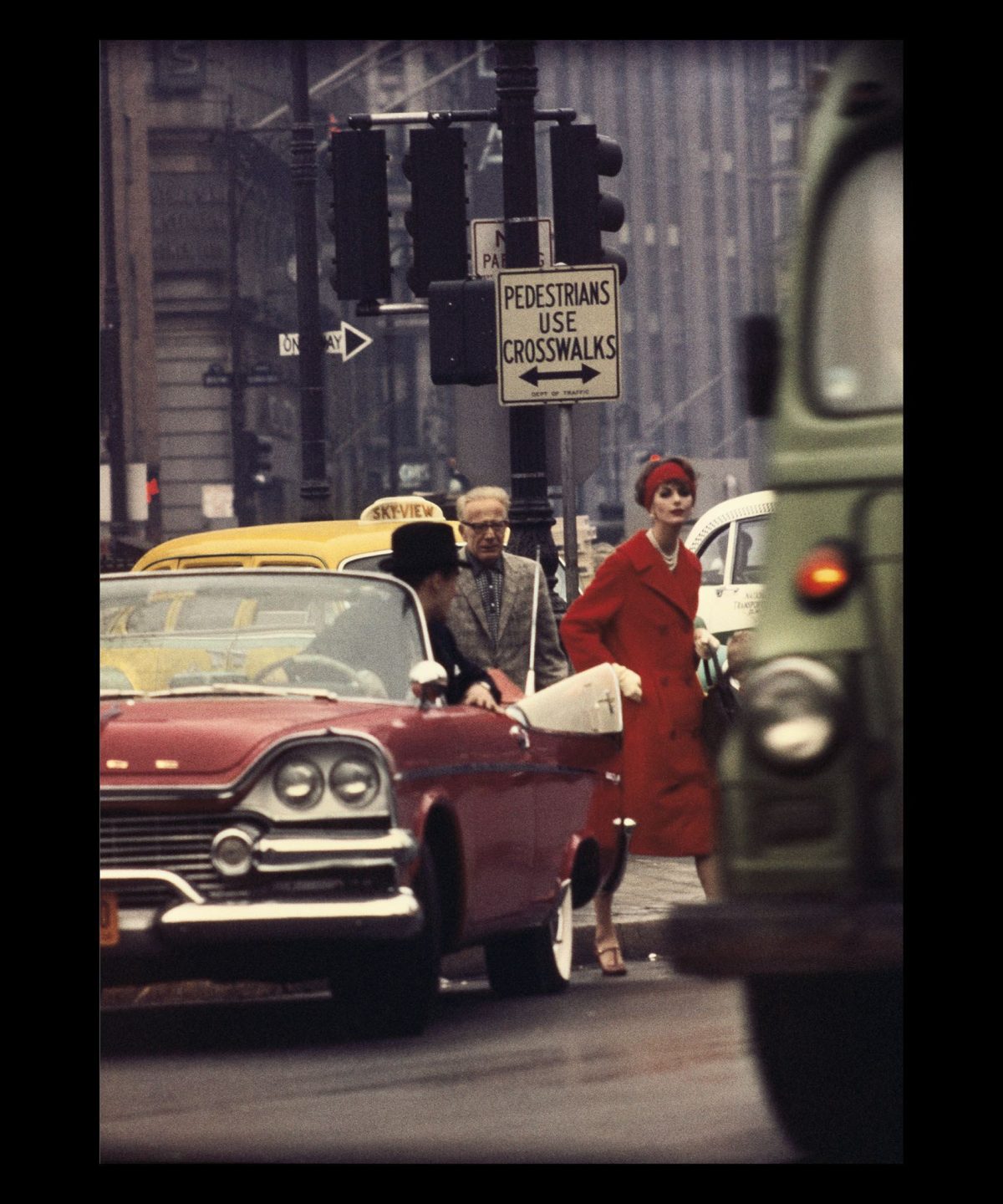
Anne St. Marie and Cruiser, New York (Vogue), 1958
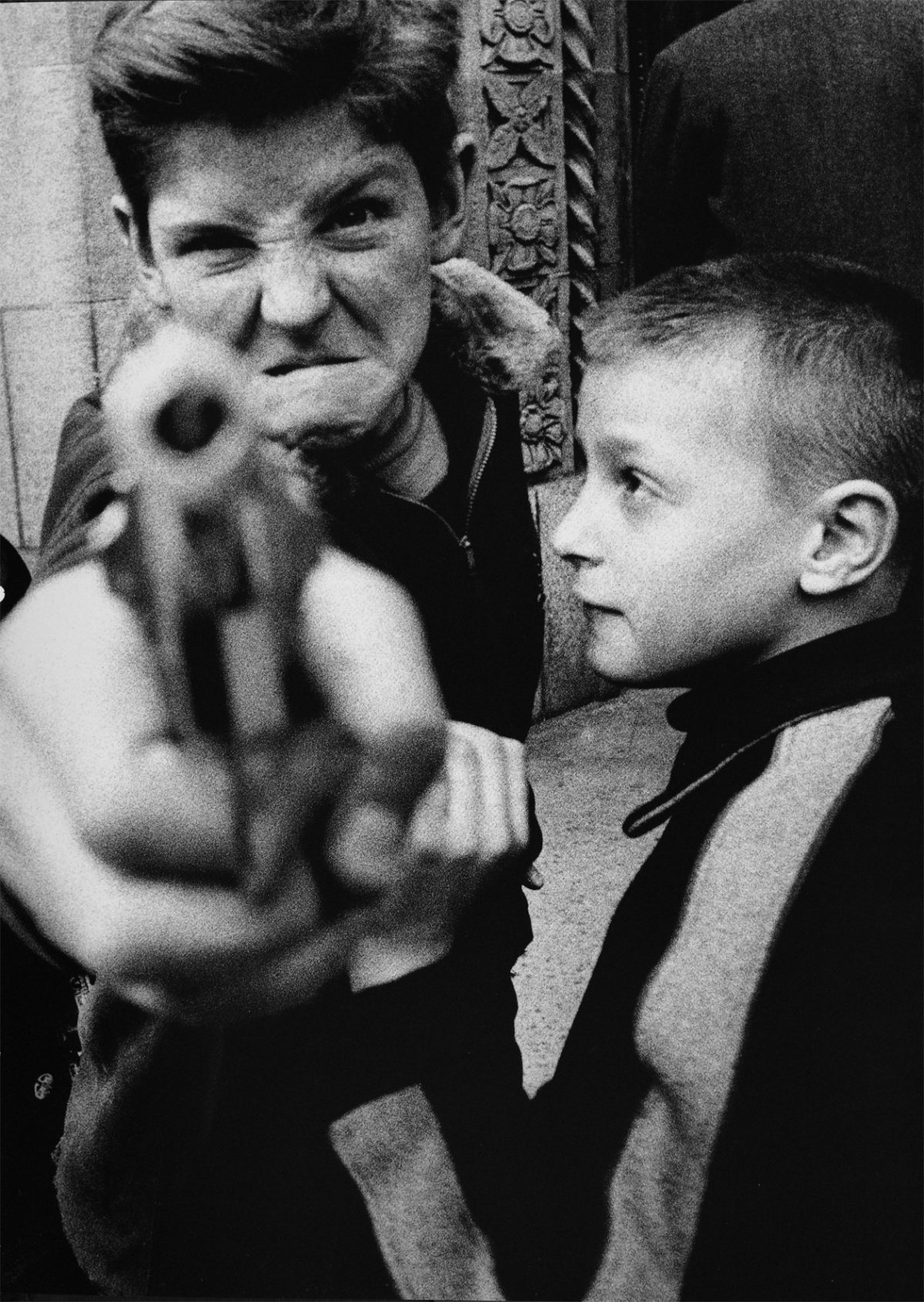
Gun 1, New York, 1955
“One time, Life asked well-known photographers to find the people that they had photographed two generations earlier, and they asked me to find the boy with the gun. But actually, when I took that photograph I was just walking down the street, I saw some kids playing cops and robbers, and I asked three of them to look tough, so it was a setup. But the idea of finding them again was crazy. I didn’t go along with it.”
– William Klein
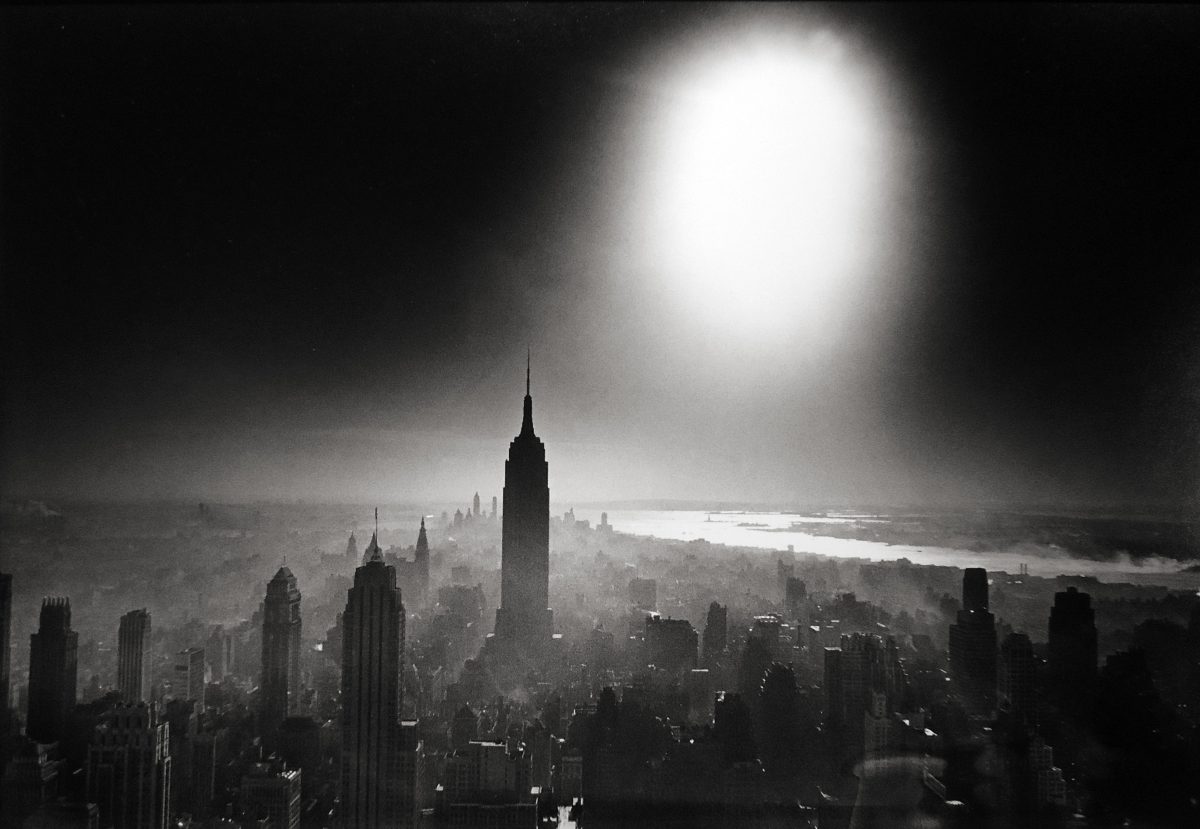

William Klein: Atom Bomb Sky, New York, 1955
“I was a primitive, and the photographs I was taking for myself were at the level of zero in terms of the evolution of photography. But once I had the opportunity to take the negatives and print them my way, I realized that I could use what I had learned – about graphic art, painting, and charcoal drawings, and so on – in my printing. So when I went back to New York, I had an idea of doing a book. I was twenty-four or twenty-five, something like that, and when you’re twenty-five you can do that sort of thing; if you decide to do it, you just do it. So I turned the bathroom in the hotel I was living in into a darkroom, and had access to a darkroom in my apartment. I washed the prints in the bathtub, and now these prints are considered “vintage prints”—they’re worth a lot of money.
– William Klein on improvising for Life Is Good & Good for You
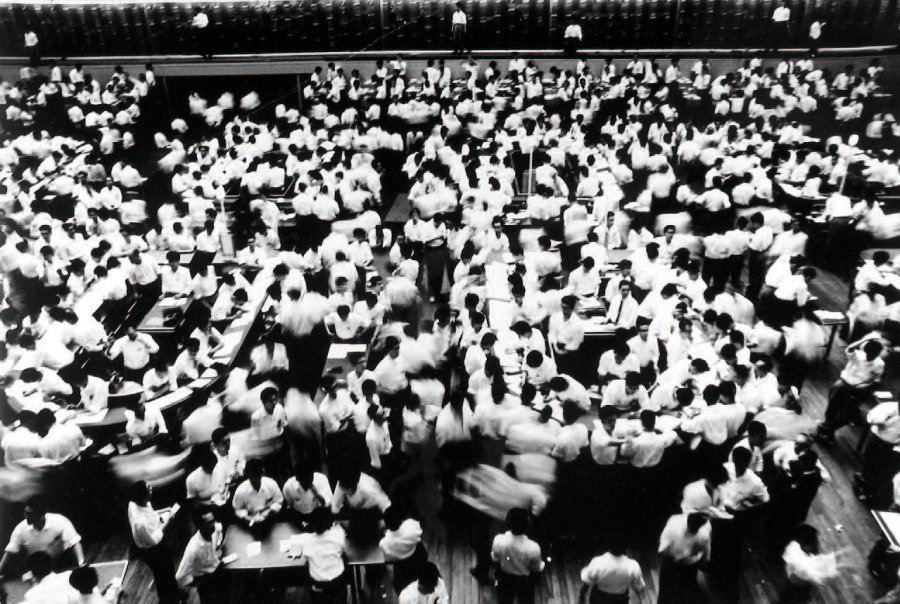
Tokyo Stock Exchange, 1961
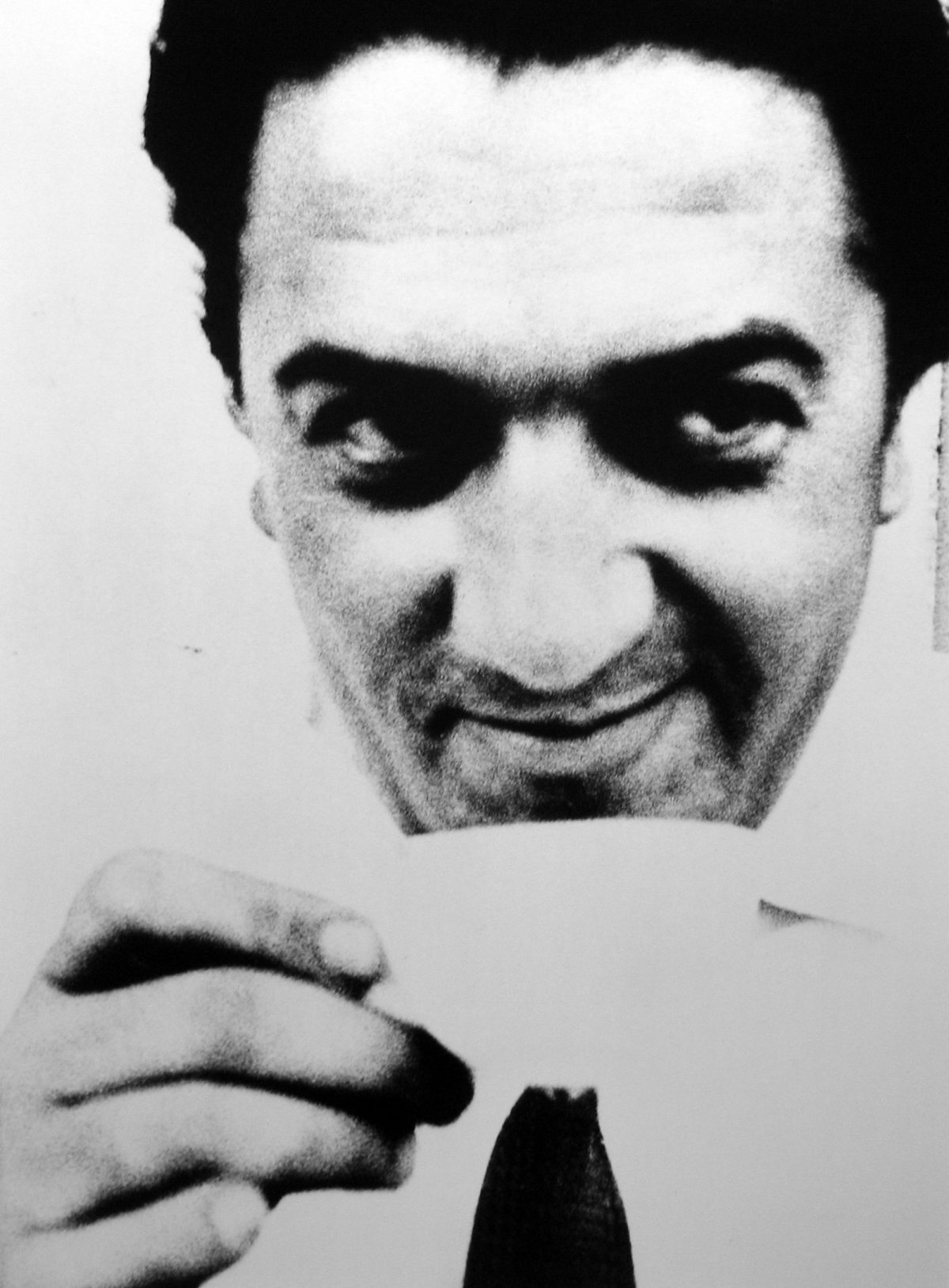

Federico Fellini Drinking Coffee, 1956
‘I had no photographic training at all. When I was working in Paris, at Fernand Léger’s studio, he’d say, “You guys are all obsessed with collectors and museums and galleries, but all that’s bullshit. What you should do is take a look at what painters did in the 15th century in Italy.” There were books on the Quattrocento, but they were expensive, and we didn’t have money so we stole them. We took what Léger told us seriously. Later, I ran into a young architect who had done panels painted on both sides separating a space. I photographed the setup as I had somebody turn the panels. The geometrical forms in the paintings blurred. Photography gave another aspect to the compositions of geometrical paintings. Then I started to become interested in what you could do in the darkroom, and I realized that this blur was adding something to painting. So I said, “Maybe I could do something with photography.”
‘What’s funny is that it’s usually the other way around. A guy does paintings, and discovers that his paintings are pretty shitty, and he says, “What else can I do?” He goes to photography, which is a step down. For me, it was the contrary.’
– William Klein
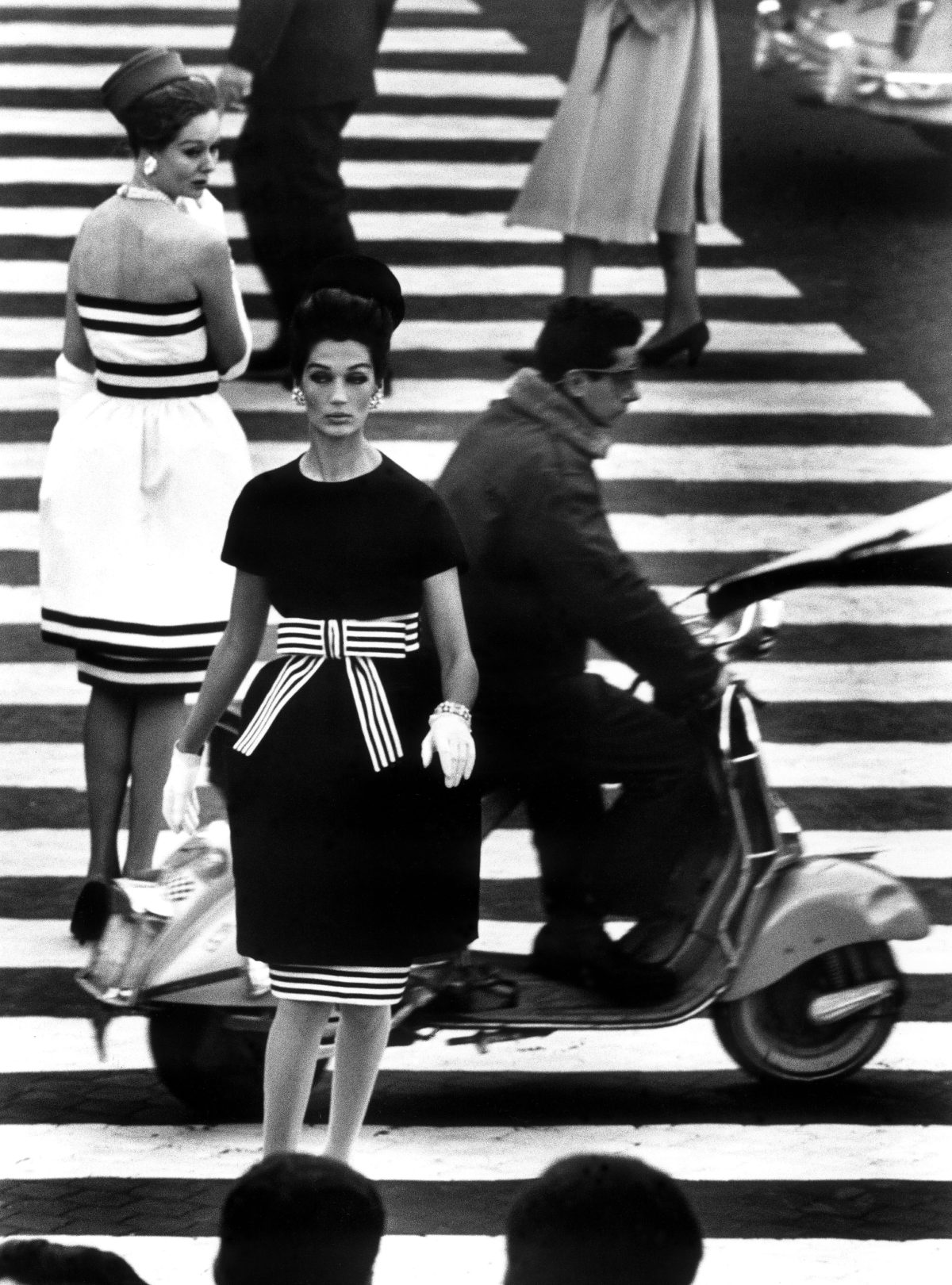
Simone & Nina, Piazza di Spagna, Rome (VOGUE), 1960
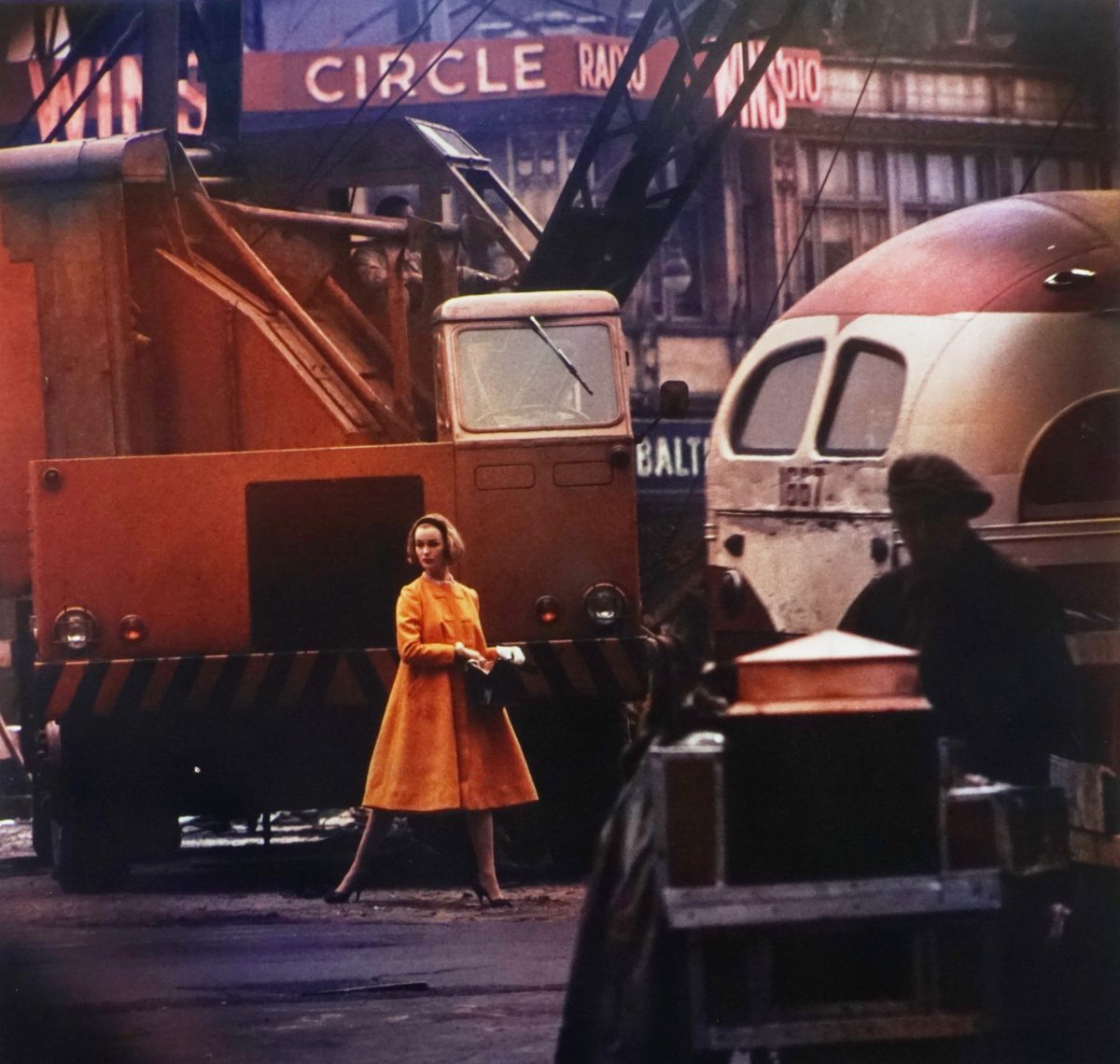
Yellow Coat + Bus + Crane, New York, 1958
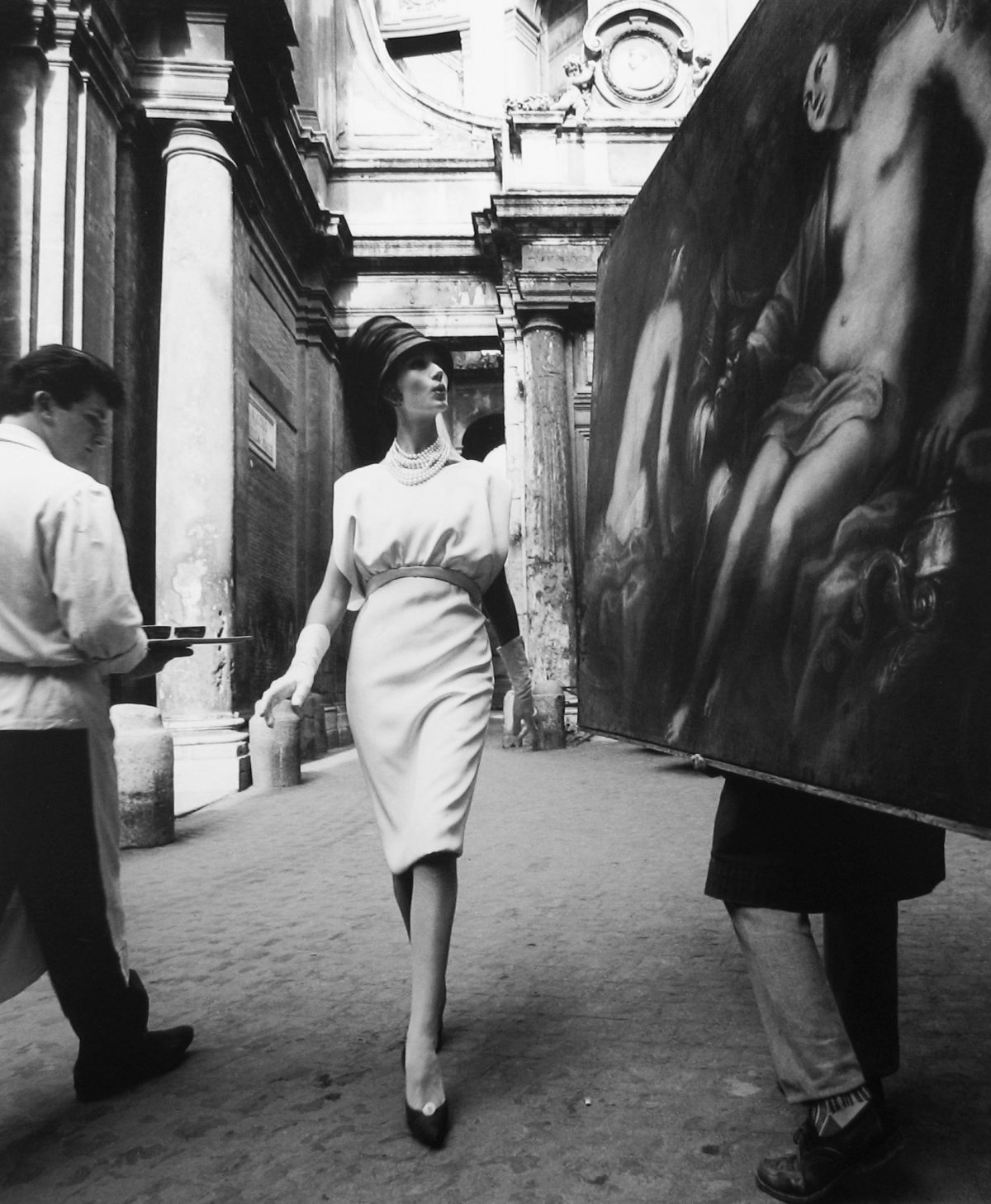
Simone d’Aillencourt – Painting, Coffee, Rome, (VOGUE), 1960
“I wasn’t part of any movement. I was working alone, following my instinct. I had no real respect for good technique because I didn’t know what it was. I was self-taught, so that stuff didn’t matter to me.”
– William Klein
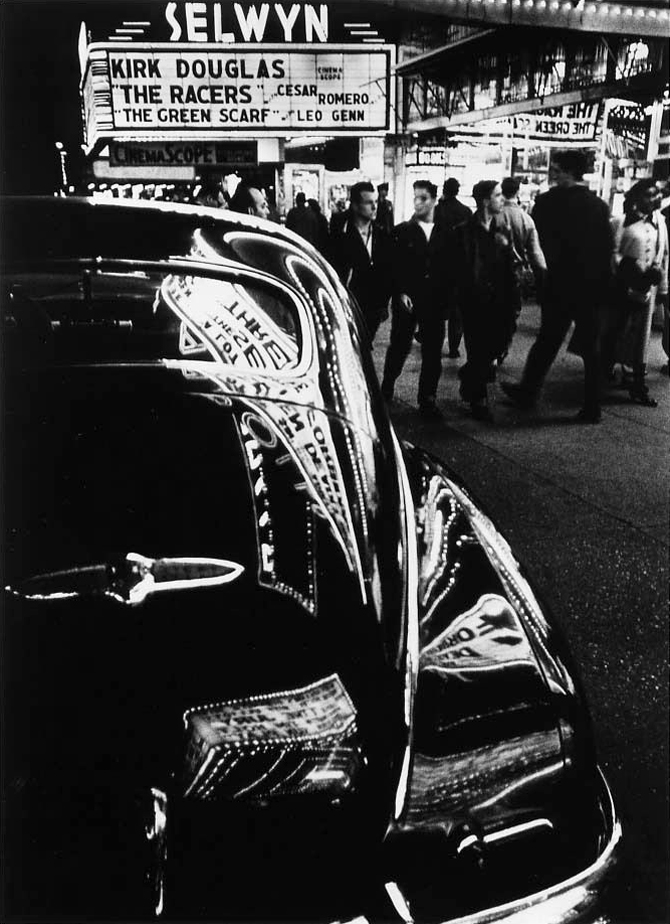
Selwyn Theatre, 42nd Street, New York, 1955
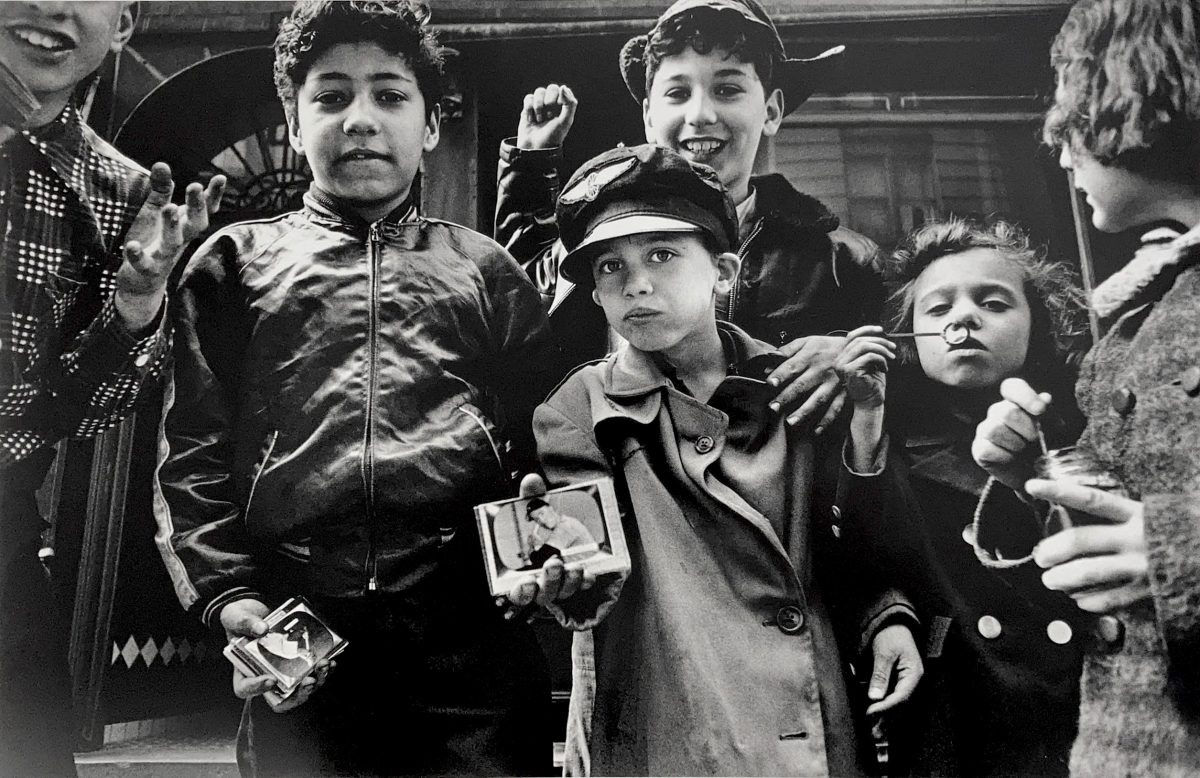
Baseball Cards, NYC 1955
Via: Aperture, Interview
Copyright: The Estate of William Klein / Courtesy of In Your Face at Peter Fetterman Gallery.
Would you like to support Flashbak?
Please consider making a donation to our site. We don't want to rely on ads to bring you the best of visual culture. You can also support us by signing up to our Mailing List. And you can also follow us on Facebook, Instagram and Twitter. For great art and culture delivered to your door, visit our shop.