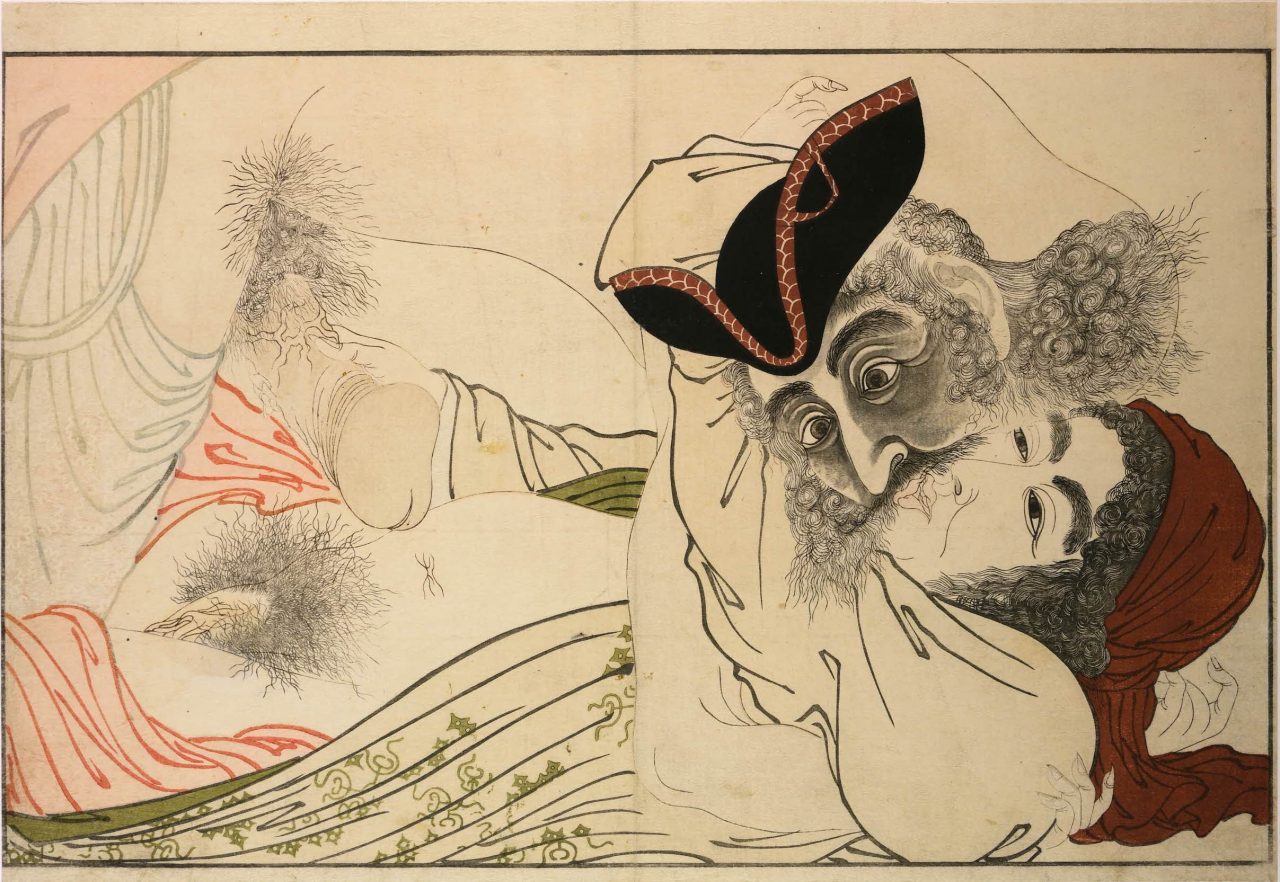
The print is rare in presenting two Westerners having sex; other prints from the era that depict foreigners normally have a foreign male with a Japanese female. The print appeared when the Dutch East India Company was still making trips to Japan; they normally arrived in spring, which brought the Dutch arrivals associations with the erotic connotations of spring, as in the term shunga (春画, "spring picture[s]"). For diplomatic reasons, few such pictures appeared before 1790, after which the Company's visits ended.[34] They stayed at the Nagasakiya inn in the Hongoku-chō neighbourhood in the Nihonbashi district of Edo, and many stopped by to take a look at the foreigners.[21] Utamaro may have seen Dutch people on one of these visits, and thus may have based the man's portrait on observation; women on the other hand were rare visitors to Japan, and the woman's garb is anachronistic.[34] The man's face is shaded using bokashi. The print receives such attention to detail that even the head of the penis is dusted with mica to give it a glittering effect. The artist Kitao Masanobu remarked on the enormity of the penises Utamaro drew;[9] the French art critic Edmond de Goncourt, on the other hand, praised Utamaro's "power in the line, which makes the drawing of a penis the equal of the Louvre's Hand by Michelangelo".[35]