In 2021, in the family home in Rhode Island, Andrew Baer unearthed thousands of negatives his father John Baer had sealed away in the mid-1950s. This unpublished body of work became a book an an exhibition in New York.
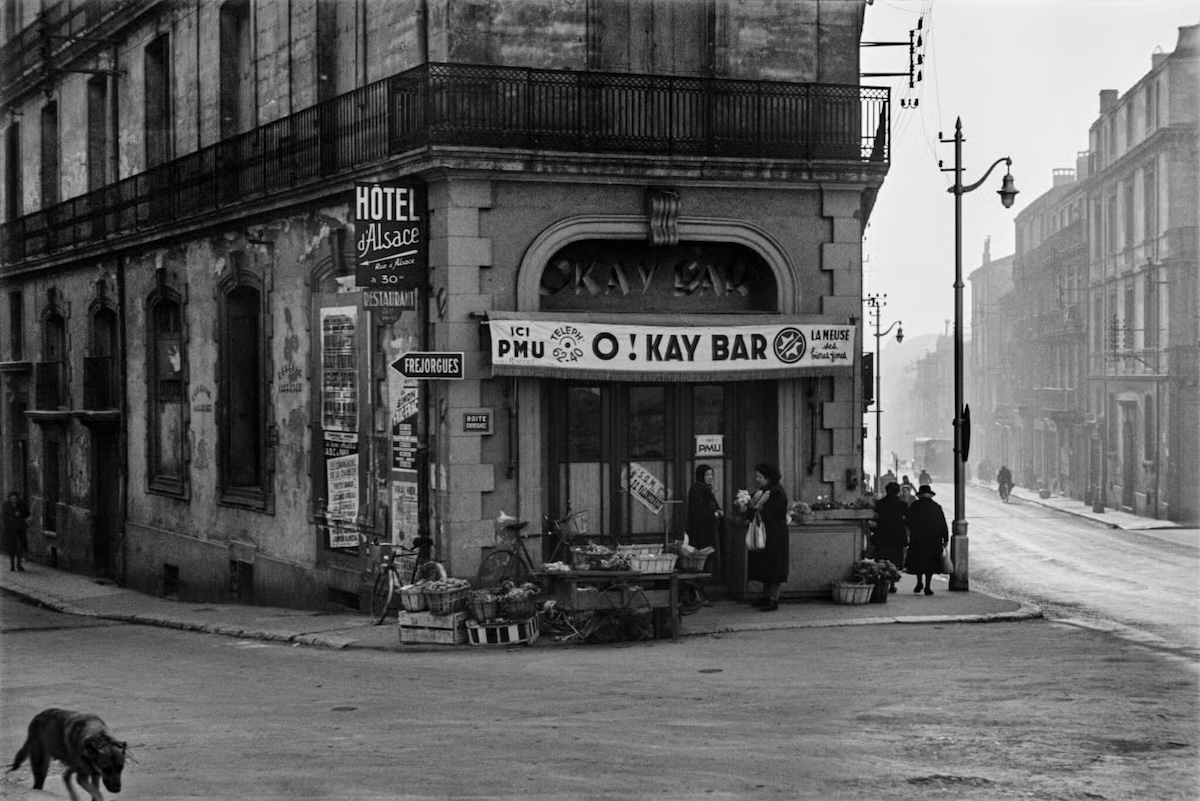
O!Kay Bar, Montpellier, 1951 © Courtesy John Baer Archive
John Baer turned 25 on May 7, 1945. That same day Germany surrendered. Baer, had been journalism student at Penn State before serving as an officer with the 644th Tank Destroyer Battalion. He’d landed in Normandy, fought in the Battle of the Bulge, and witnessed firsthand the horror of a Nazi concentration camp.
At some point he took possession a Model III Leica camera made in 1938 taken from a captured German soldier. Stationed in Wetzlar, home of the Leica company, he bgan to take photographs.
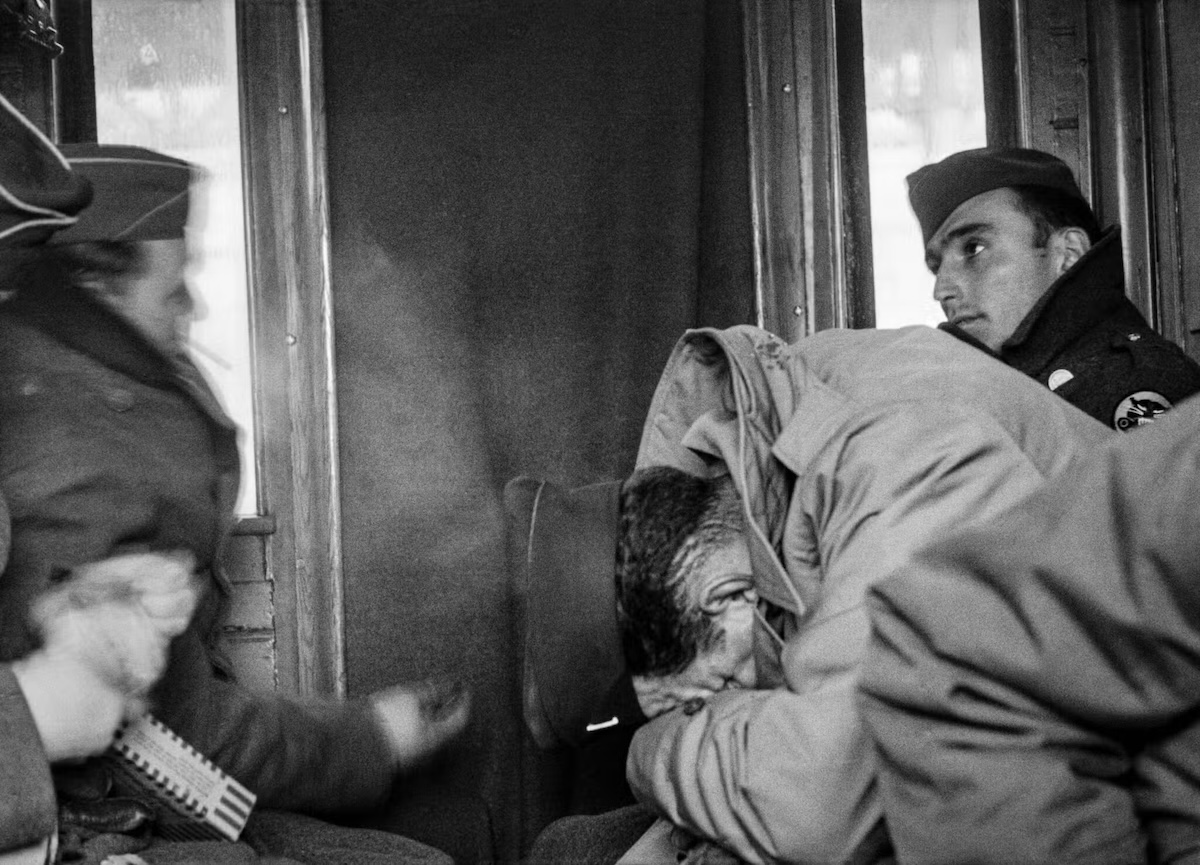
Soldiers on a French train, 1945 © Courtesy John Baer Archive
In 1950, with his wife Louise Fuoss, he set off again for Europe. The couple settled in Montpellier and traveled through France, Spain, Germany and Italy for nearly a year. John Baer photographed the communist posters urging American troops to leave, children playing at war with wooden guns in Franco’s Spain, the still-visible scars of a continent tending its wounds.
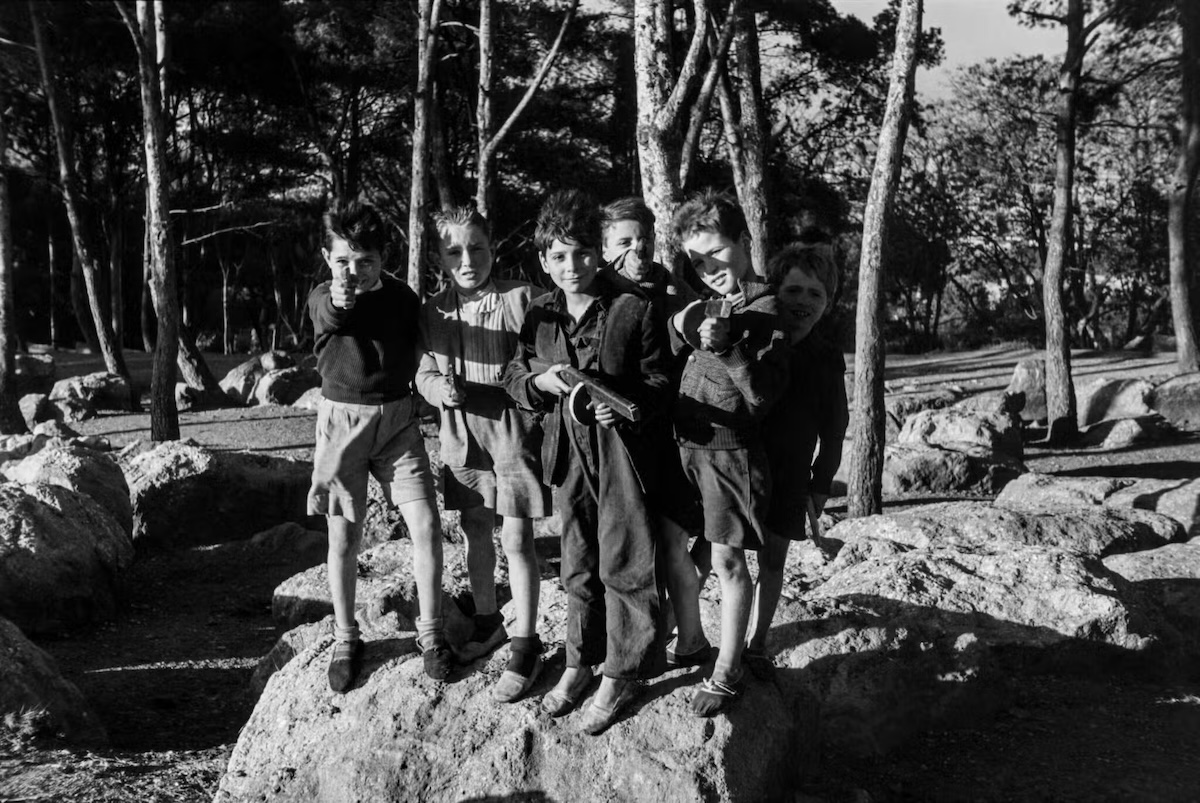
Boys with Guns, Barcelona, 1951 © Courtesy John Baer Archive
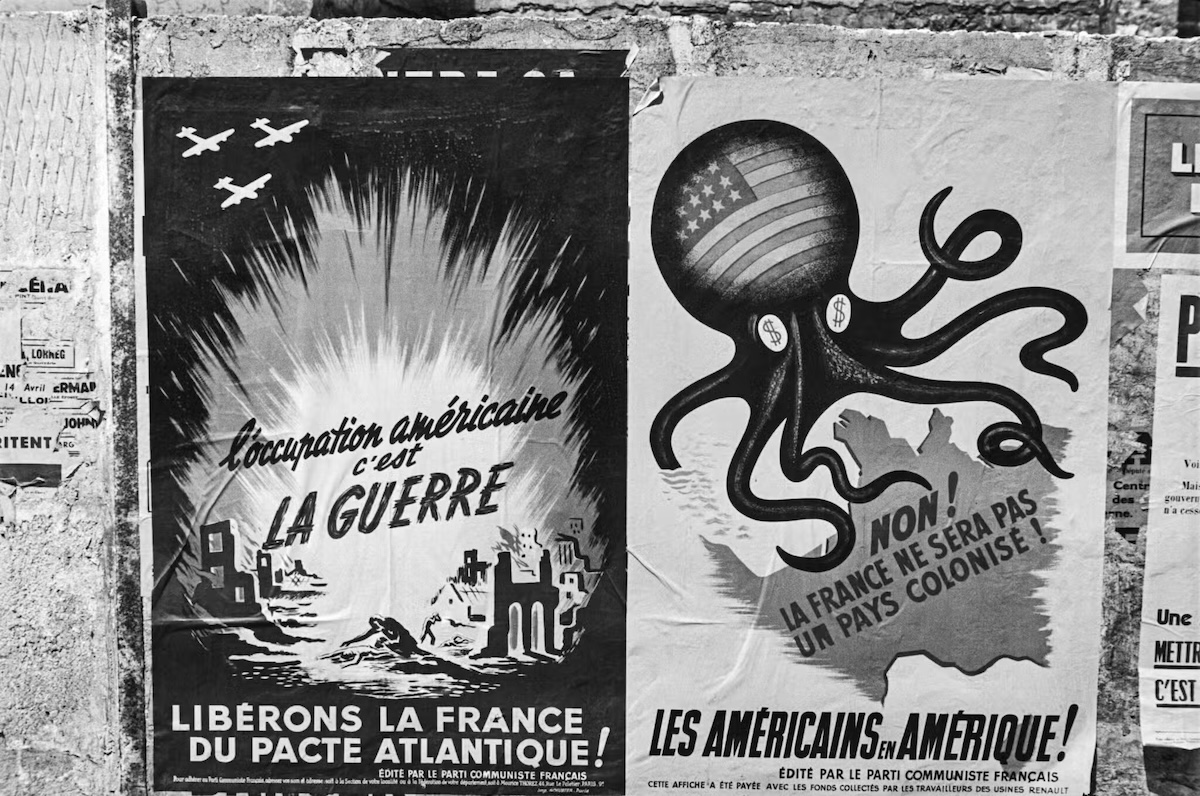

Anti-American Posters, Montpellier, 1951 © Courtesy John Baer Archive
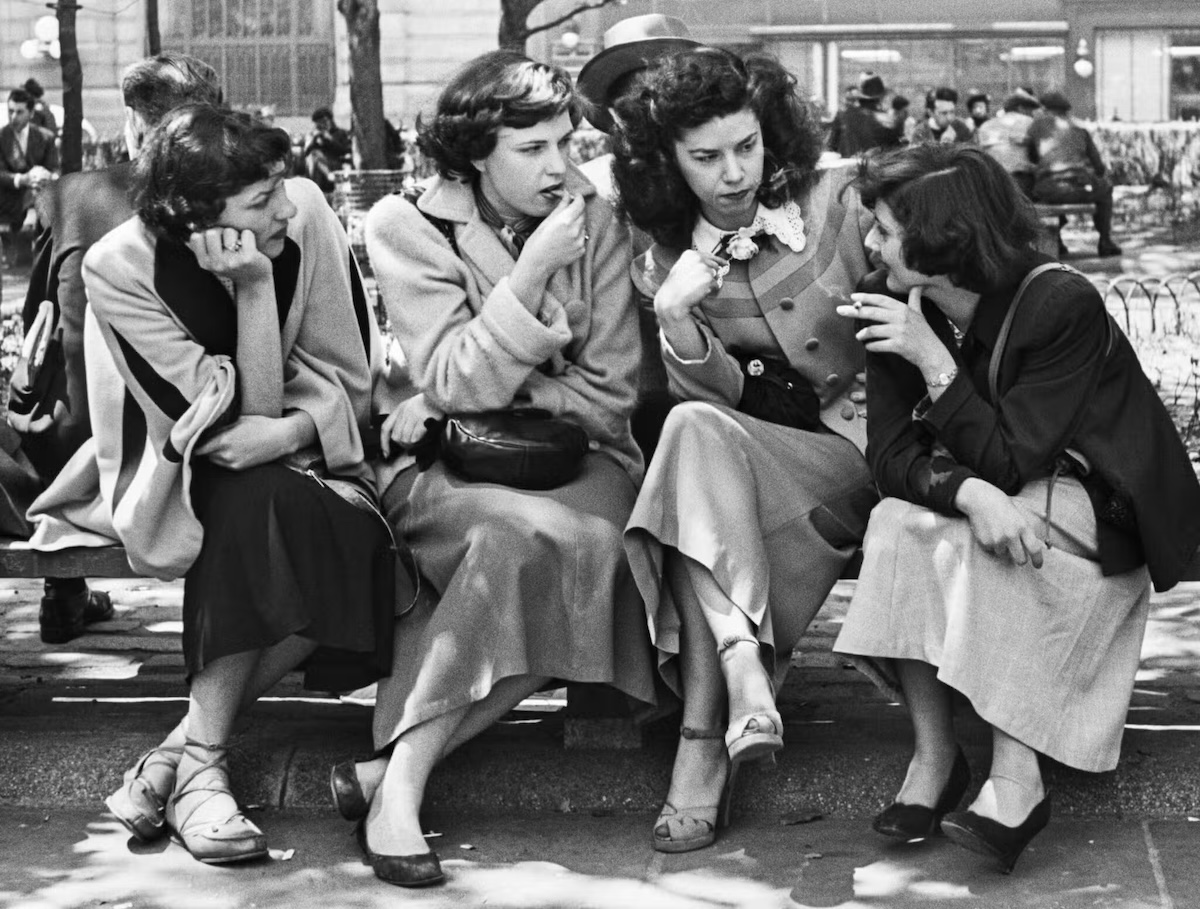
Lunch Hour, Bryant Park, 1953 © Courtesy John Baer Archive
Back in New York by the summer of 1951, John Baer found work as a copywriter at a public relations firm in Midtown. By day, he wrote press releases; by night and on weekends, he walked the city, developed his negatives, and printed his photographs in the bathroom of their apartment at 215 Second Avenue, in the East Village.
From the fifth-floor apartment, the fire escape became his ideal vantage point, framing the comings and goings of the street below. Elsewhere in the city, at the corner of Lexington Avenue and 41st Street, he caught the reflection of a pedestrian beneath an umbrella, doubled in a puddle, Rainy Day Reflections.
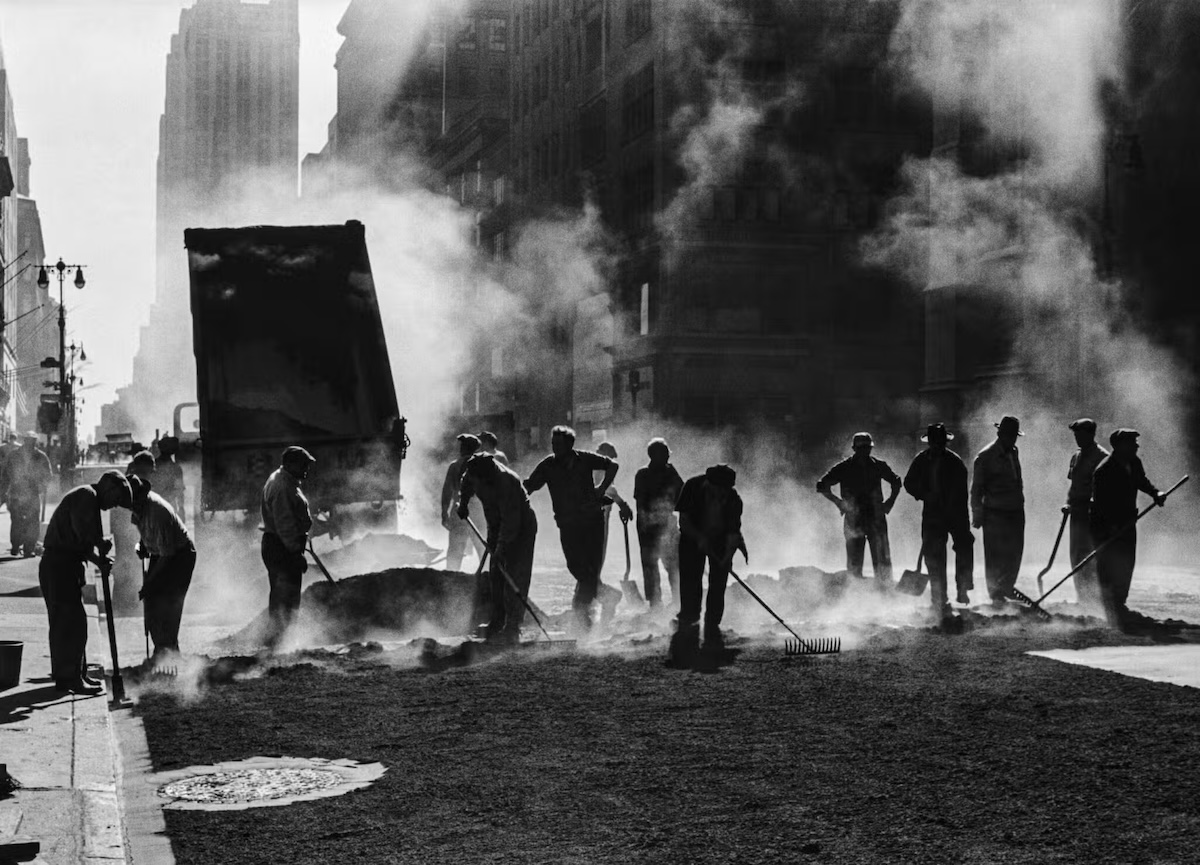

Paving Fifth Avenue, 1953 © Courtesy John Baer Archive
The most ambitious series of this period remains the one devoted to the pavers of Fifth Avenue, engulfed in clouds of asphalt steam, reduced to charcoal-dark silhouettes. This rigor found its consecration in 1953: John Baer and his college friend Barney Weinberg became the first non-painters exhibited at the Abingdon Square Painters gallery, a West Village collective. He mounted unframed photographs on large horizontal panels, composing contrasts that read like frames from an experimental film.
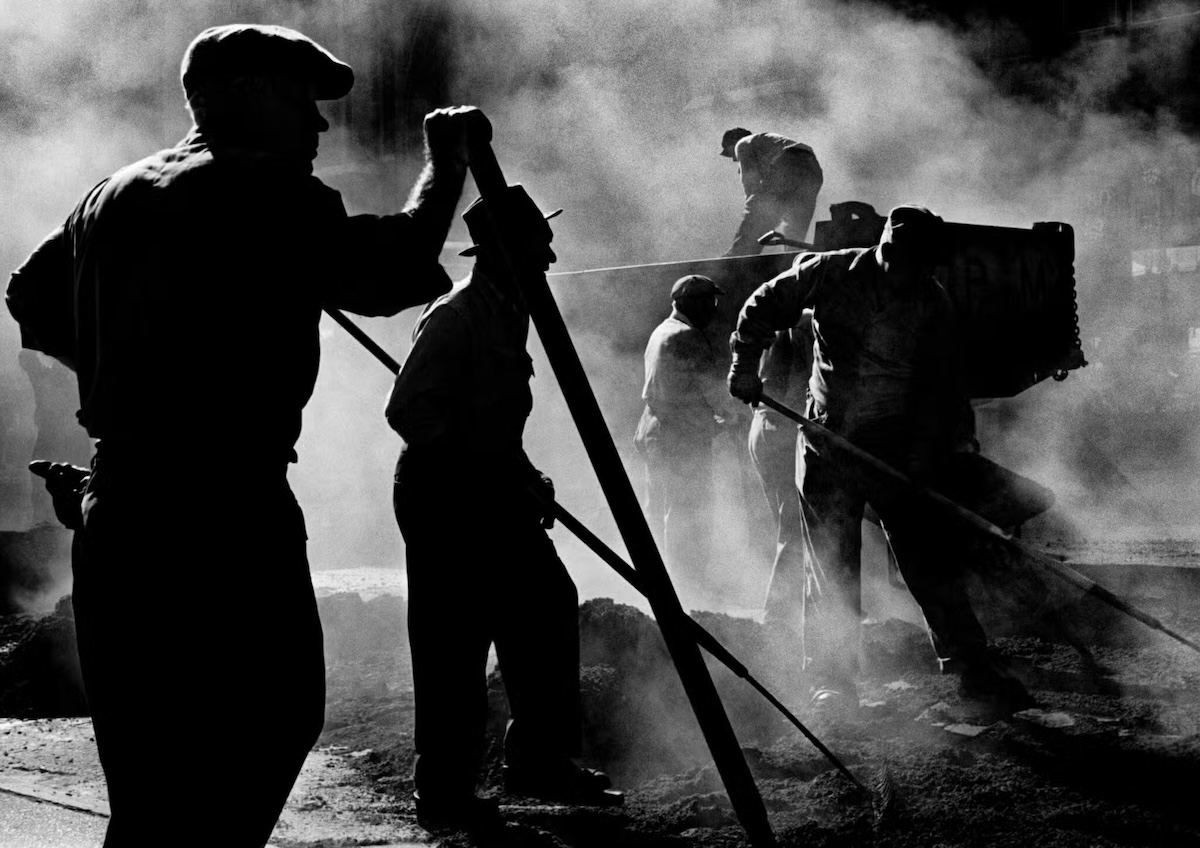
Paving Fifth Avenue, 1953 © Courtesy John Baer Archive
In those same years, he pushed the experimentation even further, cutting up some of his own prints by hand with a blade, inverting black and white, reassembling silhouettes of skaters and boxers, an entirely manual process, an analog forerunner of what would, much later, become digital retouching. This is the height of his practice, one already nearing its end.
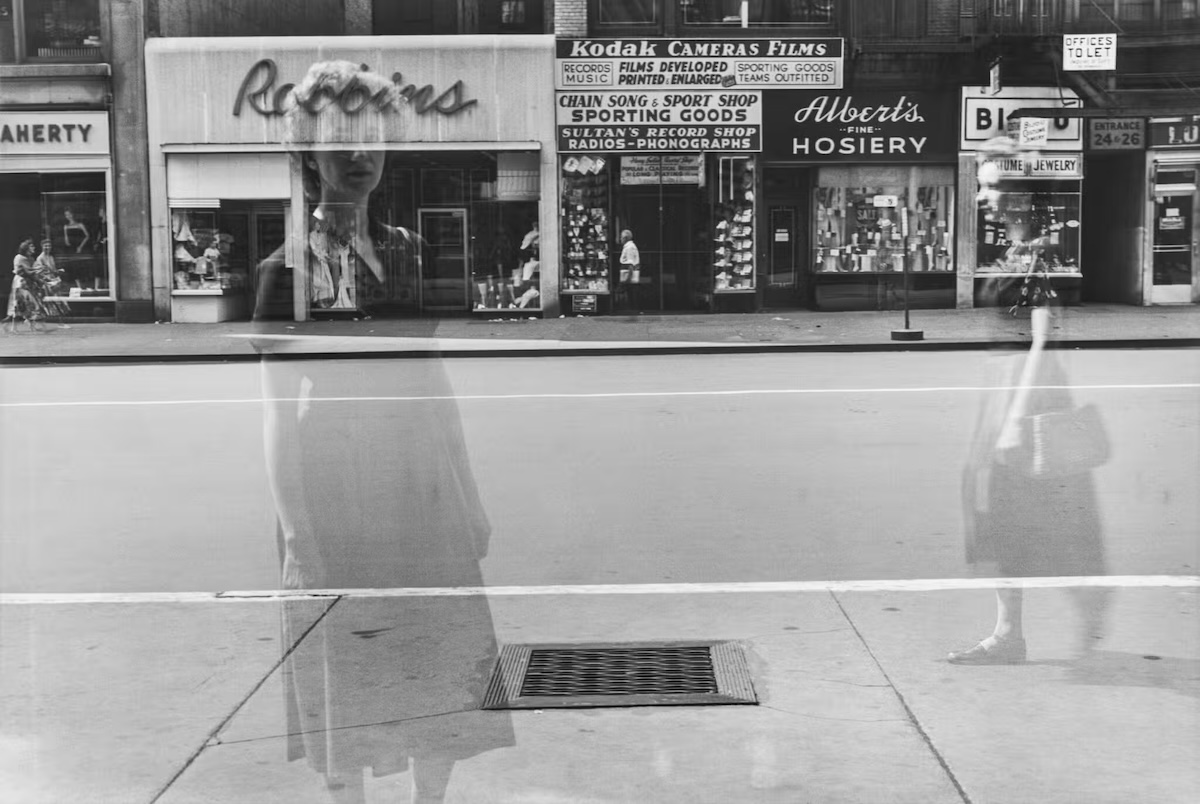
Louise Twice © Courtesy John Baer Archive
“First I saw the photographs—men paving Fifth Avenue, lovers in Washington Square . . . weary soldiers on a French train, and John Baer and Louise Fuoss when they were young and in love.
John Baer was my father. My brother, Joe, and I never called him Dad. John was John, and Louise was Mom.
John died in 1994. He lived alone for the last eight years of his life, after he and Louise had divorced for the second time, and his few possessions became mine to sort through. In a corner of the damp basement in his Rhode Island cottage, past the Sears Roebuck table saw, old fishing rods, and rusty clam rakes, sat three plastic boxes. I carried them upstairs.
We can’t know what John hoped for his pictures, what he would have included in a book—he seems to have never revisited his images. Perhaps they provided him with a way to hold on to what’s hard to forget but equally hard to remember, to fix the past in time and let it stay there.”
– Andrew Baer
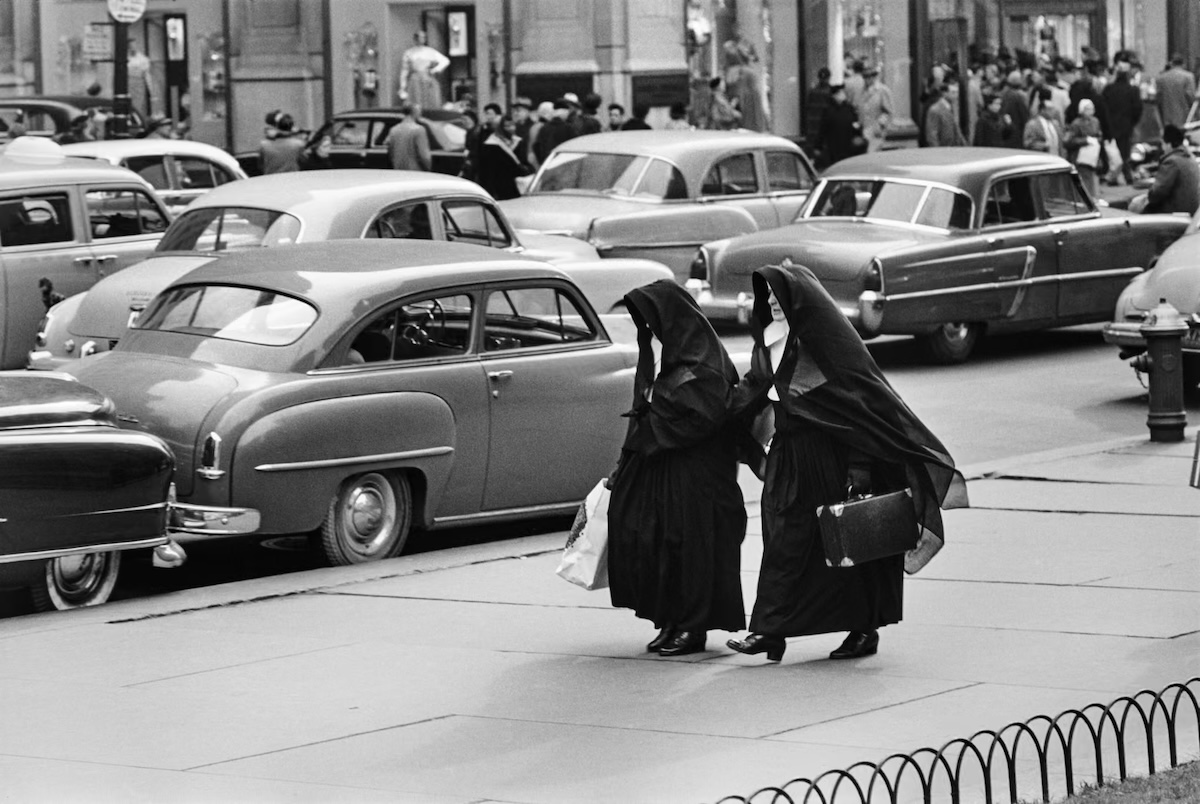
Nuns, Midtown
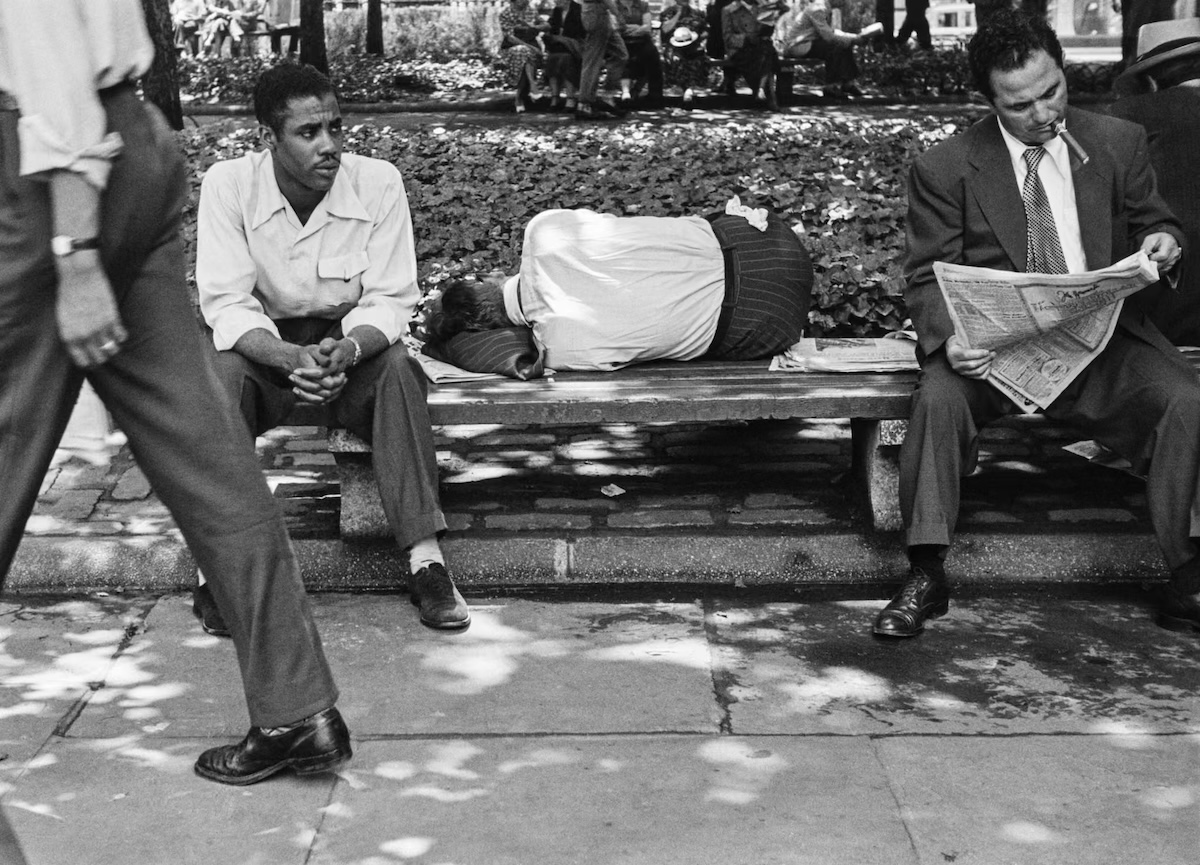
Passing Time, Bryant Park
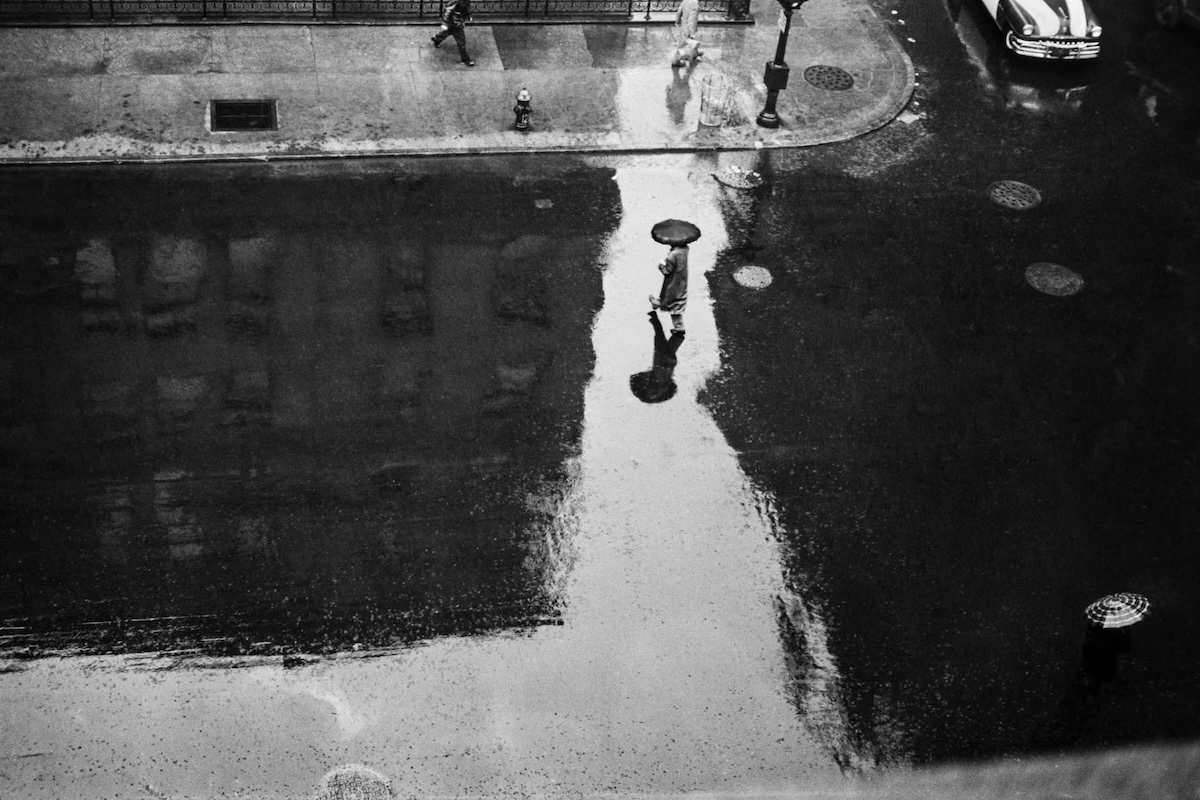
Rainy Day Reflections, Lexington Ave
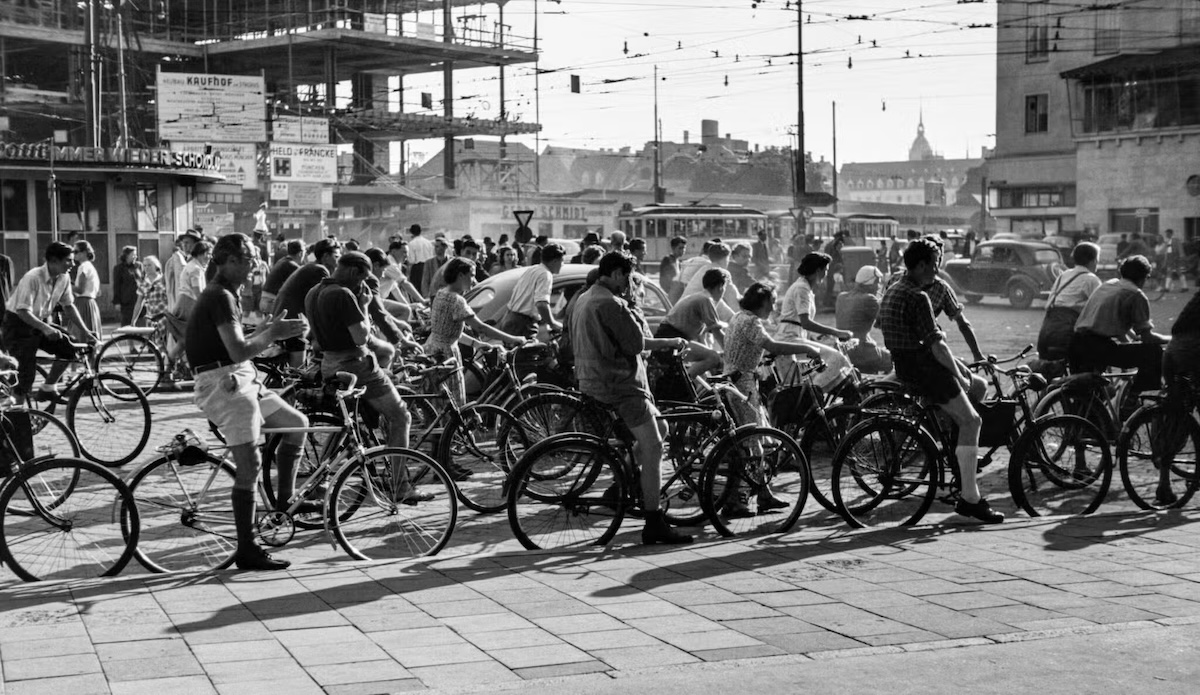
Cyclists in traffic, Munich, 1951 © Courtesy John Baer Archive
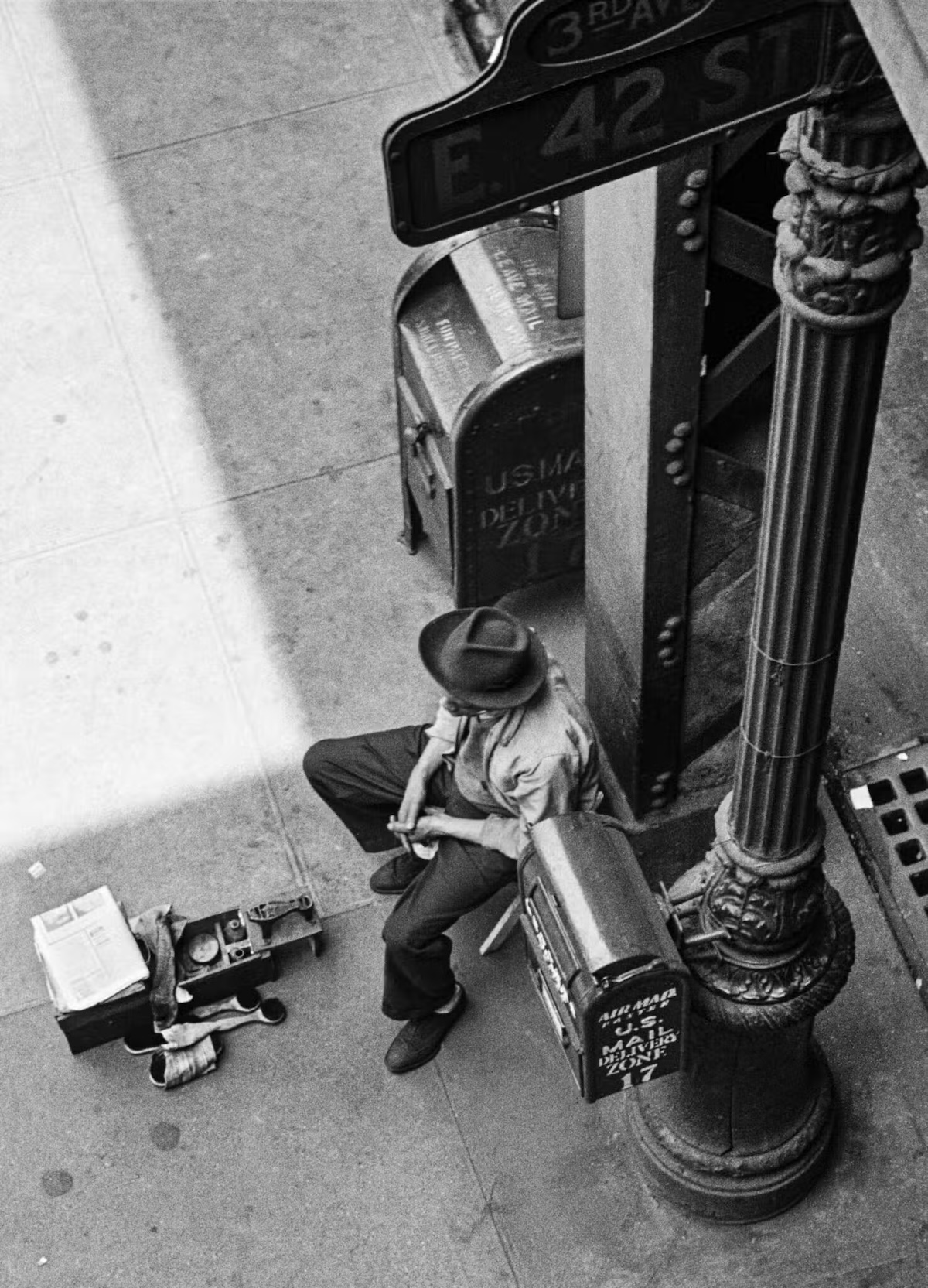
Shoeshine Man, Manhattan © Courtesy John Baer Archive
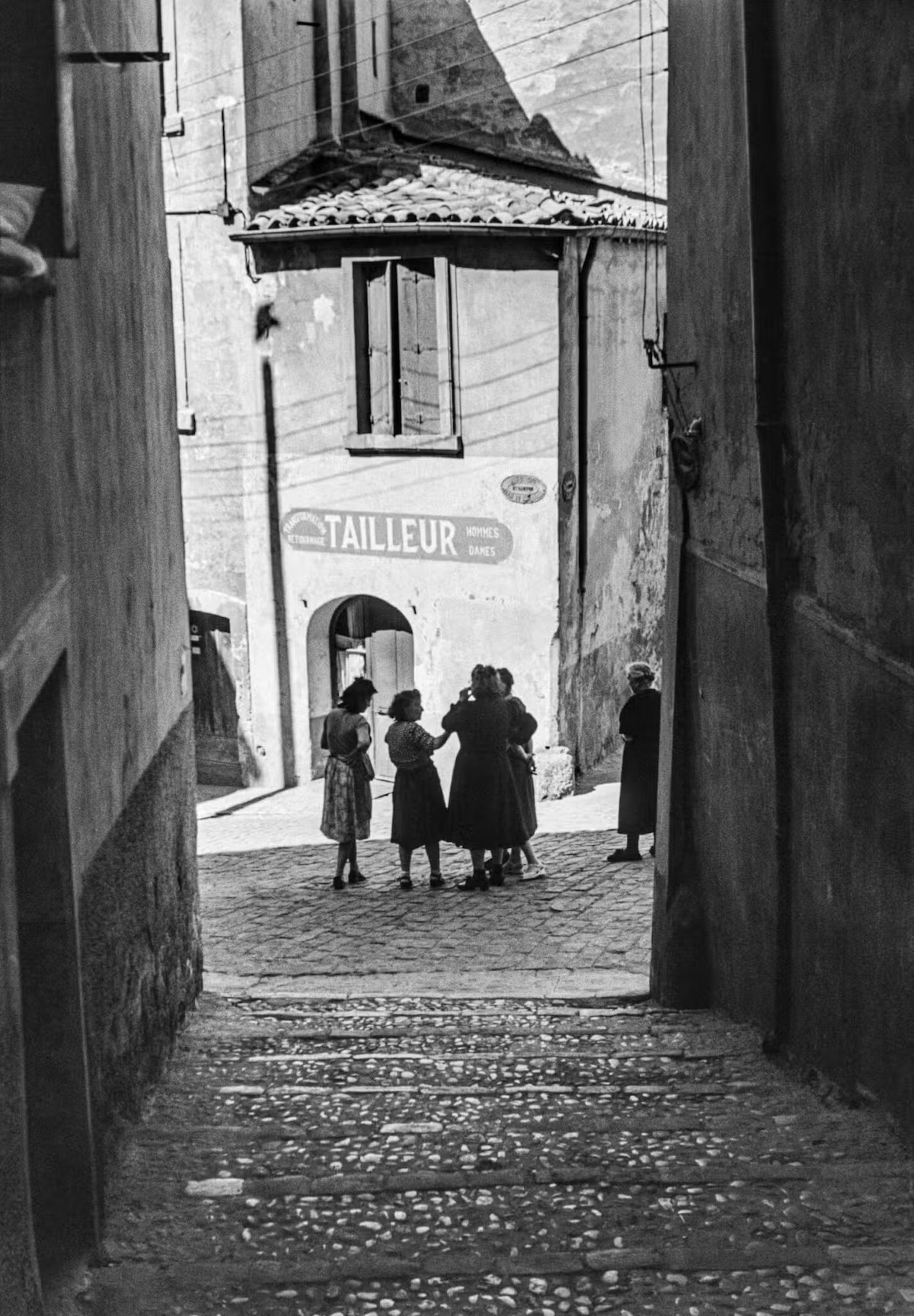
Tailor Shop, Montpellier, 1951 © Courtesy John Baer Archive
Louise Twice © Courtesy John Baer Archive
John Baer: The Extraordinary Ordinary: A Memoir in Photographs, 1945–1954 is available to purchase. More information about John Baer is at the John Baer Archive.
Would you like to support Flashbak?
Please consider making a donation to our site. We don't want to rely on ads to bring you the best of visual culture. You can also support us by signing up to our Mailing List. And you can also follow us on Facebook, Instagram and Twitter. For great art and culture delivered to your door, visit our shop.