On February 8, 1904, Imperial Japan launched a war against Tsarist Russia. A Japanese armada under Admiral Tōgō Heihachirō attacked the Russian Far Eastern Fleet – inflicting heavy losses, driving the Russians back into their anchorage at Port Arthur, Manchuria (now Lüshun Port), and clamping a blockade on them. Millions of postcards depicting the attack and ensuing war were made and distributed worldwide.
As John W. Dower writes of Russo-Japanese war postcards:
The Russo-Japanese War was brutal and left hundreds of thousands dead before a peace treaty was signed on September 5, 1905. For journalists, photographers, artists, and military attaches from around the world, it was an engrossing and even attractive affair… Foreign observers flocked to the scene, and large numbers of them traveled officially with the Japanese army. British, American, French, and German warships gathered off the China coast to witness the mayhem, occasionally dropping anchor together. In the United States and Europe, photographs of this titanic struggle between “East” and “West” were published in periodicals and collected in large-format volumes.
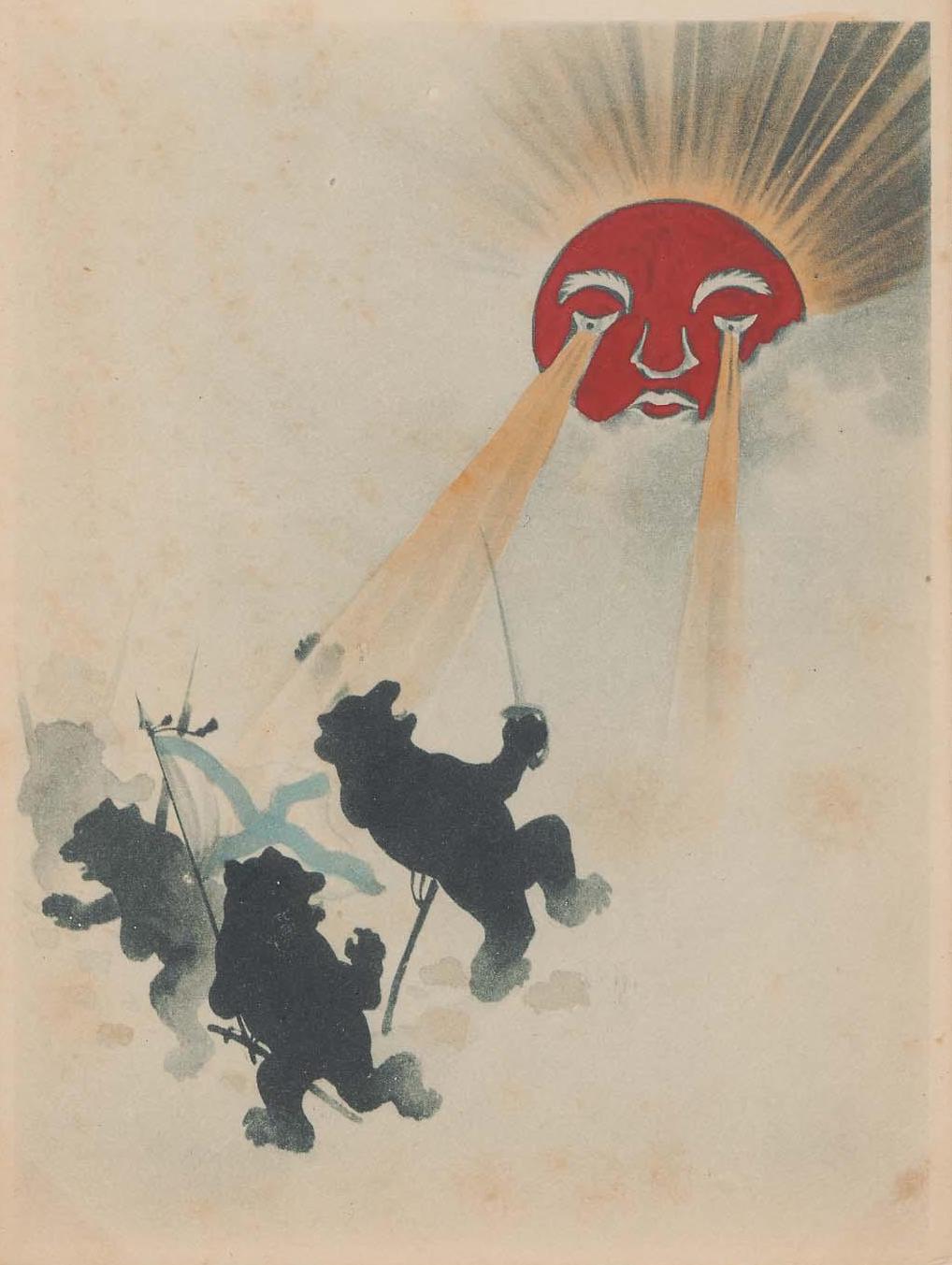
Russo-Japanese war postcard of the Japanese sun seeing off the Russian bear
Postcards of the Russo-Japan war
Just as with photography, picture postcards were a new mass-produced mode of communication that made it possible to share graphic images of the war with audiences far and wide – something also helped by the arrival of national and international postal regulations. As MIT notes:
The postcards in particular changed the way large numbers of people saw the world. They ranged from “realistic” to highly subjective, and they crossed national borders with remarkable ease. Pictures transcended language per se; and where language mattered, in the form of captions, entrepreneurs quickly learned how to cater to an international audience. The same postcard might appear in different languages, for example, or with the caption given in multiple languages (usually three or seven) on a single card.
Manufacturers of picture postcards also cultivated a clientele of international collectors. Cards might be issued in a numbered series featuring a common theme or artistic style, for instance. They might also involve a kind of comic-strip unfolding, in which it took two or more cards to play out a story line. Both foreign and Japanese postcards of the Russo-Japanese War were creative in this regard, and the foreign illustrators were particularly keen (and cynical) when it came to placing the war in a broader context of power politics among the great imperialist nations.
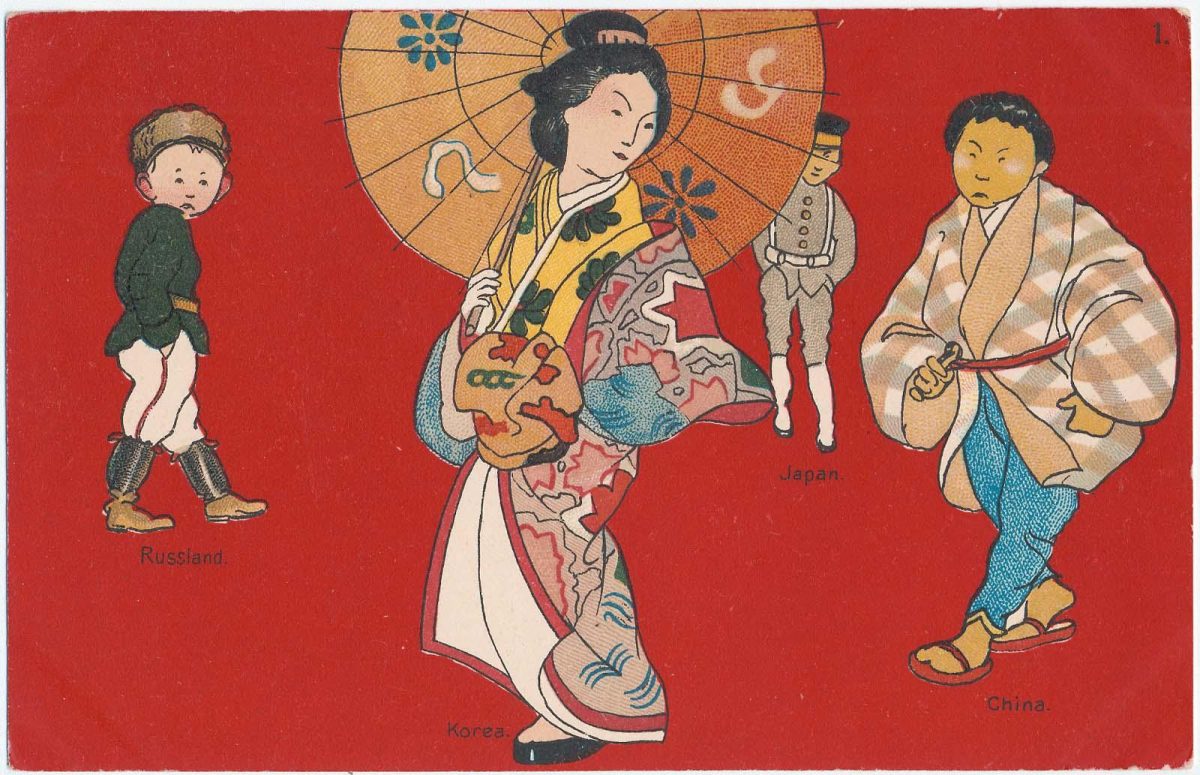
Personification of the Four Countries in the Russo- Japanese War, No.11904–05
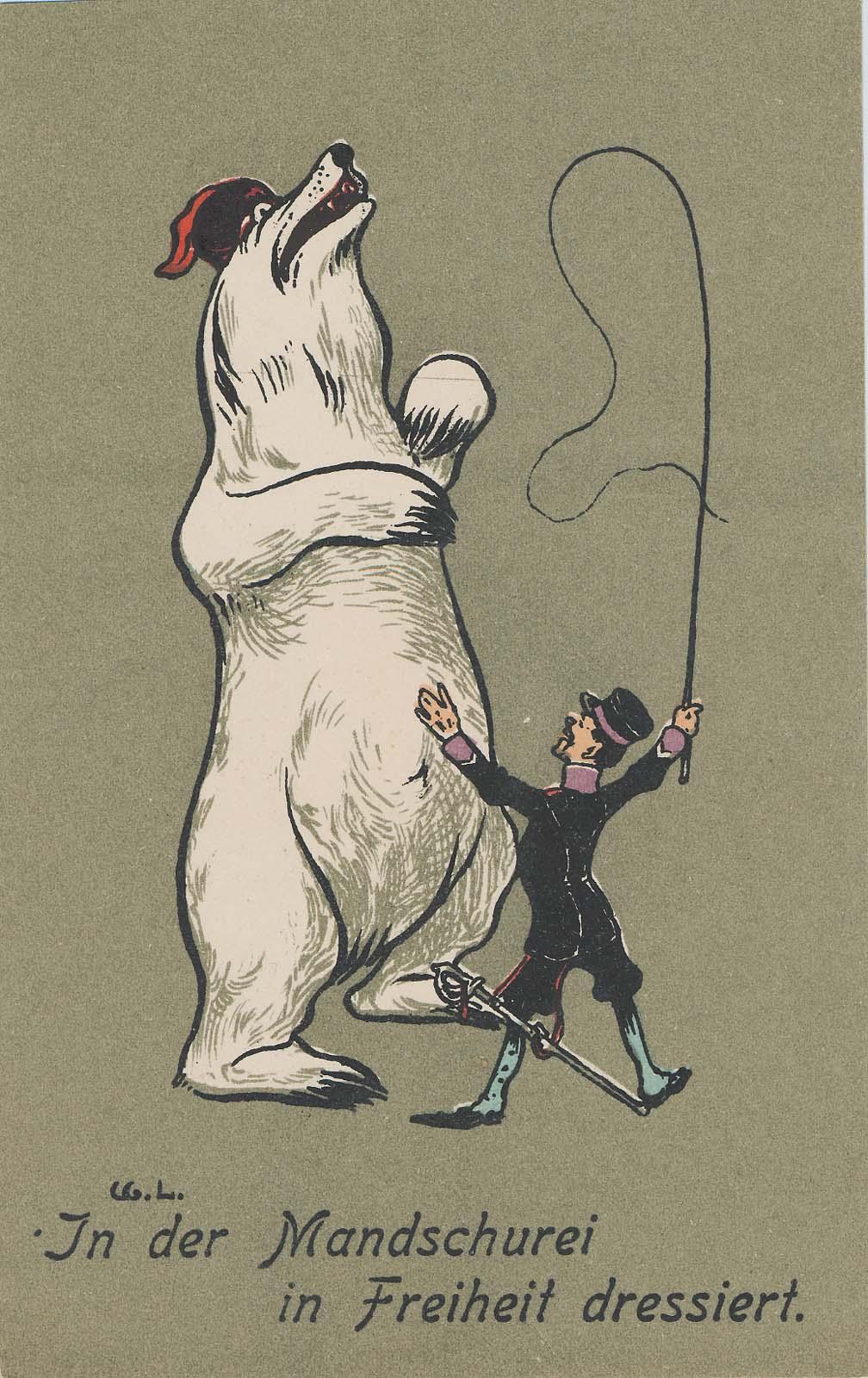
White Russian Bear and Small Japanese Soldier from the series La Grand Russe In der Mandschurei in Freiheit dressiert from the series La Grand Russe
The Russo-Japanese War
Russia’s Tsar Nicholas II was advised by his Minister of the Interior, Vyacheslav Konstantinovich von Plehve, that a successful war would counter opposition to Tsarist rule and promote a unifying sense national pride.
Japan was seen as a threat to Russian expansion in Asia. And Japan saw Russia’s expansion of the Trans-Siberian Railway into Chinese Manchuria as a threat to Korea. China was weak and Japan was looking to gain land for itself. Japanese negotiations to avoid war were ignored by Tsarist officials and hence the fighting began.
The attack
In early 1904, the Japanese attacked the Russian garrison and naval base at Port Arthur. Russian forces were left without supplies as the Trans-Siberian Railway was unfinished and there was no effective way of moving troops to the east. Russia suffered heavy losses on the Yalu River and at Mukden as a result of the vastly superior Japanese forces.
The Russian Baltic fleet was sent to the Pacific. After arriving there in May 1905, it encountered the Japanese navy. Two thirds of the Russian fleet was destroyed and many ships were captured.
A bitter end and a new beginning
At the end, victorious Japan had forced Russia to abandon its expansionist policy in East Asia. In so doing it became the first Asian power in modern times to defeat a European power. The war had far-reaching effects on the destinies of both Europe and Asia. Japan was destined to play in world-politics, and what began as an act of self-preservation against Russia’s expansionist policy in Siberia and the Far East would develop into ideas of aggrandisement.
For the Russians, the embarrassment of defeat to an Asiatic power led to a mutiny on board the Potemkin battleship in June 1905 and added to the view that Tsarist government was incompetent. And Plehve? Well, he was killed when a member of the Socialist Revolutionary Party threw a bomb into his horse-drawn carriage.
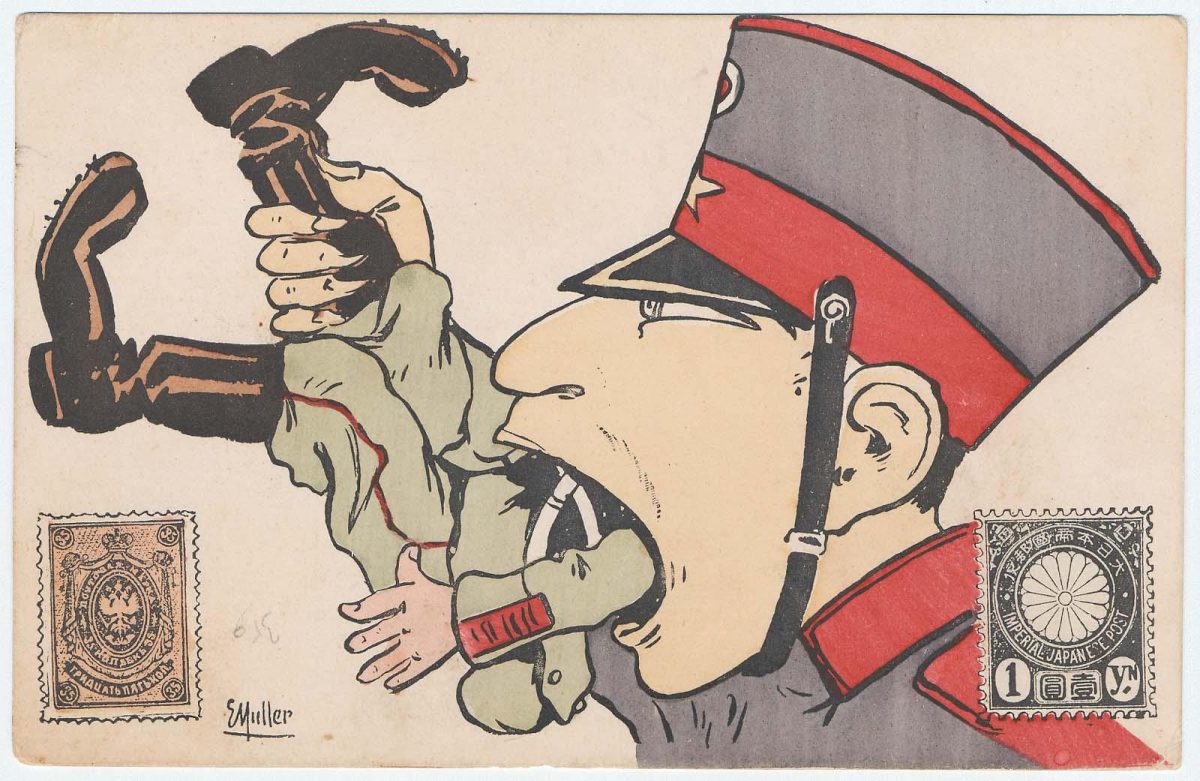

Postcard of a Japanese Soldier Swallowing a Russian Soldier
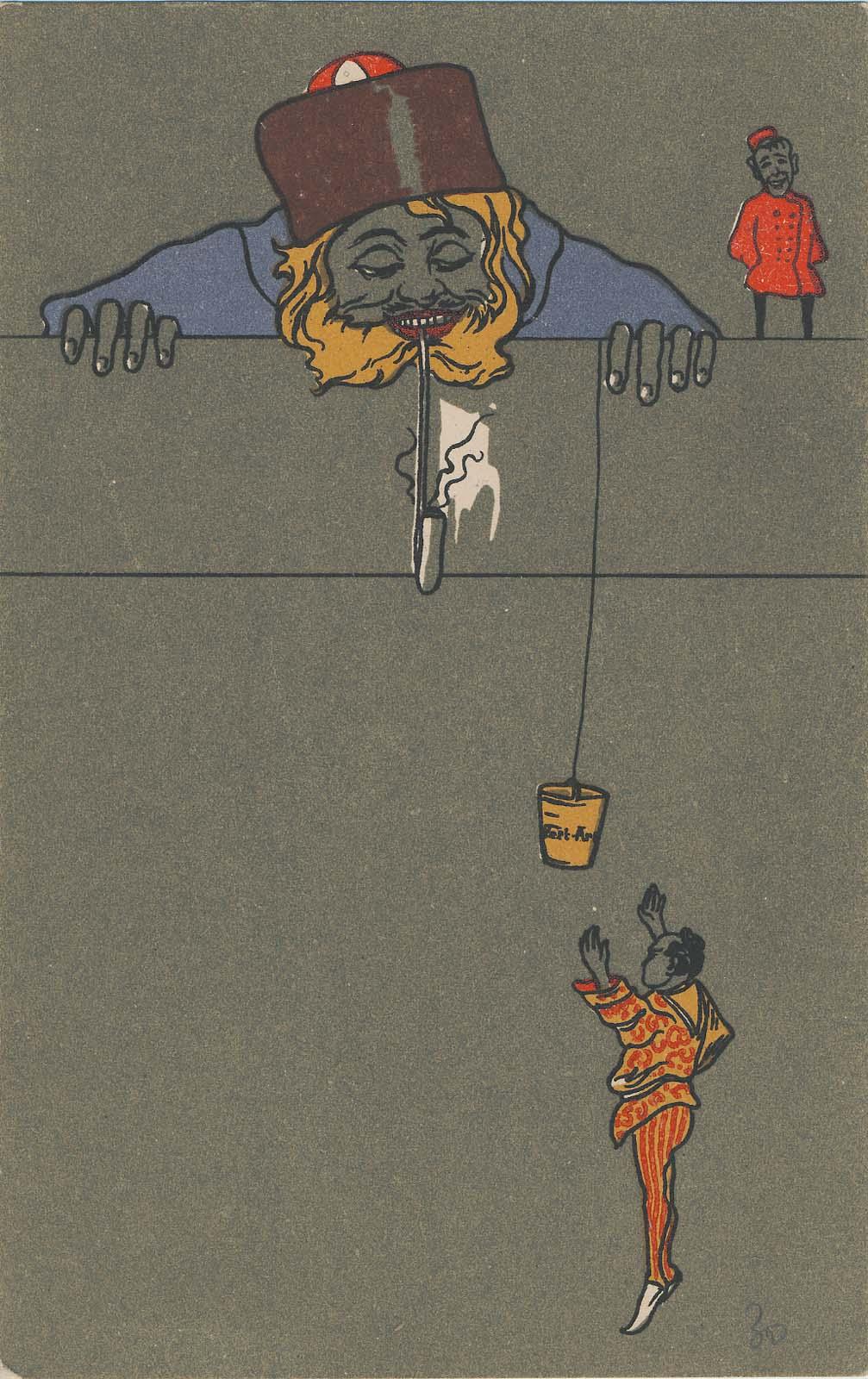
Russian Trying to Attract a Japanese with Port Arthur
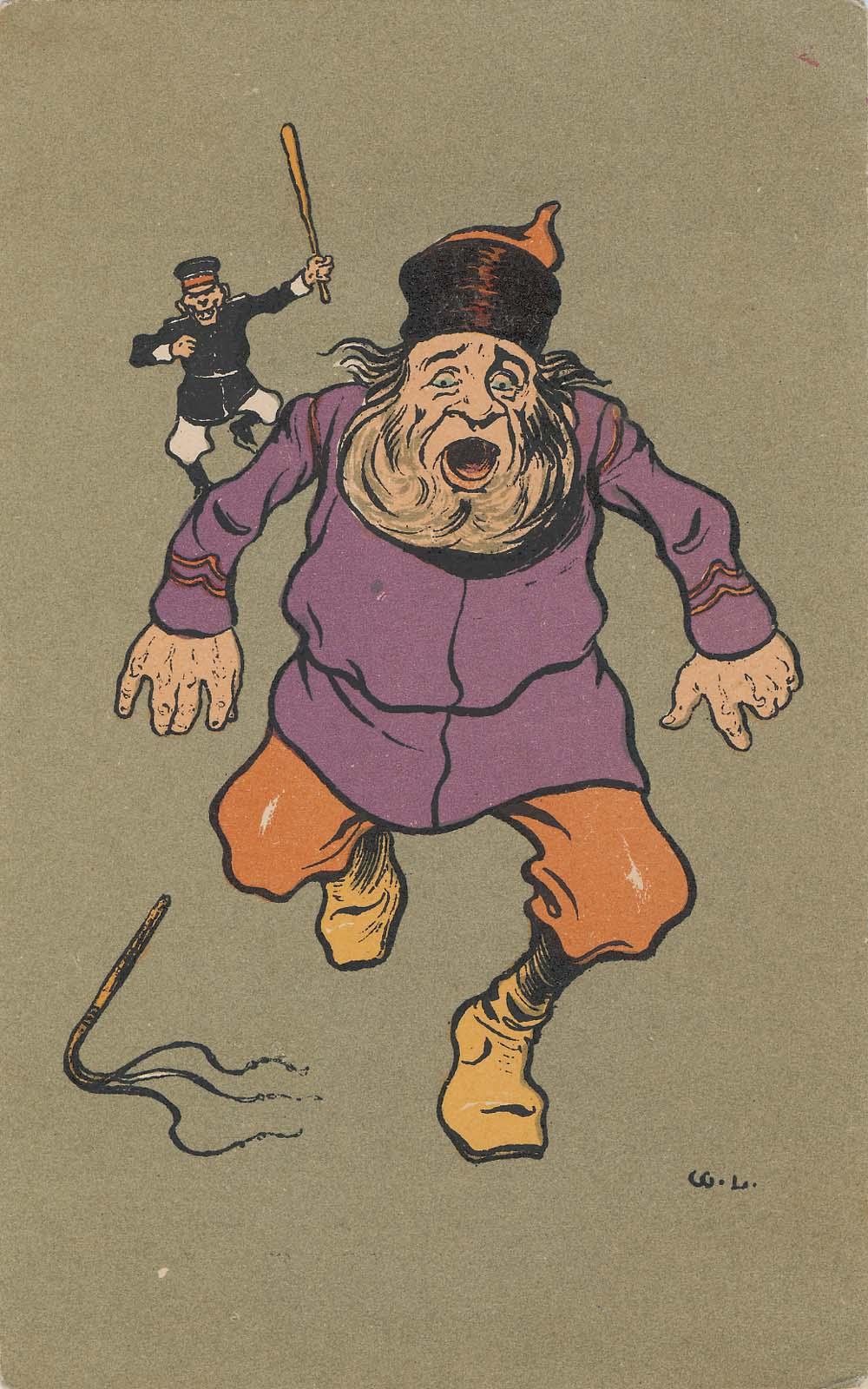

Russian Fleeing from Japanese Soldier from the series La Grand Russe
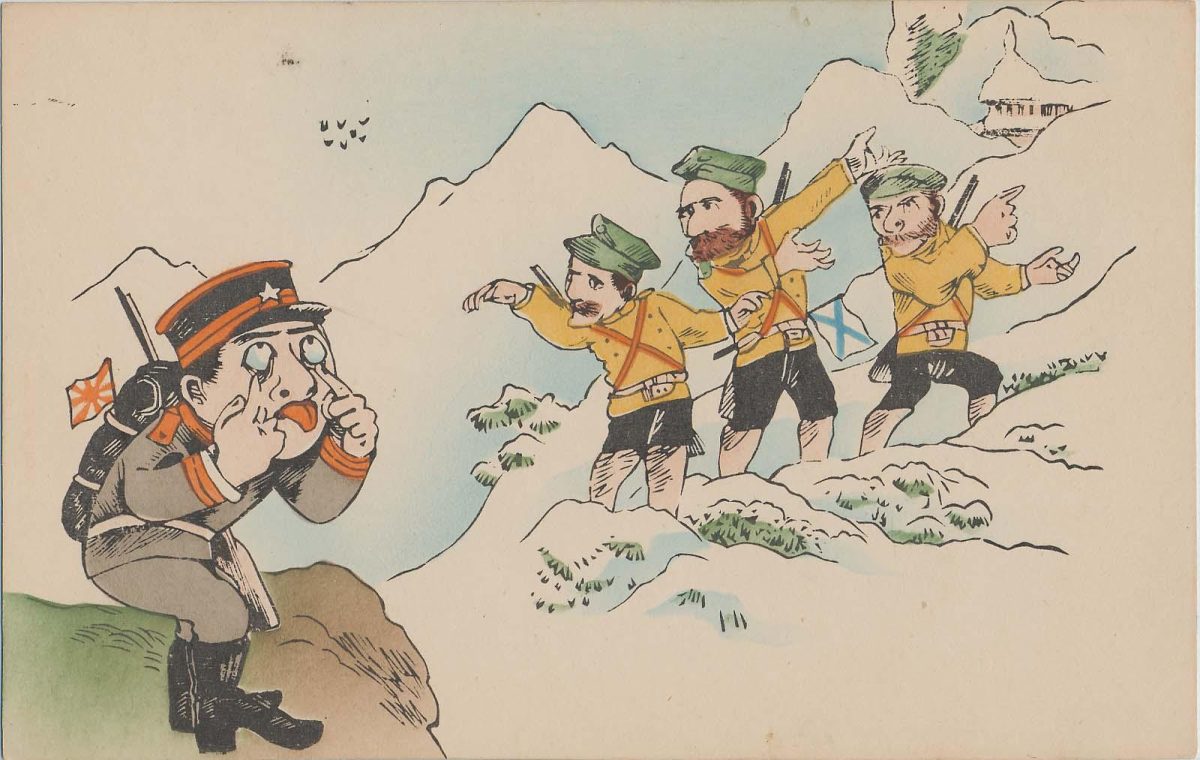
Japanese Soldier Not Tempted by Russian Soldiers Artist
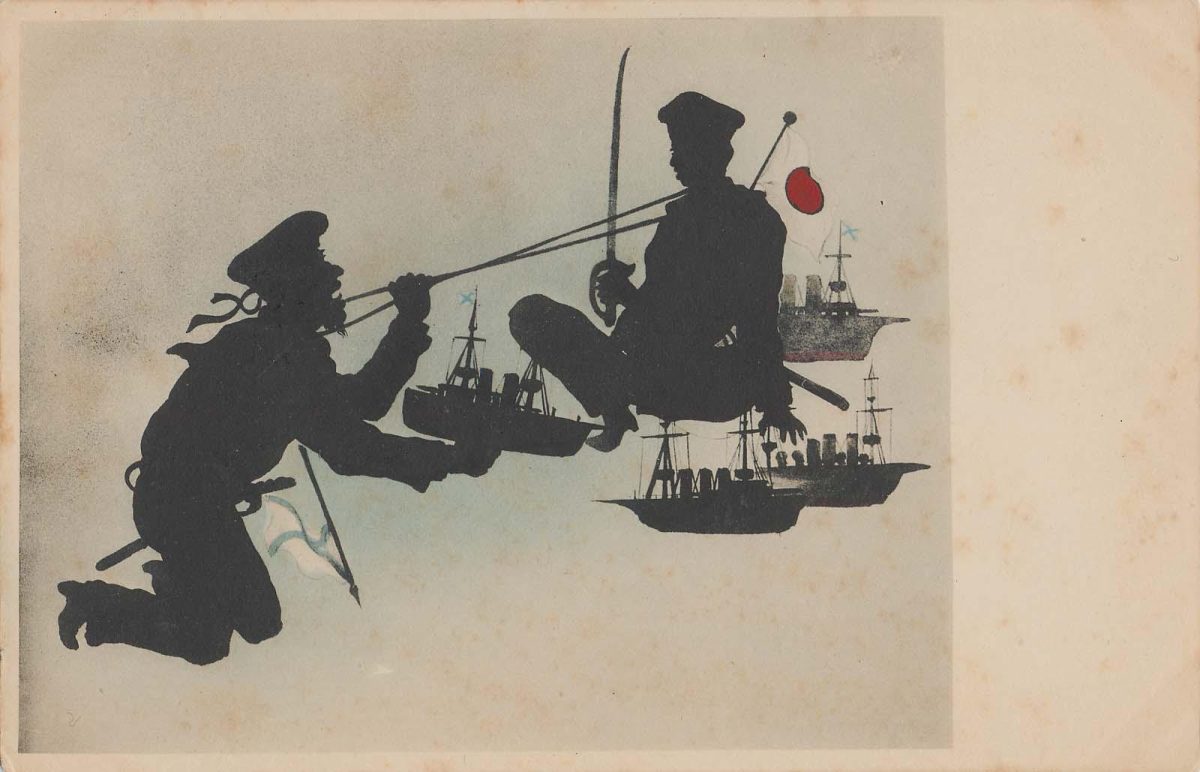
Tug-of-War between Japanese and Russian Soldiers
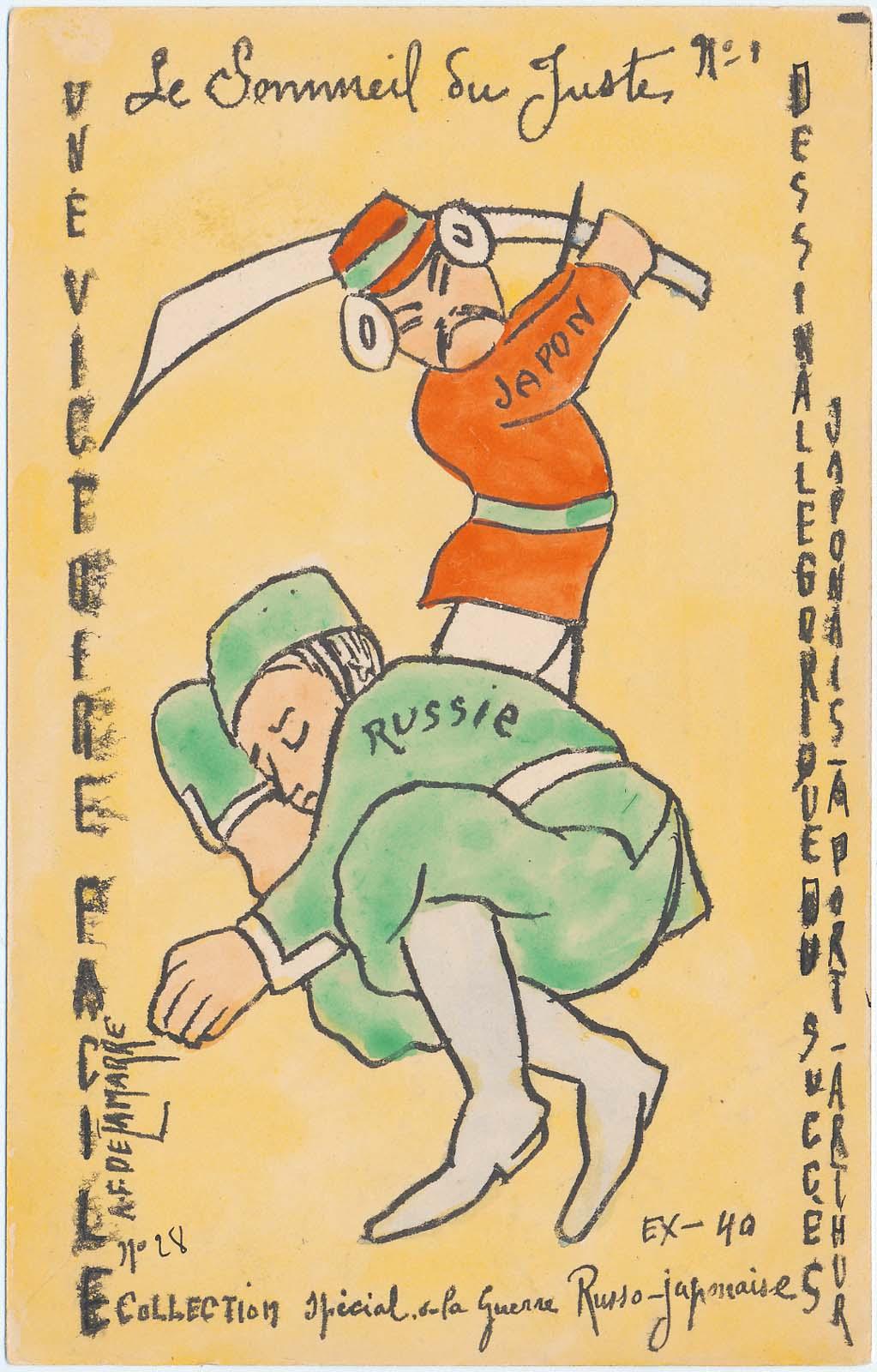
Perfect Sleep from the Special Collection of the Russo-Japanese War A. F. Delamarre (French)
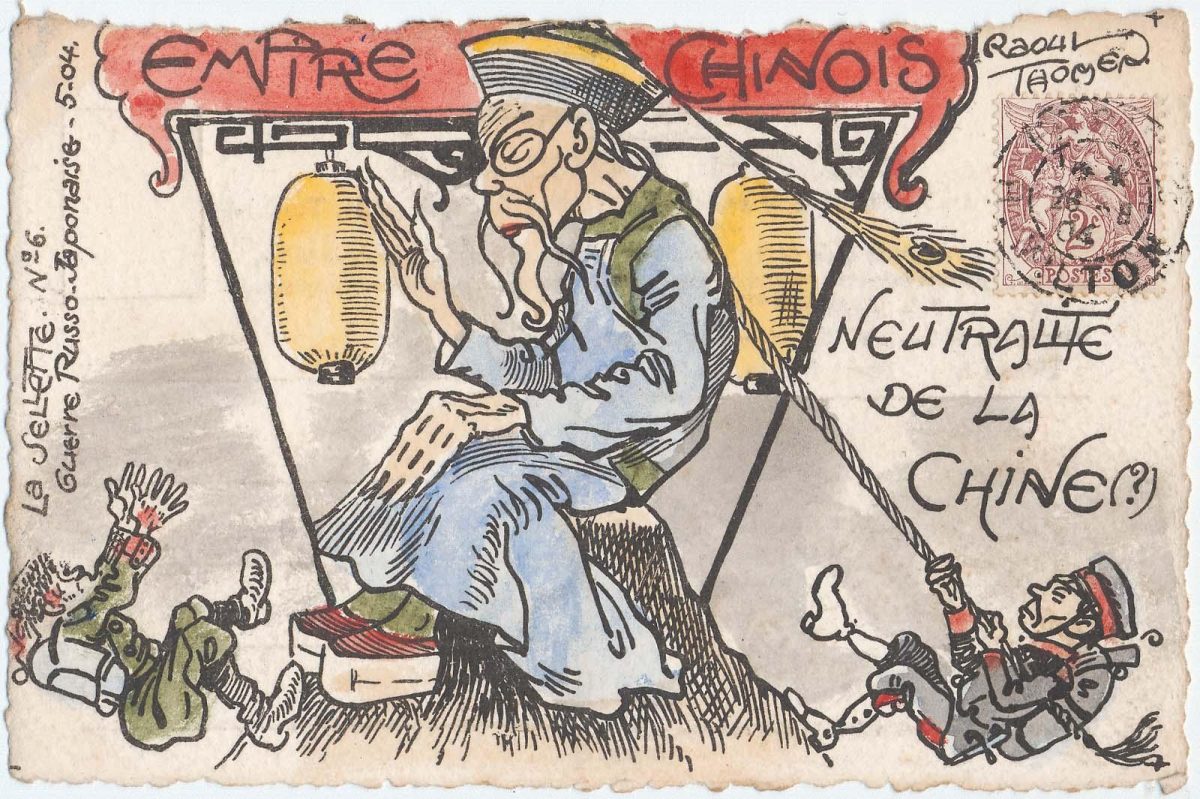
The Empire of Chin- The Neutrality of China from the series Le Sellette no.6, Russo-Japanese War
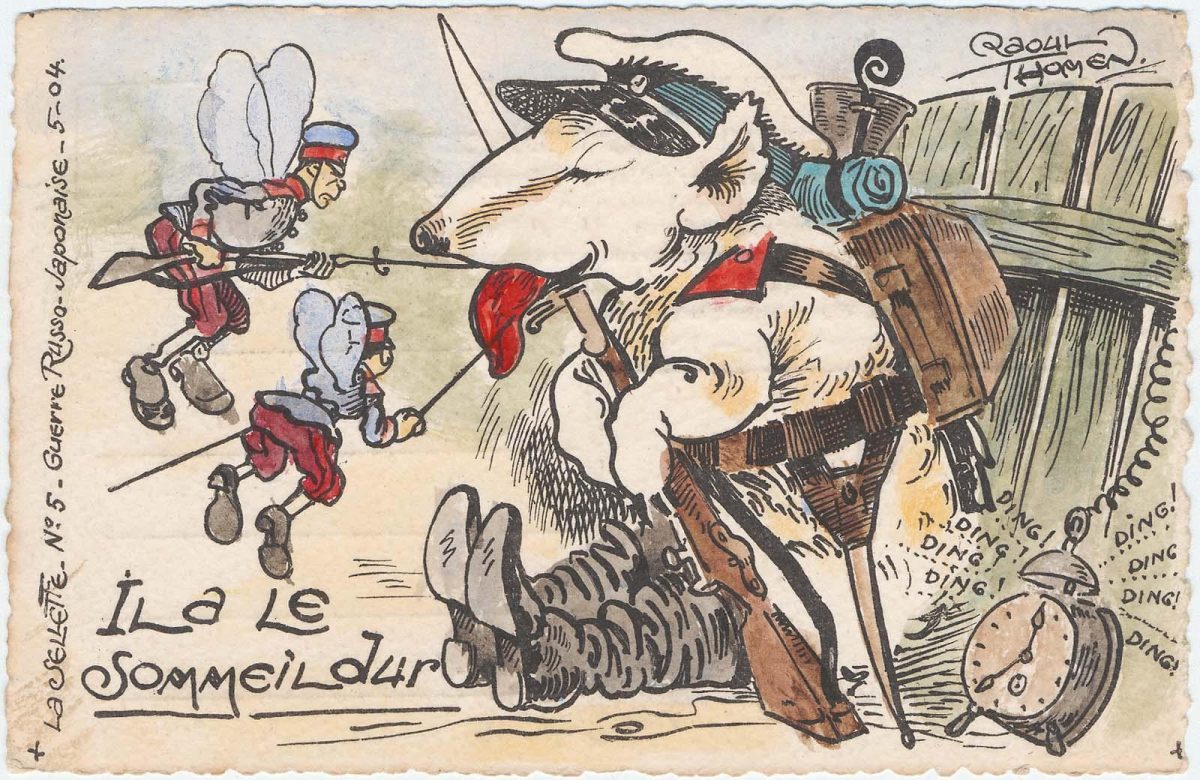
He Is Deeply Sleeping from the series La Sellette No.5 Russo-Japanese War
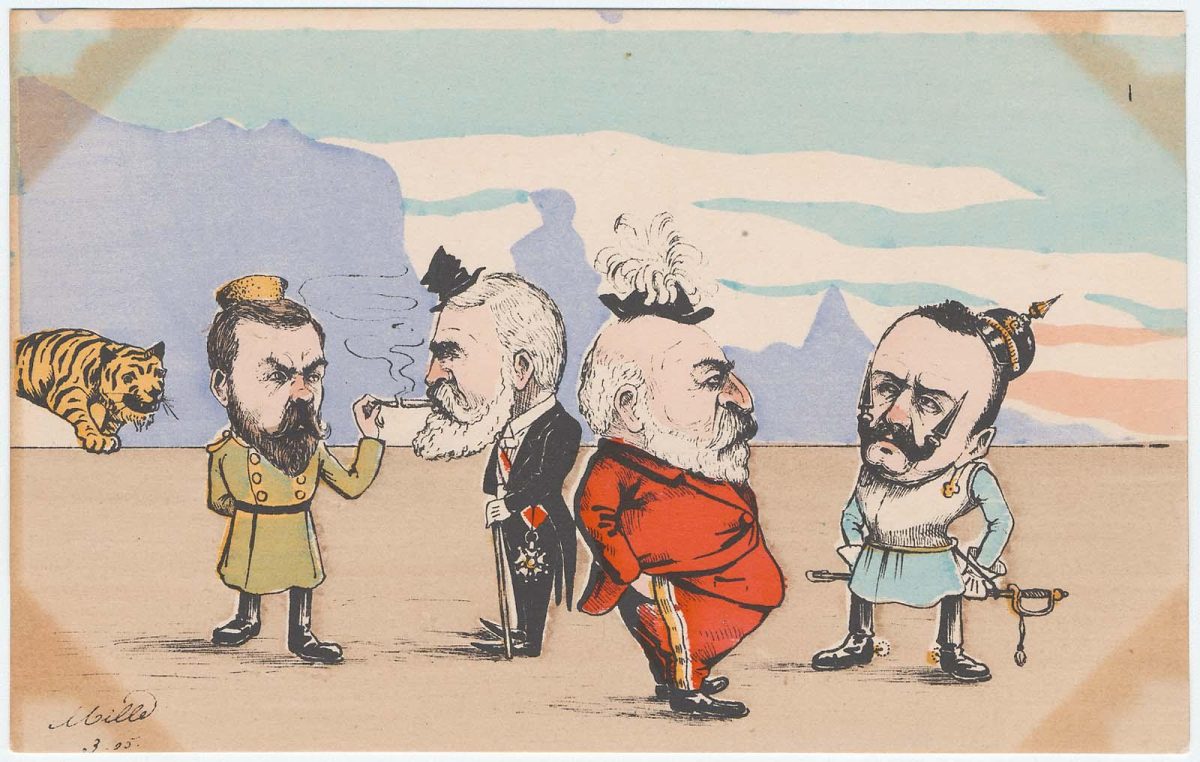
Personnel of the Four Countries of the Russo- Japanese War
Personification of the Four Countries in the Russo- Japanese War
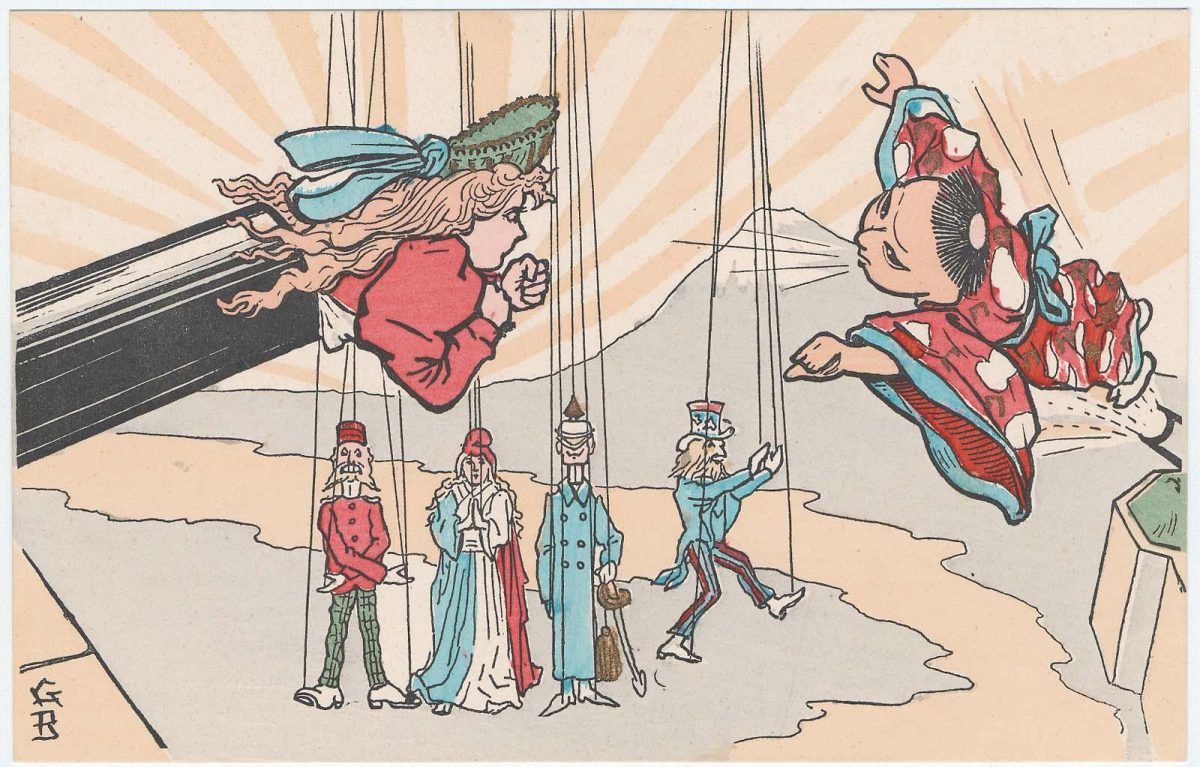
Russian and Japanese Dolls in a Parody of the Russo-Japanese War Situation
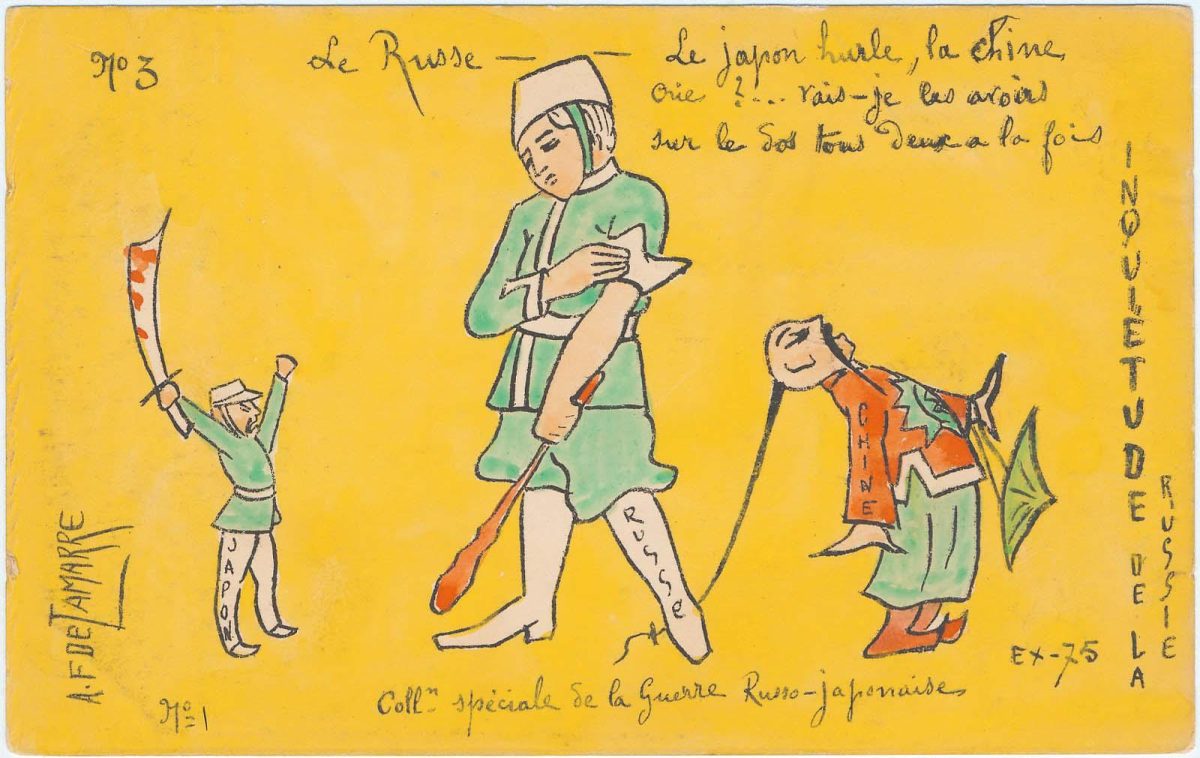
Russian Anxiety from the Special Collection of the Russo-Japanese War by A. F. Delamarre
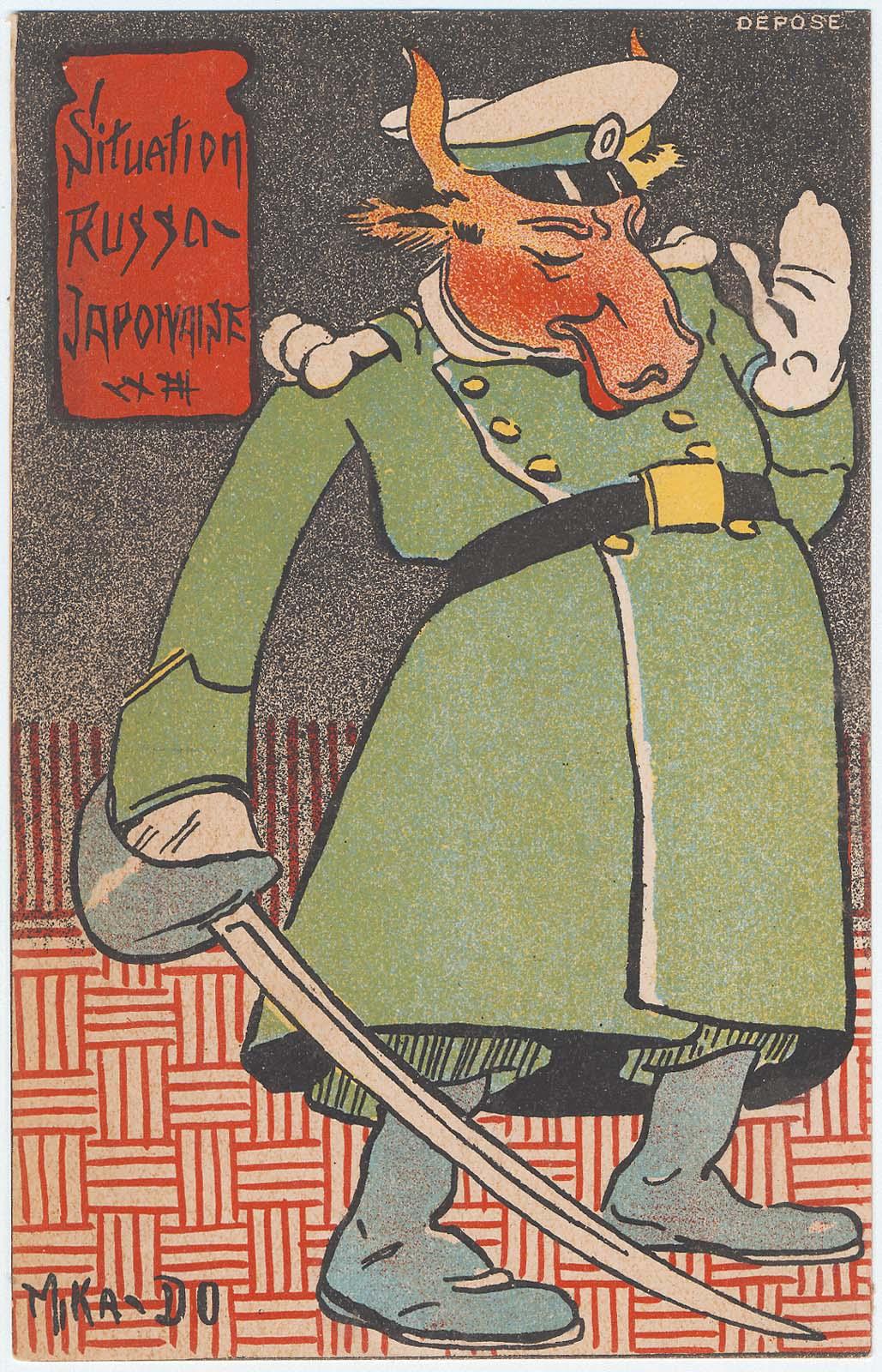
Bull as Russian Soldier from the series The Russian and Japanese Situation
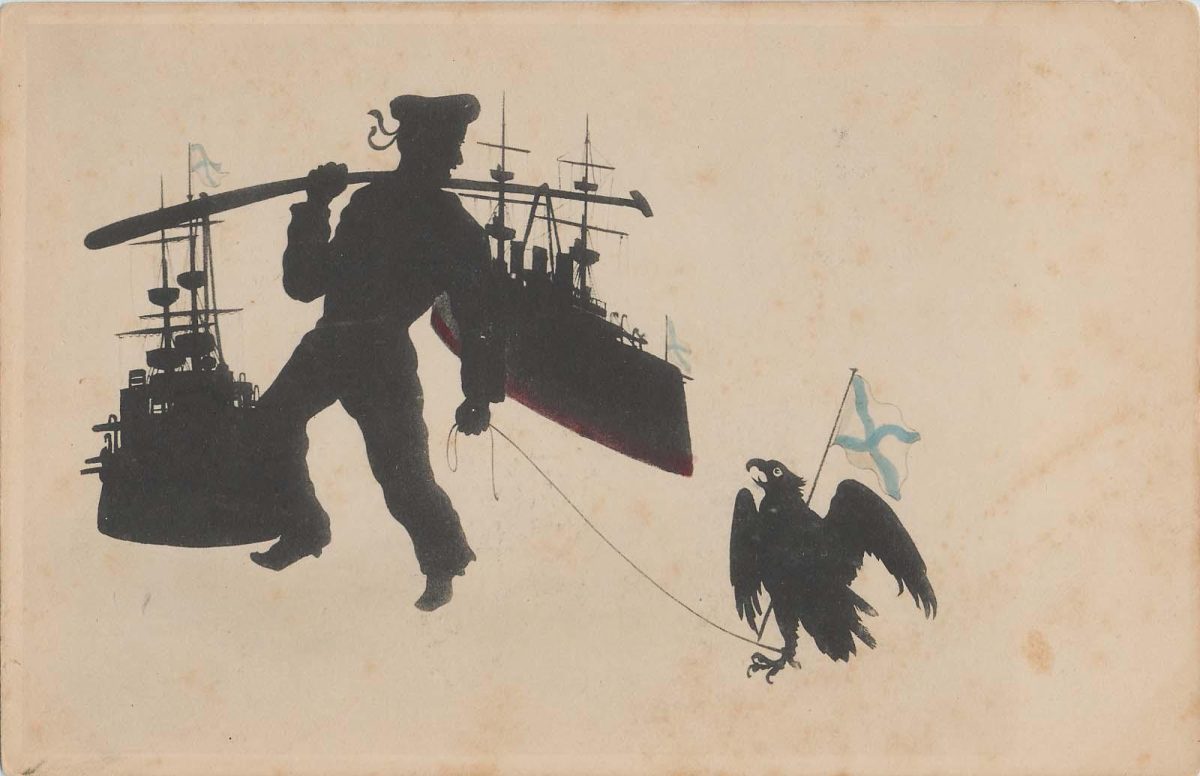
Russian Soldier and Eagle with Russian Flag
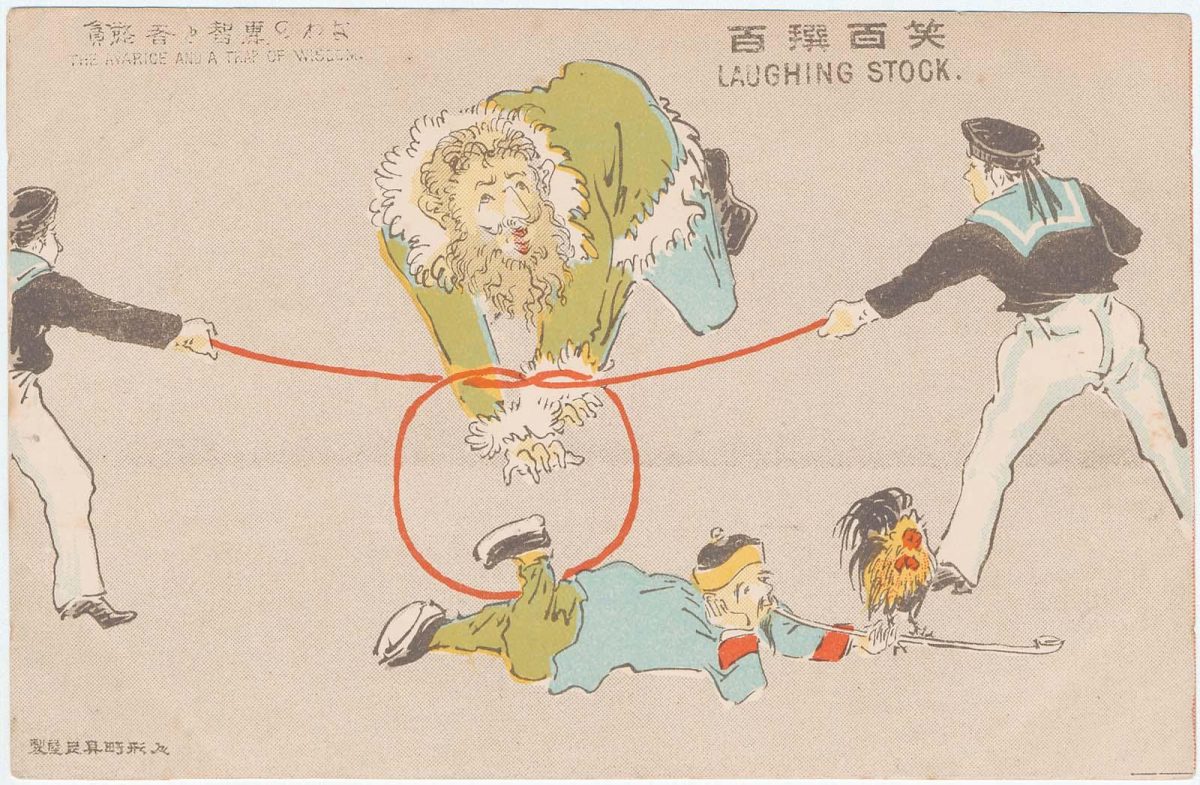
The Avarice and A Trap of Wisdom from the series Laughing Stock The Japanese Navy Uses China as Bait to Trap the Greedy Russian Bear
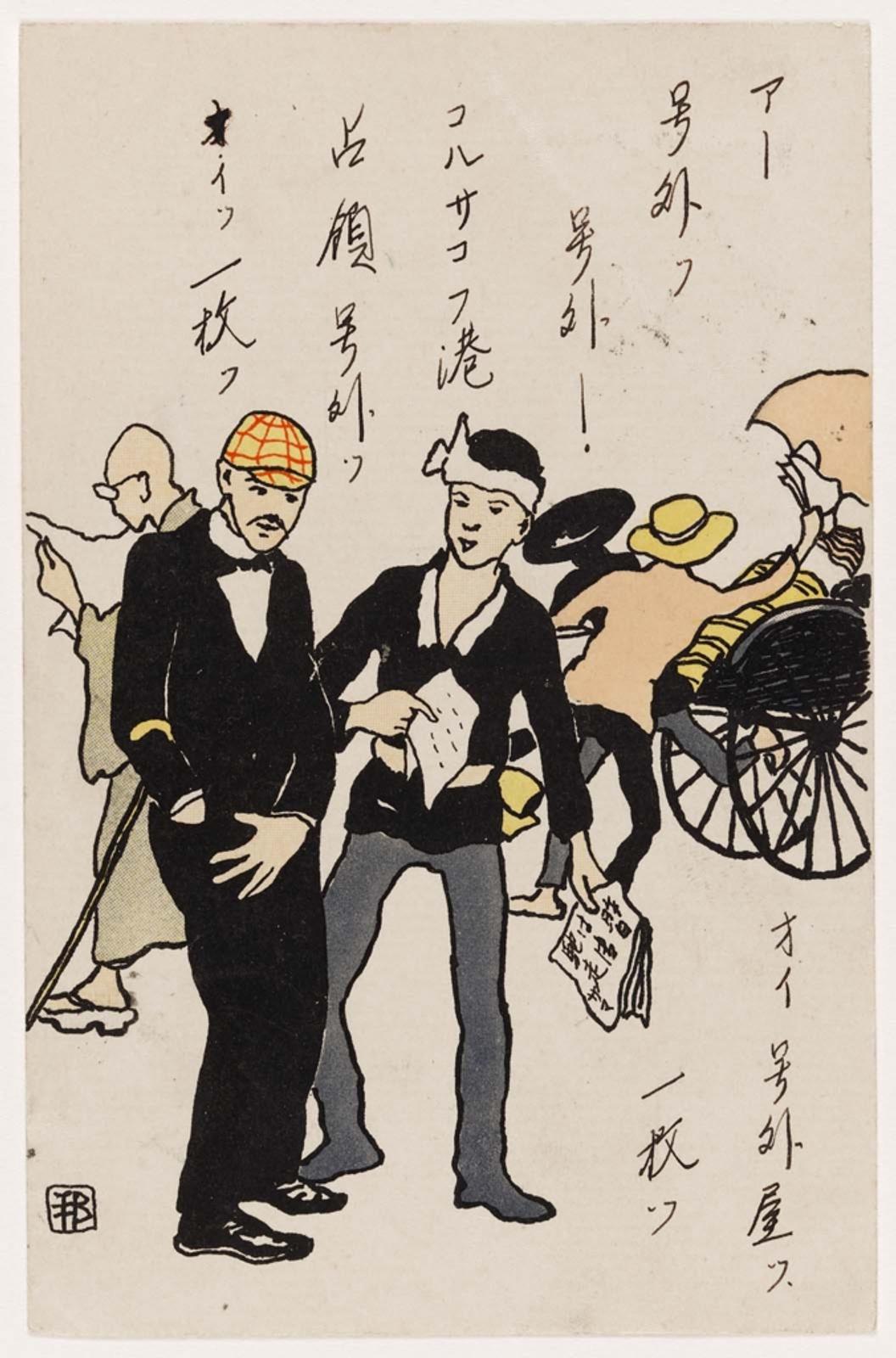
Delivering news of the war
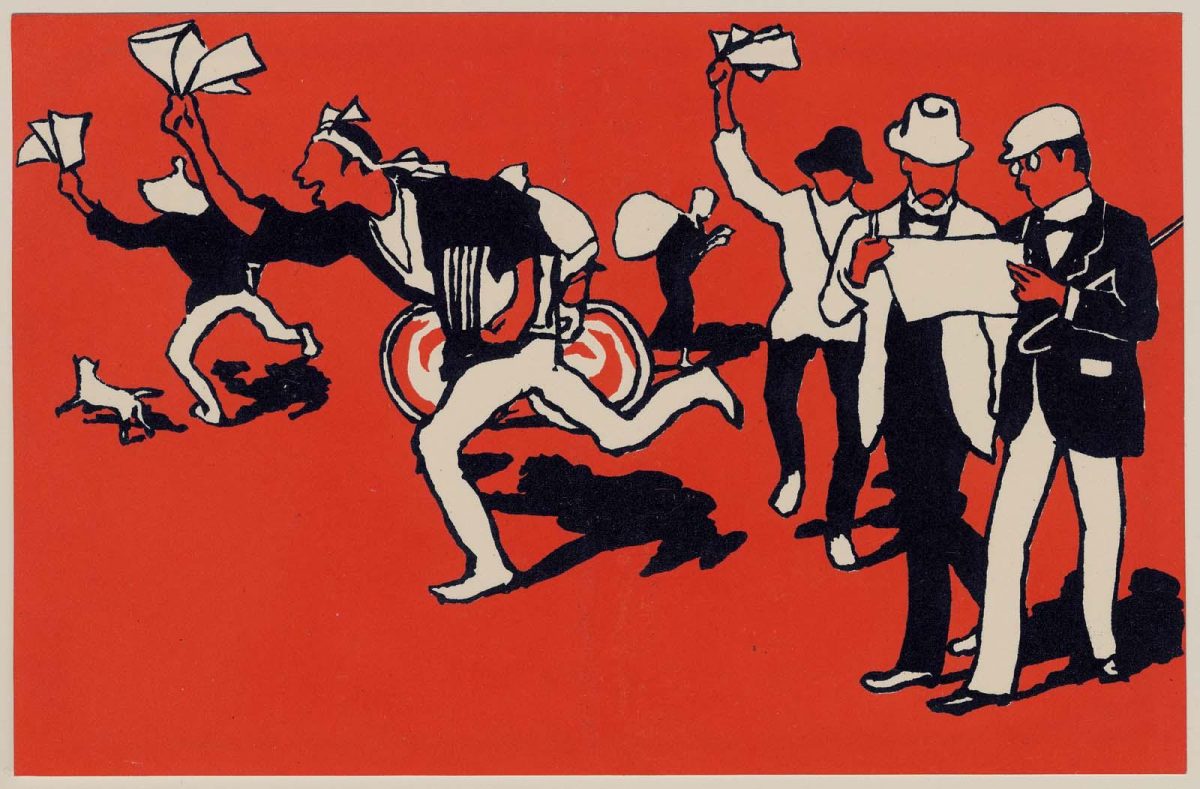
Bringing news of the Russo-Japan war
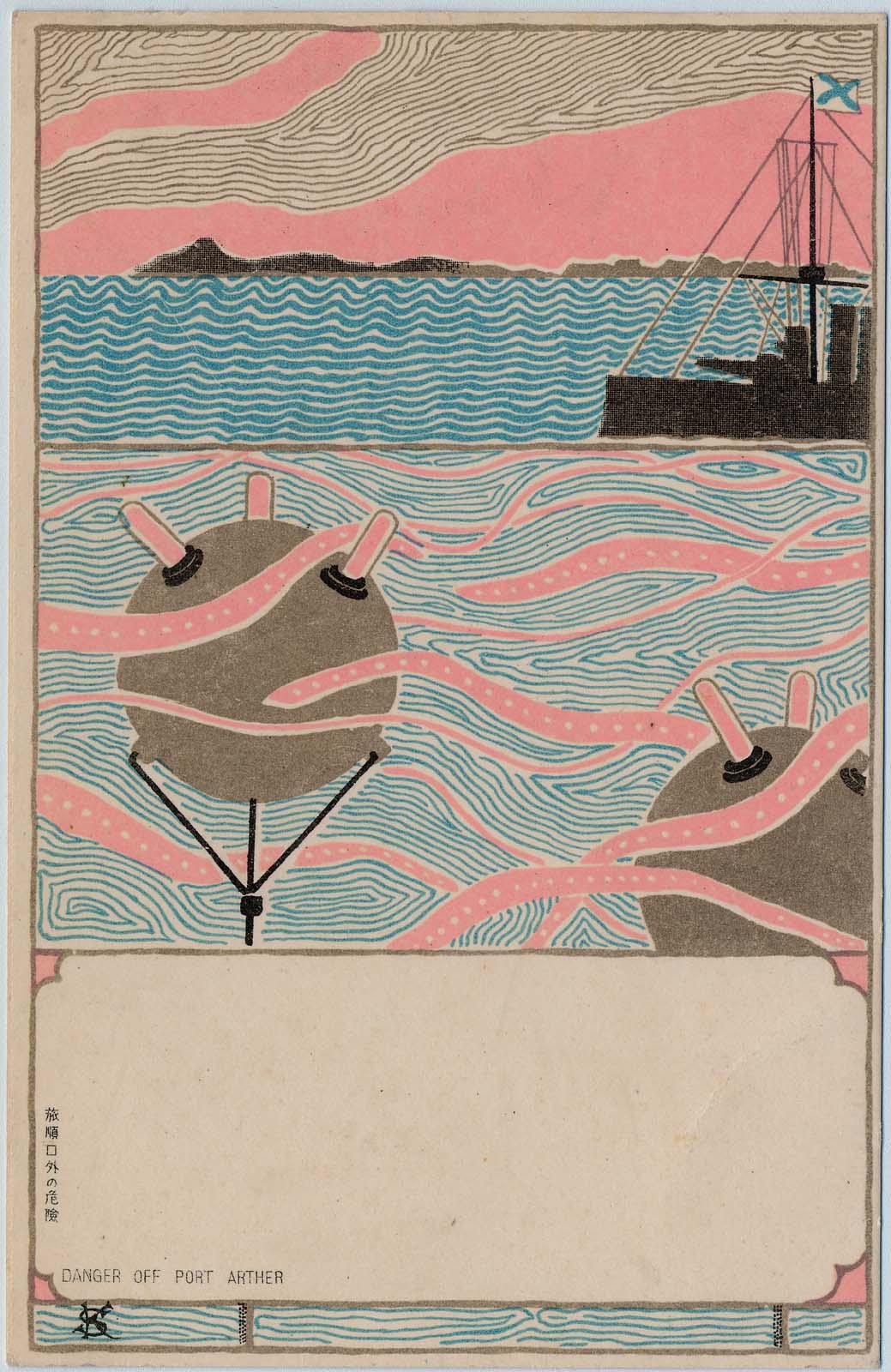
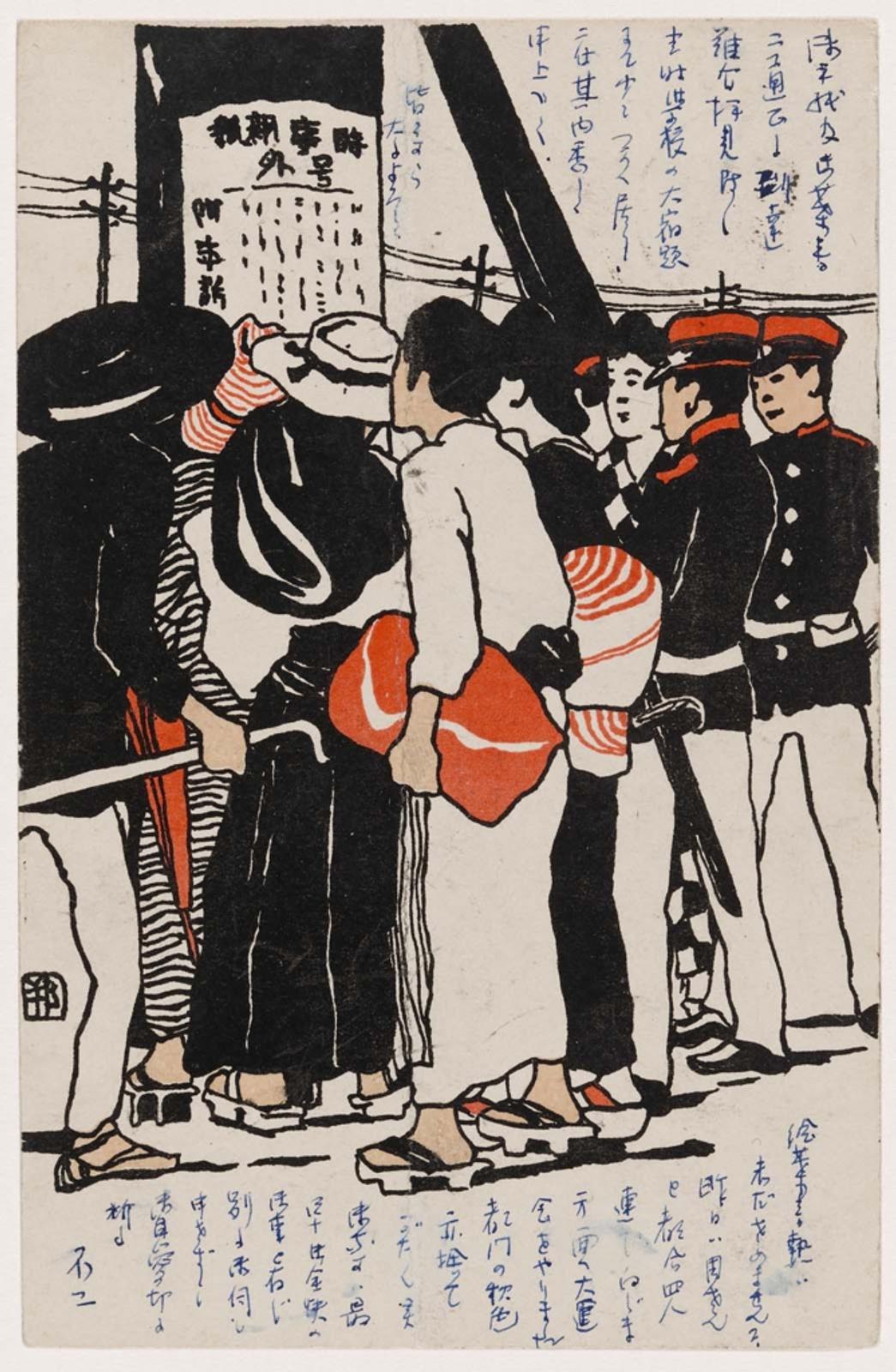
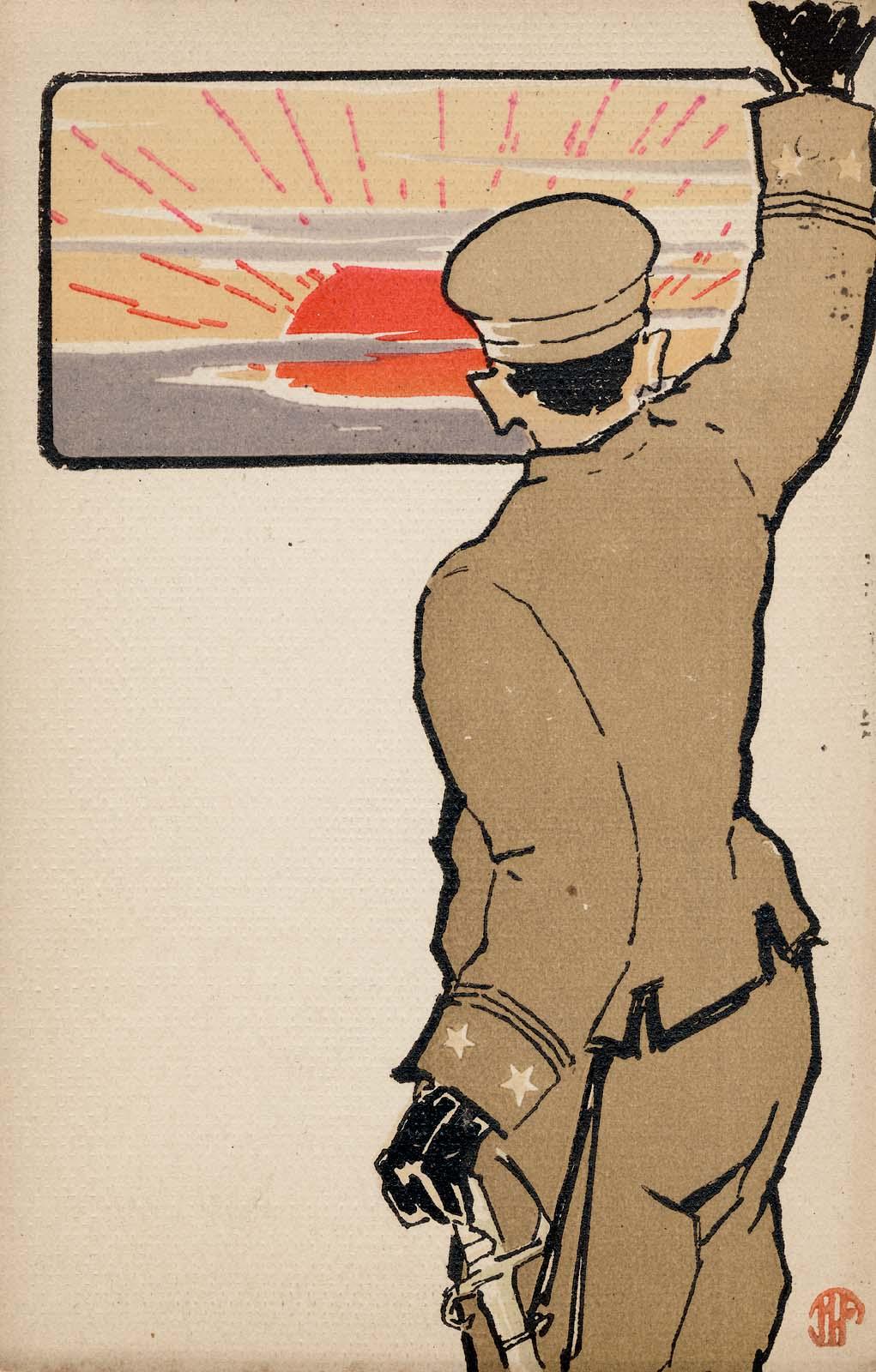
 七福神よりHashimoto-Kunisuke-Japanese-1884–1953-Publisher-Bunrokudo.jpg)
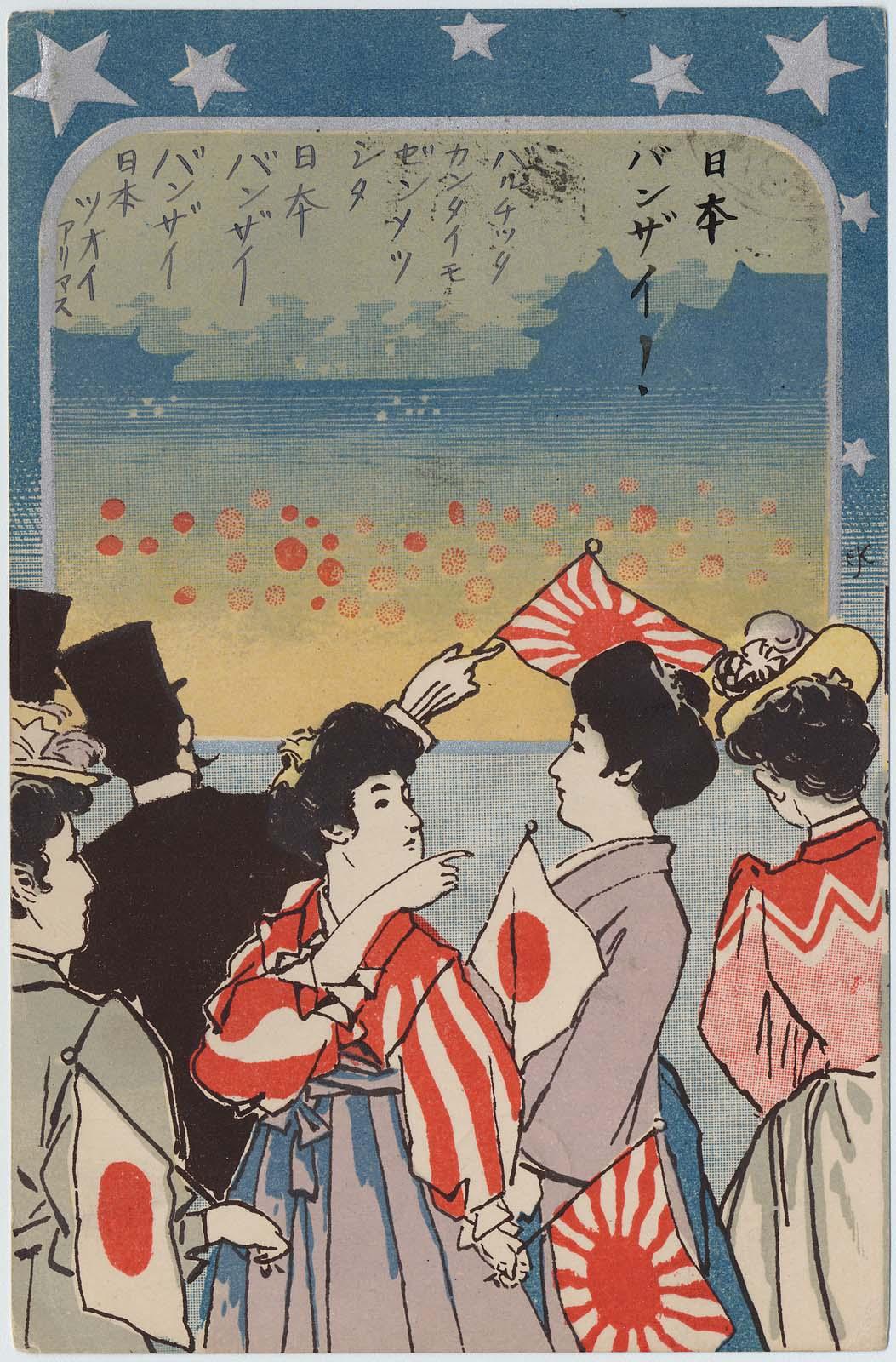
A celebration of victory in the Russo-Japanes war
If you’d like to collect your own cards, we’ve a number of Japanese postcards in the shop.
Would you like to support Flashbak?
Please consider making a donation to our site. We don't want to rely on ads to bring you the best of visual culture. You can also support us by signing up to our Mailing List. And you can also follow us on Facebook, Instagram and Twitter. For great art and culture delivered to your door, visit our shop.