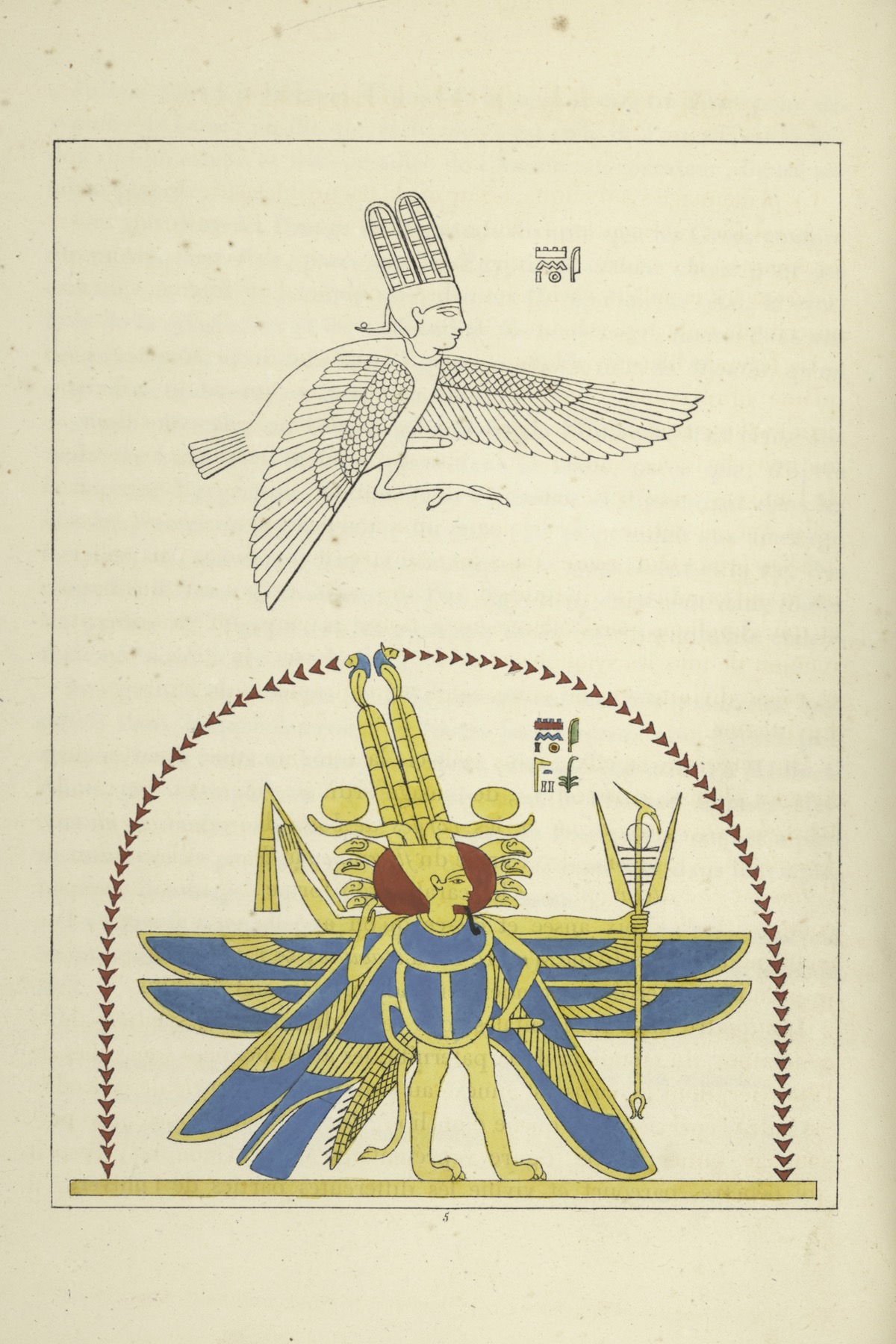
With illustrations by Léon-Jean-Joseph Dubois (1780-1846), we see walking snakes and other gods of ancient Egypt in the 1823 book Pantheon in egyptien: collection des personnages mythologiques de l’ancienne Egypte, d’apres les monuments, avec un texte explicatif (Egyptian Pantheon: a collection of mythological figures from ancient Egypt, based on monuments, with explanatory text).
Published in Paris, and written by linguist Jean-François Champollion, the book takes a look at ancient Egyptian mythology, providing detailed descriptions and significance of various gods and mythological figures, drawing on historical texts and monuments. The emphasis seems to be on cataloging and explaining the pantheon, supported by illustrations and hieroglyphic translations.

Tpé, Tphé, or Tiphé. (Urania, the Sky goddess.)
It mentions the initial design for a larger collection, detailing various figures and their corresponding explanations. The text delves into the attributes and significance of several gods, such as Amon, highlighting their roles in Egyptian cosmology and worship, often accompanied by illustrations to aid in the understanding of these complex mythological entities. Overall, the opening offers a glimpse into the depth of ancient Egyptian religious beliefs and sets up a thorough exploration of the pantheon.

The winged disk and the hawk, emblems of Thoth Trismegistus, or the first Hermes.
Jean-Francois Champollion And Ancient Egypt
The book’s opening sets the scene by introducing the manuscript’s incomplete state due to the author’s premature death. Jean-François Champollion, also known as Champollion le jeune (23 December 1790 – 4 March 1832), was a French philologist and orientalist, known primarily as the decipherer of Egyptian hieroglyphs and a founding figure in the field of Egyptology. As a young man he was renowned in scientific circles, and read Coptic as route to deciphering hieroglyphs.he wrote:
“I am going to visit a Coptic priest at Saint-Roch, rue Saint-Honoré… who will instruct me in Coptic names, and the pronunciation of Coptic letters. I am devoting myself entirely to the Coptic language, for I want to know the Egyptian language as well as my own native French. My great work on the Egyptian papyri will be based on this tongue.”
Adding in a letter to his brother:
“I dream in Coptic. I do nothing but that, I dream only in Coptic, in Egyptian … I am so Coptic, that for fun, I translate into Coptic everything that comes into my head. I speak Coptic all alone to myself, since no one else can understand me. This is the real way for me to put my pure Egyptian into my head.”
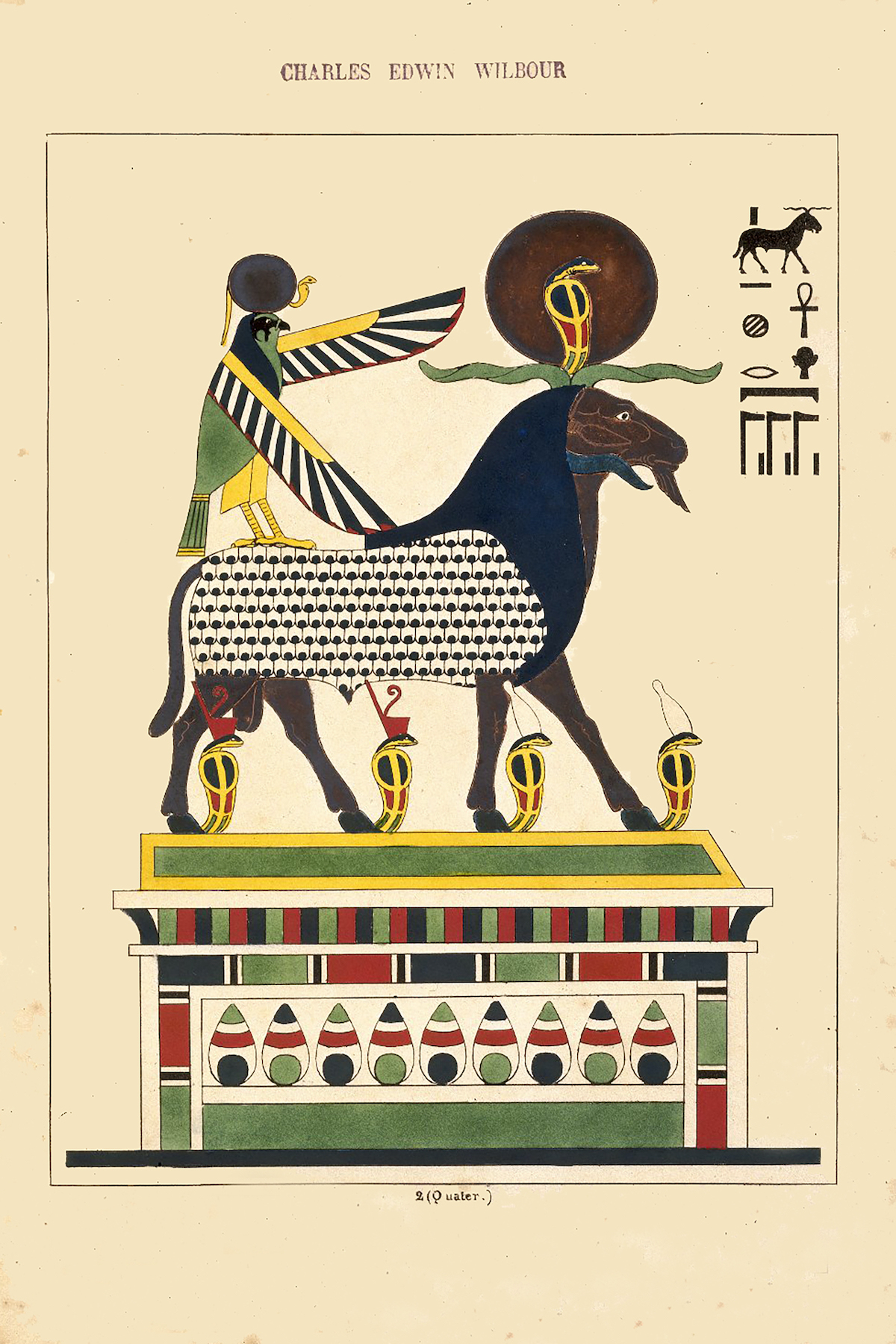
Amon-ra [Amon]. (The spirit of the four elements, the soul of the material world.)
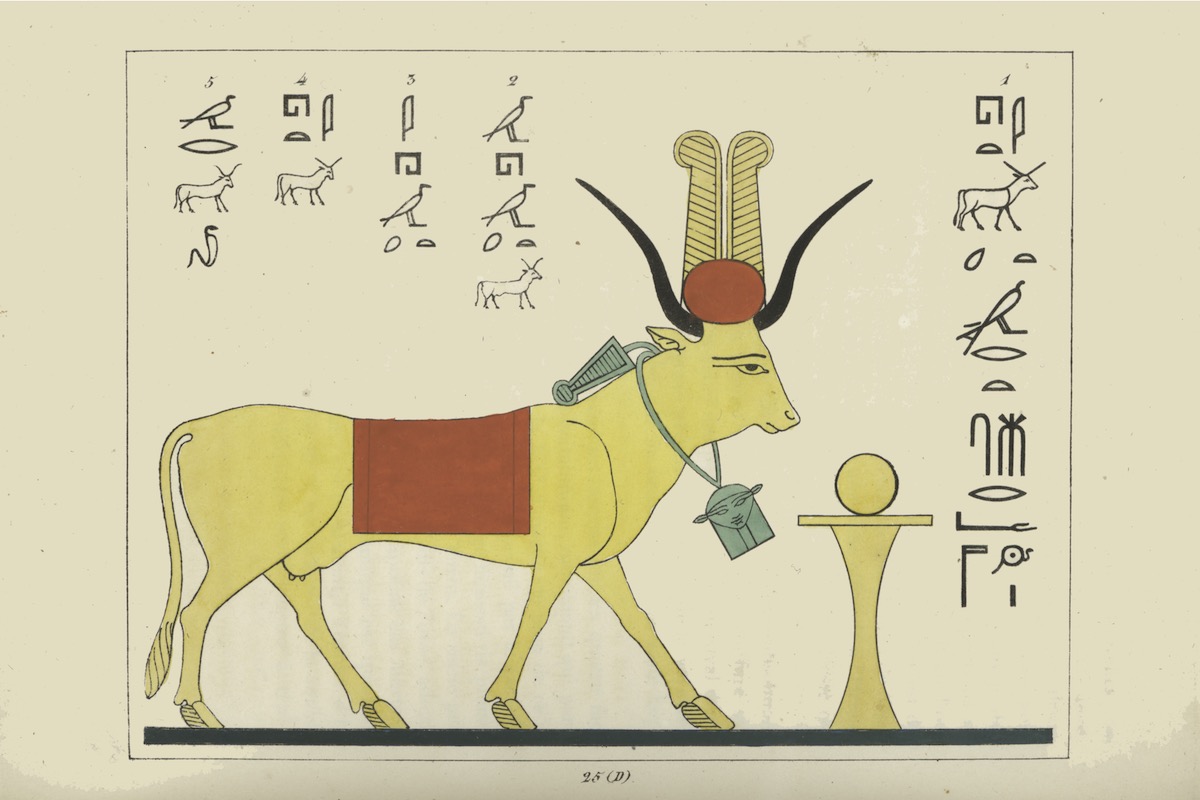

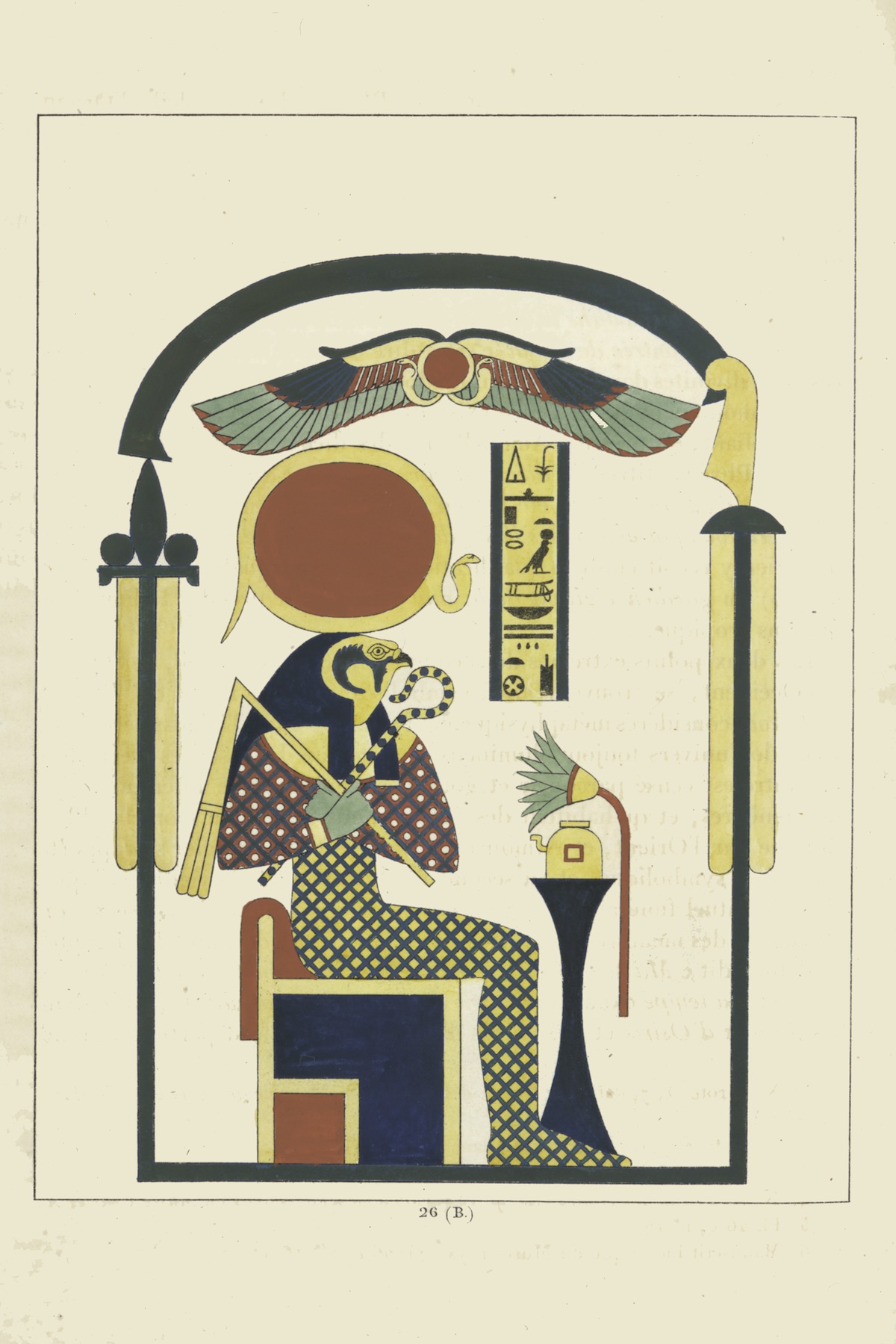

Atum
By Léon-Jean-Joseph Dubois
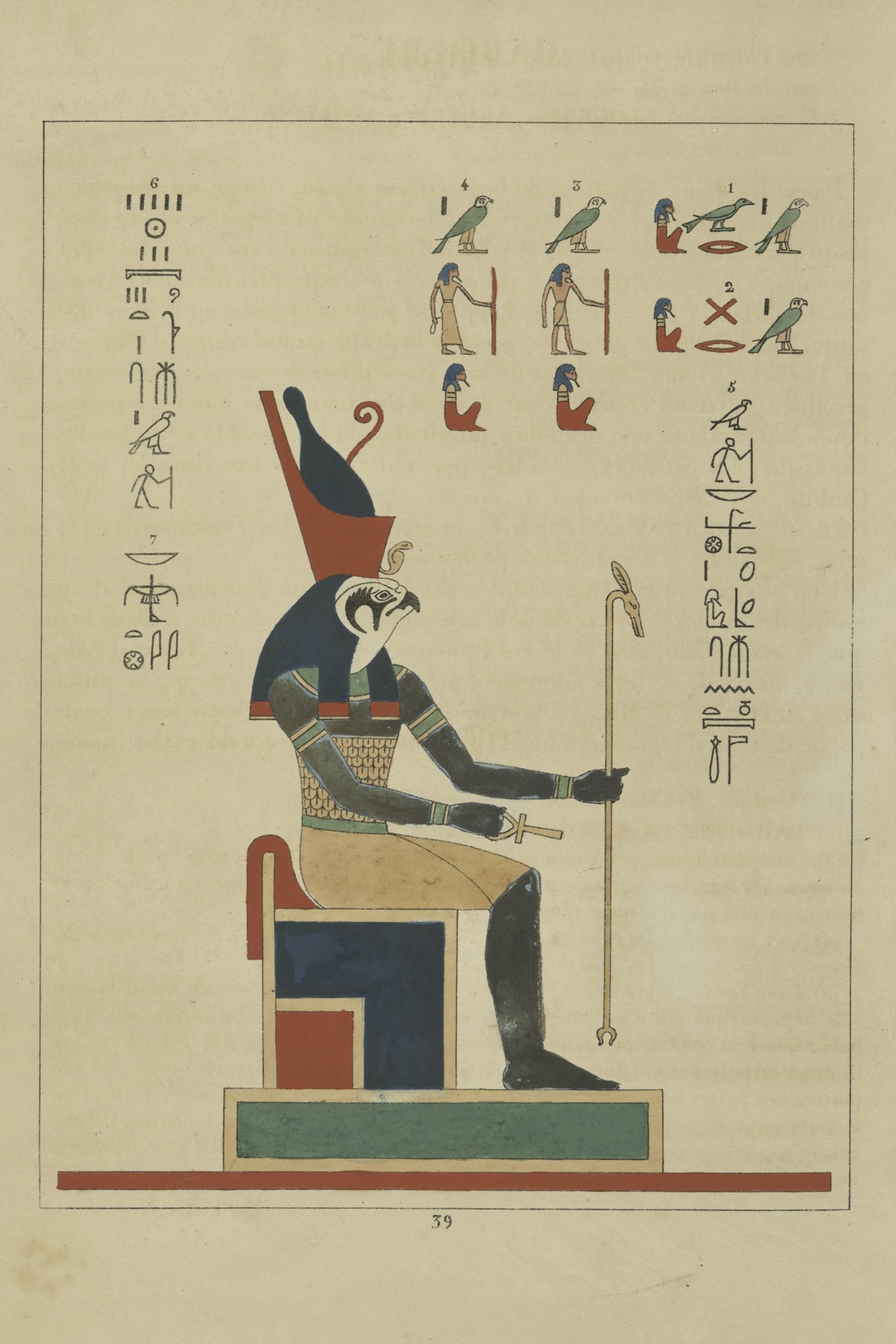
Haroeri [Haroeris]. (Aroueris, Aroeris, Apollo.)
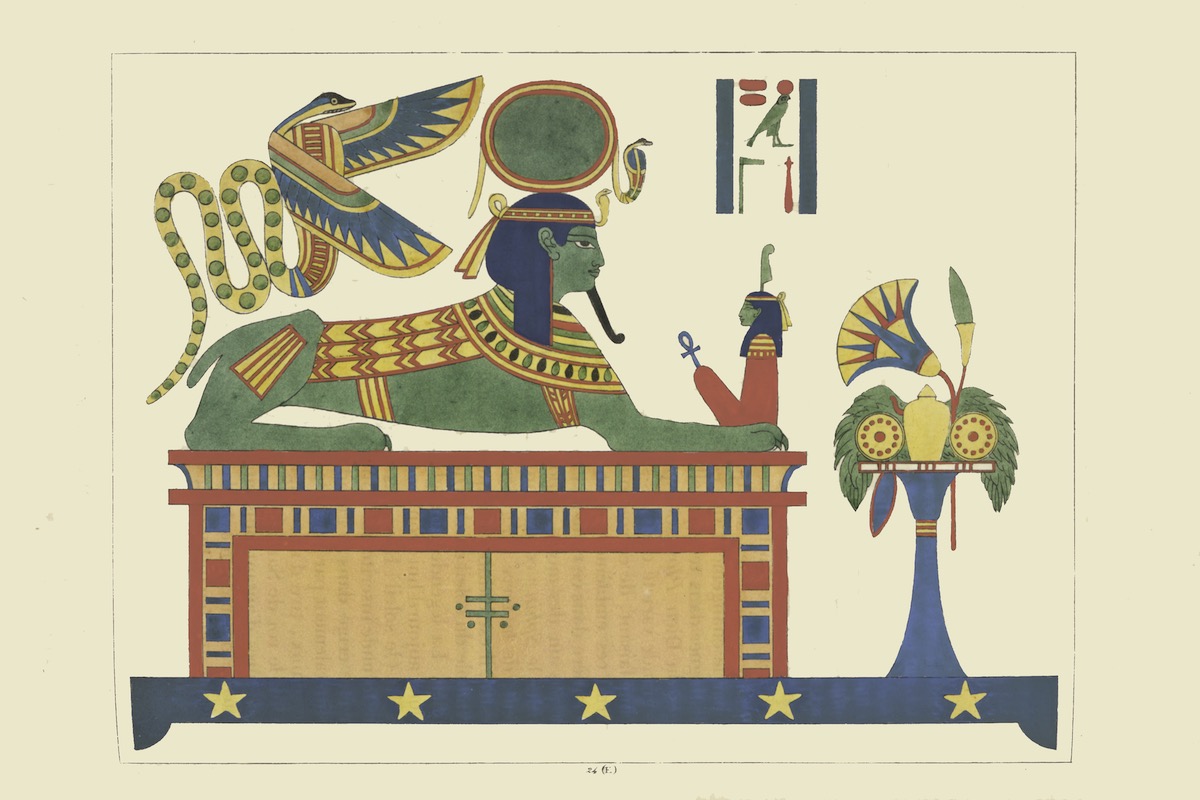
The Sphinx of the Sun god Ra
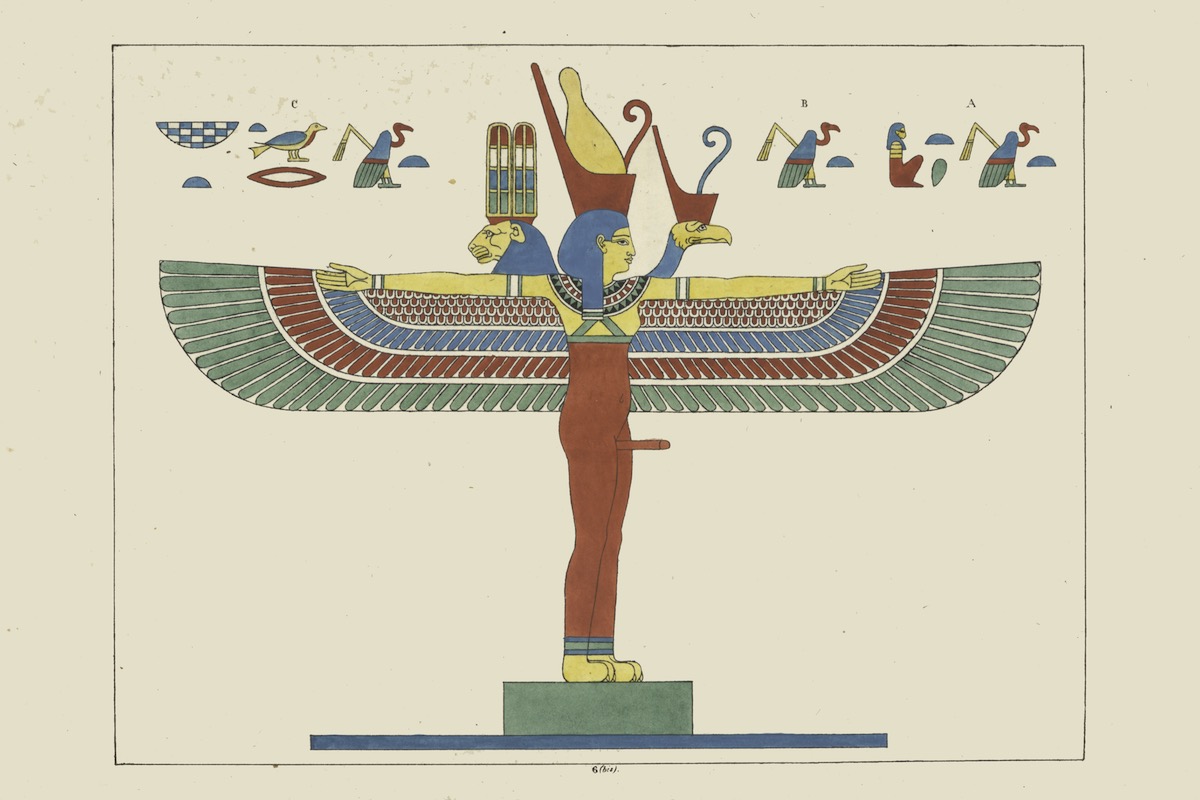
Neith, the generator. (Athens, Physis, Minerva.)
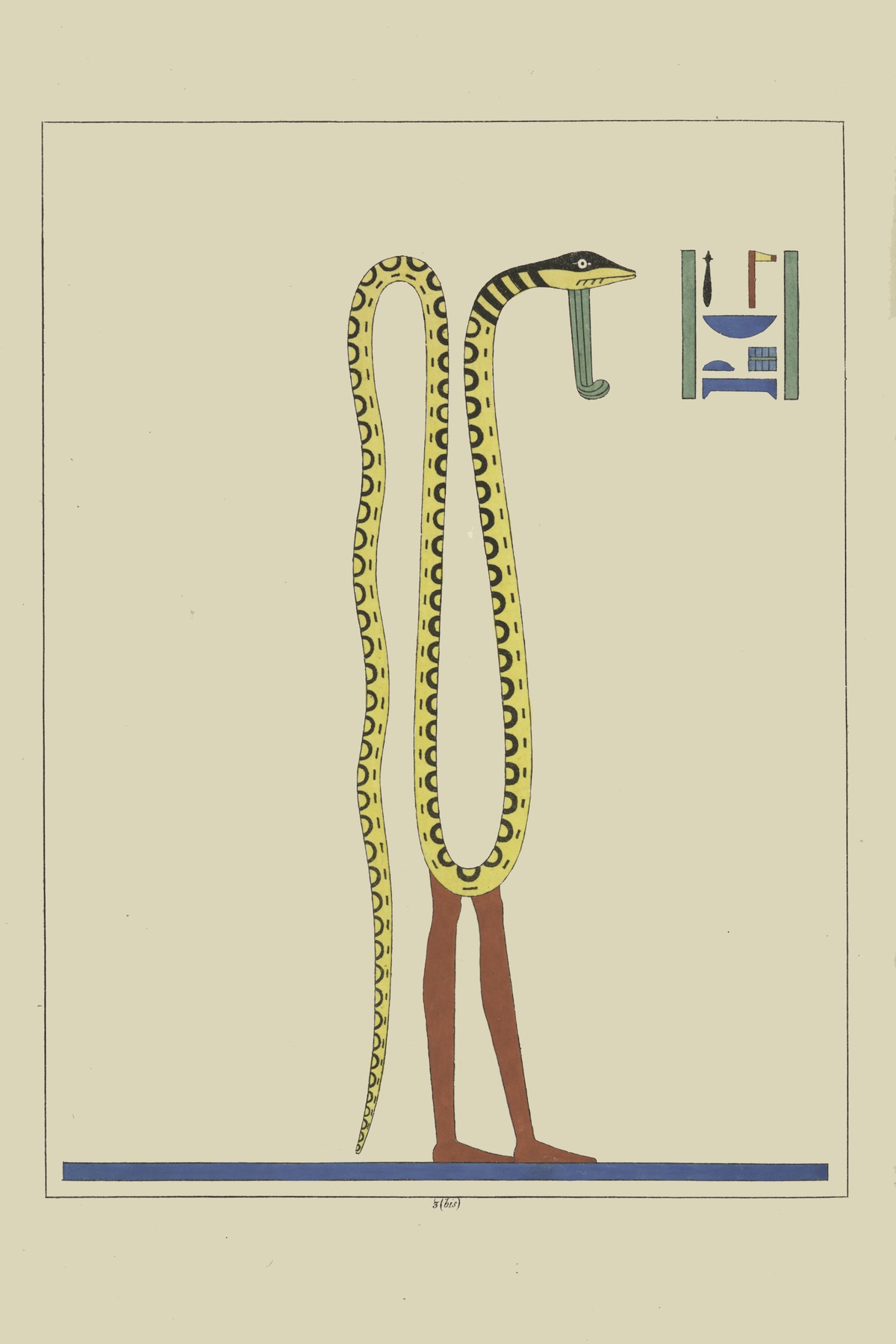
Nave, Noub, Noum. (Cneph, Cnouphis, Cnoubis, Chnoumis, Agathodaemon.)

Thoth, the Egyptian god of wisdom, writing, magic, and the moon, was identified with Hermes.
Via: Gallicia
Would you like to support Flashbak?
Please consider making a donation to our site. We don't want to rely on ads to bring you the best of visual culture. You can also support us by signing up to our Mailing List. And you can also follow us on Facebook, Instagram and Twitter. For great art and culture delivered to your door, visit our shop.