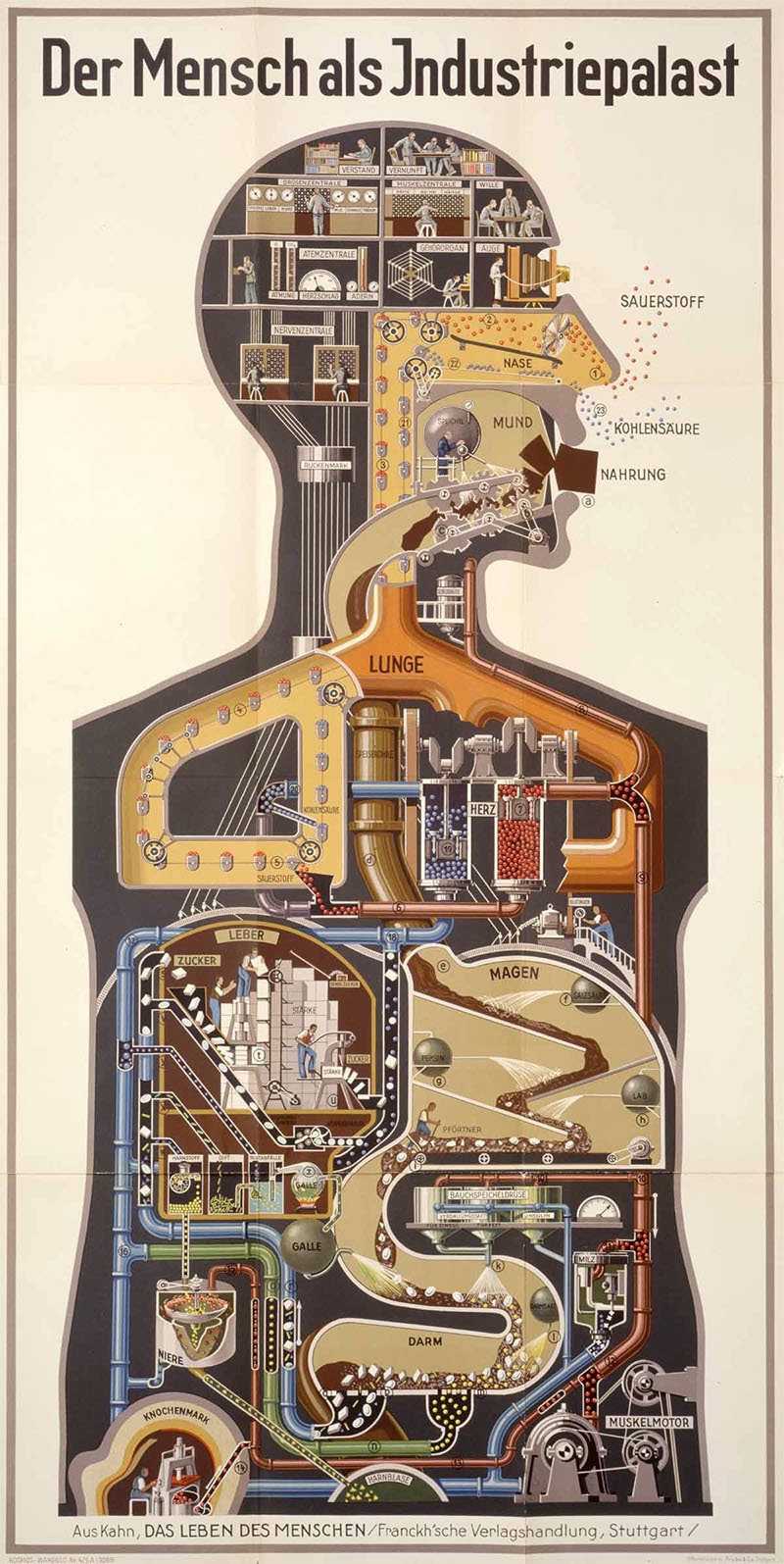
Man as Industrial Palace (1926), enclosed as poster in the book “Fritz Kahn – Man Machine : Maschine Mensch”
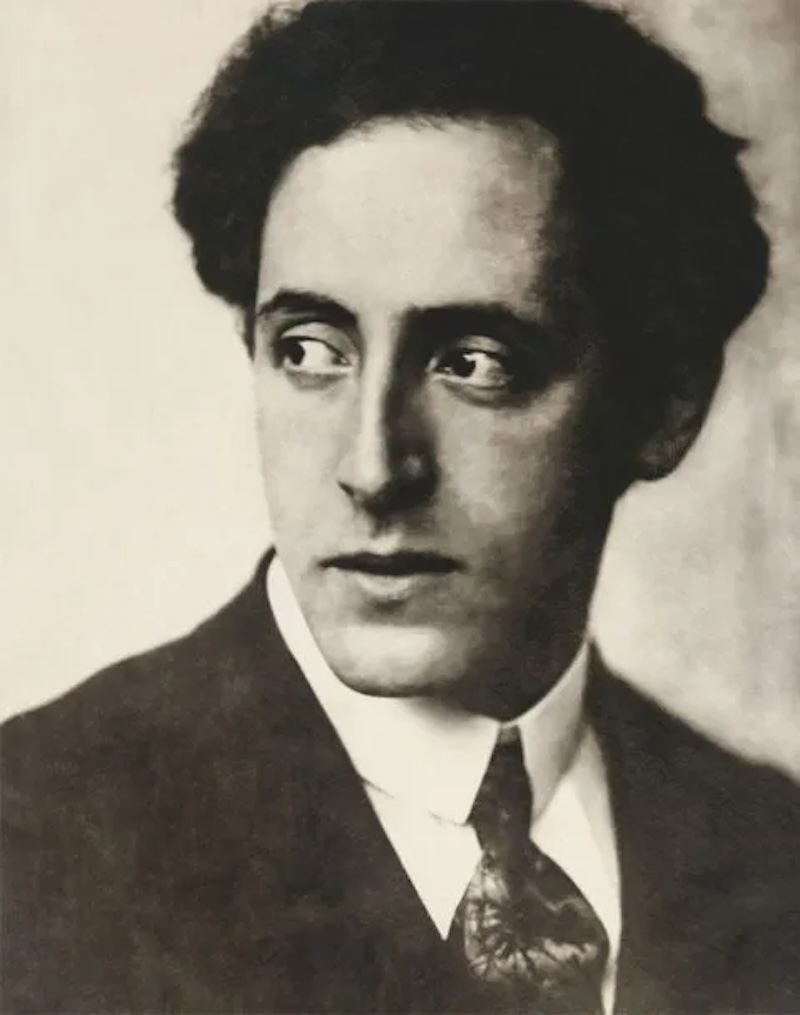
Fritz Kahn (28 Sep 1888 – 14 Jan 1968) authored many books on a variety of subjects: Die Milchstrasse (The Milky Way) in 1914, Die Zelle (The Cell) in 1919, and starting from 1921, the five volumes of Das Leben des Menschen (The Life of Man).
Das Leben was an encyclopedic work of 1600 pages and 1200 illustrations depicting biology as industrial and mechanical processes, adopting the most avant-garde visual techniques and contemporary styles as Neue Sachlichkeit, Dada, Surrealism, and also Constructivist photomontage.
The work present the metaphor of the human body as a factory whilst reflecting the incresingly mechanised times he lived in, such as turbines, telephones and projectors convey an air of futurism.
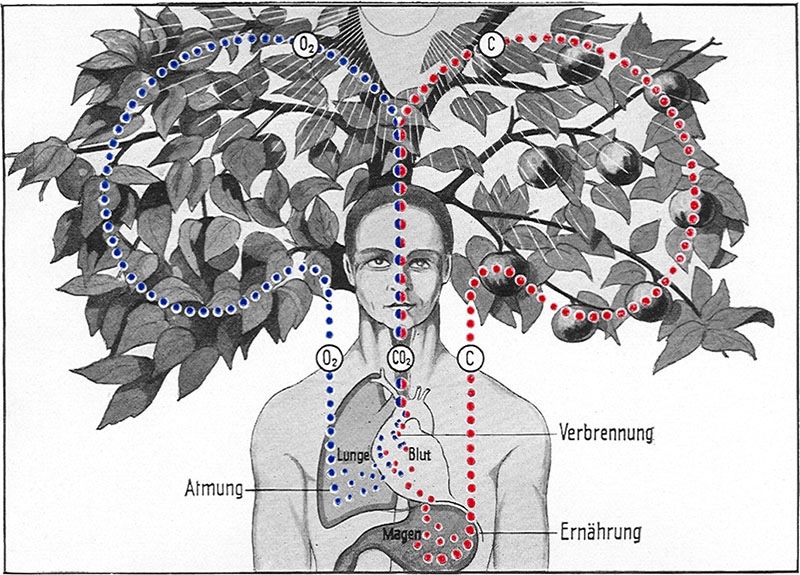
The cycle of carbon dioxide, ca.1929.
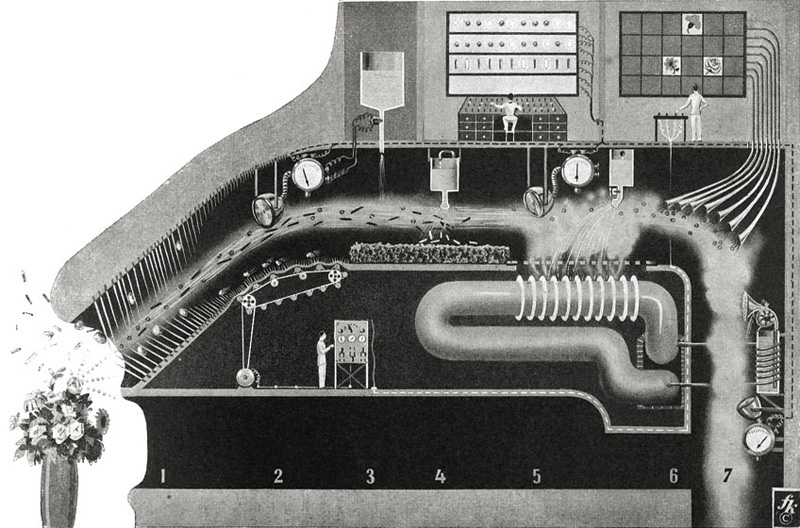
The seven functions of the nose (1939)
By the 1930s Kahn was caught squarely in the growing anti-semitism of Nazi Germany. In 1933 his medical accreditation was revoked and his books were banned
He escaped from Germany with the help of the underground American people smuggler Varian Fry. and after a series of travels across Europe and the Middle East, he finally settled in the US, where he was able to publish two more books: Unser Geschlechtsleben5 (Our Sex Life) in 1935 and Der Mensch gesund und krank, Menschenkunde (Man in Structure and Function), a distillation from Das Leben, in 1940.
His return to Europe, in the 1950’s was less fortunate, as Kahn further work was progressively failing in popularity. Almost forgotten, he was finally rediscovered only forty years after his death, in 1968.
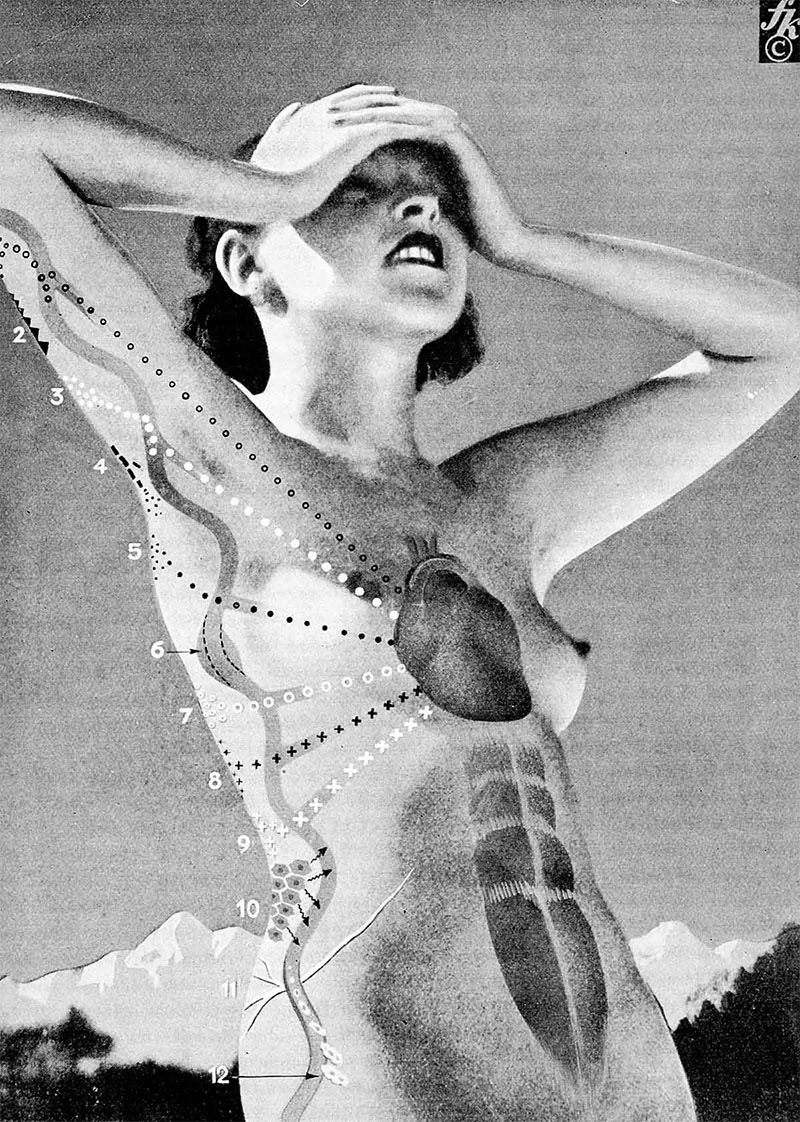

The effect of sunlight, 1940
Fritz Kahn was born in Halle, Germany, to the physician and writer Arthur Kahn and his wife Hedwig. He was raised as an orthodox Jew and received a liberal humanistic education, studying in Halle, later the Sophien-Gymnasium in Berlin, and finally the Friedrich Wilhelm Universität where he received a medical degree in 1912.
After receiving his doctorate he opened a gynecology practice in Berlin and began to write articles on popular science, notably for Gesellschaft der Naturfreunde’s Kosmos magazine.
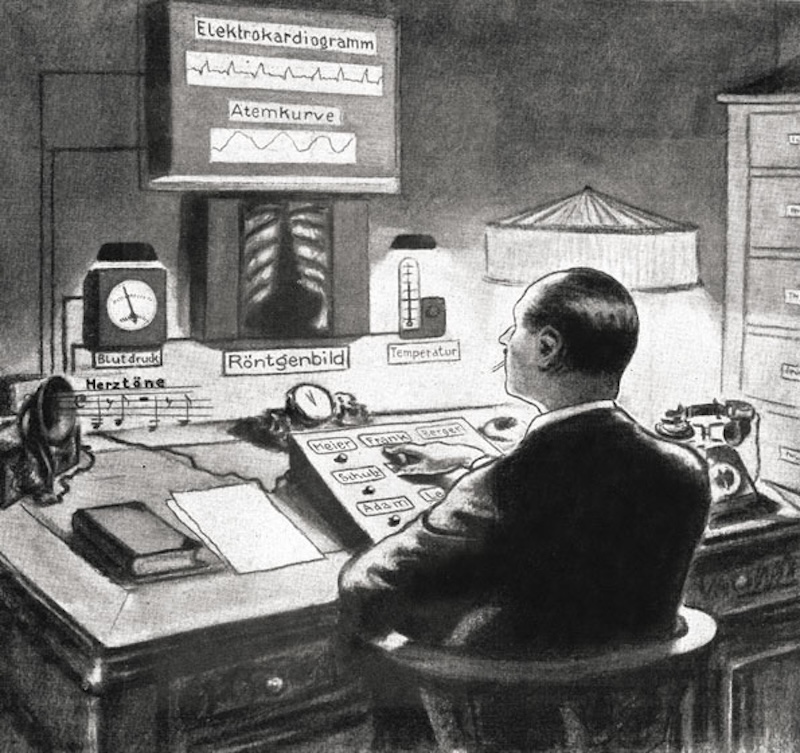
The doctor of the future (1925)
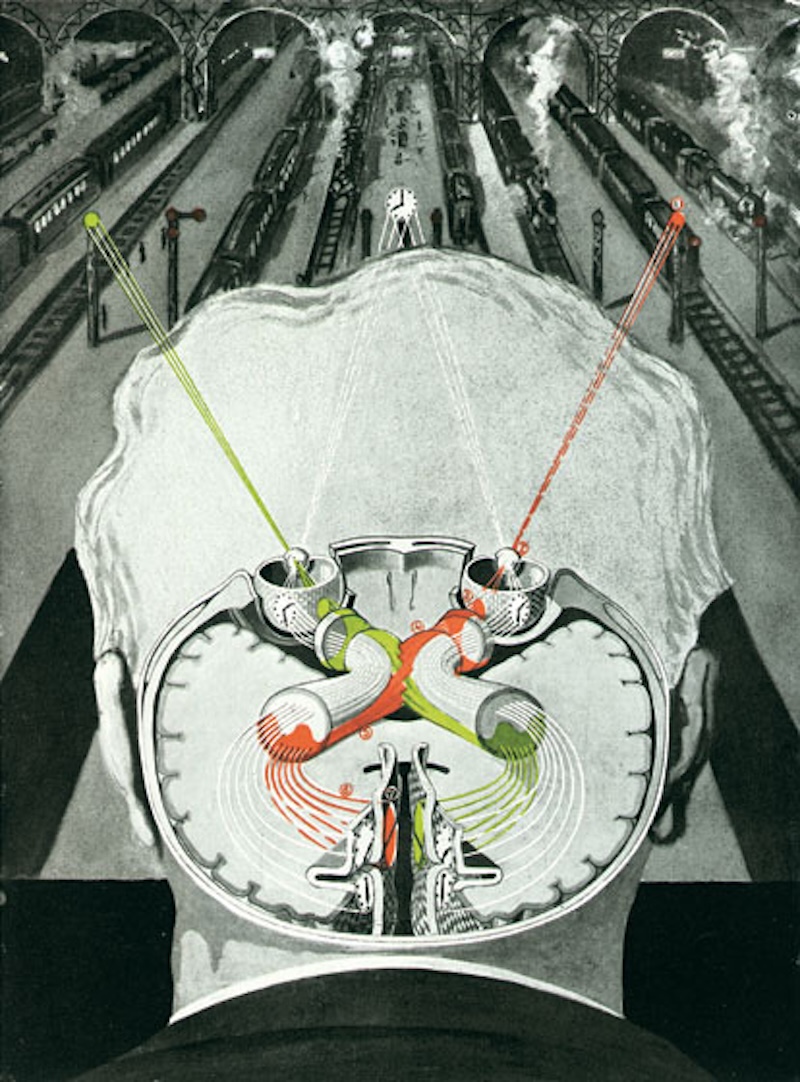

The perception of light (1929)
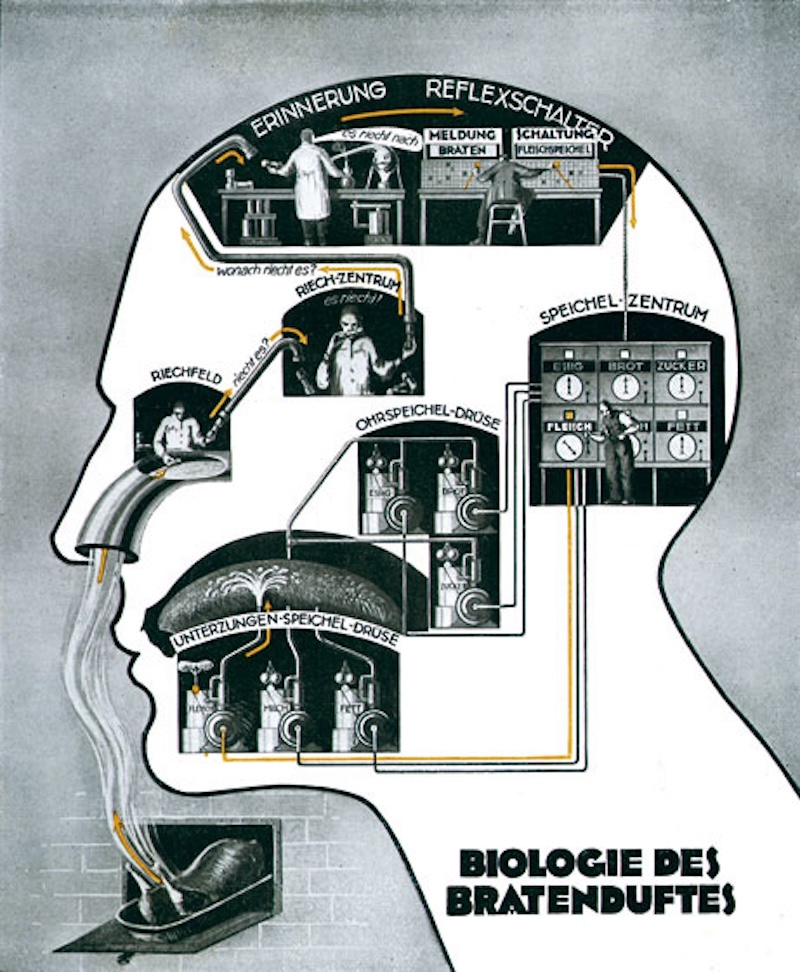
The biology of a roast’s smell (1926)
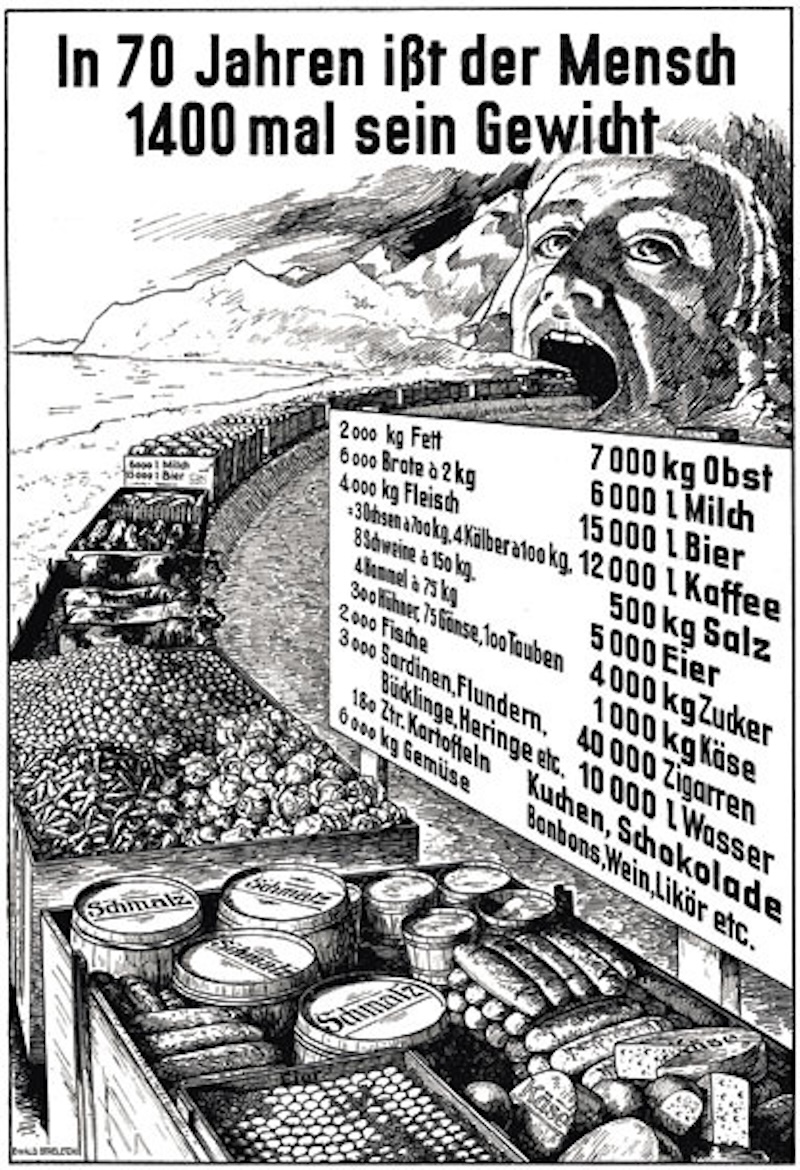
Man eats 1400 times his weight in 70 years. (1926)
By the 1930s Kahn was caught squarely in the growing anti-semitism of Nazi Germany. In 1933 his medical accreditation was revoked and his books were banned K
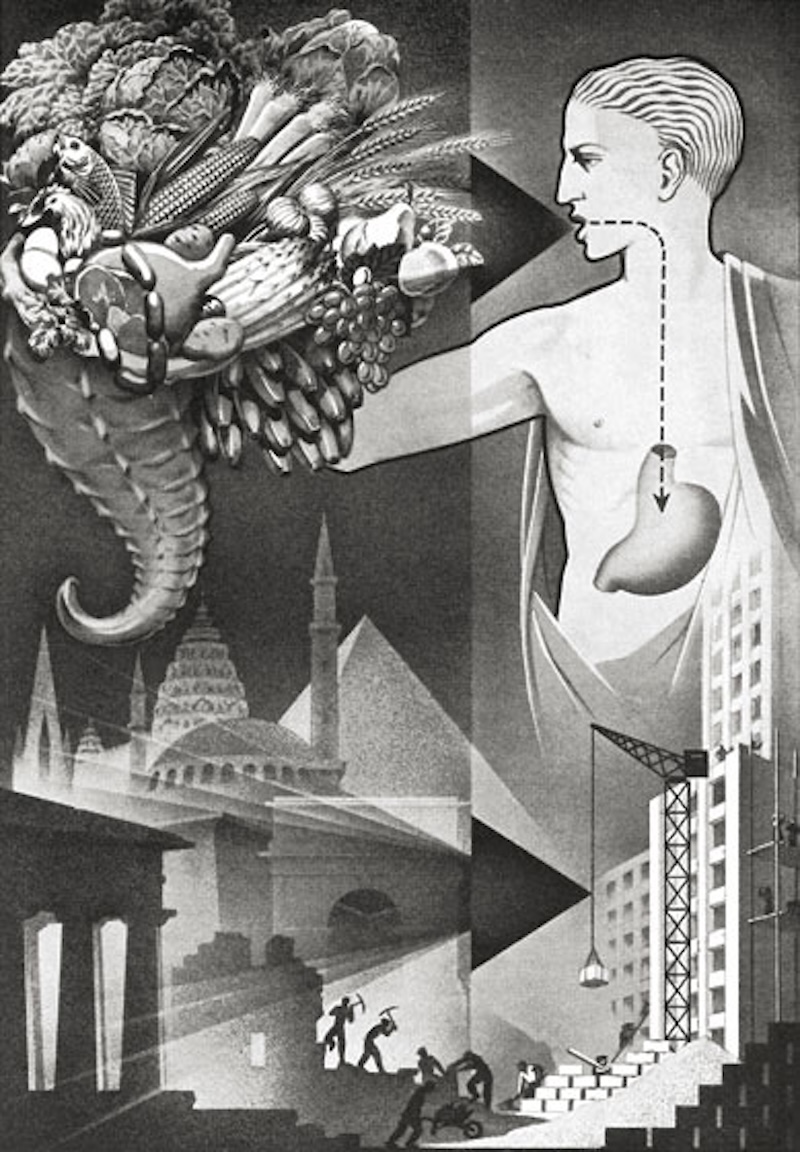
The architecture of digestion (1939)
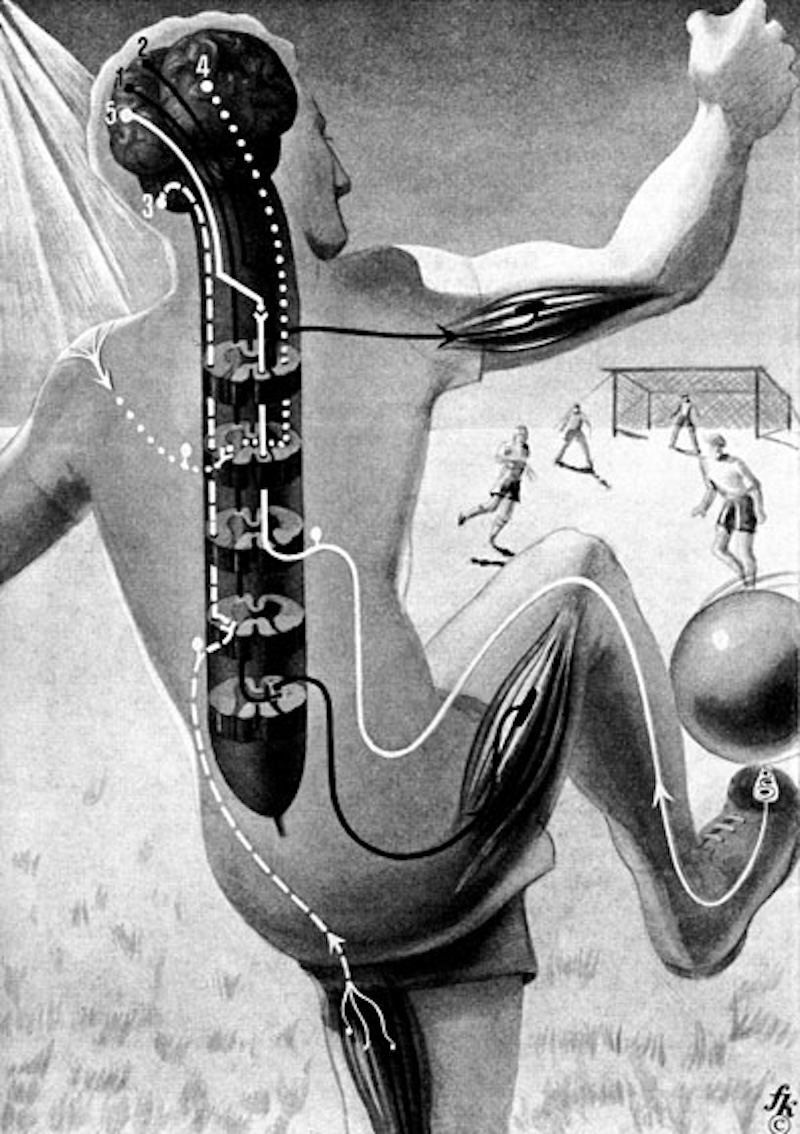
The five most important routes of the spinal cord, in their course and functions demonstrated on a soccer player. (1939)
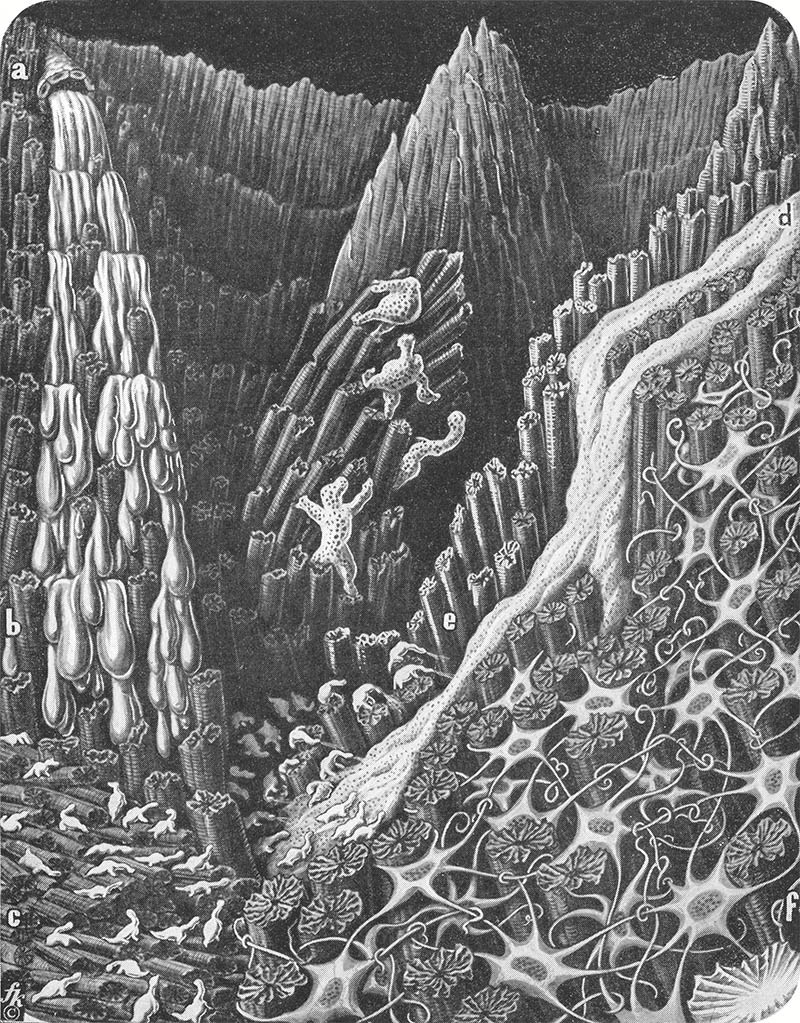
The depths of a wound, 1943
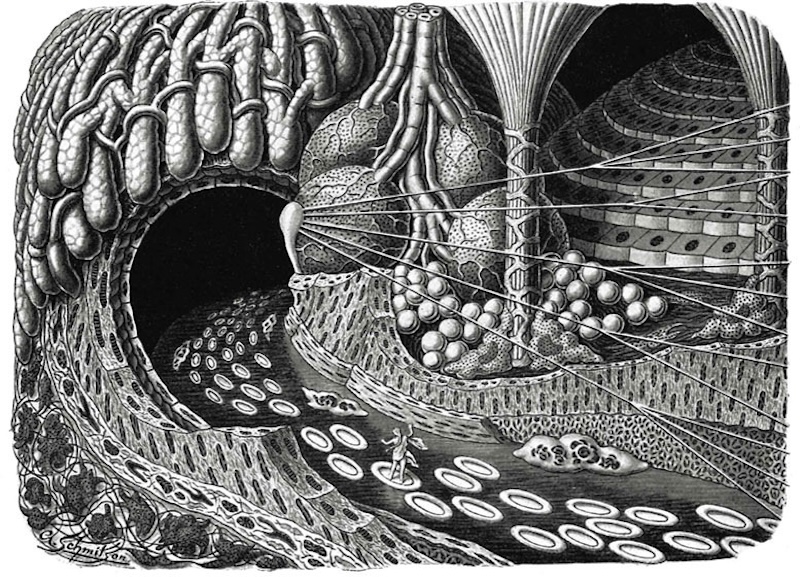
Fairytale journey along the bloodstream (1924)
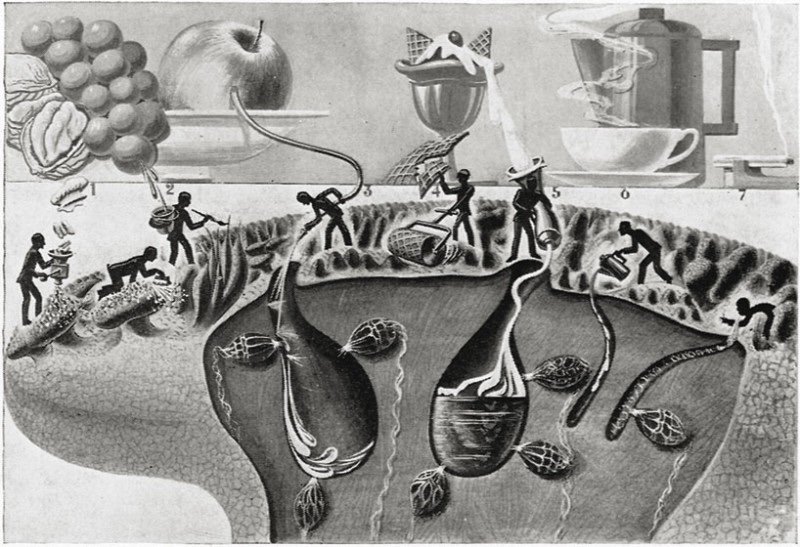
How dessert cleans the tongue (1943)
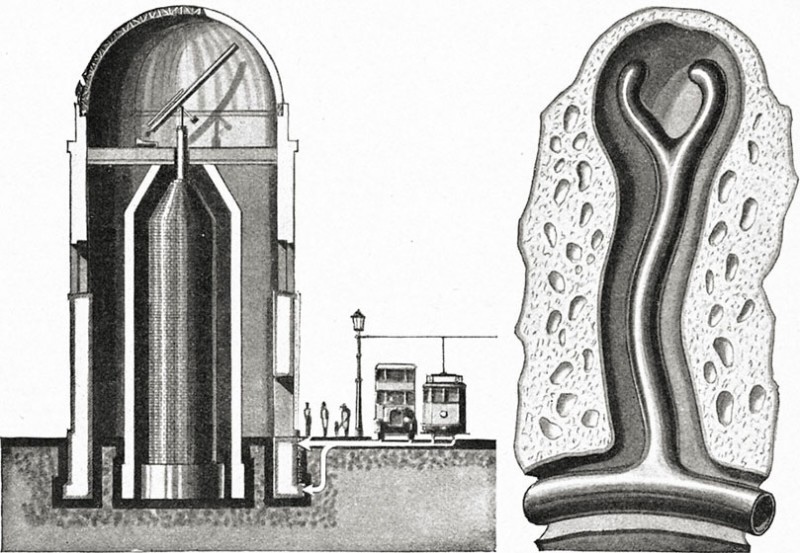
Vibration-free montage in technology and nature- astronomical telescope and blood vessel in the ear (1929)
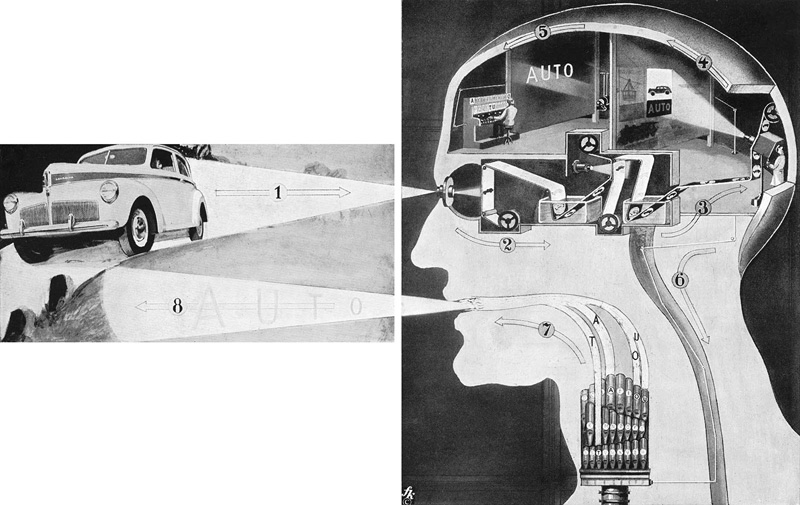
This is what occurs in our head when we see and say “Auto” 1943
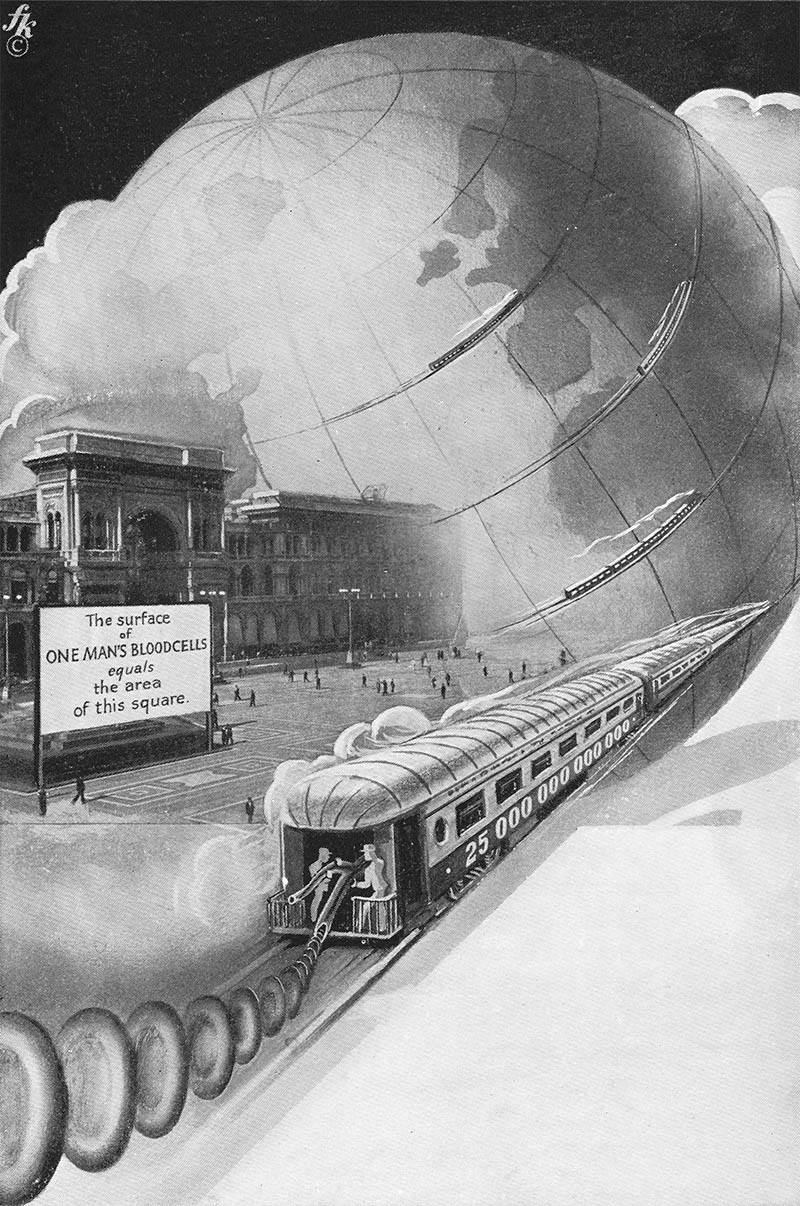
The blood corpuscles, joined together in a chain, would span the globe 4 times, 1943
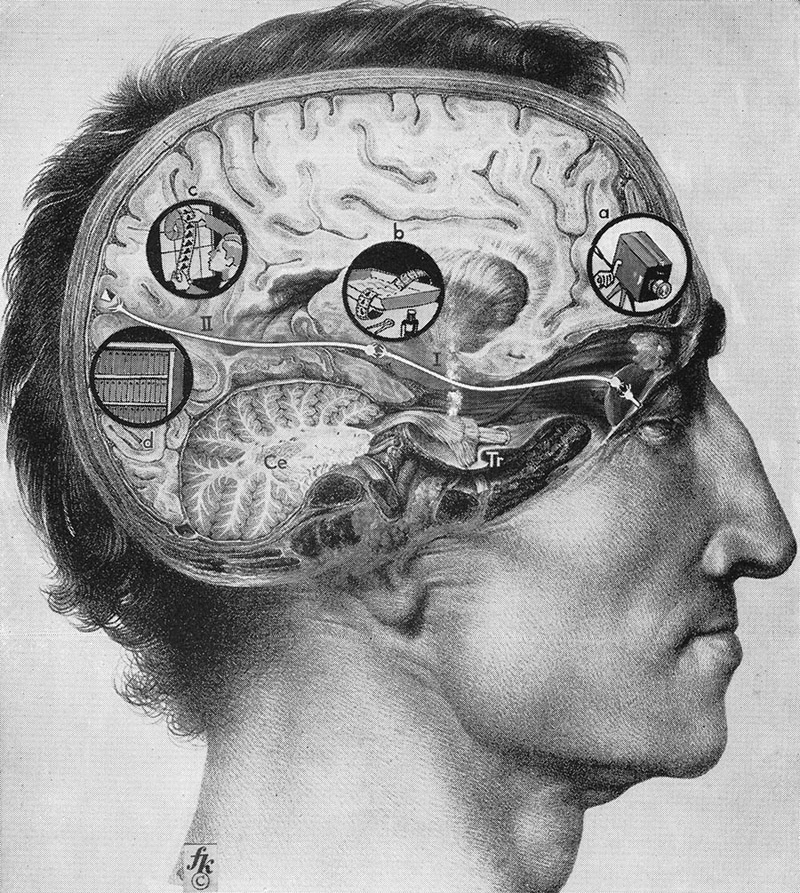
We see with the occipital area of the brain! 1943
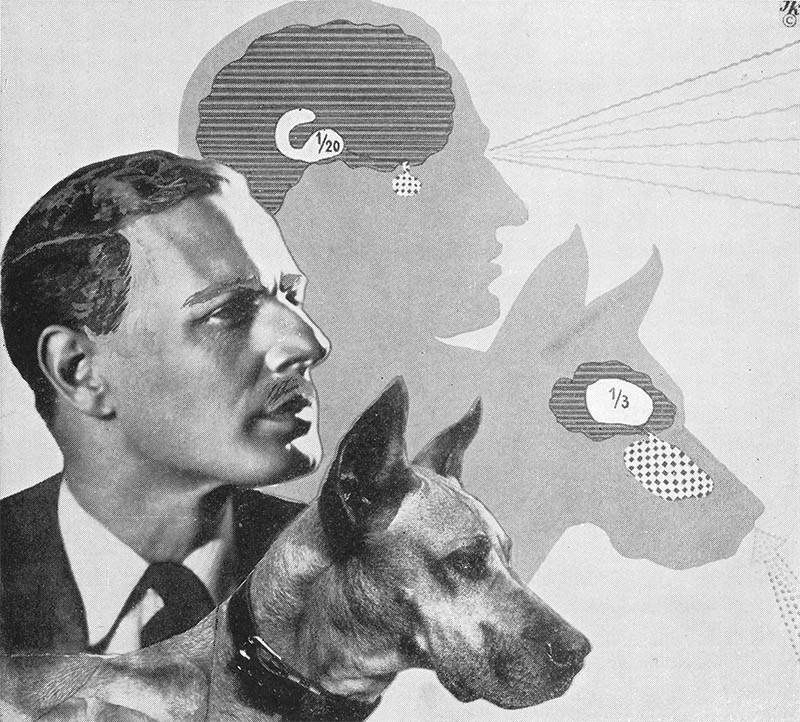
Man is an “eye” animal- a dog is a “nose” animal, 1943
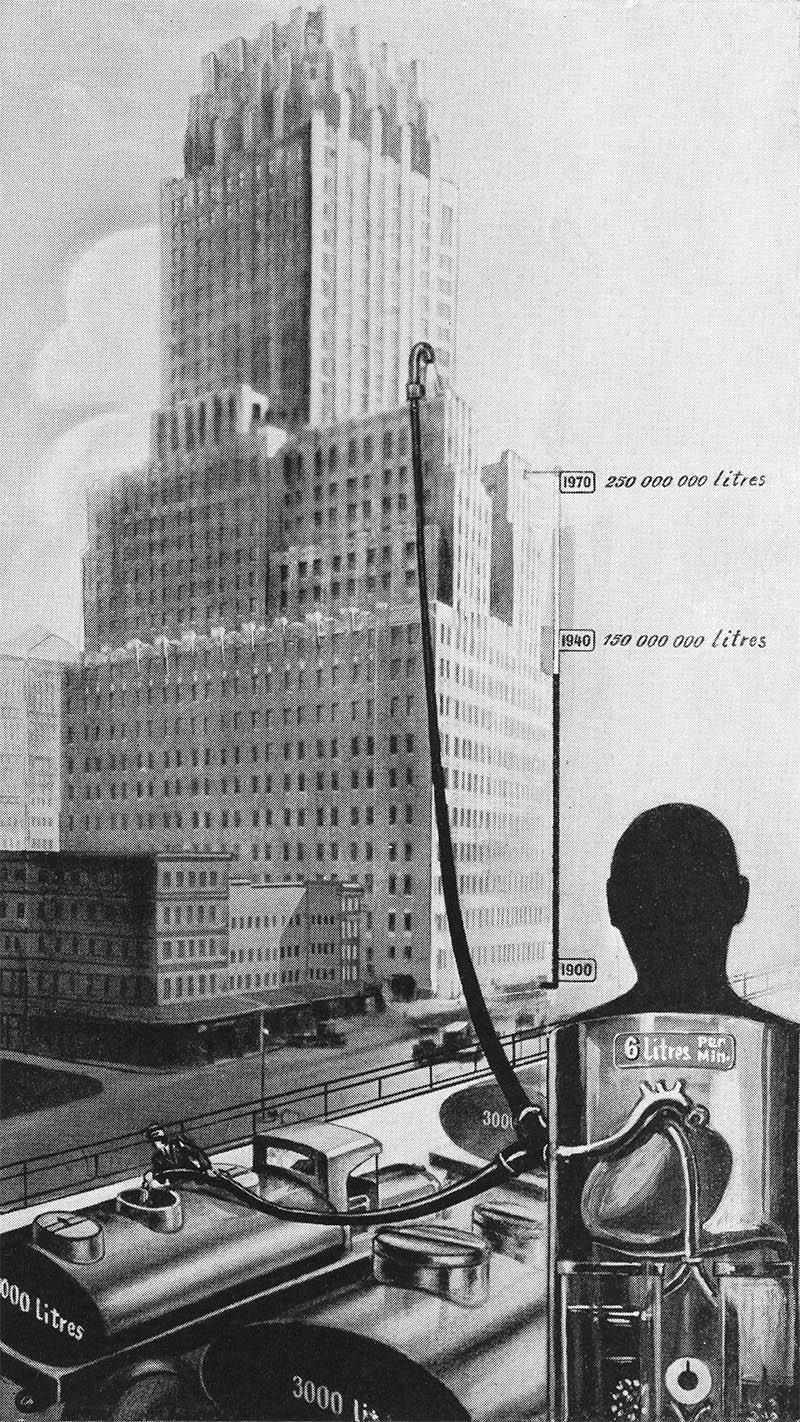
The work of the heart, 1943
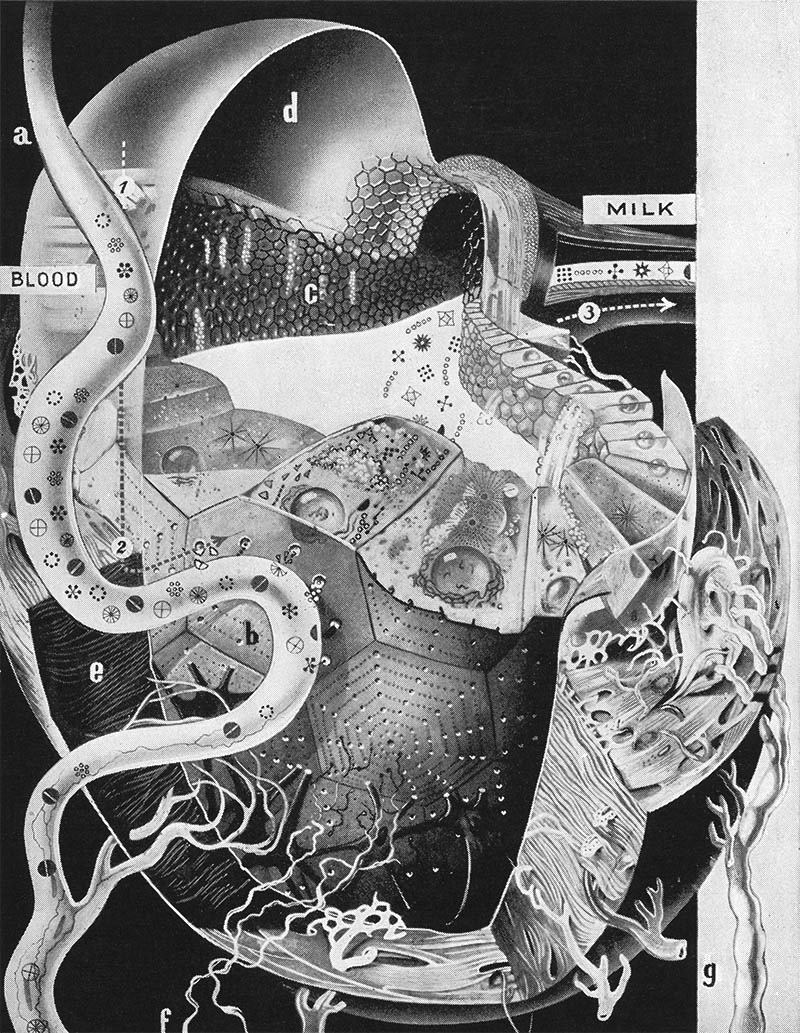
The mammary gland, 1943
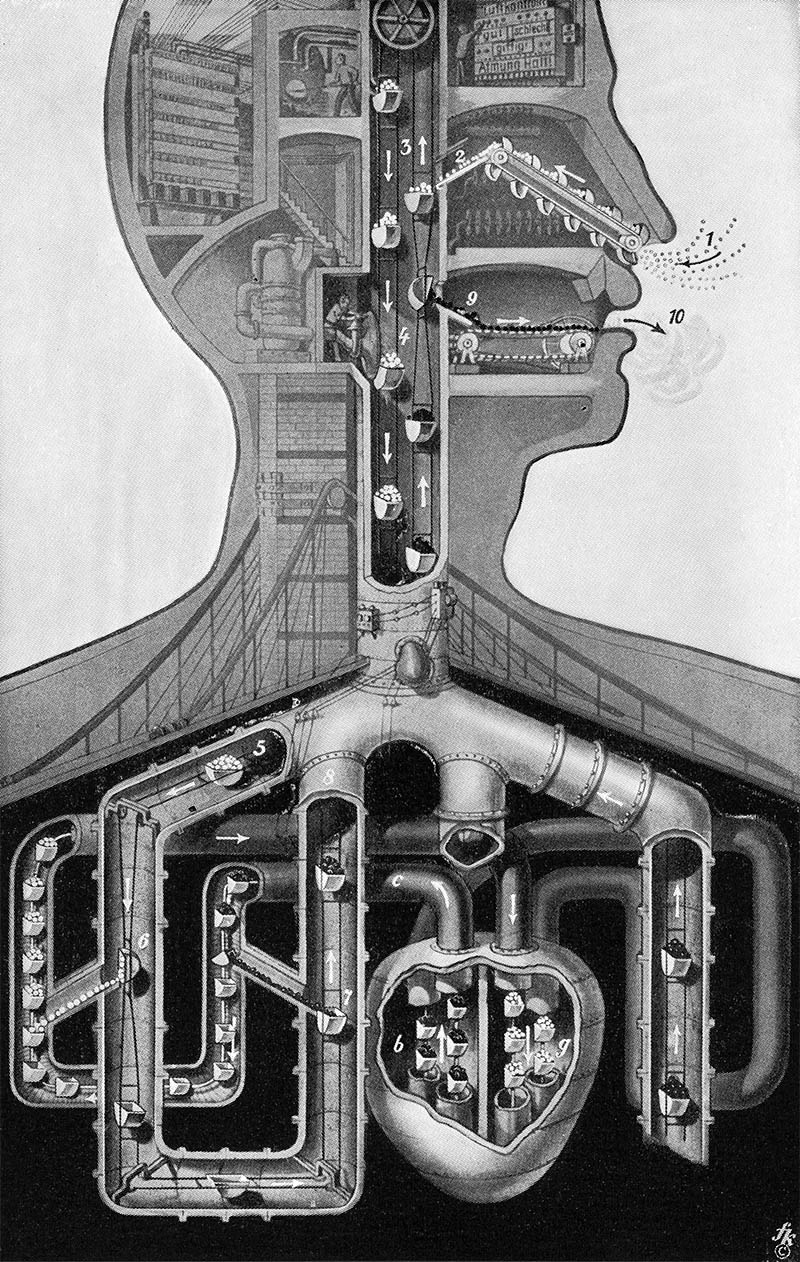
Respiration, 1943
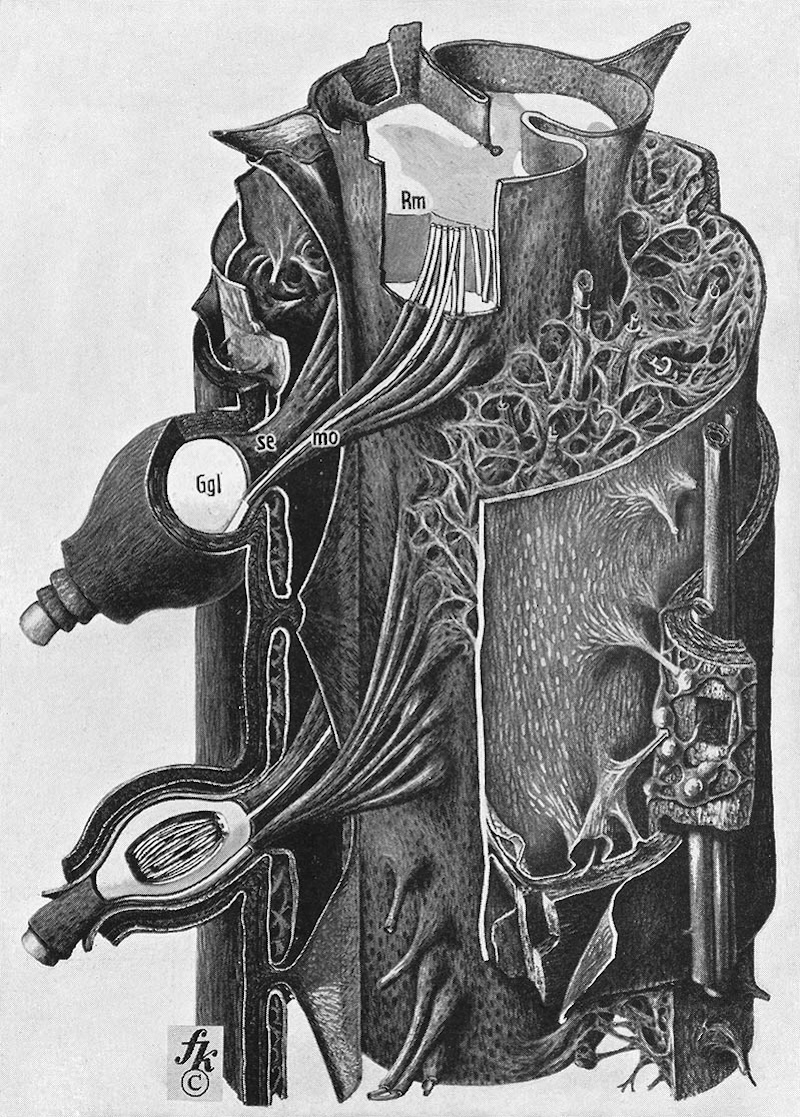
The spinal cord, 1943
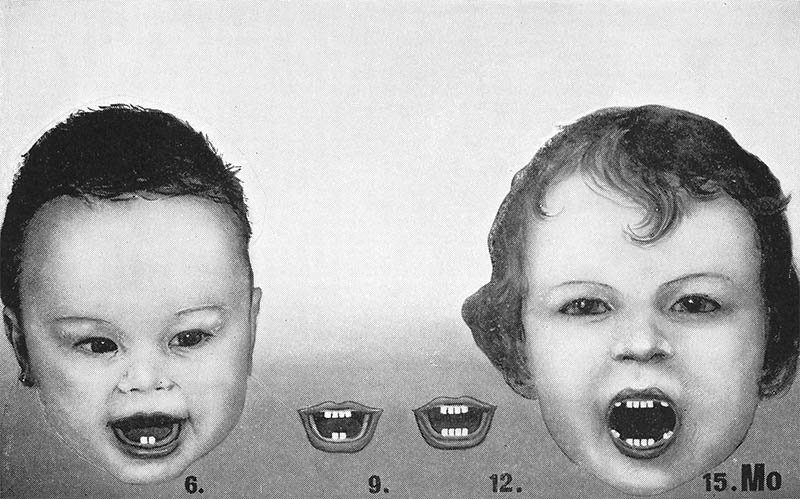
The eruption dates of the milk teeth, 1943
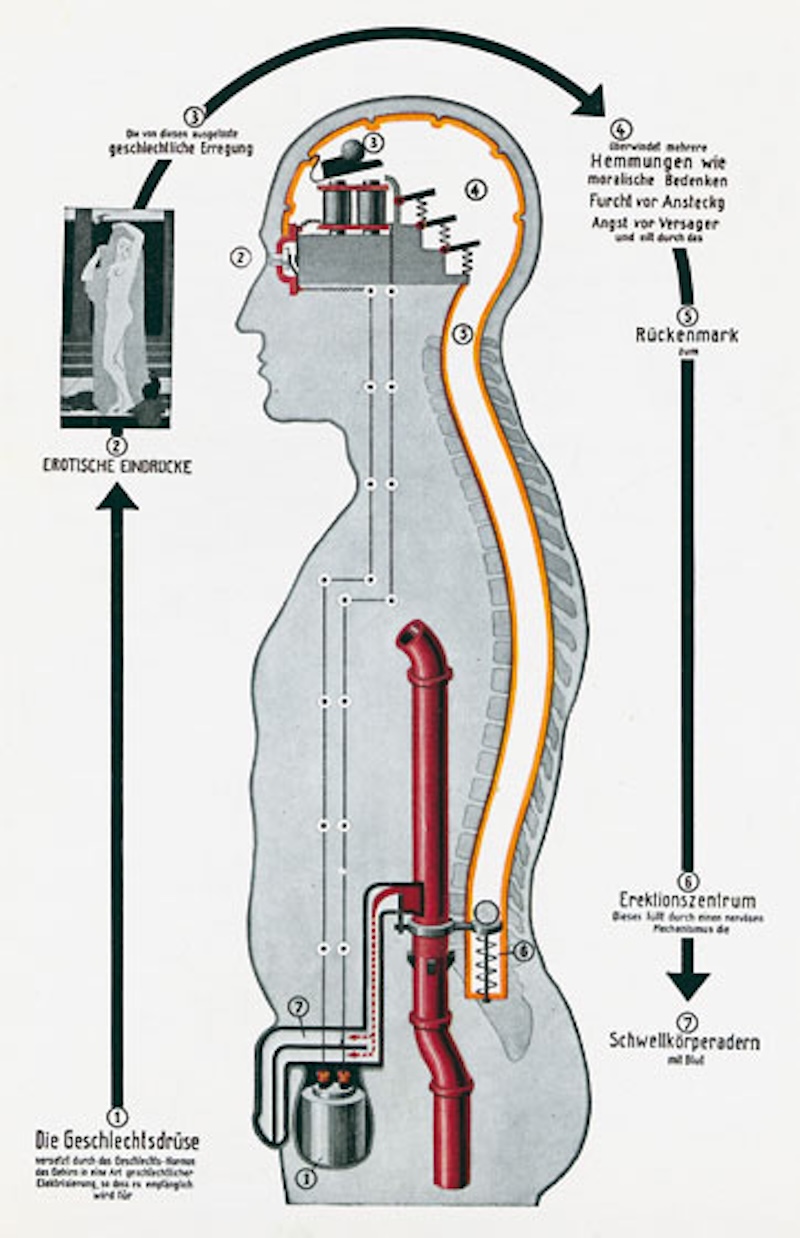
Erection – technical-schematic presentation of the male erection system (1937)
Via: Codex99, ‘Fritz Kahn’s Body Machines’ at the British Library, ‘Dreaming the Industrial Body – Fritz Kahn’s Modernist Physiology’ at the National Library of Medicine; part of the ‘Dream Anatomy’ web exhibition, the Fritz Khan site.
Would you like to support Flashbak?
Please consider making a donation to our site. We don't want to rely on ads to bring you the best of visual culture. You can also support us by signing up to our Mailing List. And you can also follow us on Facebook, Instagram and Twitter. For great art and culture delivered to your door, visit our shop.