I’ll sing you one, O
Green grow the rushes, O
What is your one, O?
One is one and all alone
And evermore shall be so.— Green Grow the Rushes, O, an old English folk song
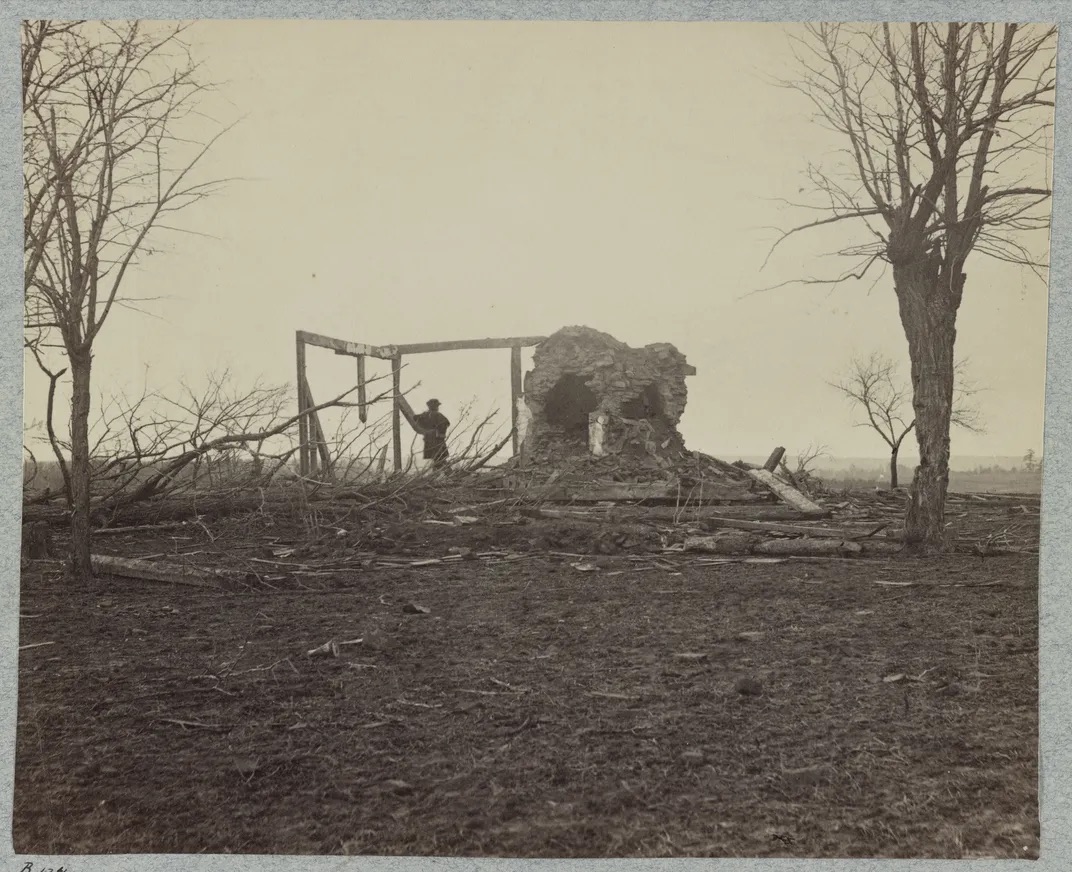
The Ruins of Henry House in 1861, residence of 85-year-old Judith Carter Henry, the US Civil War’s first civilian casualty. Carter died in an artillary barrage by Union soldiers during the First Battle of Bull Run in Manasses, Virginia. Confederate troops later stripped the house for timber.
Documentary filmmakers portray the devastation of the U.S. Civil War in such a folksy way that we can’t help but think of things from that time as all sepia tones and fiddle tunes. The quaintness of a pan-and-scan approach belies the novelty of this war in its time. There was nothing old-timey about it. The technology of mass killing advanced the technologies of photography, field dressing, and more killing. Among the more lasting innovations of the Civil War: wide-scale civilian death as an expected, even intended, outcome of every armed conflict
News of what to us is an increasingly horrific fact came as an absolute shock to ordinary Americans in the 1860s, who thought the war would to end within weeks, maybe, and claim the lives of only trained combatants. They hardly thought that famine and disease would wipe out their livestock and loved ones, or cannon fire would blow through their front doors. Elderly widow Judith Carter Henry had no precedent for these things on July 21, 1861, when her home in Virginia became the center of a battlefield.
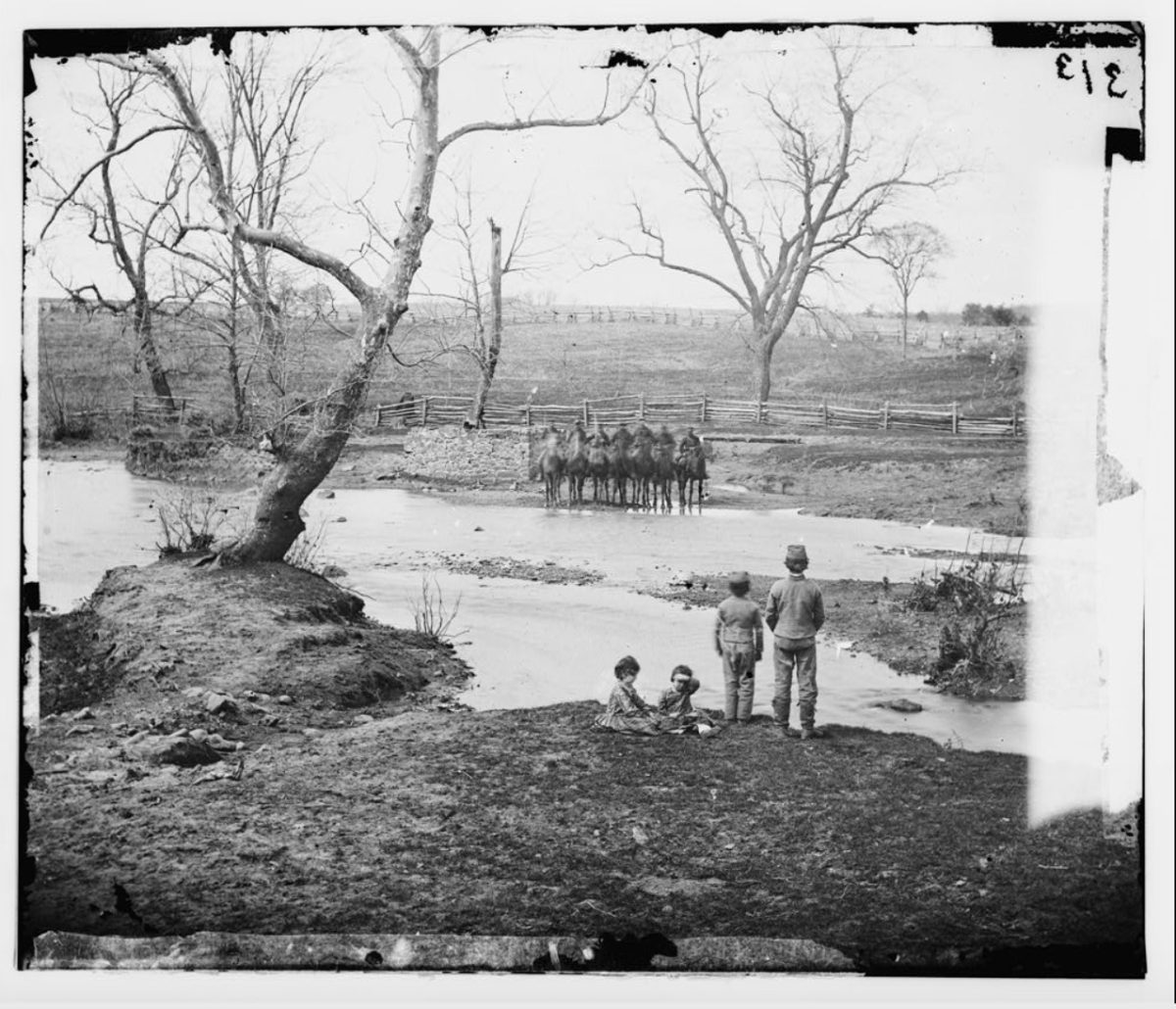
Children watch Union Troops arriving at Bull Run
‘Two months before the First Battle of Bull Run’, Kellie B. Gormly writes at Smithsonian, ‘Henry’s son Hugh Fauntleroy Henry made what would prove to be an overly optimistic prediction’:
‘“Should troops be passing about the neighborhood, you and mother need not fear them, as your entire helplessness, I should think, would make you safe,” Hugh wrote in a May 30, 1861, letter to his sister Ellen’.
Not only did the elderly reasonably expect to be kept safe: Whole families came to the battlefield, having trekked for days ‘in stylish carriages, others in city hacks, and still others in buggies, on horseback and even on foot’, writes Casey Ruken. ‘Some brought picnic baskets, opera glasses and bottles of champagne’. Members of Congress showed up to watch the proceedings, certain the Union army would sweep the field, which they seemed to do, at first.
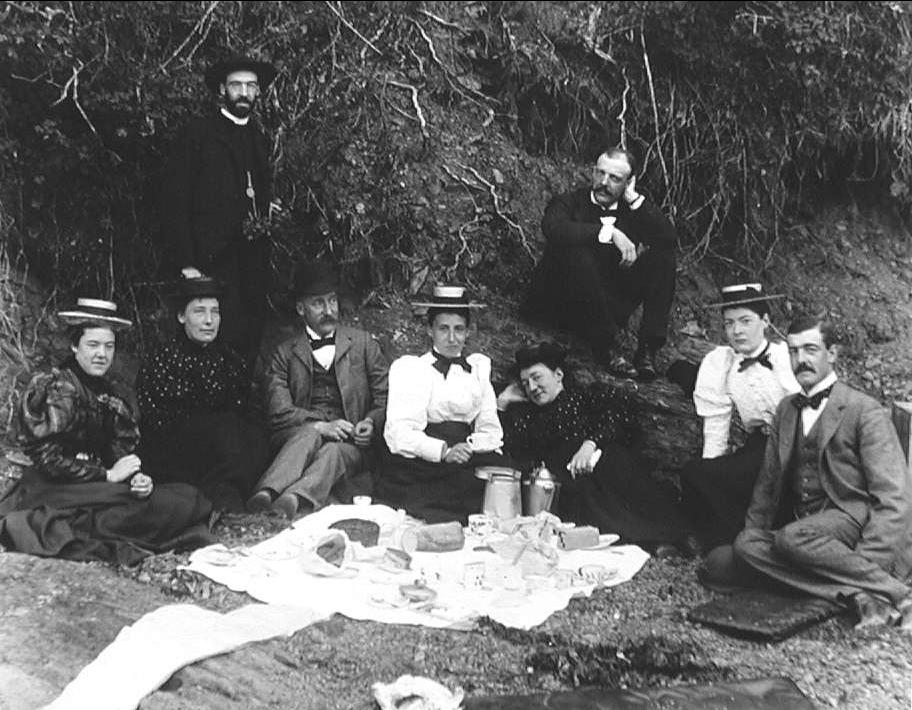
Picnickers at the First Battle of Bull Run, 1861
That afternoon, some Confederate sharpshooters took up posts in Judith Henry’s house. The widow, failing to escape, took to her bed, while her daughter Ellen hid in the fireplace and ‘Lucy Griffith, an enslaved teenager whom Henry had leased from a neighbor, sought refuge under the bed’. While a member of a wealthy slave-owning family herself, the widow Henry was not collaborating with the Confederate army but was drawn in as an unwilling participant.
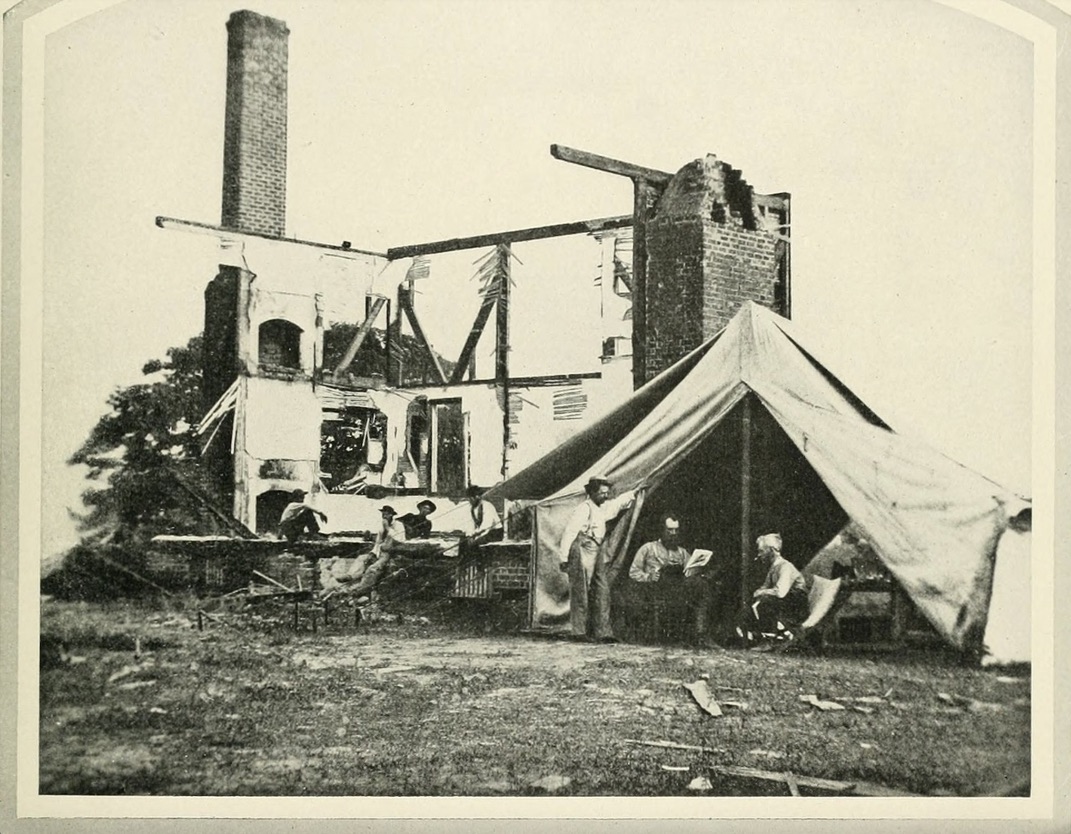

Henry House immediately after the battle
‘Union Captain James B. Ricketts ordered his men to converge on the house, unaware that civilians remained inside’, Gormly writes. ‘Hoping to stop the enemy sharpshooters, the Union soldiers fired their artillery from a distance of between 60 and 300 yards. Shells ripped through the house, partially blowing off Henry’s foot and inflicting several other injuries. Ellen suffered hearing loss, and Lucy hurt her heel. Henry died later that day and was buried in front of her home.’
‘I turned my guns on that house and literally riddled it. It has been said that there was a woman killed there by our guns’. —Union Captain James B. Ricketts
The Union army seemed assured of victory until the afternoon. During this battle, Union troops gave Confederate general Thomas ‘Stonewall’ Jackson his nickname, supposedly to signify his look of stupefaction under fire. But as the tide turned and Southern troops rallied, the name took on its meaning of stalwart resistance. The image of a disciplined wall advancing contrasted starkly with the chaotic scenes of the Union army’s retreat and became irresistible fodder for later commentators.
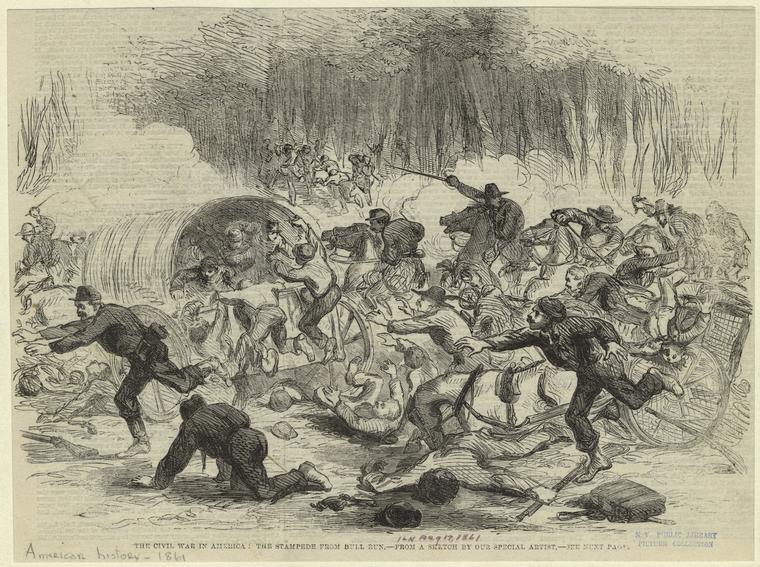
‘The Stampede from Bull Run’ —1861 cartoon
As the South rallied, military retreat became a stampede among the sightseers. Union soldiers and civilians, including many prominent Northern citizens and members of Congress, scrambled to evade the advancing Confederates. ‘The Southern press called the humiliating retreat the ‘Great Skedaddle’, Ruken notes: ‘Remarkably, there were no reported deaths. Congressman Ely from New York, however, was captured and held prisoner in Richmond for five months, and ‘Senator James Grimes of Iowa barely avoided capture’.
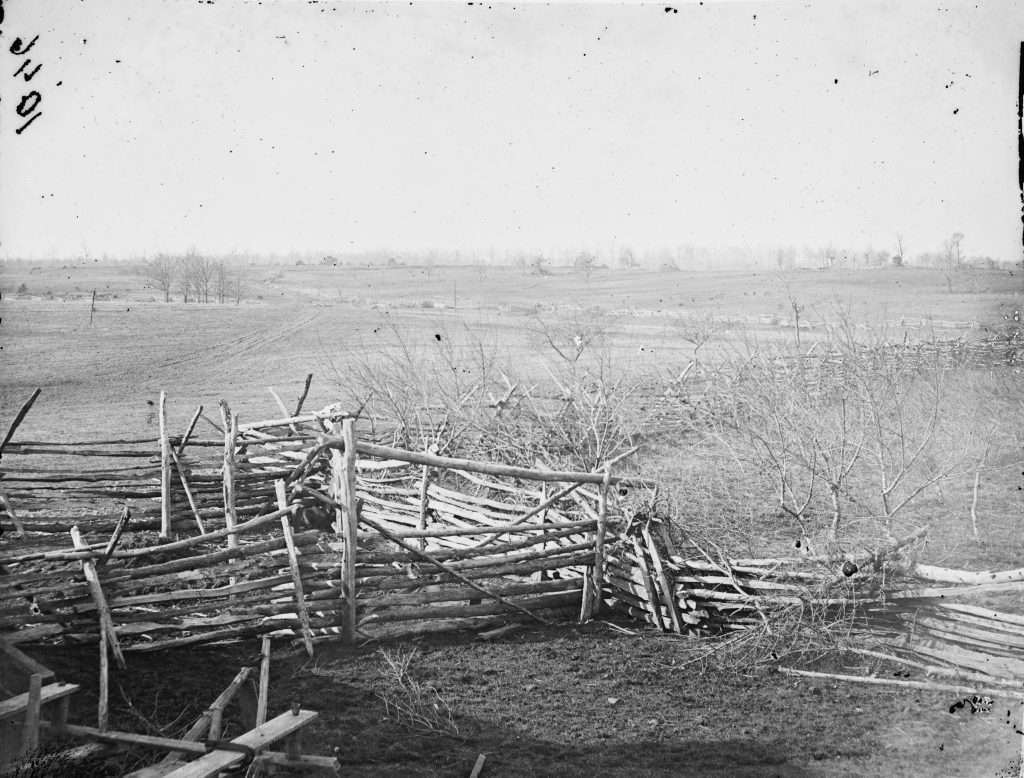

Bull Run Battlefield, 1861
As dramatic as these events later proved to the press and reading public, ‘Henry’s death came as a shock to both sides’, says education coordinator at Manassas National Battlefield Park Liz Hokanson. ‘It’s understood that this is not going to be the last time this happens’. It’s understood, after the First Battle of Bull Run, that instead of tramping to the war for entertainment, ordinary people would live in danger of the war coming to them, wealthy widows or no.
‘[Judith Carter Henry] was the first in a lengthy list of civilian casualties. By the end of the Civil War, an estimated 50,000 civilians had died of causes ranging from gunfire to starvation to disease. Among them were Mary Virginia “Jennie” Wade, a Gettysburg resident shot while she was kneading dough in her sister’s kitchen on the morning of July 3, 1863’ —Kellie Gormly
While historians dispute some details of Henry’s death, her status as the war’s first casualty stands, as does the Henry home, rebuilt to house the visitor center of the Manassas National Battlefield Park. What has passed into quaintness of history, however, is our shock and surprise at the mass deaths of noncombatants, who now account for most of the casualties in most armed conflicts, and who are more often than not, the sole intended targets of the destruction.
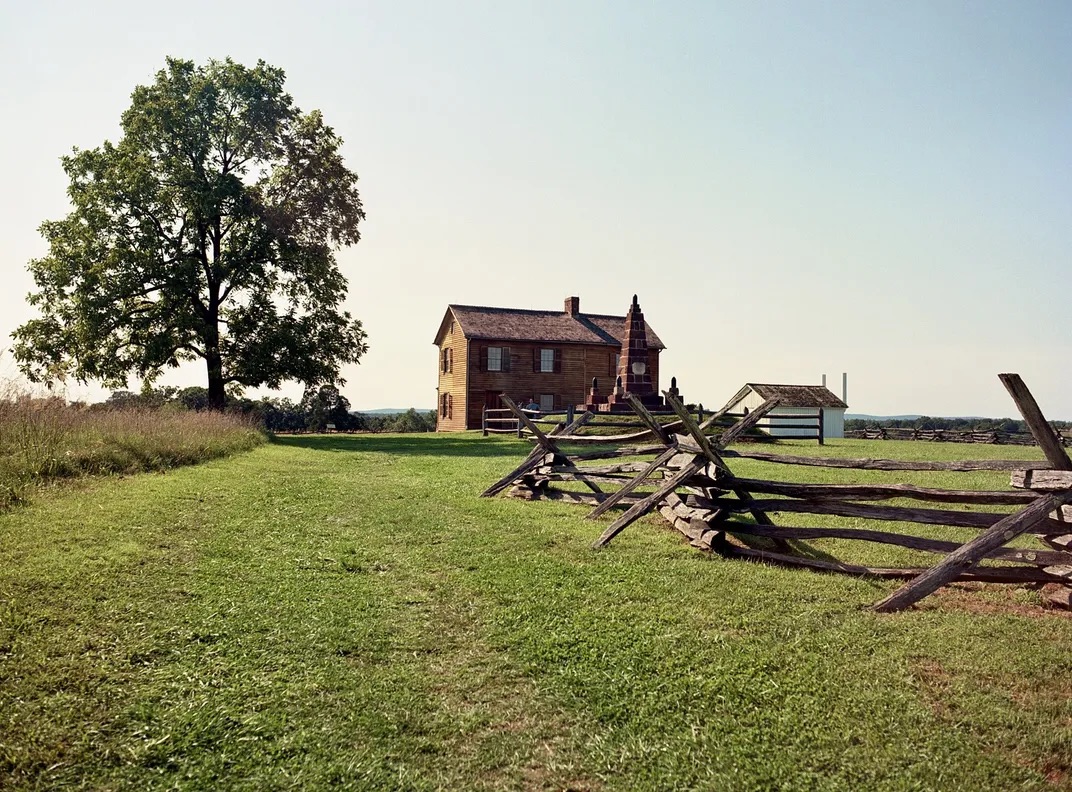
Henry House, rebuilt, at the Manassas National Battlefield Park in Virginia
Would you like to support Flashbak?
Please consider making a donation to our site. We don't want to rely on ads to bring you the best of visual culture. You can also support us by signing up to our Mailing List. And you can also follow us on Facebook, Instagram and Twitter. For great art and culture delivered to your door, visit our shop.