“Perspective is to painting what the bridle is to the horse, the rudder to a ship”
– Leonardo da Vinci
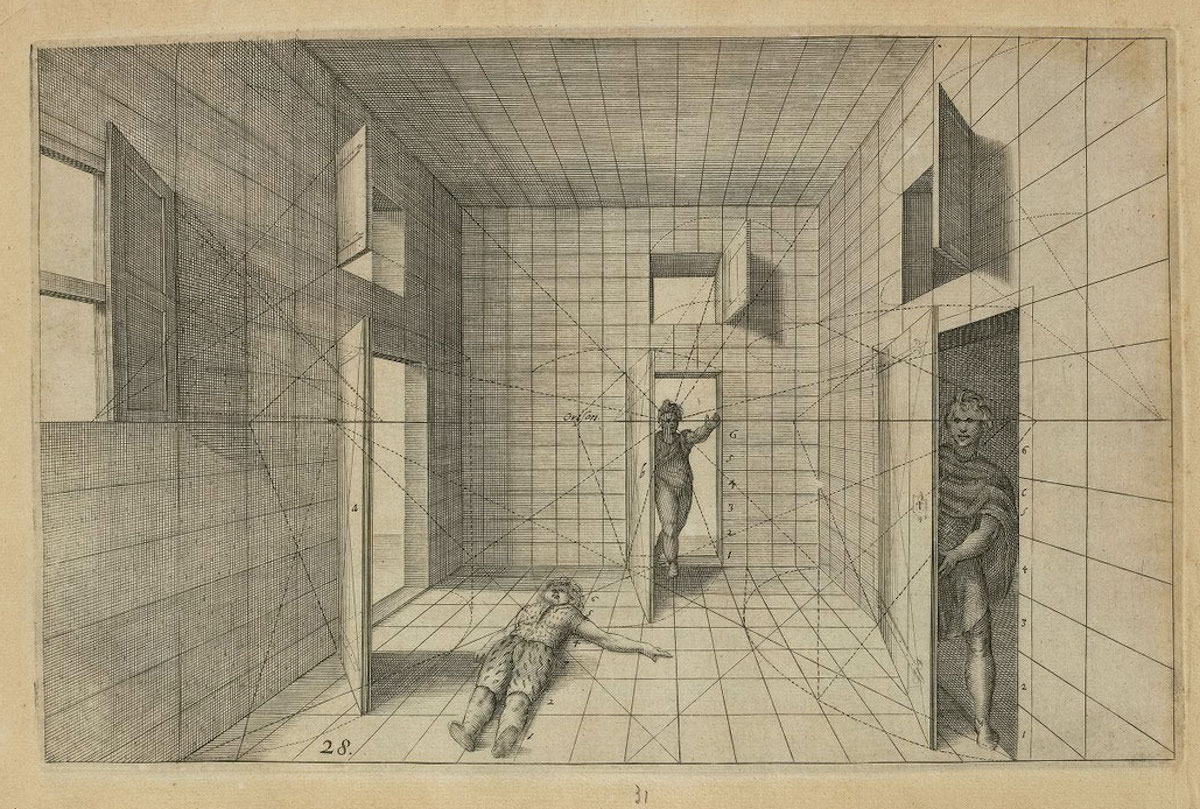
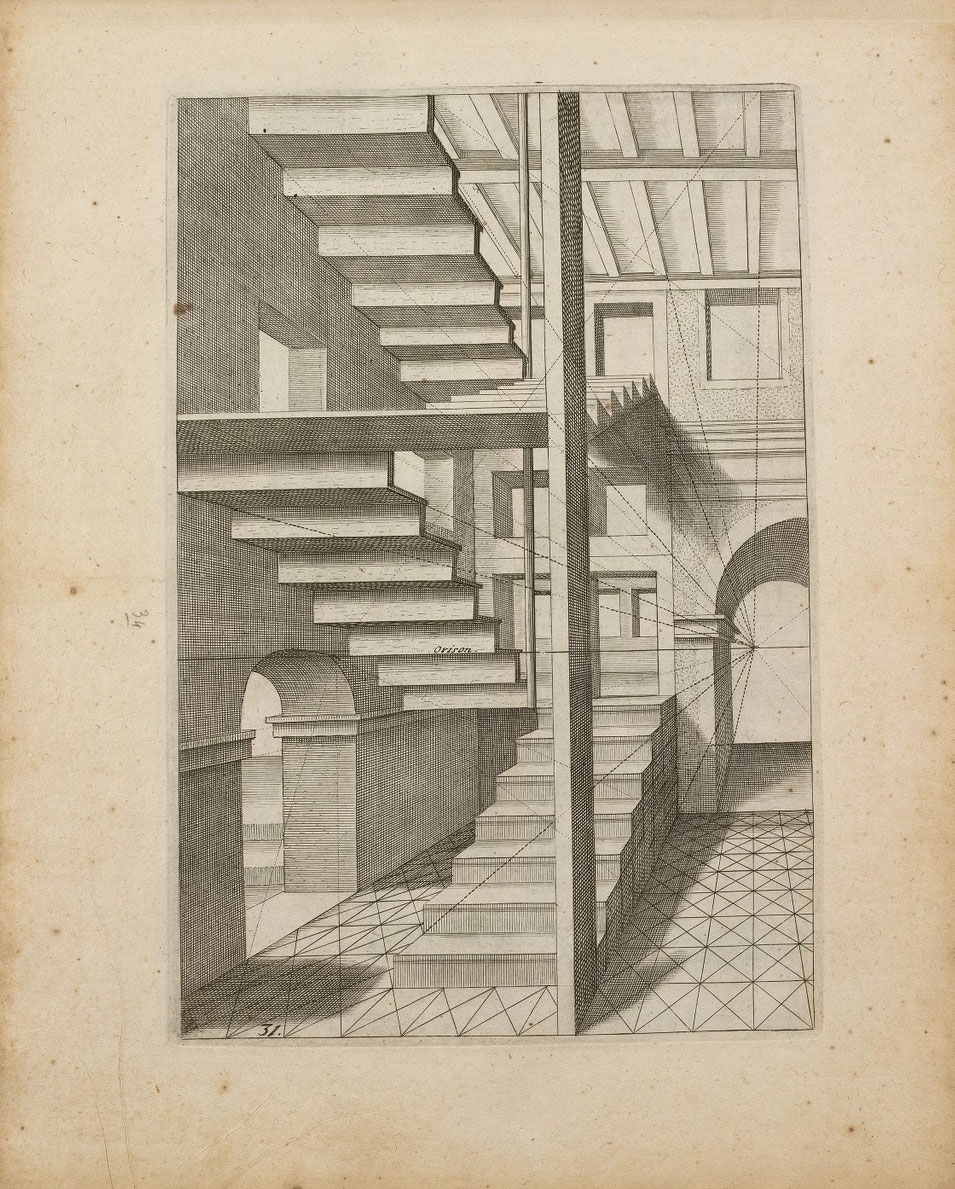
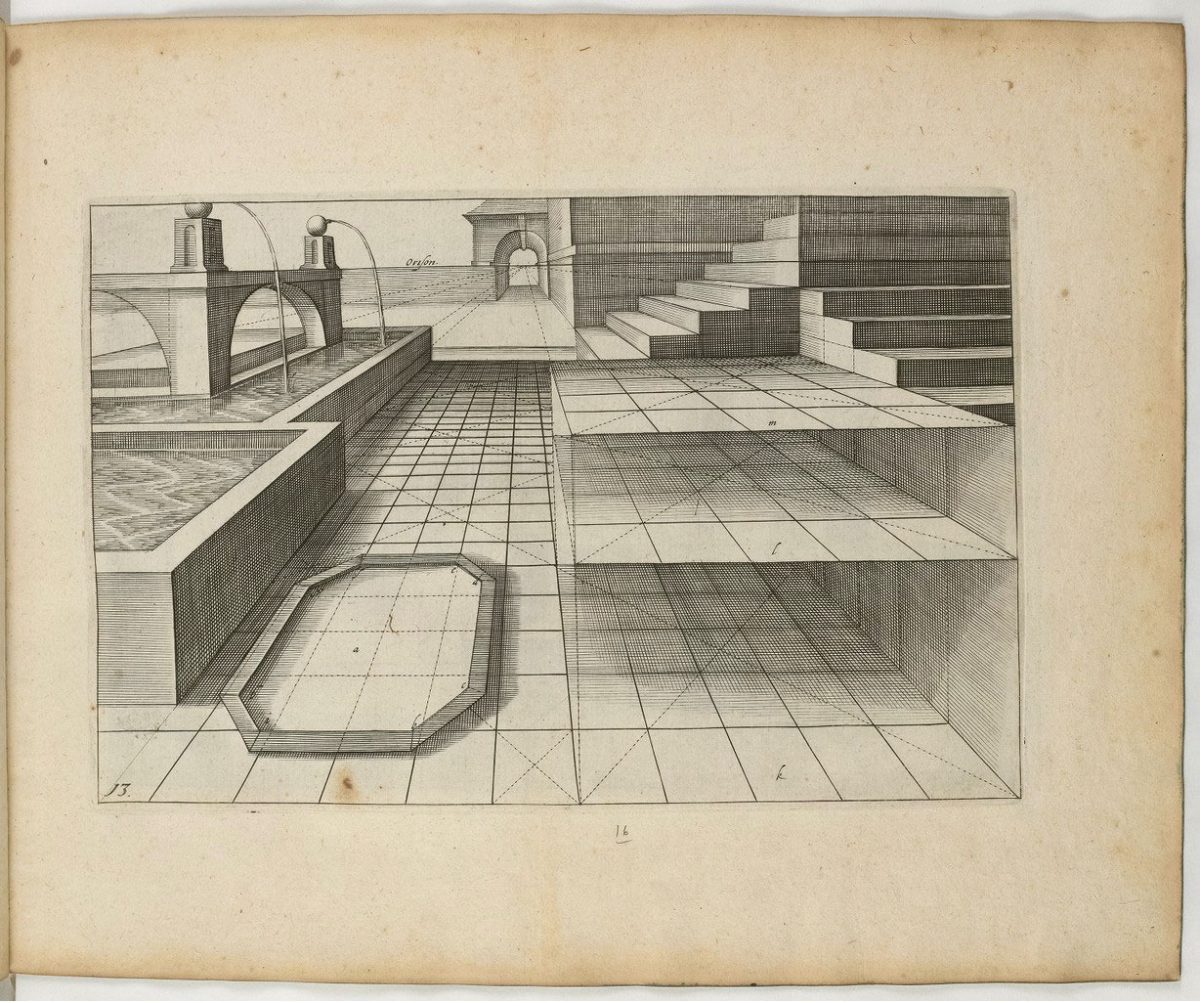
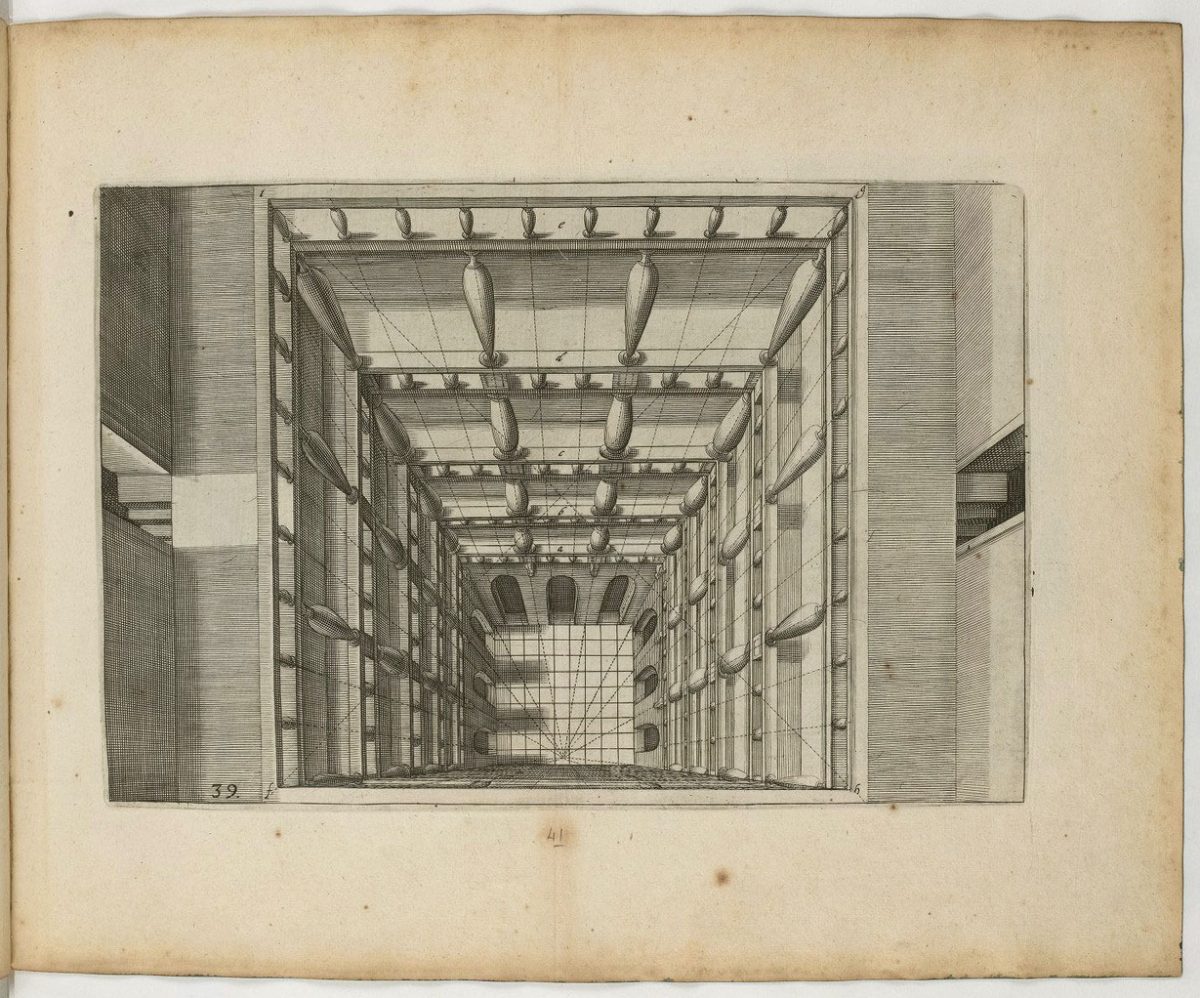
In 1604, Dutch Renaissance architect, painter and engineer Hans Vredeman de Vries (1527 – c. 1607) published Perspective. In it he explored the relationship between linear perspective in an architectural space. He invites the reader to wonder how the structure of reality can be interpreted. Can a flat canvas or page show space, time and the infinite? How can we free ourselves from a perspective imposed by the popular technology of the day?
Inspired by Serlio’s Seven Books of Architecture, de Vries presents a number of architectural scenes, each with a cat’s cradle of markings to illustrate sight lines and vanishing points. As his drawings get more complex, they take on a life of their own, becoming more art than design. But ultimately, perspective ties us to a particular view.
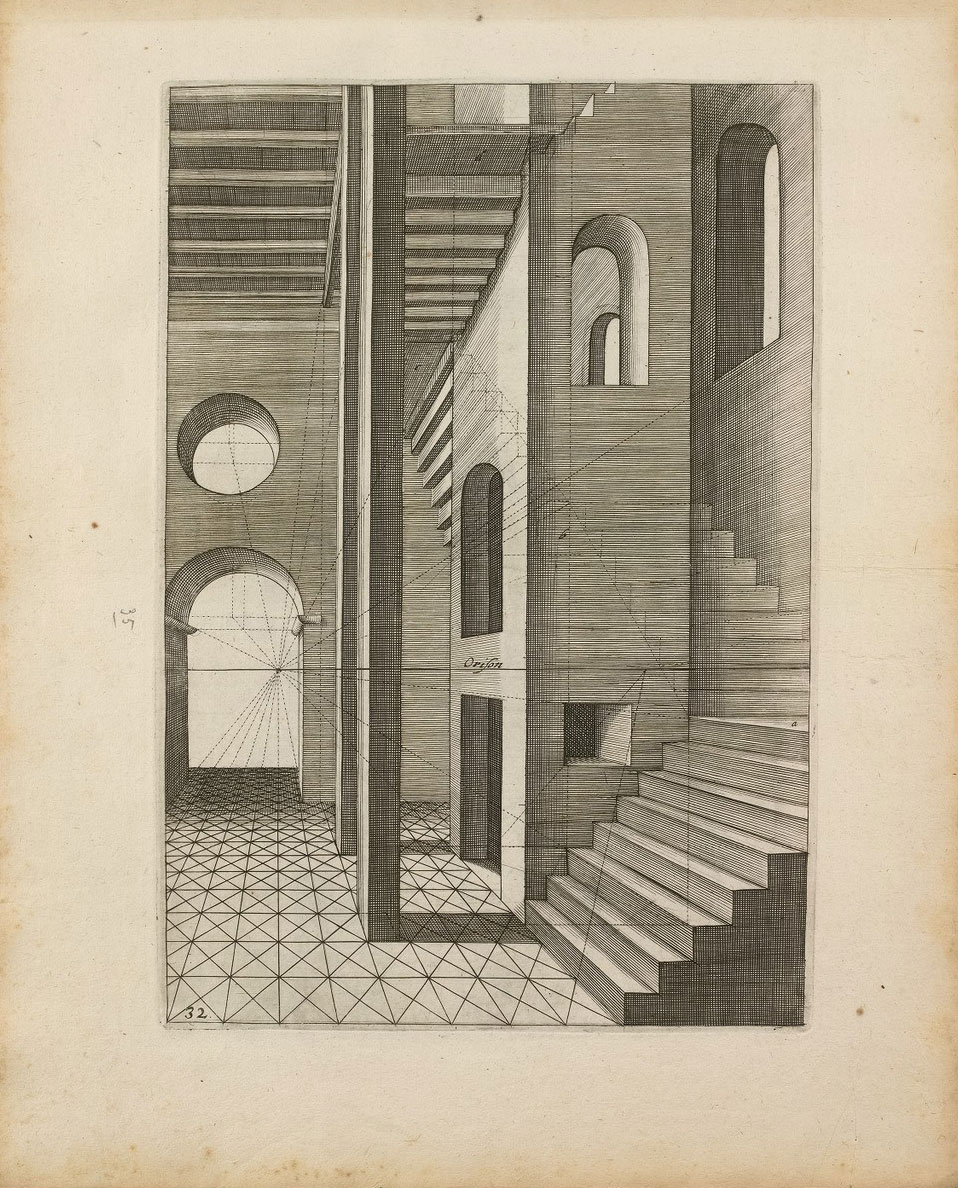
“And perspective it is best painter’s art. For through the painter must you see his skill / To find where your true image pictured lies …”
– William Shakespeare, 24th Sonnet
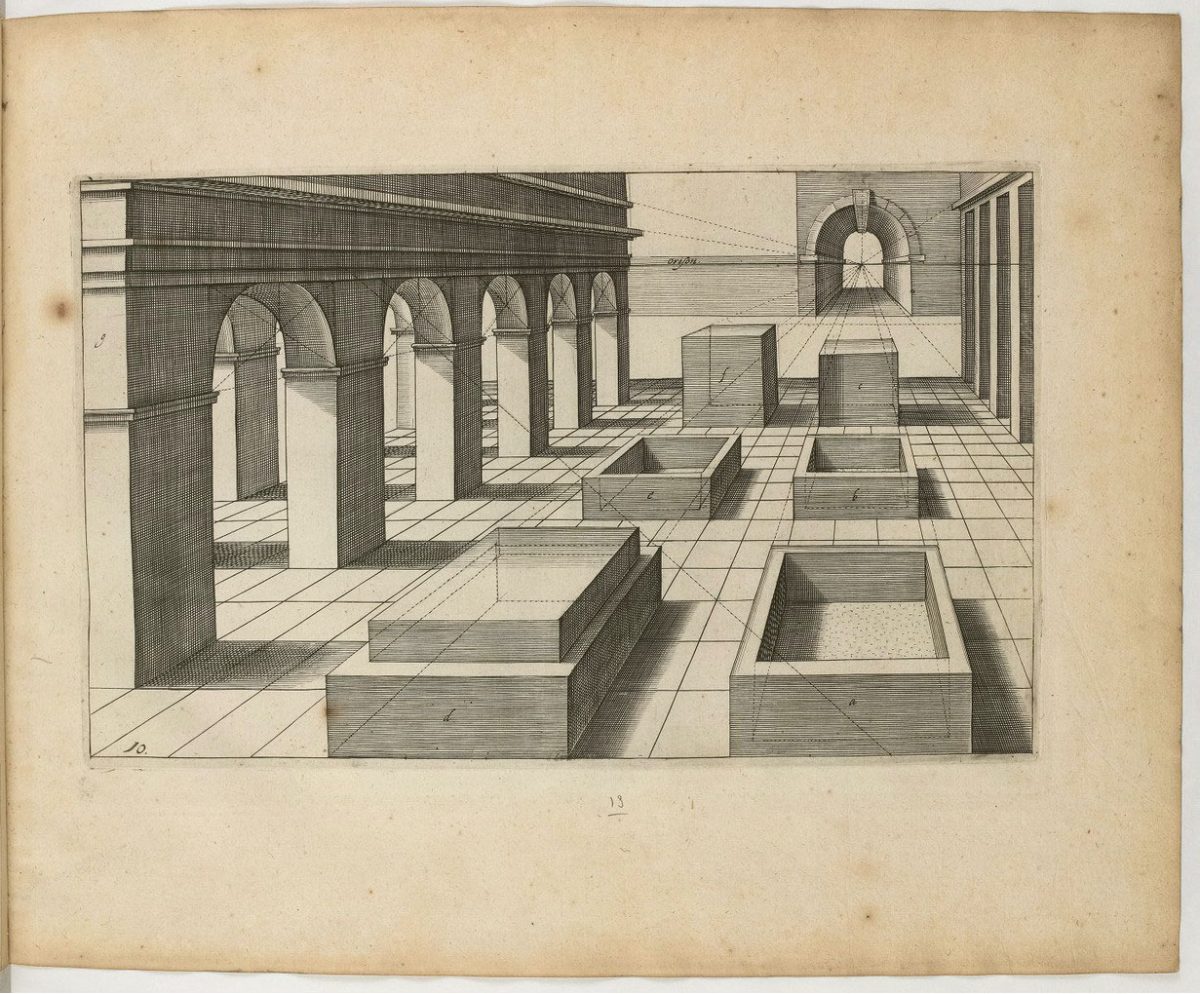

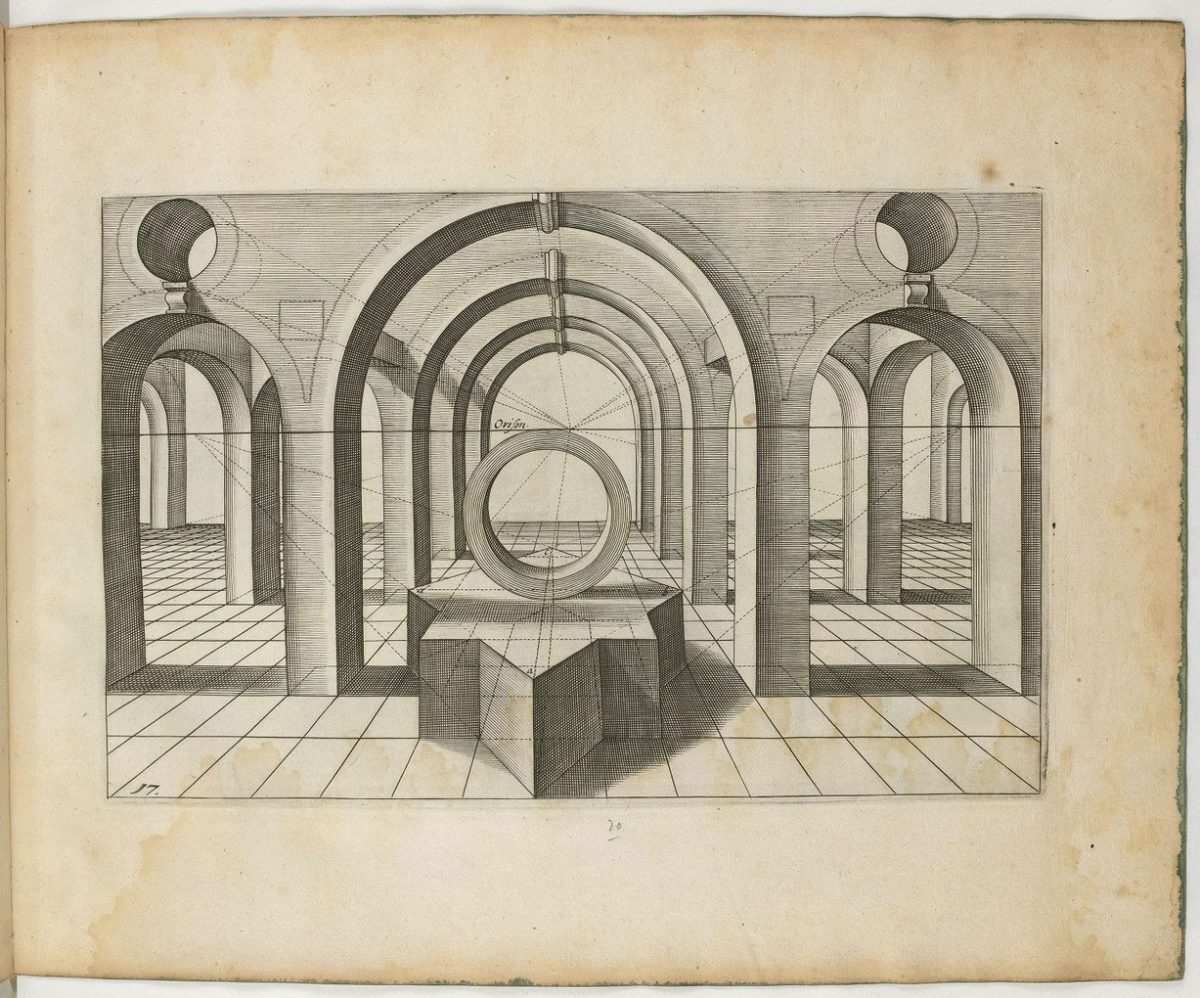
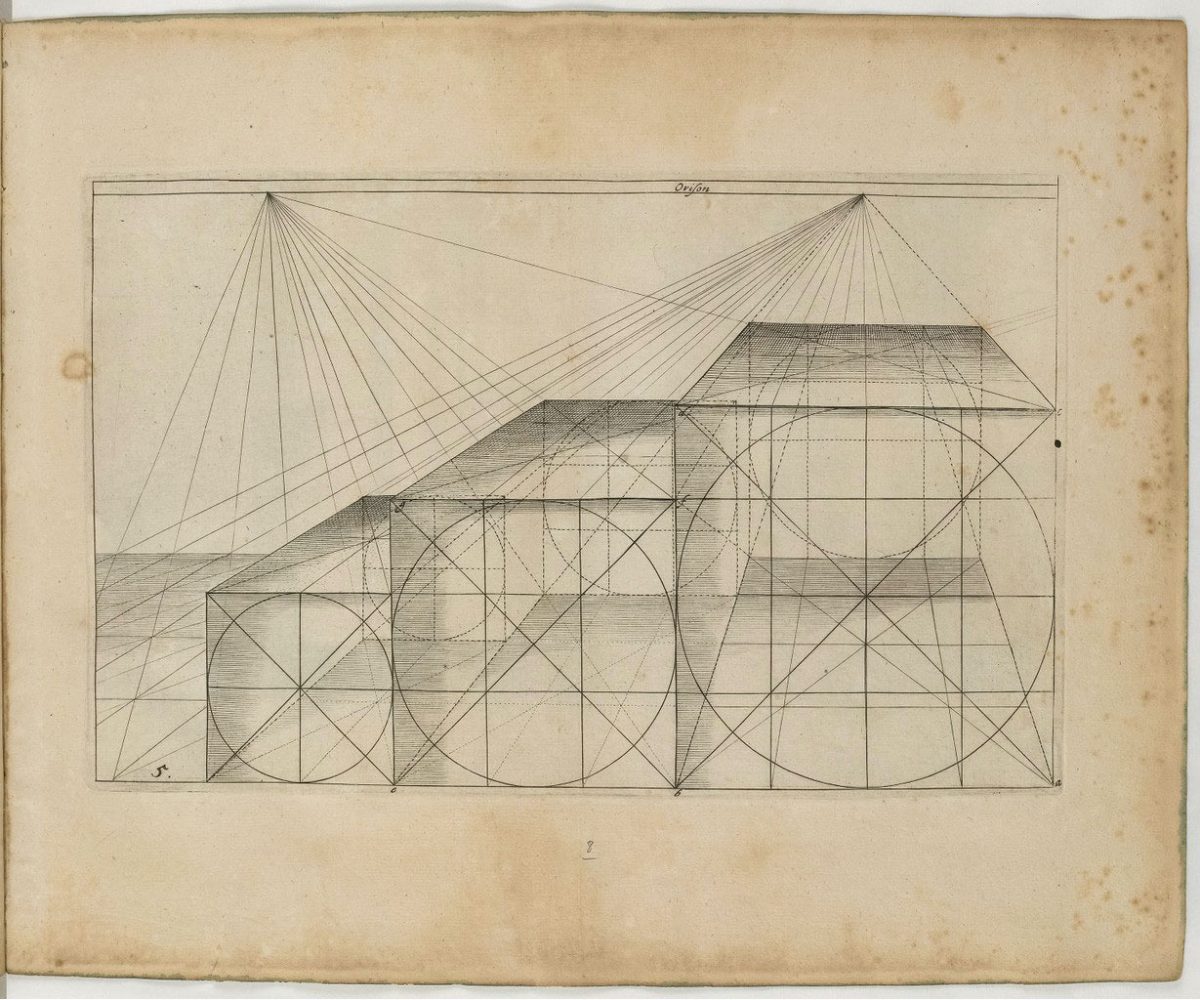

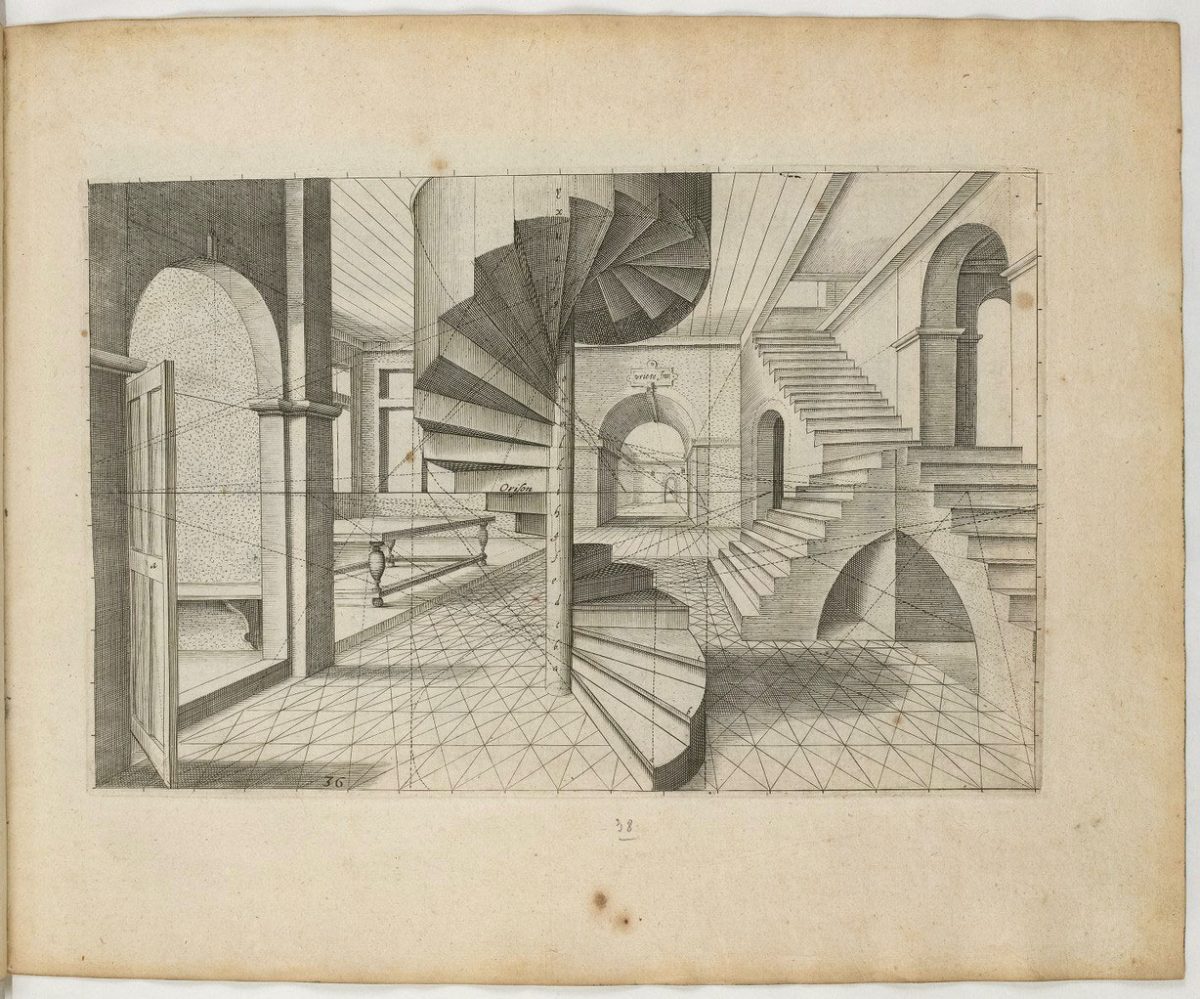
“If you look, the eye is always moving. If it isn’t, your dead. This means there are hundreds of vanishing points not just one.”
– David Hockney
Would you like to support Flashbak?
Please consider making a donation to our site. We don't want to rely on ads to bring you the best of visual culture. You can also support us by signing up to our Mailing List. And you can also follow us on Facebook, Instagram and Twitter. For great art and culture delivered to your door, visit our shop.