The stars indicate the places that are open all night. The only important omission is … the various speakeasies but since there are about 500 of them you won’t have much trouble
– Elmer Simms Campbell, A Night-Club Map of 1930s Harlem
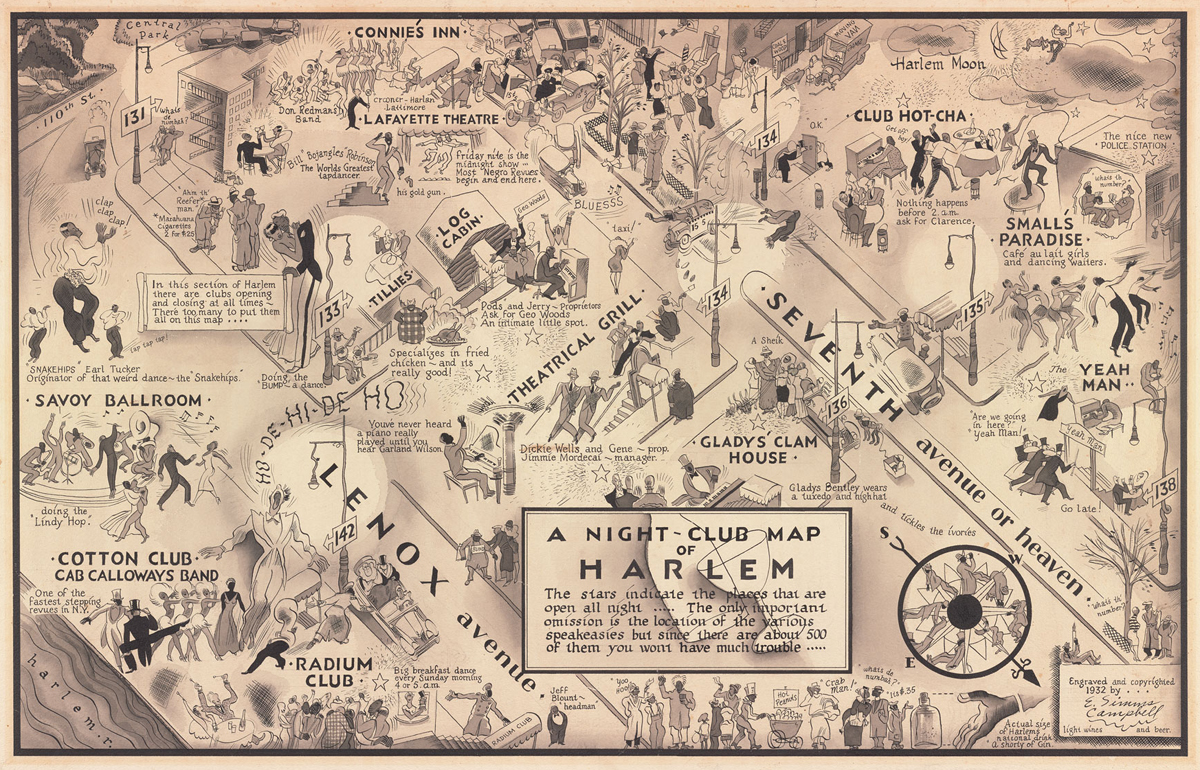
In 1932, a night out in Harlem, Manhattan, NYC, could mean a trip to the Cotton Club, the Savoy Ballroom, Club Hot-Cha or any number of speakeasies. We can better imagine the experience thanks to Elmer Simms Campbell (January 2, 1906 – January 27, 1971), a native of St. Louis, Missouri, and a graduate of the University of Chicago.
Struggling to find work in Chicago, Campbell got a job as waiter on the trains. As he told his biographer for the book, We Have Tomorrow, it helped him develop as an artist:
I learned from my fellow waiters how close man can be to his fellow men. After this discovery my character began to develop and I began to paint and draw people as they really looked. Oh, I could always draw, but I was a failure as an artist till I became a successful dining-car waiter.
In 1929, he moved to New York. There, he worked for an advertising firm and began taking classes at the National Academy of Design. During this time, he contributed to various magazines, notably Life, Judge and Esquire.
And at some point, Elmer became friends with the singer Cab Calloway, star of the Cotton Club, inspiration for the Hepsters’ Dictionary and singer of all that Hi-de-hi-de-hi-de-ho!
Harlem Night Clubs
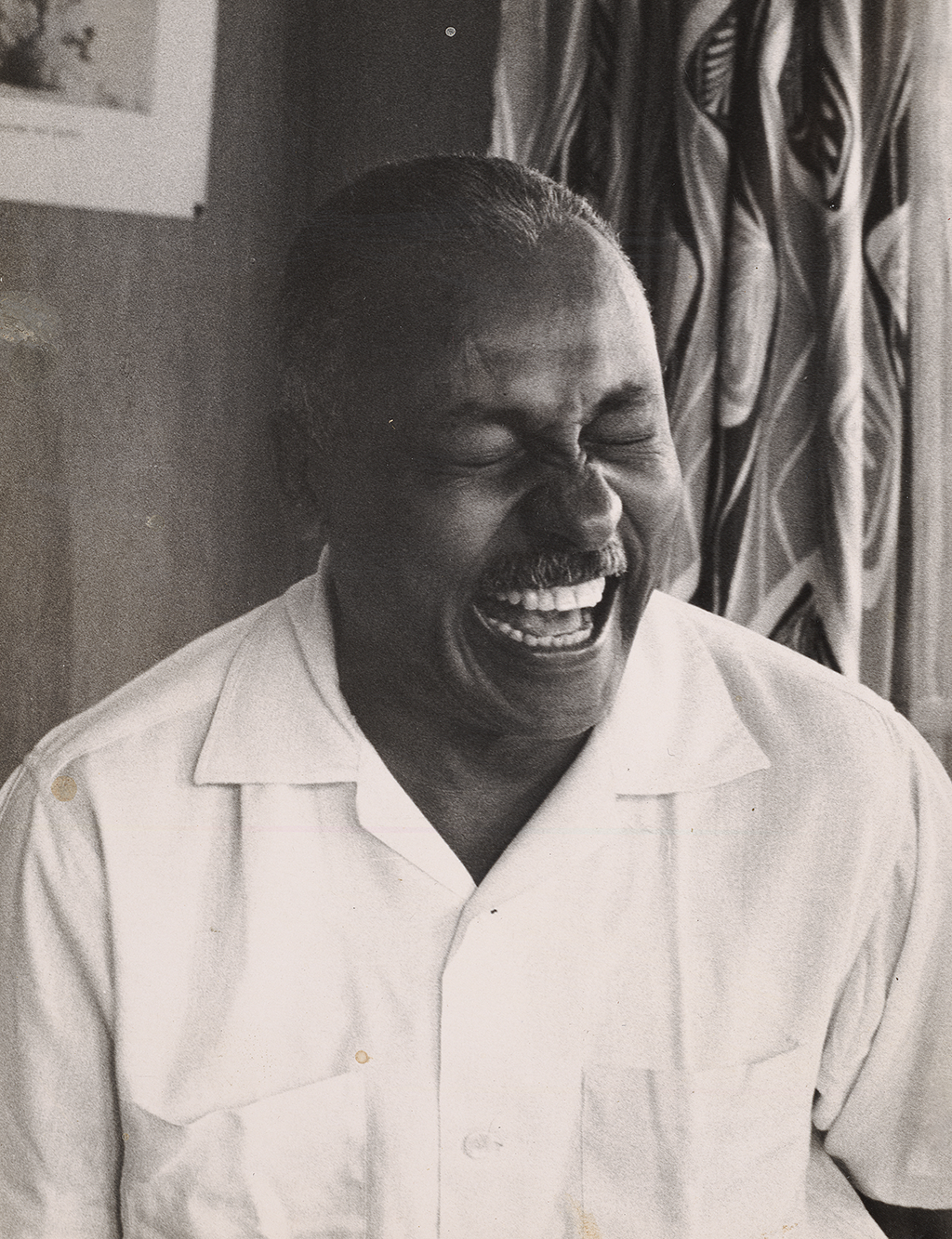
Elmer Campbell – E. Simms Campbell Photos, scrapbook pages, and correspondence 1958–1962 McGowan Miller Collection
Campbell drew A Night-Club Map of 1930s Harlem in 1932 when he was looking for a decent job. He identified the area’s attractions during the Harlem Renaissance, showing us Calloway singing at the Cotton Club and Bill “Bojangles” Robinson performing his step dance at the Lafayette Theater – “Friday night is the Midnight show, Most Negro revues begin and end here.”
At the foot of principal title we’re told:
The stars indicate the places that are open all night. The only important omission is … the various speakeasies but since there are about 500 of them you won’t have much trouble.
After The Club
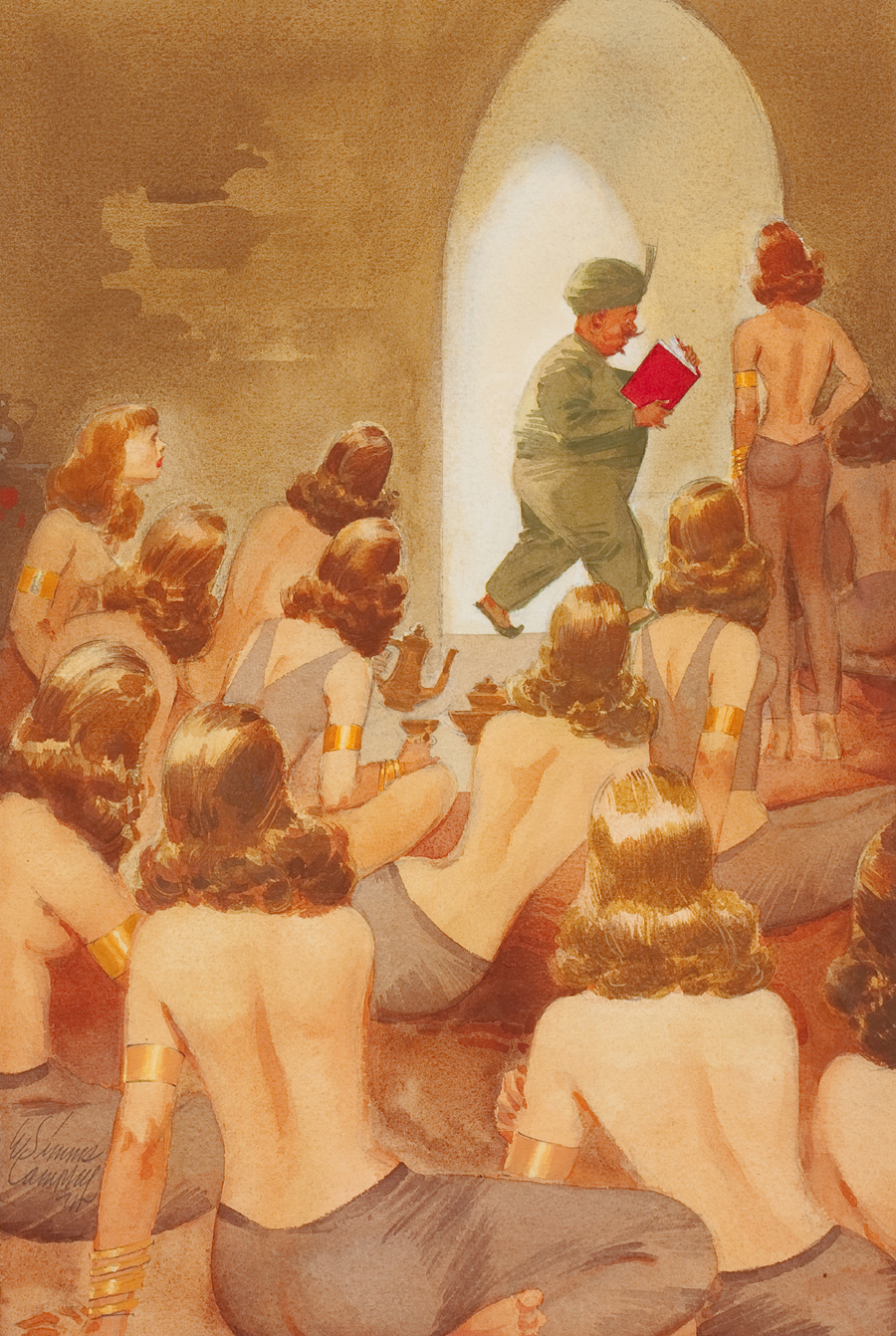
Harem Girls: Now He Goes to Bed with Dr. Kinsey by Elmer Simms Campbell
Following the suggestion of cartoonist Russell Patterson to focus on the hyper-sexualised version of femininity depicted in comics of the era known as good girl art, Campbell created his Harem Girls, a series of watercolour cartoons that attracted attention in the first issue of Esquire, debuting in 1933. Campbell’s artwork was in almost every issue of Esquire from 1933 to 1958 and he was the creator of Esky, its mascot – the cartoon character in a silk top hat.
He also contributed to The Chicagoan, Cosmopolitan, Ebony, The New Yorker, Playboy, Opportunity: A Journal of Negro Life, Pictorial Review and Redbook.
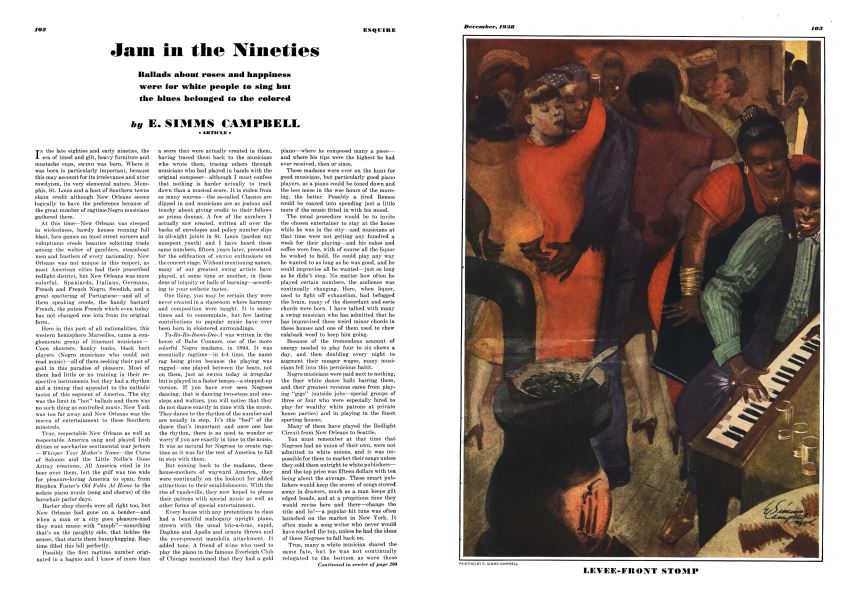

LEVEE FRONT STOMP by E Simms Campbell – Esquire, December 1938
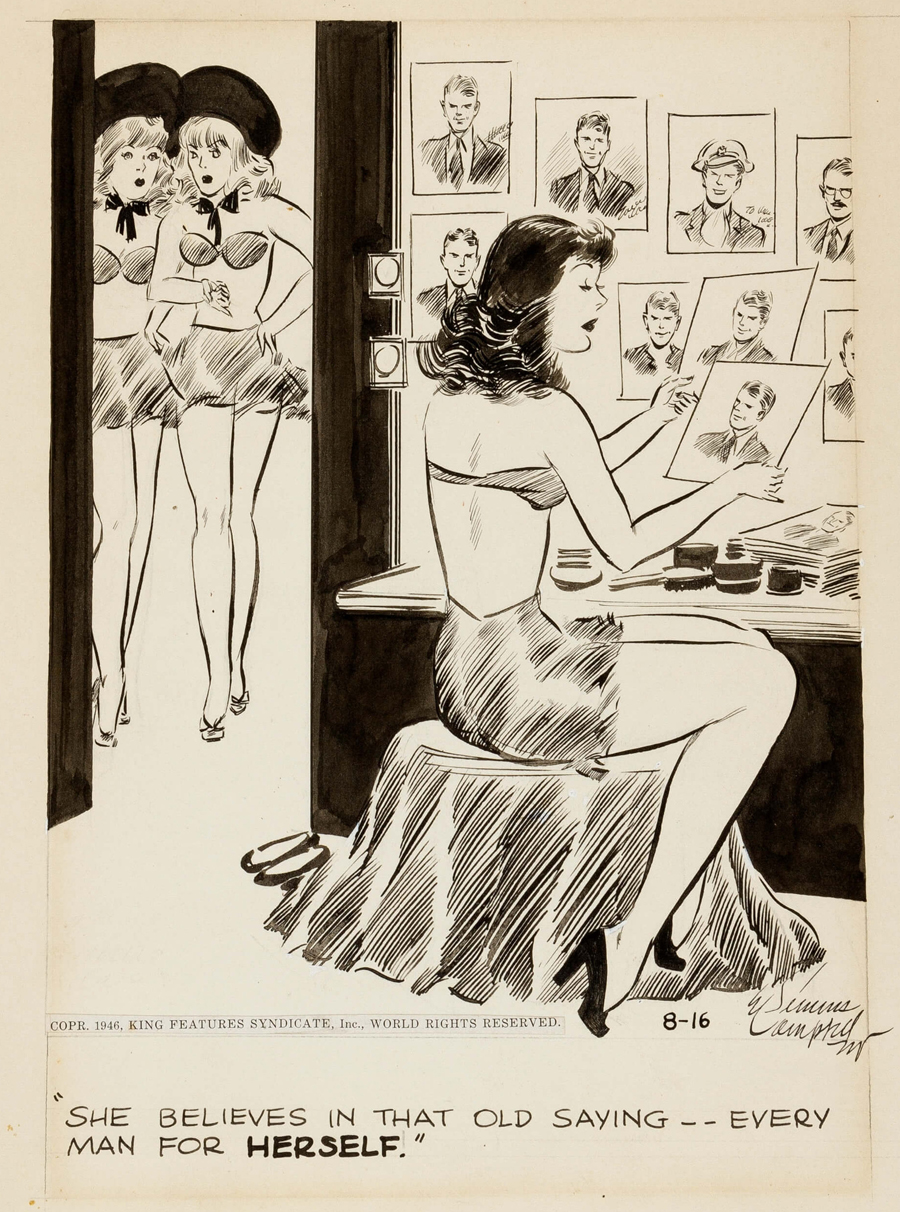
“Cuties” comic strip, August 16, 1946
In 1939, Campbell became the first black artist to have his work syndicated around the nation. Although his race was kept a secret in order to prevent any resistance by Southerners, King Features published Campbell’s Cuties comic strip in over 140 newspapers throughout the country. He was inducted to the Society of Illustrators Hall of Fame in 2002.
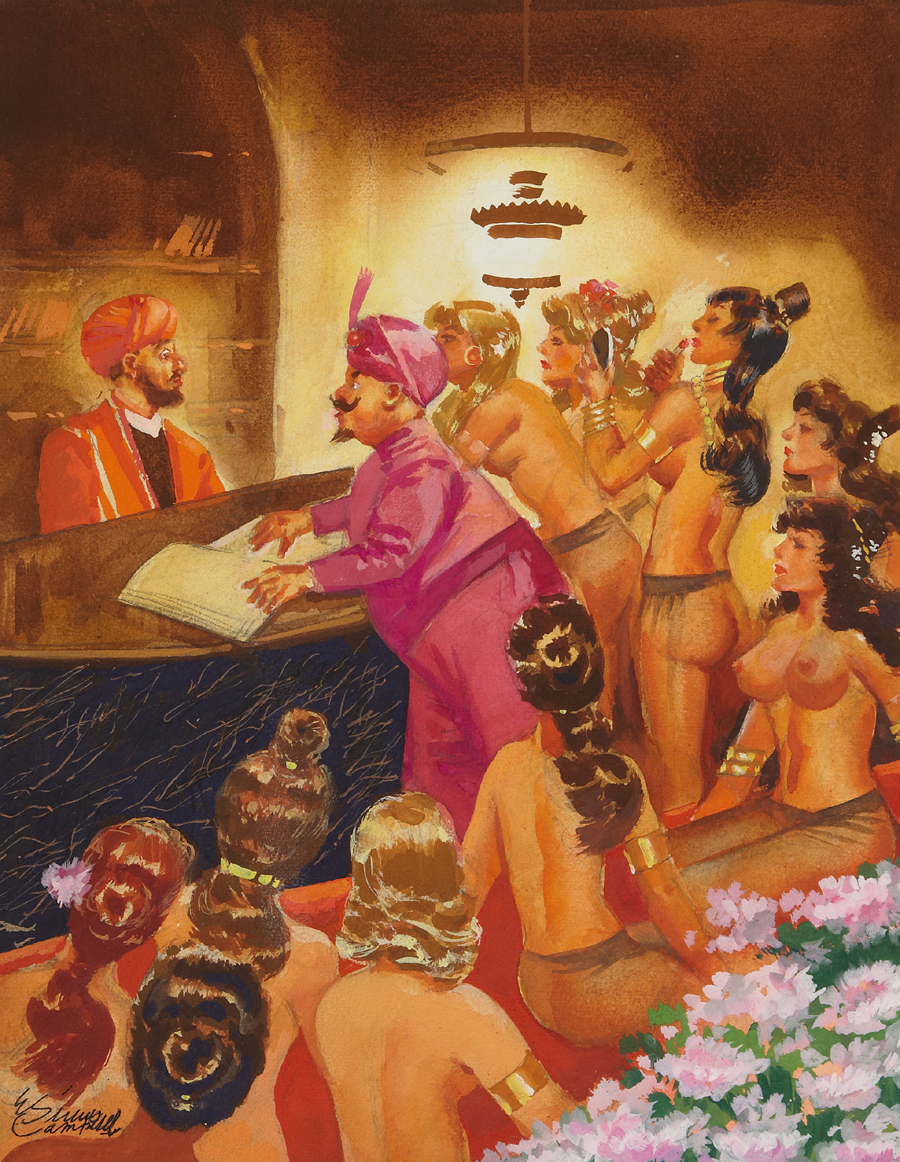

Playboy cartoon illustration, July 1969, Playboy
Let’s end with some music. Right below, you can see Simms’ friend and drinking buddy Cab Calloway perform “Hotcha Razz Ma Tazz” at the famous Cotton Club, in Harlem, 1935.
Via: Ohio State
Would you like to support Flashbak?
Please consider making a donation to our site. We don't want to rely on ads to bring you the best of visual culture. You can also support us by signing up to our Mailing List. And you can also follow us on Facebook, Instagram and Twitter. For great art and culture delivered to your door, visit our shop.